Public liability insurance for contractors in South Africa

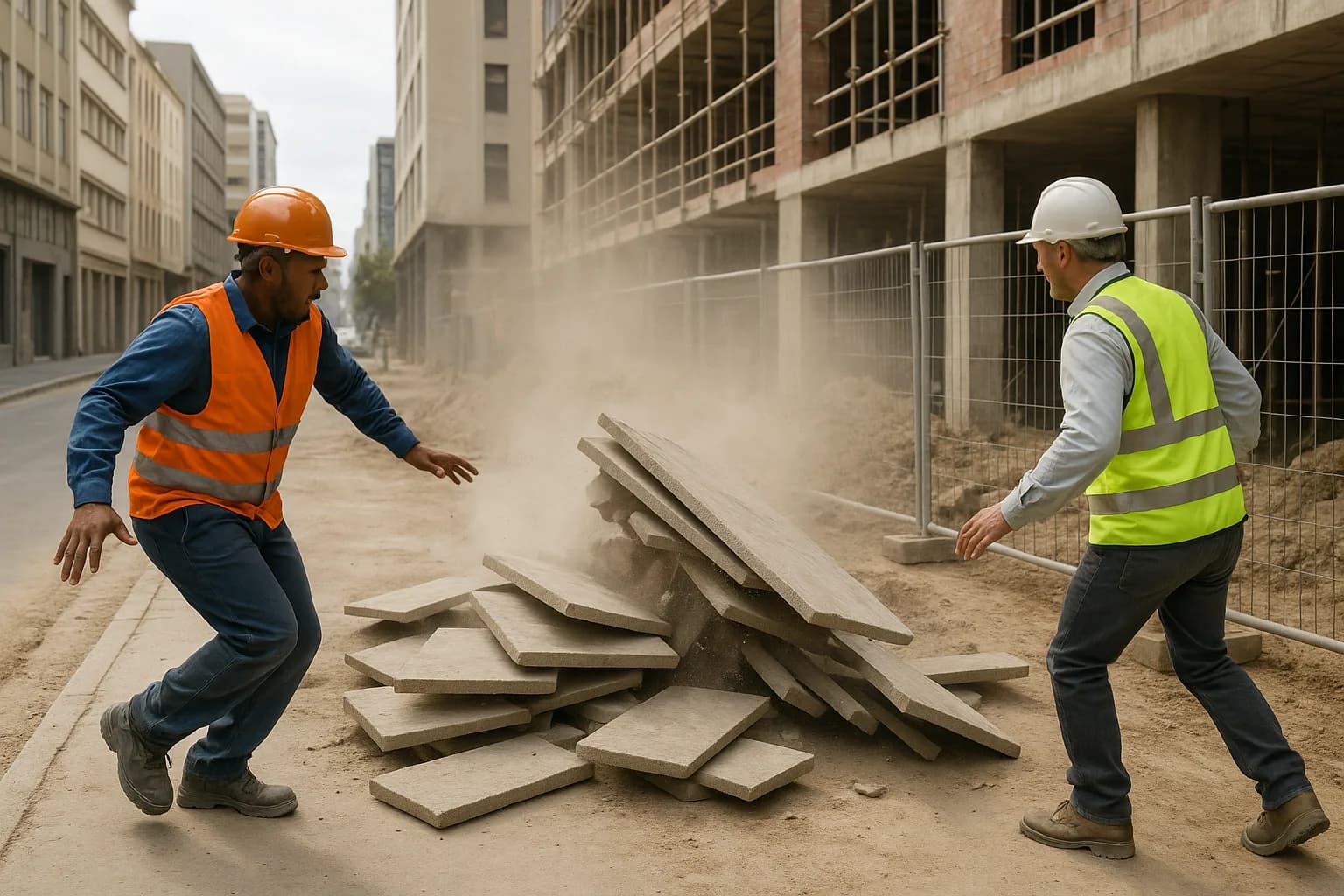
A scaffolding plank falls two storeys at a Sandton apartment block during a Saturday morning installation. It clips the roof of a parked Audi, bounces off the security boom, and lands three metres from a child on the pavement. Nobody is hurt badly, but the car owner is already photographing the damage, and the building manager is on the phone to the principal contractor before the dust settles. The argument about who is legally responsible for that plank, the scaffolding sub-contractor, the principal, or the site owner, will run for weeks. The bill for the damaged vehicle and the legal costs of establishing liability will arrive long before a verdict does.
What is contractor public liability?
Contractor public liability is the section of a contractor's insurance programme responding when your construction or maintenance activities cause bodily injury to a third party or damage to property belonging to someone outside your own business. It pays the legal costs of defending a claim and the compensation awarded if liability is established. Without it, those amounts come directly from your business.
Key Takeaways
- Contractor public liability covers third-party bodily injury and property damage arising from your on-site activities, and it pays both legal defence costs and any damages awarded.
- Most principal contractors, developers, and government clients require a certificate of contractor public liability before they will allow you on site or sign a subcontract.
- The indemnity limit, the maximum the insurer will pay for any one event, must match the scale and value of the projects you work on, not the smallest contract you have ever signed.
- The policy doesn't cover your own employees' injuries, damage to the works themselves, or professional errors in design and specification; those require separate covers.
- South African law doesn't mandate contractor public liability by statute, but contractual requirements and practical exposure make it non-negotiable for most construction businesses.
Why contractors face a different liability exposure

A shopkeeper's public liability exposure is largely fixed: the same floor, the same customers, the same risks each day. Your exposure moves with every new site, every new sub-contractor relationship, and every temporary structure erected by people who may not all work directly for you. A tile installer working in a Bloemfontein hospital wing operates under different conditions than the same installer working in a private home in Constantia, yet both create liability for the events they cause. The site context, the type of work, and the people present all change the risk profile continuously.
South African construction sites bring an additional layer of complexity. The standard conditions of contract used on government and parastatal projects, including the JBCC Principal Building Agreement and the NEC suite, commonly make contractor public liability a contractual prerequisite. A procurement specification from a government department will typically require bidders to confirm cover before their tender is evaluated. The requirement isn't a formality; it is a condition of contract, and the site won't open to you without a current certificate in the file.
Construction also creates a category of risk many contractors underestimate: consequential property damage. If your plumbing sub-contractor fits the wrong valve and a residential complex floods over a long weekend, the damage to the building fabric, the contents of every affected unit, and the costs of alternative accommodation for displaced residents can accumulate far beyond what the initial installation was worth. The policy responds to that accumulation because the damage was caused by your activities, not by a product you manufactured or a professional opinion you gave.
What the policy actually responds to
Contractor public liability responds to two categories of loss: bodily injury suffered by a third party, and damage to property belonging to a third party, where both arise from your operations. Bodily injury, meaning physical harm, illness, or death, covers the most obviously feared scenario: a member of the public injured on or near your site. Property damage covers destruction, contamination, or loss of use of something not belonging to you.
Both categories attract legal costs as well as the underlying damages, and those legal costs can exceed the compensation in a contested claim. A Gauteng contractor defending a R400,000 property damage claim through the High Court might spend more than that on legal fees before a judgment is handed down. The policy covers both the liability established by the court and the cost of reaching that judgment.
Illustrative comparison: what the policy covers and what sits outside it
| Scenario | Policy responds? | Why |
|---|---|---|
| Pedestrian injured by falling debris | Yes | Third-party bodily injury from site operations |
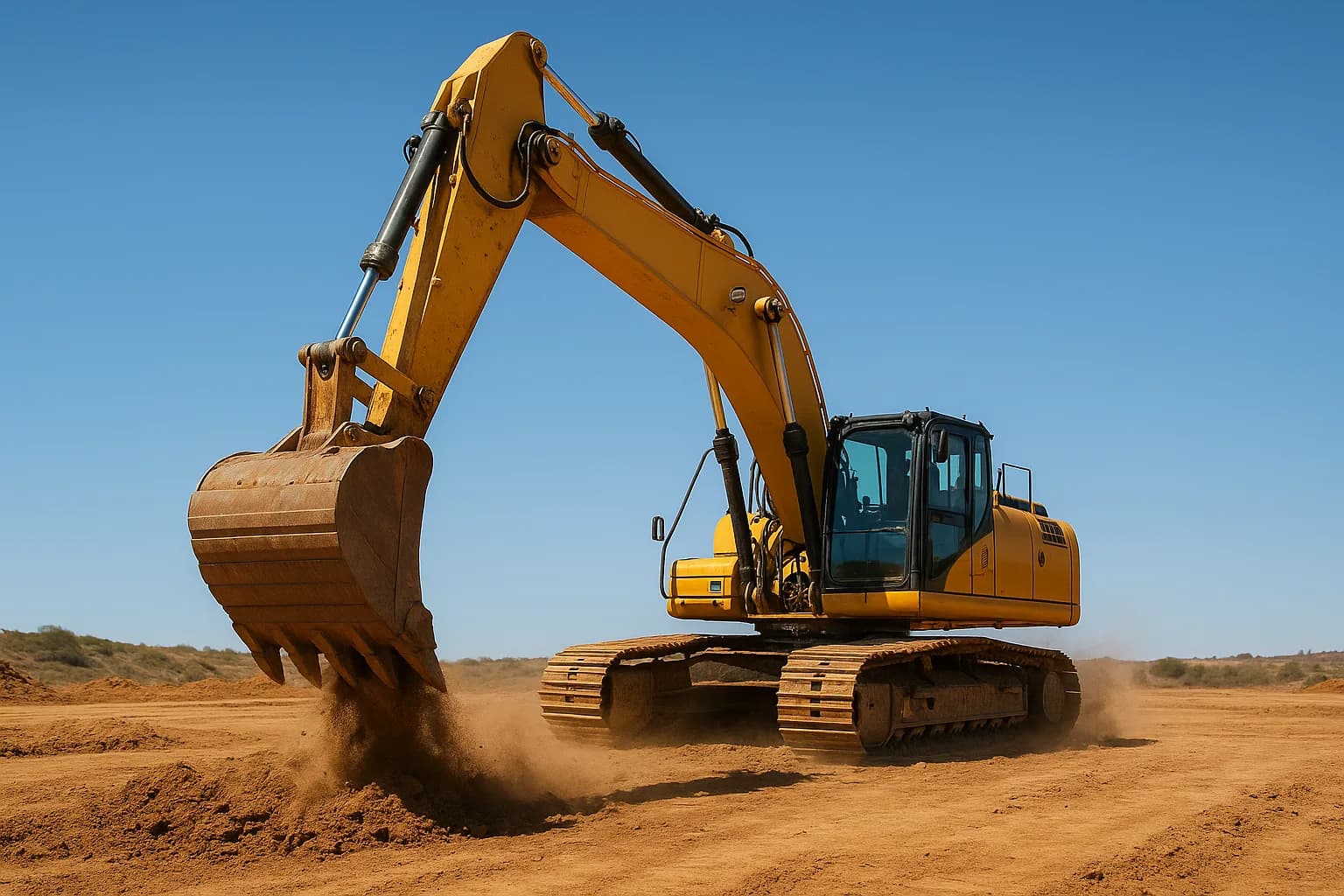
| Client's wall demolished by your excavator | Yes | Third-party property damage from operations |
| Your own employee injured on site | No | Employers' liability or COID Act claim |
| Structural defect in the completed works | No | Requires contractors all risk or latent defects cover |
| Design error causing a structural failure | No | Professional indemnity responds here |
| Theft of your tools from site | No | Plant and equipment cover |
The table illustrates the standard position under most South African commercial wordings; actual cover depends on the specific policy wording in front of you.
How the indemnity limit shapes the policy's usefulness
The indemnity limit is the ceiling the insurer will pay for any one occurrence, and choosing it correctly is where most contractors either protect themselves properly or leave a gap arithmetic will eventually find. If your policy carries a R5 million indemnity limit and a High Court awards R7.2 million in damages plus R900,000 in legal costs, the R3.1 million shortfall sits with you personally unless you have an umbrella liability arrangement above the primary layer.
Limits on South African construction sites typically start at R5 million for smaller residential work and extend to R50 million or higher for infrastructure and civil contracts. The limit your principal contractor or client specifies in the contract is often the minimum, not a recommendation calibrated to the actual risk. Consider what the worst credible event on your largest active project would cost: the total of emergency response, property damage, medical treatment, loss of income for an injured party who can't work, and the legal costs of three years of litigation. That number, not the contract minimum, is the floor for your indemnity limit discussion with your broker.
The gap between principal contractor cover and your own
Principal contractors on large South African projects often carry a project-wide contractor public liability policy nominally extending to sub-contractors working on that specific project. In practice, that extension is narrower than most sub-contractors assume. It generally applies only to liability arising from activities within the strict scope of the principal's contract, and it doesn't follow you to your other sites. Your own separate contractor public liability policy is the only cover staying with you across every contract you carry simultaneously.
Standard subcontract agreements under South African construction law frequently require you to indemnify the principal contractor against claims arising from your activities, meaning any liability you create flows back to you under the contract regardless of whether the principal's policy responds. Independent broker guidance on public liability cover consistently identifies this indemnification exposure as one of the most commonly misunderstood aspects of subcontractor risk. Read the indemnification clause in your subcontract before assuming the principal's cover protects you.
What contractor public liability does not cover
The exclusions in a contractor public liability policy are where claims go to die, and knowing them in advance is more useful than discovering them mid-assessment. Most standard wordings exclude the following:
Your own employees. Injuries to employees on your payroll fall under employers' liability cover and the Compensation for Occupational Injuries and Diseases Act (COIDA). The public liability section responds only to third parties, people who have no employment relationship with you.
The works themselves. The partially completed building, the foundation being poured, the installed systems not yet handed over, those are insured under contractors all risk cover, not public liability. Public liability covers the damage your work causes to other things; contractors all risk cover covers the damage happening to your work. Both sit in a contractor's insurance programme, but they are separate sections with separate triggers.
Professional liability. If a structural engineer on your team specifies the wrong load-bearing capacity and a floor slab fails, the claim arising from that specification error is a professional indemnity concern. Public liability covers the physical consequence of doing the work, not the intellectual consequence of advising on it.
Deliberate acts. If the damage was caused intentionally, the insurer isn't obliged to respond. This is a universal exclusion in liability policies and one the courts have repeatedly confirmed.
Contractual liability assumed beyond the common law position. If you contractually accept liability for events you wouldn't be liable for at common law, for example, an indemnity clause making you responsible for the acts of an independent contractor over whom you have no control, the policy may not cover that enlarged exposure unless the wording specifically extends to contractual liability. Check the wording, not the assumption.
Understanding what the policy excludes in the context of professional indemnity and liability insurance is essential before you sign a contract assuming broader cover than your policy carries.
How FSCA regulation affects the policy you buy
Contractor public liability is a non-life insurance product governed by the Insurance Act 18 of 2017 and the conduct standards administered by the Financial Sector Conduct Authority. The FSCA's regulatory framework requires insurers and brokers placing these products to be licensed, to act in your best interest, and to ensure the policy wording is clear enough that you understand what you are buying before you sign. In practice, that last requirement is honoured more faithfully by some intermediaries than others. The wording governs what the insurer pays. The certificate of insurance records that a policy exists. They aren't the same document, and the certificate isn't a summary of the wording.
Ask your broker for the full policy wording, not just the schedule, before you commit to a contract specifying minimum cover requirements. The schedule tells you the limit. The wording tells you whether the limit is accessible when the event happens.
When a plank hits the ground it shouldn't

Construction liability doesn't announce itself. It arrives as the noise of something hitting the ground it shouldn't, or the phone call from a site manager thirty seconds after an event nobody planned for. The instinct is to manage it on the day, to talk to the other party, to assume it will be minor. What turns a manageable incident into a business-ending one is usually not the severity of the harm but the absence of a policy from day one. Contractor public liability doesn't prevent the plank from falling. It decides whether the business is still standing when the legal process finishes.
You shouldn't have to find out mid-claim that the cover you assumed you had doesn't say what you thought it did. With Mont Blanc Financial Services you won't.
Contact Mont Blanc Financial Services to have your contractor public liability wording reviewed, your indemnity limit stress-tested against your largest active project, and your sub-contractor agreements read for the liability you may have accepted without realising it.
The questions contractors ask most often about public liability cover tend to cluster around three practical concerns: what the policy pays, who is required to carry it, and how it sits alongside the other sections of a construction insurance programme.
Frequently Asked Questions
Who needs contractor public liability insurance?
Any contractor, sub-contractor, or tradesperson whose work creates a risk of injury to people or damage to property outside their own business needs contractor public liability insurance. This includes building contractors, electrical and plumbing specialists, civil and structural engineers, painting and finishing contractors, landscapers working on developed sites, and installation teams operating in occupied buildings. The exposure exists whether you work on residential, commercial, or infrastructure projects. Independent contractor insurance guidance identifies public liability as the foundational cover for any contractor operating on third-party premises. In South Africa, the requirement is reinforced by contractual conditions rather than a single statutory mandate, but the practical effect is the same: you won't get onto most formal sites or into most subcontract agreements without a current certificate showing the minimum indemnity limit the principal contractor specifies. If your work takes you onto client premises, occupied buildings, or any site where members of the public are present, your exposure to a third-party claim is real and the absence of cover is a direct financial risk to your business and your personal assets.
What does bodily injury coverage include in a contractor public liability policy?
Bodily injury coverage under your contractor public liability policy responds to physical harm, illness, psychiatric injury, and death suffered by a third party, meaning anyone who isn't your employee, as a result of your operations. It covers the compensation payable to the injured party, which may include medical costs, loss of income during recovery, general damages for pain and suffering, and, in fatal cases, loss of support claims brought by dependants. It also covers the legal costs of defending the claim through to judgment, even where the claim is ultimately unsuccessful. It doesn't cover injuries to your own workforce, which fall under COIDA and your employers' liability section. The distinction between who counts as a third party and who counts as an employee is consequential when your site uses labour brokers, independent labour-only contractors, or casual workers, the employment relationship decides which section of the policy responds, and that relationship isn't always obvious from the working arrangement. Confirm the classification of every person on your site with your broker before a claim makes it urgent.
Do I need contractor public liability insurance as a contractor?
Yes, in practice, even where no single statute makes it universally compulsory. Most principal contractors, developers, body corporates, government departments, and parastatal clients require a current contractor public liability certificate before they will allow you on site or countersign a subcontract. Beyond the contractual requirement, your personal exposure at common law is real: if your activities cause harm to a third party or damage to their property, you are liable for the full cost of making that person whole. A successful judgment against your business without insurance in place means the award is enforced against your assets, your vehicles, your equipment, your bank account, and potentially your personal estate if the business can't satisfy the judgment. The cost of the policy is the cost of keeping that exposure off your personal balance sheet. Obtaining cover before you sign a contract, rather than after a tender is awarded, gives you the time to have the wording reviewed and the indemnity limit set correctly for the scope of work you are about to carry.
What does contracts works insurance cover, and how does it differ from contractor public liability?
Contract works insurance, also called contractors all risk cover, protects the physical works under construction: the materials on site, the partially completed structure, and the temporary works supporting it. It responds when the works themselves are damaged by fire, flood, theft, storm, or accidental damage during the construction period. Contractor public liability is a different section entirely: it responds when your operations cause harm to people or property outside the works. The practical distinction is the ownership of what was damaged. If your crane drops a beam onto the slab you poured yesterday, that is a contract works claim. If the same beam lands on the client's existing building next to the site, that is a public liability claim. Most comprehensive contractors insurance programmes carry both sections, and both are typically required under formal construction contracts. The two sections work alongside each other, not as alternatives. Your broker should confirm both are active and correctly scoped before your project commences.

Nicola Iozzo
Founder & CEO, Mont Blanc Financial Services
Nicola has spent his career reading the policy wording most people skip, and writes here so you don't discover at claim stage what page 14 meant.
Everything on this blog is written to inform and educate. It is for information only. Nothing here is professional legal, financial, or technical advice. If you are making a significant business decision, speak to a qualified professional first. Mont Blanc Financial Services works hard to keep this content accurate and current, but is not liable for decisions made based on what you read here.
Mont Blanc Financial Services (PTY) Ltd. is an authorised financial services provider. FSP 8271