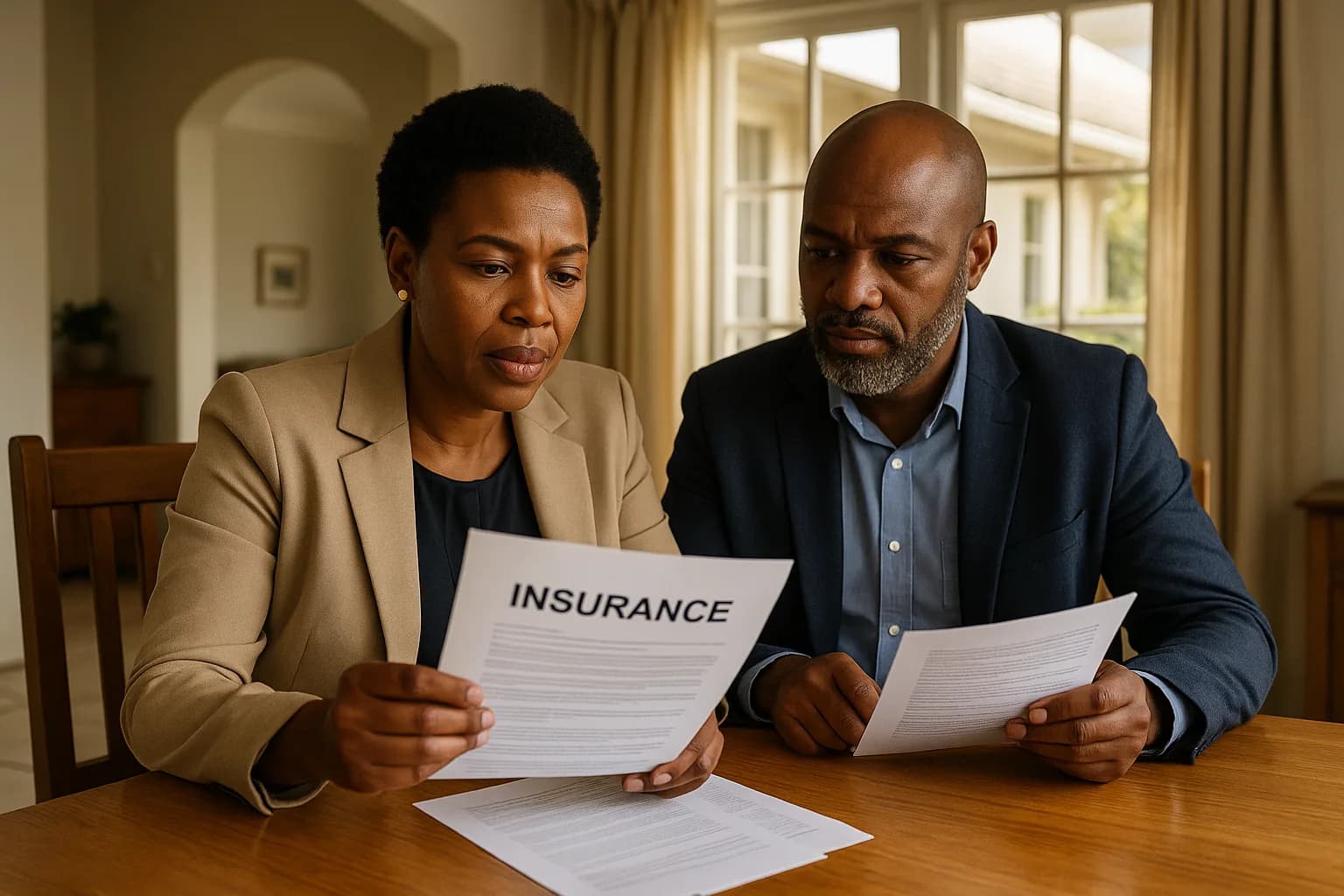
Public Liability Insurance in South Africa

A floor can be mopped, the warning sign set out, the morning ordinary, and a business can still change shape in a second when a customer steps back, falls, and says they have hurt their back. From that moment the business is no longer a place that sells coffee; it is a place where someone believes it is responsible. No owner expects to fund a stranger’s medical treatment before lunch, yet public liability claims begin in exactly this ordinary way.
What is public liability insurance in South Africa?
Public liability insurance in South Africa protects a business when a third party suffers injury or property damage connected to its operations and brings a negligence claim. It covers legal defence, compensation, and settlement costs up to a selected limit of indemnity. It applies across sectors, retail, hospitality, construction, events, wherever the public interacts with the business.
Key Takeaways
- Public liability insurance protects a business when a third party suffers injury or property damage connected to its operations and alleges negligence.
- It typically covers four areas: third-party bodily injury, third-party property damage, legal defence costs, and settlement or court awards.
- Exposure follows activity, so any business the public interacts with, a cafe, a retail store, a building site, an event, carries the risk.
- Defence costs apply even where fault is disputed, since attorneys, investigations, and reports are required before liability is decided.
- Compensation is paid up to the selected limit of indemnity, making the choice of that limit an important decision.
What Public Liability Insurance Covers

Whether you run a café in Johannesburg or oversee a building project in Cape Town, exposure follows activity. If the public interacts with your business, risk follows.
Public liability insurance responds to negligence claims involving third parties. It usually covers four core areas.
Third-party bodily injuryA visitor slips on a wet floor. A passerby is struck by falling signage. A customer trips over unsecured wiring. Medical expenses, rehabilitation, and potential loss-of-income claims may follow.
Third-party property damageA technician drops equipment inside a client’s premises. A contractor damages surrounding property while completing work. Repair costs escalate quickly when structures or high-value assets are involved.
Legal defence costsEven when fault is disputed, legal representation is required. Attorneys are appointed. Investigations are conducted. Reports are commissioned. Defence costs alone can exceed what many businesses expect.
Settlement or court awardsIf negligence is established, the insurer pays compensation up to the selected limit of indemnity.
Public liability cover operates like a financial airbag. You hope never to deploy it. But when impact happens, you want it correctly installed.
It is important to understand what it does not do.
What Public Liability Insurance Does Not Cover
Misunderstanding exclusions is one of the most common causes of claim disappointment. Insurance rarely fails silently. It usually fails because expectations were wider than the wording.
Public liability insurance does not respond to every operational problem.
Employee injuries, for example, fall under a different statutory structure entirely. Employers in South Africa contribute toward the Compensation Fund administered by the Department of Employment and Labour. This framework addresses workplace injuries separately from third-party negligence claims. It may feel like “liability,” but legally it sits in another category.
Professional advice errors are also excluded. If your guidance causes monetary loss, that risk falls under professional indemnity insurance. Different exposure. Different structure.
Intentional acts are excluded. Insurance responds to negligence, not deliberate harm.
Faulty workmanship is excluded as well. If your own work must be corrected because it was defective, the policy does not pay to redo it. Liability policies deal with damage caused to others, not repairing your own output.
Clear structuring at policy stage prevents uncomfortable surprises later. A policy works properly when it is understood before it is tested.
How Public Liability Claims Work in South Africa
When an incident occurs, timing becomes critical.
The first rule is simple. Report immediately.
Even if the injured party insists they are fine. Even if no formal claim has been made. Even if you believe nothing will come of it.
Once reported, the process typically unfolds as follows:
- Formal notification is logged.
- The insurer appoints assessors or attorneys.
- Statements are gathered.
- Evidence is preserved.
- Liability is evaluated.
- Negotiations begin or litigation proceeds.
Legal procedure resembles entering a structured courtroom arena. Every word recorded. Every deadline enforced. Every document examined.
Admitting fault too early may prejudice your position. Failing to report quickly may prejudice the insurer.
Preparation before the incident often determines outcome after it.
How Much Public Liability Insurance Costs
Cost depends on exposure, not optimism.
A small advisory office carries less risk than a high-footfall retail environment. A contractor working on elevated structures carries greater exposure than a remote consultant.
Insurers evaluate:
- Nature of operations
- Annual turnover
- Public access levels
- Claims history
- Risk management controls
- Selected limit of indemnity
- Excess chosen
Common indemnity limits begin at R1 million and scale upward depending on industry requirements.
Lower premiums usually correspond to lower limits. Lower limits may not accommodate severe injury claims involving long-term medical treatment.
Selecting cover should reflect realistic worst-case exposure. Not hopeful assumptions.
It is easier to adjust cover at renewal than to increase a limit after an accident.
Public liability insurance in South Africa operates within a regulated financial framework overseen by the Financial Sector Conduct Authority. Intermediary conduct, disclosure requirements, and policy governance follow national compliance standards designed to protect policyholders. This regulatory environment sets boundaries for insurers and brokers alike. Mont Blanc Financial Services works within this structure, ensuring exposure is described accurately, indemnity limits reflect real activity, and policy wording is aligned with operational risk. When incidents occur, claims reporting and insurer communication follow the same structured discipline. The objective is not complexity. It is stability under pressure.
Before we close, here are the most frequent questions business owners ask about public liability insurance.
Conclusion
The milkshake incident from this morning may cost a few thousand rand. It may cost significantly more. That depends on medical outcome and legal progression. Public liability insurance does not remove risk. It contains financial fallout. For businesses operating in South Africa, structured liability protection forms part of responsible governance. It is not exciting. It is stabilizing sometimes stabilizing is exactly what a business needs. You shouldn’t wait for a legal letter to discover whether your liability cover was structured correctly. With the right advice in place, you won’t face a public claim without guidance.
You shouldn’t have to fund a stranger’s medical claim out of your takings because an ordinary morning went wrong. With Mont Blanc Financial Services you won’t.
Contact Mont Blanc Financial Services to set a public liability limit that matches what your busiest, worst-case day could actually cost.
For the bigger picture, start with our full guide to general liability insurance.
Frequently Asked Questions
What does public liability insurance in South Africa cover?
Public liability insurance in South Africa covers a business when a third party suffers injury or property damage connected to its operations, and it usually responds across four core areas. The first is third-party bodily injury: a visitor slips on a wet floor, a passer-by is struck by falling signage, or a customer trips over unsecured wiring, and medical expenses, rehabilitation, and loss-of-income claims may follow. The second is third-party property damage: a technician drops equipment inside a client’s premises, or a contractor damages surrounding property, where repair costs can escalate quickly. The third is legal defence costs, which apply even when fault is disputed, since attorneys must be appointed, investigations conducted, and reports commissioned, and these costs alone can exceed what many businesses expect. The fourth is settlement or court awards: where negligence is established, the insurer pays compensation up to the selected limit of indemnity. Together these address the financial consequences of a negligence claim by a member of the public. The cover responds to the exposure that arises wherever the public interacts with the business.
Which businesses need public liability insurance in South Africa?
Public liability exposure follows activity, so any business the public interacts with carries the risk and benefits from cover. A cafe in Johannesburg, a retail store, a contractor running a building project in Cape Town, an event venue hosting guests, each brings members of the public into contact with the business’s operations, and each therefore faces the possibility of a third-party injury or property-damage claim. The level of exposure varies with the nature and volume of that interaction: a high-foot-traffic retail environment presents frequent opportunities for slips and falls, while a construction site presents risks to neighbouring property and passers-by. The common thread is that the public’s presence creates the exposure, regardless of the sector. Businesses with little or no public interaction carry less of this particular risk, though they may face other liability exposures instead. For the many operations whose daily activity involves the public, public liability cover is a core protection rather than an optional one. Assessing how and how often the public interacts with the business is the way to gauge the scale of the exposure.
How much public liability cover does a South African business need?
The amount of public liability cover a business needs is governed by the limit of indemnity, the maximum the insurer will pay for a claim, which should be set against the scale of the potential exposure rather than chosen arbitrarily. A business with high foot traffic, valuable third-party property nearby, or activities capable of causing serious injury faces larger potential claims and therefore needs a higher limit. The consequence of setting it too low is significant: if a claim exceeds the selected limit, the business carries the difference itself, which can be substantial for a serious injury or major property damage. Setting the limit means considering the worst realistic scenario the operation could produce, not just the typical minor incident. Because the right figure depends on the specific business, its activities, location, and the value of what its operations could affect, it is a decision worth taking deliberately. Reviewing the limit as the business grows keeps it aligned with the expanding exposure.
Why do public liability claims cost more than businesses expect?
Public liability claims often cost more than businesses expect because the expense begins well before any question of fault is resolved, and because the components add up quickly. Even when a business disputes liability, defending the claim requires appointing attorneys, conducting investigations, and commissioning expert reports, and these defence costs alone can be substantial regardless of the eventual outcome. On top of defence, a successful claim brings compensation for the third party’s injury or damage, which for a serious bodily injury can include medical expenses, rehabilitation, and loss of income, figures that escalate well beyond an initial impression of a minor incident. Property-damage claims similarly climb when structures or high-value assets are involved. The result is that what began as an ordinary spill or fall can produce a claim large enough to destabilise a business’s finances. This is precisely the gap public liability cover is designed to absorb. Underestimating the potential cost, and therefore underinsuring against it, is a common error that the structure of these claims, defence plus compensation, tends to expose.

Nicola Iozzo
Founder & CEO, Mont Blanc Financial Services
Nicola has spent his career reading the policy wording most people skip, and writes here so you don't discover at claim stage what page 14 meant.
This blog is here to inform, not advise. Think of it as a guidebook, not a contract. For decisions affecting your world, have a chat with your broker or financial professional.
Mont Blanc Financial Services (PTY) Ltd. is an authorised financial services provider. FSP 8271