Plant all risks insurance cost: what affects your premium
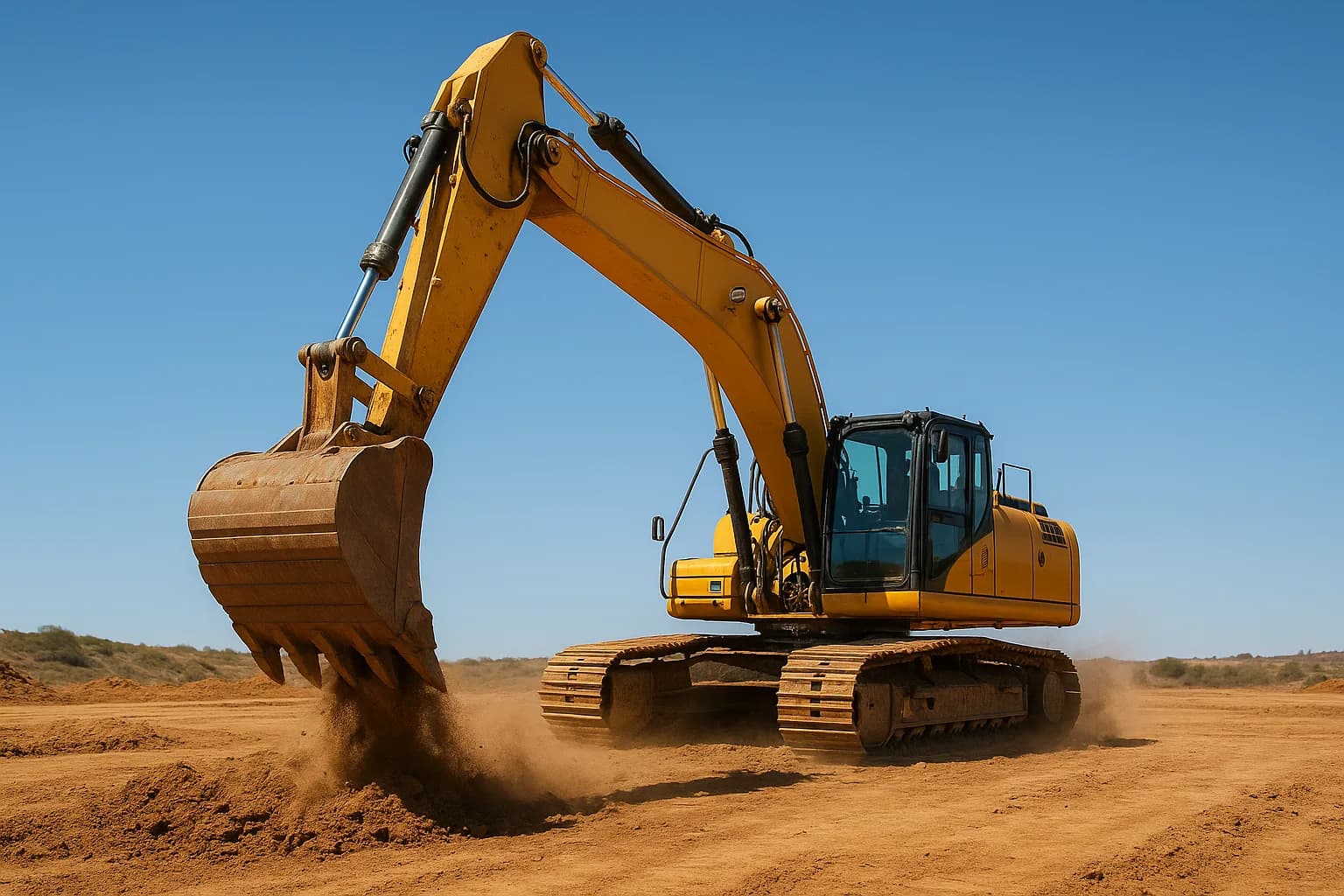
The excavator comes back from a six-month pipeline contract with a cracked slew ring, a dented cab, and a new operator who drove it for three months without a valid code. The owner submits the claim, and the insurer's response is a page of endorsements nobody read at inception. Two things happened that day: the machine broke, and the cover failed. The machine was always going to break eventually, because that is the nature of steel grinding against rock in a Limpopo riverbed for six months. The cover failing was avoidable, and it would have been avoided if anyone had understood what was driving the premium.
What is plant insurance cost?
Plant insurance cost is the premium you pay to keep your construction or mining equipment covered under a plant all risks policy, the insurance class protecting machinery such as excavators, graders, cranes, and compactors against accidental damage, theft, and breakdown while they operate on a site or travel between sites. The premium isn't a flat rate; it is a calculation based on how your specific machines, your operators, your sites, and your claims history look to an underwriter.
Key Takeaways
- The sum insured, the replacement value of the machine, is the starting point for your premium, but it rarely stays the starting point once rating adjustments apply.
- Operator experience, age, and licensing are among the most influential rating factors; an unlicensed or inexperienced operator on a high-value machine can materially increase your premium or trigger an exclusion.
- Site conditions, terrain, security, remoteness, and exposure to theft or flooding, are assessed separately from the machine's own risk profile and carry real consequence in the final rate.
- Your claims history follows the machine between insurers. A pattern of small, frequent claims signals a management problem, not a string of bad luck, and underwriters read it that way.
- Underinsurance at claim time activates the average clause: if your machine is insured for less than its replacement value, the insurer settles proportionally, and the shortfall lands on your balance sheet.
- SASRIA cover for political violence and civil unrest is separate from your plant all risks policy; the premiums are collected together but the covers operate independently.
How replacement value drives the starting rate

Every plant all risks premium begins with the sum insured, the figure representing what it would cost to replace the machine new on the day of the loss. Underwriters use this number as the base rate multiplier, so getting it right isn't a formality; it is the arithmetic foundation of every claim calculation.
The problem most contractors run into is staleness. A contractor who insured a 20-tonne excavator in 2021 at R3.2 million and renewed the same figure through 2024 may be sitting on a current replacement value closer to R4.5 million, because imported plant prices move with the rand-dollar exchange rate, and that rate hasn't been kind to contractors importing machinery. Engineering News noted in a review of plant all risks factors that inflation affects both the cost of replacement and the cost of insurance, making regular sum insured reviews essential.
When the sum insured lags the replacement value, the average clause applies at claim time. The average clause is the insurer's arithmetic correction: if your machine is insured for 70 percent of its replacement cost, the insurer treats you as having carried 30 percent of the risk yourself, and every claim pays out at 70 cents in the rand. A R900,000 repair bill on a machine insured for 70 percent of its value costs you R270,000 out of pocket, before the excess.
Replacement value vs sum insured: the gap triggering average
| Scenario | Replacement value | Sum insured | Average factor | R900 000 claim payout |
|---|---|---|---|---|
| Fully insured | R4 500 000 | R4 500 000 | None | R900 000 |
| 80% insured | R4 500 000 | R3 600 000 | 0.80 | R720 000 |
| 70% insured | R4 500 000 | R3 150 000 | 0.70 | R630 000 |
| 60% insured | R4 500 000 | R2 700 000 | 0.60 | R540 000 |
Figures are illustrative; actual claim settlement depends on policy wording and the loss adjuster's assessment.
Review the replacement value of every machine at each renewal, not the depreciated book value. Cover is there to get the machine working again, and a depreciated book value doesn't buy a new machine.
Why operator history is an underwriting signal
An underwriter reading a plant proposal form is reading it as a personnel file as much as a machine inventory. Who operates the equipment, how long they've been doing it, what training they hold, and what incidents appear in their history are all rating inputs, and some of them are exclusion triggers rather than premium adjusters.
Most plant all risks wordings carry an operator competency condition: the machine must be operated by a person holding the relevant licence or competency certificate for that class of plant. A bulldozer requires a different competency from a mobile crane, and a crawler excavator over a certain lifting capacity requires separate certification. When a claim arises and the operator on the day wasn't certificated, the insurer doesn't simply note it as an aggravating factor; the policy condition may not have been met, and the claim may not respond at all.
Beyond licensing, insurers look at the operator's experience in hours or years on that specific machine class, their incident record, and whether the contractor has a formal operator training programme in place. A contractor running a structured training register with documented hours per operator presents a materially different risk profile from one who hands keys to whoever is available on a Monday morning. The premium reflects the difference, and in a hard insurance market, where reinsurers withdraw capacity from high-loss classes and local insurers follow their lead, that difference widens.
How site conditions and operating environment affect the rate
The machine's own risk profile is only half the premium calculation. Where the machine works carries as much consequence as what the machine is, because the site determines the frequency and severity of the losses the policy is most likely to see.
Contractors operating on open-cast mining sites in the Northern Cape face a different hazard profile from those on urban road-rehabilitation contracts. Rock bursts, steep gradients, flooding in low-lying excavations, and equipment operating in close proximity to blasting operations are hazards an underwriter prices separately from the base rate. Remoteness adds a layer: a machine breaking down forty kilometres from the nearest dealer on a Mpumalanga forestry road costs significantly more to repair than an identical machine on a Gauteng highway project, because the mobilisation costs for the repairer are part of the claim.
Security exposure on site drives the theft component of the premium. Plant theft in South Africa is organised rather than opportunistic, GPS trackers have been stripped and machines walked off sites in broad daylight by operators presenting false documentation. A site with controlled access, overnight security, and a telematics requirement in place presents a lower theft risk than an unfenced site with minimal after-hours presence. Insurers may apply a theft sub-limit or a higher excess on theft claims where site security doesn't meet their minimum standard, and that condition should be read before the first machine arrives on a new site, not when the claim is submitted.
The role of claims history in premium rating
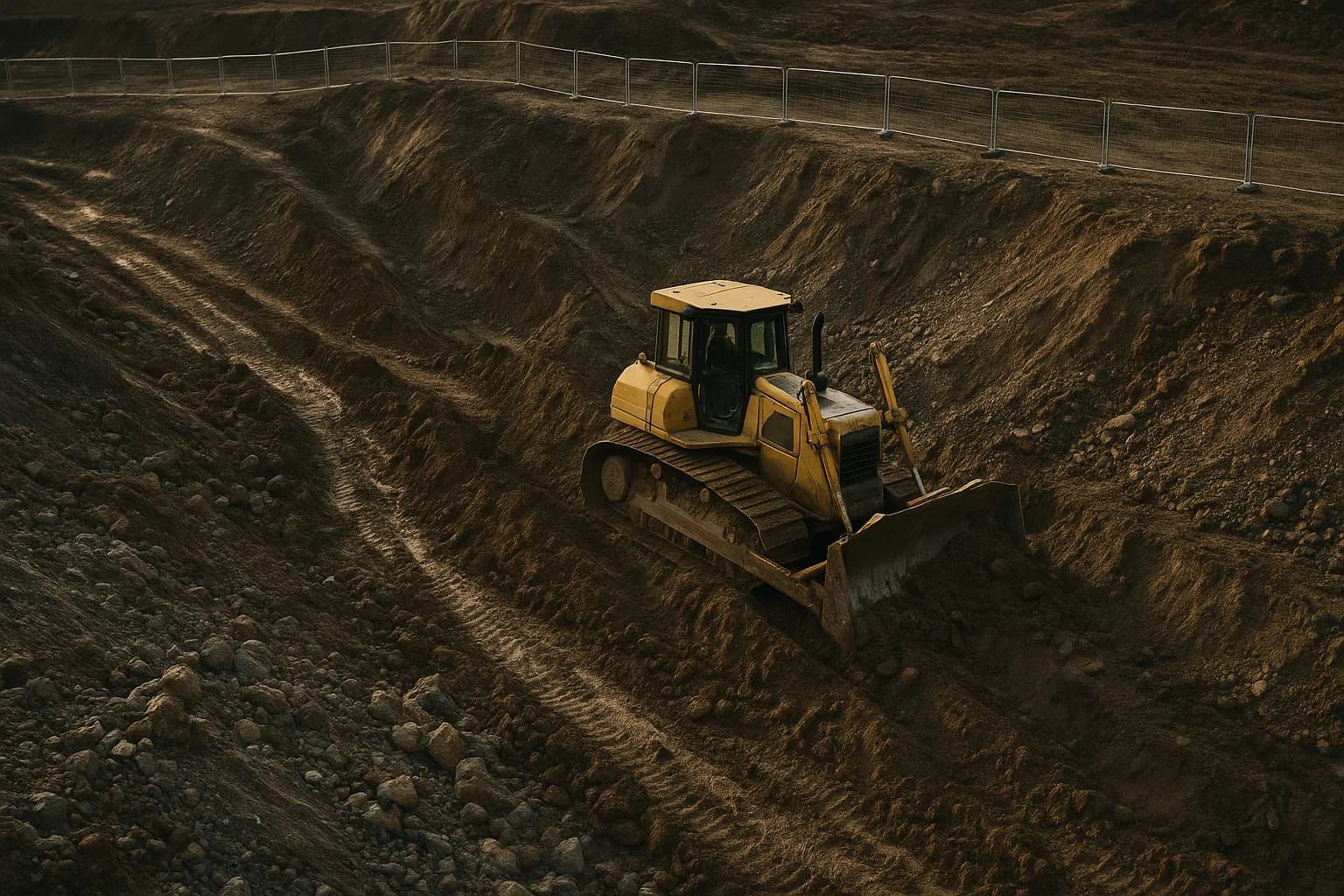
Claims history is the data set underwriters trust most, because it is the record of what has actually happened, rather than what a proposal form says might happen. A plant operator with three claims in the past five years on an R8 million fleet isn't unlucky; the pattern tells the underwriter something about how the fleet is managed, how the operators are supervised, and whether maintenance is being deferred.
The Prudential Authority's insurance sector data shows the scale of engineering and plant claims across the South African non-life market, and underwriters are acutely aware that plant and machinery remains one of the higher-loss-ratio classes. Where a contractor's claims ratio, the ratio of claims paid to premium collected, runs above the insurer's target, the renewal conversation will involve either a premium correction or a request for evidence of the root-cause investigation and the remedial steps taken.
The practical implication for contractors is that claims management is as much a premium-management tool as any other risk improvement. A claim reported late, handled without clear documentation of the event, or submitted without evidence of post-incident corrective action costs more at renewal than the same claim managed well. Some claims, particularly minor damage events below or near the excess, are worth absorbing without a formal submission, because the premium effect of a frequency pattern outlasts the single claim cost. Discuss this honestly with your broker before submitting, not after the insurer's actuaries have seen it.
How SASRIA cover is priced alongside plant all risks
SASRIA, the South African Special Risks Insurance Association, is the state-owned insurer covering damage caused by riot, strike, civil commotion, and public disorder. Standard plant all risks policies exclude these perils entirely; SASRIA is the mechanism covering them, and the SASRIA cover schedule is collected as a separate premium alongside your conventional policy rather than being embedded in it.
For contractors, this distinction carries a real consequence. A machine damaged during a community protest blocking a road access route, or destroyed in a service delivery riot on a municipal infrastructure project, falls under SASRIA rather than the plant all risks policy. The two policies need to work together; a gap between what the plant all risks policy covers and what SASRIA responds to isn't a grey area to resolve at claim time.
SASRIA premiums are set by SASRIA on a schedule basis and aren't subject to individual negotiation, but the sum insured on which the SASRIA premium is calculated must match the sum insured on the underlying policy. A contractor who has kept the plant all risks sum insured current but let the SASRIA declaration lapse at the prior year's figure is underinsured on one of the most politically exposed perils in the South African contracting environment.
Maintenance records, age, and condition as rating inputs
A machine's age and condition affect the premium in two directions. Older machines carry higher mechanical and electrical breakdown risk, and some insurers apply a maximum age threshold beyond which plant all risks cover is either unavailable or subject to a mechanical breakdown exclusion. A fifteen-year-old grader may be perfectly functional, but the insurer's actuarial data shows machines of that vintage generate more breakdown claims, and the premium or the wording reflects that.
Maintenance records work as a partial offset. A contractor who can produce a full service history, showing scheduled servicing at the manufacturer's recommended intervals, documented oil sample analysis, and a current Certificate of Fitness for equipment requiring one, is presenting evidence the machine has been managed rather than used until failure. Some insurers will adjust the rate for a well-documented maintenance programme; others will treat the documentation as a prerequisite for any mechanical breakdown extension rather than a premium credit.
The practical discipline here is the same one keeping the machine earning: keep the service register current, document every inspection, and don't defer scheduled maintenance because the machine is on a tight programme. The costs of a deferral show up in two places, the repair bill when the component fails, and the renewal premium when the claims history reflects the pattern. The contractors all risks framework reinforces this: plant and equipment cover works best when documentation supports the claim from the first day of the policy, not only when a loss has occurred.
What you know before the quote shapes what you pay

A plant all risks premium isn't issued from a machine calculating risk at a distance. It is an underwriter reading a file and deciding how much uncertainty they are being asked to carry. The file they read is the one you give them: the machine list, the sum insured, the operator register, the site description, the claims history, and the maintenance records. Every gap in that file becomes a loading in the rate or a restriction in the cover. Contractors who understand what the underwriter is looking for, and who prepare the file accordingly, consistently get broader cover at better terms than those who fill in the minimum and hope for the best.
You shouldn't have to navigate plant insurance cost calculations without knowing what is driving the number. With Mont Blanc Financial Services you won't.
Contact Mont Blanc Financial Services to have your plant schedule reviewed, your sums insured tested against current replacement values, and your renewal submission prepared so the underwriter sees the risk the way you actually manage it.
Plant insurance cost questions tend to cluster around a few themes: what the premium is based on, how to reduce it without reducing cover, and what happens when the sum insured turns out to be wrong. The answers below address the ones contractors ask most often.
Frequently Asked Questions
How can contractors reduce their plant insurance cost?
The most direct way to reduce plant insurance cost is to give the underwriter fewer reasons to load the premium. That means an up-to-date operator register with documented competency certificates, a current service history for every machine, and a written site security protocol meeting the insurer's minimum standard.
Beyond documentation, the claims ratio is the single biggest driver of renewal premiums. A contractor running below a 50 percent claims ratio, meaning claims paid are less than half the premium collected, is in a strong negotiating position at renewal. One running above 100 percent won't renew on the same terms, regardless of how good the relationship is. The practical move is to review every small claim before submitting it: if the repair cost sits near or below the excess, absorb it, document the incident internally, and present it to your broker as evidence of a near-miss management programme rather than a claim.
Sum insured accuracy also has a direct bearing on your position. Underinsurance doesn't lower your premium meaningfully, the rate applies to the declared value, but it reduces your payout at claim time. Review replacement values annually, not at the point of a loss. A broker who specialises in plant and engineering cover can run a desktop replacement cost check at renewal so the figure going to the underwriter reflects current import prices, not 2021 exchange rates.
How much does plant all risks insurance cost for a small contractor?
Plant insurance cost for a small contractor in South Africa depends heavily on the type and value of the equipment, but as a working illustration: a single tracked excavator with a replacement value of R3.5 million operating on road construction sites might attract an annual premium in the range of one to two percent of the sum insured, before rating adjustments for operator history, site conditions, and claims experience. On these figures, the base premium before adjustments falls between R35,000 and R70,000 per year.
These figures are illustrative only; actual premiums depend on the specific underwriter, the policy wording, the risk profile presented, and current market conditions. The Prudential Authority's insurance sector data reflects significant variability in engineering class loss ratios year on year, which means the market rate for plant cover isn't stable between years. Get a current quote based on your actual risk file rather than benchmarking against what a competitor paid in a different year on a different machine in a different operating environment. A broker with access to multiple engineering underwriters can run your risk file across the market and identify where the most competitive terms sit for your specific machine type and site profile.
What happens to my plant insurance cost after a large claim?
A large claim triggers a renewal review rather than an automatic increase, but the review in most cases produces a higher premium, a higher excess, or both. The insurer's actuaries look at the claims ratio for the policy over its life, the nature of the loss, and whether the circumstances suggest a systemic risk or a genuine isolated event.
A single catastrophic loss on a well-run fleet, a machine swept away in an unforeseen flood on a site with no flood history, is treated differently from a third damage claim in four years on the same machine. For the first, the insurer may apply a modest loading and continue; for the second, the insurer may decline to renew, impose a mechanical breakdown exclusion, or require a higher excess on that specific unit.
The move after a large claim isn't to wait for the renewal letter. Engage your broker immediately after the incident, before the claim is settled, to prepare the narrative: what happened, why it wasn't preventable, and what has changed since. An insurer receiving that narrative before the next renewal cycle has context; one receiving only the claims data doesn't. Where the loss was genuinely unforeseeable and the fleet is otherwise well managed, that narrative can be the difference between a modest loading and a non-renewal.

Nicola Iozzo
Founder & CEO, Mont Blanc Financial Services
Nicola has spent his career reading the policy wording most people skip, and writes here so you don't discover at claim stage what page 14 meant.
Everything on this blog is written to inform and educate. It is for information only. Nothing here is professional legal, financial, or technical advice. If you are making a significant business decision, speak to a qualified professional first. Mont Blanc Financial Services works hard to keep this content accurate and current, but is not liable for decisions made based on what you read here.
Mont Blanc Financial Services (PTY) Ltd. is an authorised financial services provider. FSP 8271