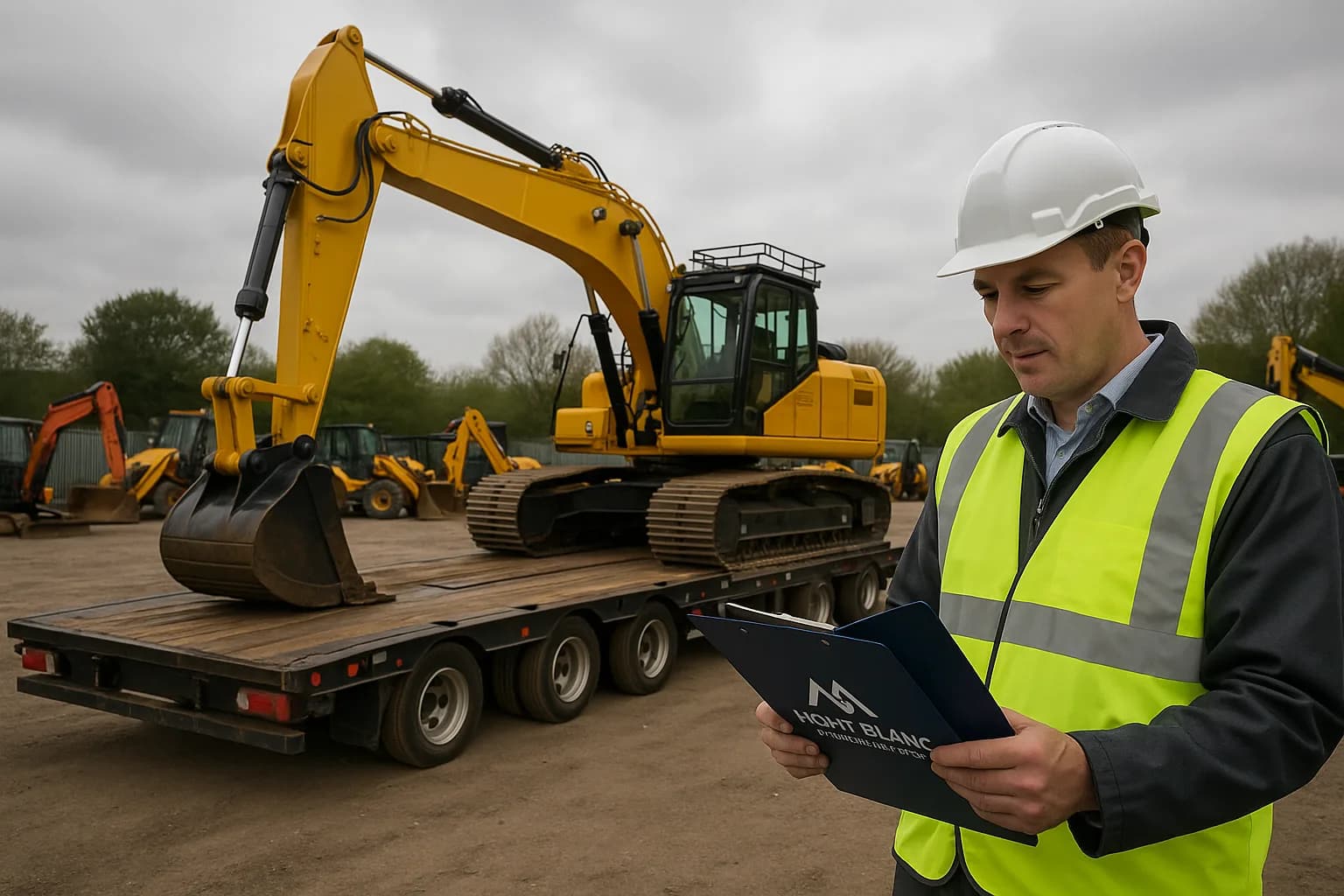
Contractors all risk insurance: what projects need covered
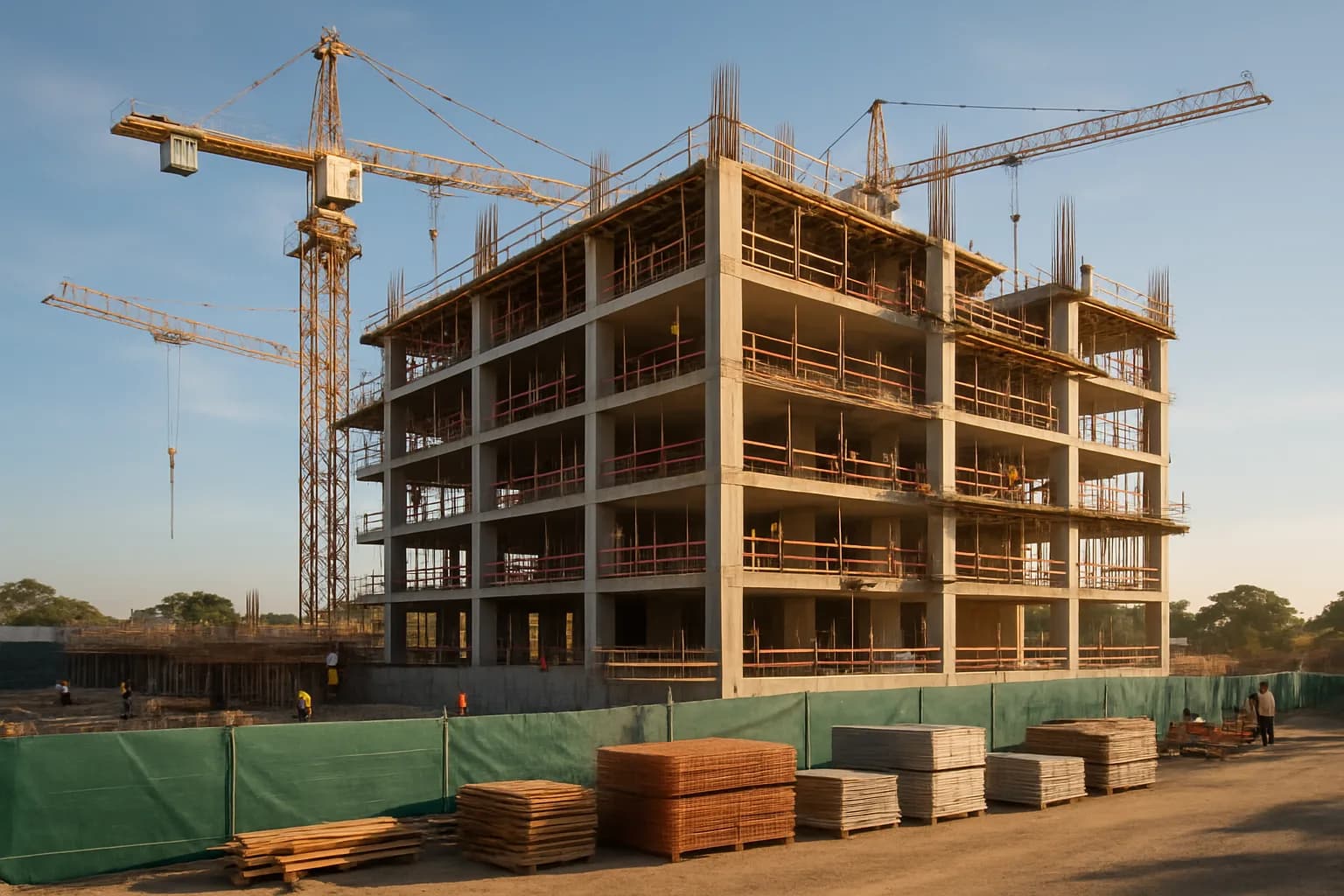
The bricklayer cracks the corner column on day forty-three of a sixty-day build. The developer's contract says the contractor carries responsibility for the works. The contractor's broker said something encouraging about cover when the policy was placed, but nobody put the policy schedule next to the contract to see whether the two documents agreed. When the repair quote lands, three parties spend two weeks pointing at each other across a site meeting table. The damage costs R180,000 to fix. The delay costs more, and the bill for who pays it isn't settled by good intentions.
What is contractors all risk insurance?
Contractors all risk insurance, often written as CAR, is a construction-specific policy covering physical loss or damage to a project under construction and the third-party liability arising from the build. It runs from the first day materials arrive on site to the day the completed works are handed over, protecting the contractor, the developer, and any subcontractors named on it against the financial consequences of things going wrong during that window.
Key Takeaways
- Contractors all risk insurance covers two separate sections: the contract works (the physical build) and third-party liability arising from construction activity.
- The policy runs from commencement to practical completion; it doesn't protect the finished building once ownership transfers unless a maintenance period extension is added.
- Subcontractors must be named or described on the policy. An unnamed subcontractor working on your site may be an uninsured third party from the insurer's point of view.
- The sum insured for the contract works should equal the full contract value, including materials, labour, and preliminaries, not the developer's purchase price or the land value.
- South African law doesn't mandate contractors all risk cover, but virtually every significant construction contract, bank funding agreement, and NHBRC-registered build requires it before work begins.
What the contract works section actually covers

The contract works section pays for sudden and accidental physical damage to the structure being built, covering materials incorporated into the works, materials on site waiting to be installed, and in many policies temporary works such as formwork and scaffolding.
What "sudden and accidental" means in practice is that the event must be unintended and happen at a specific point in time: a storm, a fire, a foundation collapse, a vehicle striking a perimeter hoarding. Gradual deterioration, poor workmanship building up over months, and inherent defects in design fall outside this definition in the standard wording. The South African construction market saw significant storm damage claims during the 2022 KwaZulu-Natal floods, and many contractors discovered their contract works sections paid for storm damage to completed floors but excluded the cost of repairing subgrade drainage failing progressively over weeks. The distinction between a sudden event and gradual failure is where most disputed contract works claims begin.
Theft from site is covered under most South African CAR policies, though insurers apply close scrutiny to security arrangements. A site without perimeter fencing, lighting, and a night guard will often see a theft claim reduced or declined on the basis that reasonable precautions weren't in place. The policy schedule should describe the security measures and match what the site has.
How third-party liability sits inside a CAR policy
The third-party liability section of contractors all risk insurance covers bodily injury and property damage caused to people who aren't parties to the contract, arising from the construction activity.
A pedestrian falls into an unmarked excavation on a Johannesburg street. A vibrating compactor cracks the foundation of a neighbouring building. Dust and debris from a demolition contaminate a shopfront two properties away. These are the claims the liability section is designed to respond to, and the limits in South Africa typically run from R2 million to R10 million per event depending on project size, with major infrastructure projects requiring limits well above that.
What the liability section doesn't cover is damage to the contract works, which sits in the first section, and liability arising from the use of motor vehicles, which belongs under a separate motor or hired plant policy. A concrete pump truck reversing over a neighbour's wall is a motor liability event. The same pump truck's boom striking an adjacent building while stationary on a pour is a CAR liability event. The line between the two carries real consequences, because the wrong section, or no section at all, leaves the claim unrouted.
Subcontractors, developers, and who the policy names
A CAR policy names the principal insured, usually the main contractor or the developer, and extends cover to other parties as additional insureds. Subcontractors aren't automatically covered simply because they are working on the same site.
The standard South African approach is for the main contractor to arrange a single project-wide CAR policy naming the developer as co-insured and describing subcontractors as a class ("all subcontractors and sub-subcontractors engaged in the project"). This arrangement avoids the gap where a subcontractor's own tools and labour are covered but the damage they cause to the contract works is argued to be an internal matter between insured parties. Where a project proceeds under the JBCC Principal Building Agreement, the principal agent's instructions on insurance are contractual, and the policy must match those instructions or the contractor is in breach before a single brick is laid.
Developers funding a build through a construction loan will find their bank requires to be noted as an interested party on the policy. The bank is protecting its security: if the works are destroyed at frame stage, the bank needs to know the proceeds will rebuild the project rather than settle a contractor's unrelated debt.
Parties typically named or described on a South African CAR policy
| Party | Role on policy | Key interest protected |
|---|---|---|
| Main contractor | Named insured | Contract works, own liability |
| Developer / employer | Co-insured or additional insured | Contract works value, funding |
| Subcontractors | Described class | Liability for works damage |
| Financier / bank | Noted interest party | Security over the completed works |
| Professional team | Sometimes added by endorsement | Limited cover for errors in supervision |
The periods a CAR policy must cover
A CAR policy is time-limited, and the dates on the schedule must match the contract programme or cover falls short.
The construction period runs from the commencement date, often defined as when materials first arrive on site, to the date of practical completion. Practical completion is the point at which the employer formally accepts the works as substantially finished. In South African JBCC contracts, practical completion triggers a number of contractual mechanisms including the start of the defects liability period, and the CAR insurer must be notified of it because the first section's cover over the works changes from that point.
The maintenance period extension, sometimes called the defects liability extension, covers damage the contractor causes while returning to site after handover to fix snags. Without it, a contractor repairing a leaking window seal three months after handover is working on a building outside the CAR policy's protection and inside the building owner's property policy, and their liability for damage caused during the repair may fall into a gap between both policies.
The FSCA's policyholder protection guidance%20-%20Amendment%202022.pdf) requires that policy periods be stated clearly and that the insured is informed of any automatic expiry. CAR policies in South Africa don't automatically renew: when the project ends, the policy ends, and a contractor moving immediately to a new project without placing fresh cover starts that project exposed.
Exclusions common in South African CAR policies

South African CAR wordings contain a set of exclusions producing surprises at claim stage repeatedly, and knowing them before the project starts is considerably cheaper than discovering them after.
Design defect exclusions are standard. The policy pays for the physical damage caused by a defect, but not for the cost of correcting the defective design. A roof collapsing because the engineer undersized a beam generates a claim for the collapsed structure, but the cost of redesigning and re-engineering the beam sits outside the policy. This is the DE3 exclusion in international CAR wording, and the South African market follows the same principle. Some policies offer a "resultant damage" extension, paying for physical damage to otherwise sound parts of the structure caused by the defective element, a useful addition for any project with bespoke structural engineering.
Wear, tear, and gradual process are universally excluded. A timber frame rotting because waterproofing was inadequate for eighteen months doesn't generate a valid contract works claim. The damage occurred progressively rather than as a sudden event.
War, riot, and political violence sit outside the standard CAR wording, as they do across all short-term insurance classes in South Africa. SASRIA, the state-backed insurer covering riot and strike damage, must be purchased separately and endorsed onto the main policy. For a construction project in a high-density urban area, SASRIA cover for the contract works isn't a theoretical concern: the July 2021 unrest destroyed and looted commercial property under construction in KwaZulu-Natal and Gauteng alongside completed buildings, and projects without SASRIA endorsement had no cover for that damage class.
The SASRIA standard cover schedule describes exactly which event types and property classes it covers. A CAR policy plus SASRIA is the minimum combination for any project with meaningful exposure.
How the sum insured is set and why it counts
Setting the contract works sum insured incorrectly is the underinsurance problem dressed in construction clothing, and it produces the same outcome: a claim paying out less than the loss.
The sum insured on a CAR policy must equal the full reinstatement value of the contract works at completion, including materials, labour, professional fees, and the contractor's preliminaries (the overhead costs of running the site). It isn't the developer's land-plus-build budget, it isn't the sale price of the finished units, and it isn't a rounded number someone wrote down in a hurry to get the policy issued.
The consequence of setting it too low is the application of average, the same mechanism shortchanging property owners who underinsure their buildings. If you insure a R20 million project for R14 million and a storm causes R5 million in damage, the insurer treats you as having self-insured the unrecognised R6 million. The claim settles at R3.5 million, and the shortfall comes out of your contingency. The SAIA technical guidance on contract works valuation confirms the sum insured should reflect the full replacement cost of the works at the end of the construction period, updated as the project value changes.
For large or phased projects, the sum insured should be reviewed as each phase reaches substantial completion, because the value at risk increases as work progresses. An insurer's assessor looking at a stage-three claim on a five-stage development will check whether the sum insured kept pace with the build.
When cover must be in place before work starts
The question of when to place contractors all risk insurance has a short answer: before the first spade goes in, and in most cases before the contract is signed.
Most JBCC contracts and NEC construction contracts in South Africa require the contractor to provide proof of insurance before commencement. A developer allowing work to begin without confirming cover has created a gap in their own protection, because during the period between commencement and policy inception, the uninsured works are the developer's problem. If the contractor has no cover and the developer has no project-specific policy, both parties are exposed and the construction loan covenants may be breached.
The CIPC-registered company carrying out the works doesn't inherit cover automatically through its general commercial policy. A standard commercial combined policy covers the business's own property at its registered premises. It doesn't extend to works-in-progress on a third-party site, which is exactly what a construction project is. The Companies Act obligations a contractor carries as a CIPC-registered entity don't create insurance cover; they create the legal exposure the insurance is meant to respond to.
Placing the policy correctly, with the right parties, the right sum insured, and the right period, takes one conversation with a specialist broker. Discovering the policy was wrong takes a site incident, an assessor, and a claim settling at the wrong number.
What every finished project leaves behind

Every construction project starts with a programme saying it will finish on time and a budget saying it will finish on cost. Experienced builders know the programme is a plan, not a promise, and the budget is a target, not a guarantee. The insurance exists for the distance between where you intended to land and where you actually do. A contractors all risk policy structured properly before work begins doesn't change the programme or the budget. It removes the financial consequences of the gap from your list of things to survive.
You shouldn't have to discover what your CAR policy excludes by reading it across a site meeting table while a repair quote sits on the agenda. With Mont Blanc Financial Services you won't.
Contact Mont Blanc Financial Services to have your project's insurance reviewed before commencement, so the cover matches the contract and the claim, if it comes, settles at the right number.
Construction projects carry enough moving parts without the insurance adding its own surprises. The questions below come up regularly from contractors and developers, and the answers are worth having before the ground breaks.
Frequently Asked Questions
Does contractors all risk insurance cover my plant and equipment on site?
Plant and equipment, including the excavators, cranes, generators, and compressors a contractor brings to site, falls under a separate cover class called plant all risks insurance, not the contract works section of a CAR policy. The contract works section covers what is being built: the structure, the incorporated materials, and the temporary works attached to the project. Owned or hired plant moves between projects, has its own replacement value, and carries its own mechanical and theft exposure, none of which the contract works section is designed to absorb.
A sound construction insurance programme combines contractors all risk cover for the works with plant all risks cover for the equipment, and with hired plant liability cover where machinery is brought in from a rental company. The rental agreement for hired plant tends to require the hirer to insure the machine; that obligation sits in the plant policy, not the CAR policy. Running a project without both in place means a breakdown or theft of site equipment becomes an out-of-pocket cost at exactly the moment the programme is already under pressure. Your broker should confirm both covers are active before plant moves onto the site for the first time, because a gap in either policy discovered at claim stage is considerably harder to resolve than one caught at placement.
Can the developer and contractor share a contractors all risk policy?
Yes, and in most South African construction contracts, they should. A single project-wide CAR policy naming both the developer and the main contractor as co-insureds eliminates the coverage disputes arising when each party holds a separate policy and a claim occurs at the intersection of their responsibilities. When the two policies are separate, each insurer looks to the other's policy first, and the project waits while they correspond.
The JBCC Principal Building Agreement specifically contemplates a jointly held contract works policy, and most quantity surveyors recommend this structure for projects above a certain value. The developer carries an interest in the works from the day the contract is signed; their financier carries an interest too. A single policy noting all of them ensures a loss to the works, regardless of which party caused it, is routed to one insurer with one set of terms and one claims process. Your broker should draft the policy schedule to name the developer, the main contractor, and the financier explicitly, and to describe subcontractors as a class, so no party at the table finds out at claim stage they were never on the policy to begin with.
What happens to the contractors all risk policy when the project overruns?
If the construction period on the policy expires before practical completion, the contract works section lapses. Any damage occurring after the policy period ends is uninsured, even if the project is still in progress and the contractor is still on site. This is one of the most common sources of uninsured loss on South African construction projects, because programmes slip and policy renewal on a construction project isn't automatic.
The correct procedure when a project overruns is to notify the insurer before the expiry date and request an extension of the construction period, usually for an additional premium calculated on the extended time at risk. Insurers will generally agree to this where the project is proceeding normally and no claim is in progress. Requesting the extension after the expiry date, or after a loss has occurred, is a different position entirely. The FSCA's short-term insurance conduct standards place obligations on insurers to act fairly in claims handling, but a policy expired before the loss occurred is a policy without force, and no conduct standard changes that. Build an extension request into your programme review process whenever a delay becomes apparent, and notify your broker before the expiry date, not after.
Is SASRIA cover automatically included in a contractors all risk policy?
No. SASRIA cover isn't automatically included in a standard CAR policy. In South Africa, cover for damage caused by riot, strike, public disorder, civil commotion, and related political violence is underwritten exclusively by SASRIA, the South African Special Risks Insurance Association, not by the commercial insurer writing the CAR policy. SASRIA cover must be purchased as a separate product and linked to the underlying policy.
The commercial insurer collects the SASRIA premium on SASRIA's behalf and issues a SASRIA endorsement alongside the main policy document. If the SASRIA premium hasn't been paid and the SASRIA endorsement hasn't been issued, the cover doesn't exist, regardless of what any broker said verbally. For projects in urban areas, near informal settlements, or in regions with a history of service delivery protests, the absence of SASRIA cover is a material gap. Ask your broker to confirm the SASRIA endorsement number appears on your policy schedule before work begins, because the July 2021 unrest showed clearly the exposure is real: construction projects in KwaZulu-Natal and Gauteng suffered losses in that category that only SASRIA-endorsed policies could respond to.

Nicola Iozzo
Founder & CEO, Mont Blanc Financial Services
Nicola has spent his career reading the policy wording most people skip, and writes here so you don't discover at claim stage what page 14 meant.
Everything on this blog is written to inform and educate. It is for information only. Nothing here is professional legal, financial, or technical advice. If you are making a significant business decision, speak to a qualified professional first. Mont Blanc Financial Services works hard to keep this content accurate and current, but is not liable for decisions made based on what you read here.
Mont Blanc Financial Services (PTY) Ltd. is an authorised financial services provider. FSP 8271