Contractors Insurance in South Africa
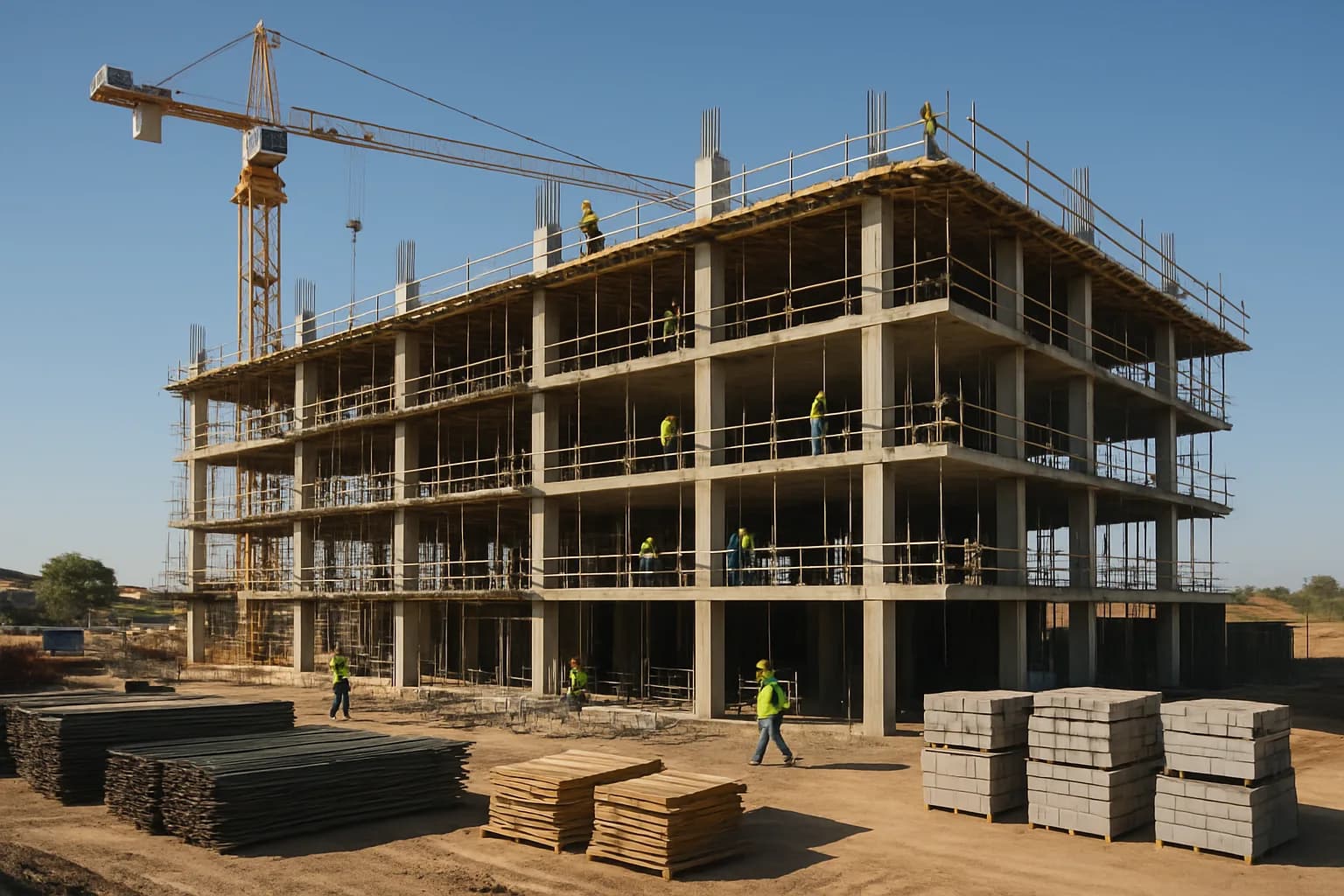
A half-built warehouse outside Brackenfell burns on a Tuesday night. By Wednesday morning three companies are on the phone: the owner, the builder, and the scaffolding firm, each certain one of the other two is paying. The policy meant to answer the question sits in a lever-arch file, unread since the day the contract was signed. Construction risk works like this: everyone assumes cover exists until the morning it has to perform.
What is contractors insurance?

Contractors insurance is the family of policies protecting a building or engineering project while it is being built: the works, the materials, the plant, and the people around them. The core policy is Contractors All Risk, with liability, plant, and specialist covers arranged around it to match the contract you've signed.
Key Takeaways
- One policy seldom does the whole job. The works, the plant, public liability, and professional risk each need their own cover, arranged so the pieces meet without gaps.
- The building contract decides who insures what. Under the JBCC agreements your policy must mirror the contract data, not the other way round.
- An uninsured subcontractor's loss climbs to whoever on site carries the widest policy, so their cover is your business.
- Cover doesn't end when the building is handed over. The defects liability period and delayed project revenue carry risks of their own.
- A policy lapsing between projects leaves the next contract exposed from its first morning.
Contractors All Risk cover explained
Contractors All Risk, CAR in the trade's shorthand, is the policy carrying a project while it exists as neither land nor building. It covers the half-poured slab, the stacked bricks, the works in progress no buildings policy recognises yet. A completed warehouse sits on the owner's property policy, but a warehouse at 60 percent sits on nobody's. The CAR policy insures your contract works and the materials on site against fire, storm, theft, and collapse for the life of the build. The name promises more than any wording delivers. "All Risk" is the industry's most optimistic phrase, and the exclusions begin on the next page. Defective design, wear and tear, and losses after handover sit outside standard cover unless an extension brings them in. What a CAR policy excludes decides more claims than what it covers, so the exclusions deserve the first read, not the last. The reading belongs before you sign the contract, not after the loss adjuster arrives.
Contract works insurance and JBCC requirements
The building contract decides what contract works insurance you carry; the insurer only prices it. Most formal South African projects run on the agreements of the Joint Building Contracts Committee, the standard contracts the industry signs and seldom reads twice. The committee's JBCC quick guide sets out the suite, from the Principal Building Agreement down to the Minor Works Agreement. Those agreements require the works to be insured and name whether the employer or the contractor arranges the policy. They expect proof of cover before work starts on site. On alterations to an existing building, the employer commonly insures, because the existing structure and the new works share one roof and would share one fire. A policy schedule contradicting the contract data is a breach of contract before it becomes an insurance problem. When the two documents disagree, the claim lands in the space between them, and neither the insurer nor the employer is in a hurry to occupy it.
Principal-controlled and contractor-controlled policies
One project can be insured from either end: the employer buys a single policy covering every party on site, or each contractor arrives carrying its own. A principal-controlled policy puts the developer in charge of one wording naming the contractor and subcontractors. It removes the uninsured-subbie problem, but leaves each builder relying on cover they haven't read. A contractor-controlled site multiplies policies instead, and where two insurers overlap on one loss, they argue like heirs at a will reading. The table below shows where each arrangement carries its risk.
Two ways to arrange one project's cover.
| Question | Principal-Controlled | Contractor-Controlled |
|---|---|---|
| Who buys the policy | The employer or developer | Each contractor buys its own |
| Who controls the claim | The principal and its broker | The contractor named on the policy |
| Common gap | Contractors assume wider cover than exists | Overlaps and disputes between insurers |
| Where it fits | Large projects with many parties | Smaller contracts and annual programmes |
Whichever end insures, you must confirm the other end isn't assuming the same thing. A risk both sides believe the other covers is a risk nobody does.
Subcontractor risk and uninsured subbies
An uninsured subcontractor doesn't shrink the site's risk; it moves the risk to whoever still has cover. A plumber's torch starts a ceiling fire; his liability policy lapsed two renewals ago. The claim climbs to the main contractor's insurer, which pays and then pursues a company with nothing to recover. The exposure is growing because the industry is fragmenting: Stats SA's construction industry figures show the largest 100 firms earned 40,0% of industry income in 2014 and 26,7% by 2024. Small and micro firms carried 55,3% of construction jobs in 2024. More of each project now passes through small firms, and small firms are where premiums get skipped in a lean month. Checking a subbie's policy before they start costs you a phone call and a certificate. Discovering the lapse afterwards costs the claim, plus the years of correspondence explaining it.
Plant, tools, and equipment on site
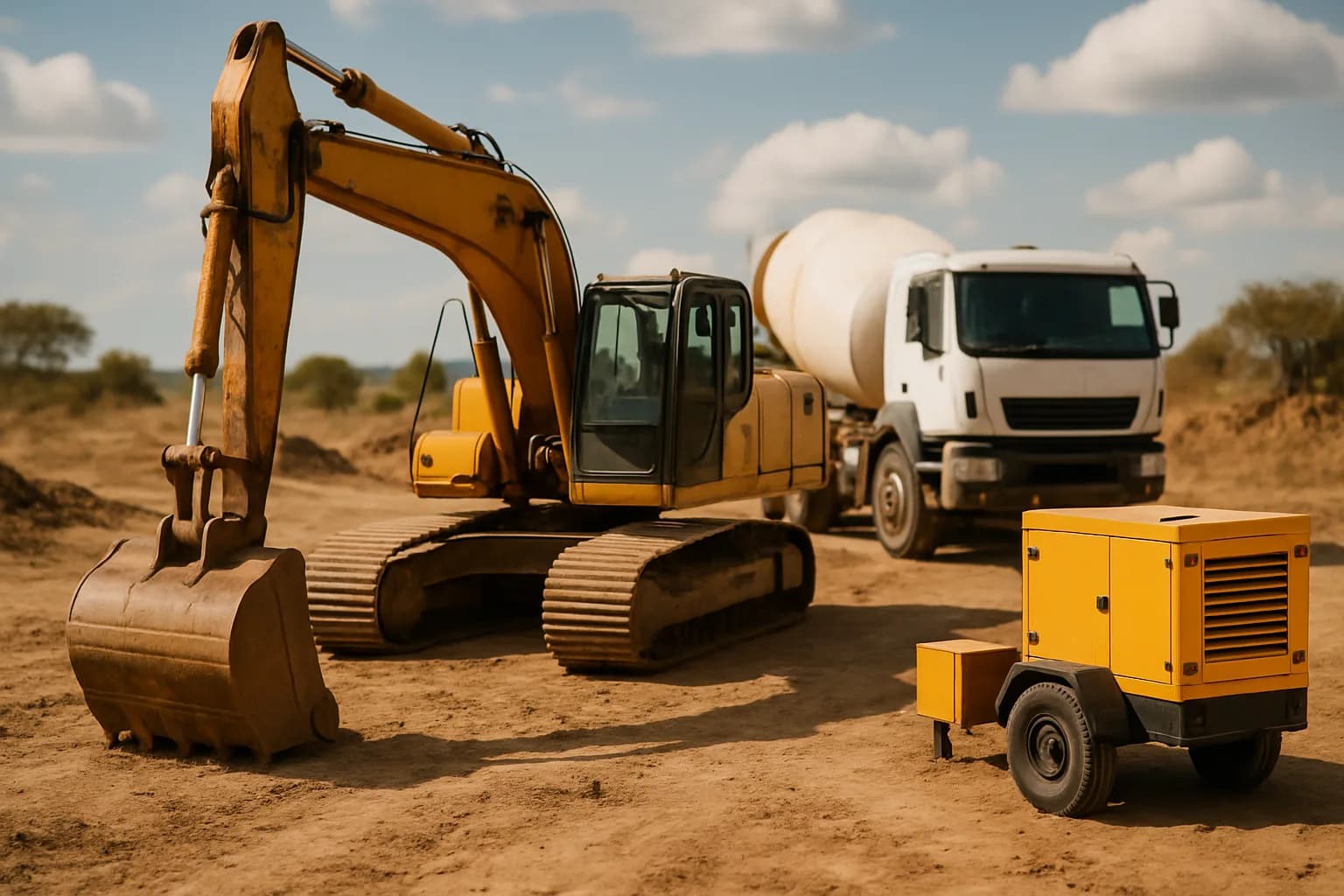
The CAR policy insures the thing being built; your machinery needs insuring separately. Plant All Risk covers the owned fleet, the excavators, mixers, and tower cranes, against damage and theft on site and in transit between sites. Hired-in plant is different: under most hire agreements the machine becomes your responsibility from the moment it arrives, insured or not. A hired crane toppling in an August wind is your account unless your policy says otherwise. Hand tools have their own arithmetic, since they leave a site in one of two ways: in the bakkie they arrived in, or in someone else's. Plant standing idle between contracts still burns, still floods, and still attracts attention. The cover has to follow the machine to wherever it sleeps. A plant schedule reconciled against the yard once a year keeps the sums insured honest and the claims arguable in your favour.
Public liability on construction sites

The largest liability claims on construction sites tend to come from people who never set foot on them. A brick leaves the third floor and finds a parked car. A pedestrian finds an unbarricaded trench, and a month of piling cracks the neighbour's boundary wall. None of these claimants signed your indemnity forms. The Construction Regulations under the Occupational Health and Safety Act place duties on clients, designers, and contractors to manage the risks a site creates. A breach of those duties makes the resulting liability claim harder to defend. Public liability cover pays the compensation and the legal costs when your site injures a third party or damages their property. The limit should be sized to the surroundings rather than the contract value. A R5 million limit reads one way beside an empty plot and another way beside a shopping centre.
Professional indemnity for design and build work
Contractors All Risk pays for damage you can point at; professional indemnity pays for decisions. Professional indemnity is the cover responding when a client alleges your design, specification, or advice caused their loss, and it exists because design, unlike brickwork, shows its cracks later. A design-and-build contractor carries both exposures in one signature. A raft foundation specified too thin produces cracking two years after handover. The CAR policy has long expired, and it excluded design defects anyway, so the claim now stands against the drawing rather than the damage. Without professional indemnity, the contractor defends a design claim from its own pocket, and design claims are priced in professional fees, delay, and demolition rather than bricks. If your contracts include any design responsibility, a CAR policy on its own covers half of what you signed. The other half needs its own policy, with a limit chosen for the projects you design, not the ones you merely build.
Cover during the defects liability period
Your obligations outlive practical completion, the formal handover of the finished building, and your cover has to match them. The defects liability period is the stretch after handover, commonly three to twelve months, when you must return and make good the defects the building reveals as it gets used. The building is handed over with photographs and a ribbon; the obligations stay behind. A standard CAR policy can extend into this period, covering damage you cause while remedying defects and, depending on the wording, damage from causes arising during the original construction. Without the extension, the geyser your team installed in month four fails in month fourteen and floods two floors. The claim lands on a policy no longer in force. The date to check is the policy's expiry against the contract's defects period, not against the handover party. Cover ending at practical completion protects the build; cover ending after the defects period protects the builder.
Delay in start-up cover
On a large project the most expensive loss is usually time. Delay in start-up cover, also sold as advance loss of profits, pays the principal's lost income and continuing costs when insured damage pushes out the completion date. A fire in month ten of a shopping centre build is repaired by the CAR policy. The six months of lost rental and the loan interest running through the delay are repaired by nothing. The exception is delay cover bought before the first brick. The timing rule is unforgiving: you arrange this cover at the start of the project and price it on the revenue at stake. It can't be added once the works, or the trouble, are underway. Developers financing a project on projected income feel the delay harder than the damage, because the bank's repayment schedule shows no interest in site conditions. A project with committed tenants and committed debt has more to lose from the calendar than from the fire.
Annual contractors insurance or project-specific cover
Contractors insurance comes in two shapes: an annual policy covering every contract you take on, and a project policy living and dying with one site. An annual contract works policy runs on declared turnover and covers each new job as it starts. A project-specific policy is matched to one contract's value and duration, then dies at practical completion like a wedding suit going back into its cupboard. Riot and unrest damage sits separately with SASRIA, the state-owned special-risk insurer whose cover rides on your underlying policy through a coupon. Under SASRIA's construction risk regulations a coupon issued for a specific contract runs from inception until completion. The cover goes up to R500 million on any one contract. The gap lives between projects: an annual policy keeps your plant and liability covered while you price the next tender, but a lapsed project policy covers nothing at all. The wrong shape either doubles your premiums or leaves day one uninsured.
Contractors all risk insurance: the cover that holds a project together
Contractors all risk insurance is the single policy most lenders, employers, and principal agents will ask for before a shovel breaks ground. It bundles physical loss or damage to the contract works with third-party liability into one document, so there's no gap between the two covers when collapsed formwork injures a bystander and damages the partially completed structure simultaneously. The Joint Building Contracts Committee's suite of contracts makes this expectation explicit, and most bank-financed developments require evidence of cover before the first drawdown is released.
What you stand to lose without it isn't only the reinstatement cost of damaged works; it's the entire project timeline, your retention, and your relationship with the principal. The insurance industry, to its credit, has designed a policy elegant enough to cover all of that in one document and complicated enough to void it on a clerical error. The policy wording, the declared contract value, and the list of insured parties must all match the contract documents precisely, because a mismatch is the administrative oversight voiding a claim at the worst possible moment. Our guide to contractors all risk insurance walks through what projects need covered and where the common gaps appear.
Public liability risks that can stop a project cold
A single third-party injury or property damage claim can exceed the value of the contract itself, and that is the exposure most contractors underestimate until it arrives. SAIA data consistently shows liability claims as a leading driver of construction-sector losses, and civil litigation in South Africa carries no cap on general damages, meaning a judge, not your budget, sets the ceiling. A contractor without adequate public liability cover isn't self-insuring; they're gambling the whole business on nothing going wrong on any given Tuesday.
Contractor public liability cover responds when your operations injure a third party or damage property belonging to someone outside the contract, covering legal defence costs as well as any award made against you. The scope, the exclusions, and the minimum limits your principal will accept before signing your appointment letter all deserve closer attention than they usually get. Our dedicated guide to public liability insurance for contractors in South Africa walks through how the cover works, what it won't pay for, and how to set a limit you can defend.
When design meets construction, indemnity gaps get expensive
Contractors who both design and build carry a liability exposure most standard policies don't touch. A Contractors All Risk policy responds to physical damage and third-party injury; it goes quiet the moment a client alleges your design specification caused a structural failure or an engineer's calculation produced a defective slab. Those two worlds, physical risk and professional error, need separate cover, and conflating them is a mistake the industry makes with impressive consistency.
The FSCA's conduct standards require financial products sold to clients to match their actual risk profile, which puts the burden squarely on advisers and contractors alike to identify gaps before a claim surfaces rather than during one. A design-and-build contractor without contractor's professional indemnity insurance is, in effect, self-insuring against allegations of negligent professional advice, and construction litigation isn't cheap enough to treat that as a strategy.
If your scope includes any element of design, specification, or technical advice, our article on professional indemnity insurance for contractors sets out precisely what cover you need, what exclusions apply, and how limits should be structured.
Contractor professional indemnity: where design liability begins
When a contractor takes on design responsibility, even partly, the risk profile of the project shifts in ways a standard Contractors All Risk policy won't cover. CAR cover responds to physical loss or damage; it has nothing to say about a negligent specification, a miscalculated load, or a drainage design turning a basement into a swimming pool six months after handover. Professional indemnity steps in precisely here, covering third-party claims arising from errors, omissions, or negligent advice in the contractor's professional work. The Construction Industry Development Board notes that design-and-build procurement has grown steadily in South Africa, which means more contractors are carrying design liability without recognising it on their insurance schedules. If a claim surfaces during the defects liability period and the root cause is a design fault rather than a workmanship fault, the financial exposure lands squarely on the party holding the design obligation. That gap between what a contractor assumes is covered and what the policy addresses is where significant losses originate. Our detailed guide on contractor professional indemnity insurance explains how the cover is structured, what triggers a valid claim, and where the common gaps appear.
Subcontractor insurance: why uninsured subbies become your liability
Bringing a subcontractor on site doesn't transfer your liability to them automatically. Under South African construction practice, the principal contractor remains answerable to the employer for all work performed on the project, including work done by parties you engage directly. If a subcontractor causes bodily injury to a third party or damages adjoining property, and the subcontractor carries no public liability cover, the claim lands on your policy first. The SAIA construction insurance guidelines recognise this exposure explicitly, noting the frequency with which uninsured subcontractors generate claims against principal contractor policies. The financial consequence is straightforward: your premium history takes the hit, your excess applies, and your insurer may recover what it can from a subcontractor with nothing worth pursuing. Vetting subcontractor insurance certificates before work begins, and specifying minimum indemnity limits in your subcontract agreements, closes most of this gap. Our dedicated guide on subcontractor insurance in South Africa walks through the cover options, contractual wording, and common exclusions you need to understand before signing anyone on.
Frequently Asked Questions
Who must insure the works under a JBCC contract?
The contract decides, and the JBCC agreements name whether the employer or the contractor arranges the policy. Most formal South African building projects run on these standard agreements, from the Principal Building Agreement down to the Minor Works Agreement. They require the works to be insured and expect proof of cover before work starts on site. On alterations to an existing building, the employer commonly insures, because the old structure and the new works share one roof. Your policy schedule has to mirror the contract data. When the two documents disagree, the claim lands in the space between them, and nobody hurries to pay it.
Does contractors all risk insurance cover design defects?
No, defective design sits outside standard contractors all risk cover. CAR pays for physical damage to the works, such as fire, storm, theft or collapse during the build. A claim that your design, specification or advice caused a loss needs professional indemnity insurance. Picture a raft foundation specified too thin, which cracks two years after handover. The CAR policy has expired by then, and it excluded design anyway. If any of your contracts include design responsibility, CAR on its own covers half of what you signed. The other half needs a professional indemnity policy, with a limit chosen for the projects you design.
Am I liable if my subcontractor doesn’t have insurance?
In most cases, yes, because an uninsured subcontractor moves the risk to whoever on site still has cover. The principal contractor stays answerable to the employer for work done by the firms it engages. If a plumber’s torch starts a ceiling fire and the plumber’s liability policy has lapsed, the claim climbs to the main contractor’s insurer. Your excess applies, your claims history takes the hit, and the insurer may chase a firm with nothing to recover. Check each subcontractor’s insurance certificate before they start, and set minimum indemnity limits in the subcontract. It costs a phone call and saves years of letters.
Does contractors all risk insurance cover hired plant?
Not as a rule, since CAR insures the thing being built and your machinery needs its own cover. Under most hire agreements, a hired-in machine becomes your responsibility from the moment it arrives on site, insured or not. A hired crane that topples in an August wind is your account unless your policy says otherwise. Plant all risks covers owned machines against damage and theft on site and in transit between sites. Read the hire agreement before signing. Then confirm your plant policy names hired-in machines as well as the ones you own.
The paperwork outlasts the scaffolding
Scaffolding comes down in a day. The questions about who carried which risk arrive years later, in letters with reference numbers. By then the site huts are gone and your foreman has moved provinces. What answers those letters isn't memory; it's the wording agreed before the first delivery reached the gate. We admit to asking too many questions at the start of a project, about subbies, about hired cranes, about the neighbour's wall. It's an old habit, and it's cheaper than the alternative. The penance, as ever, is paperwork.
One contract is a fragment of the whole risk, which the broader business insurance picture sets in context.
The excavator on hire is somebody's asset, and plant insurance decides who carries it on the day it tips.
Site machinery breaks in creative ways, which is the case for plant all risks cover.
You shouldn't have to work out on the worst morning of a project which of three policies answers for it. With Mont Blanc Financial Services you won't.
Contact Mont Blanc Financial Services to have your contract, your cover, and your subcontractors' cover read side by side before the site opens.

Nicola Iozzo
Founder & CEO, Mont Blanc Financial Services
Nicola has spent his career reading the policy wording most people skip, and writes here so you don't discover at claim stage what page 14 meant.
This blog is here to inform, not advise. Think of it as a guidebook, not a contract. For decisions affecting your world, have a chat with your broker or financial professional. Mont Blanc Financial Services works to keep this content accurate and current, but isn’t liable for decisions made on it alone.
Mont Blanc Financial Services (PTY) Ltd. is an authorised financial services provider. FSP 8271