Tenant vs Landlord Public Liability
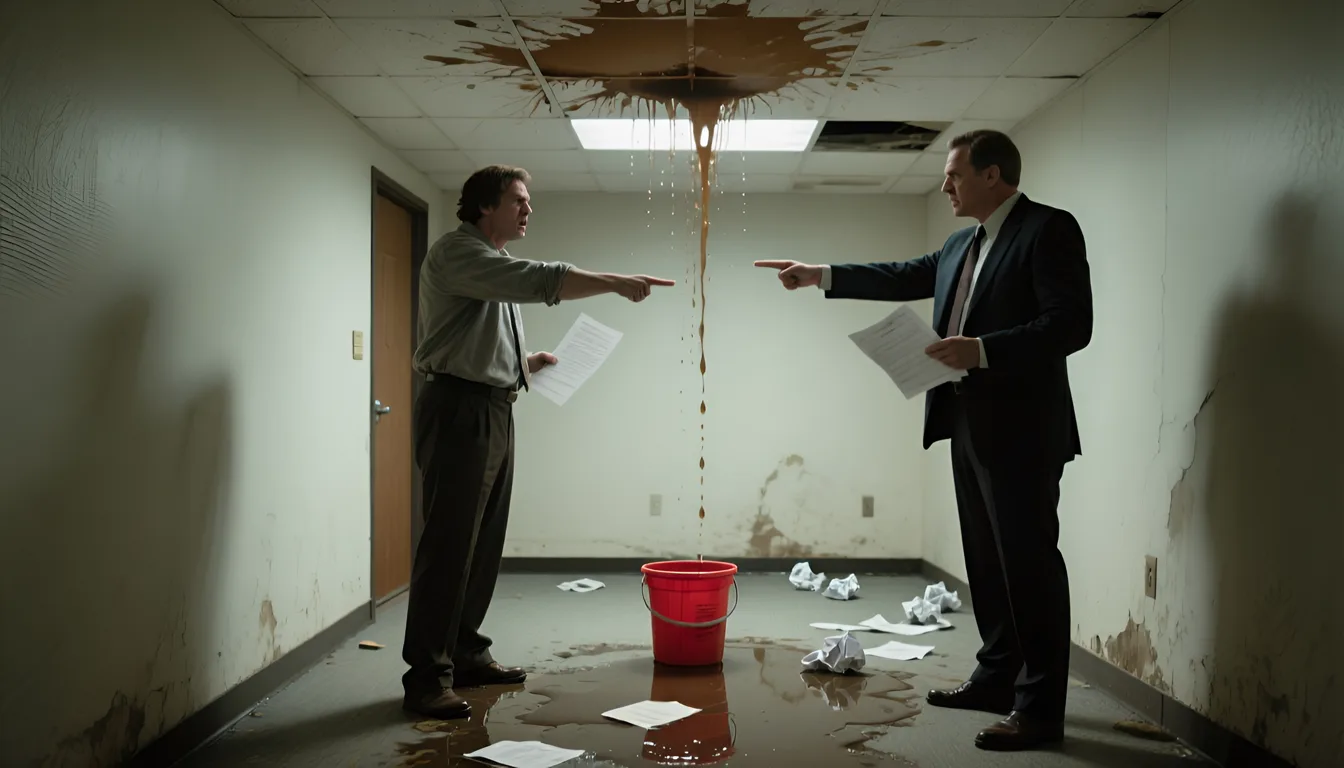
A leaking ceiling tile, a bucket on the floor, and a visitor who slides on it can turn leased premises into a slow-motion dispute, the tenant pointing up, the landlord pointing down, both pointing at the lease. Public liability inside rented space rarely settles cleanly, because responsibility crosses back and forth before anyone agrees who maintained what. Meanwhile the injured party waits with medical invoices. Ownership does not decide liability; control and duty of care do.
What is tenant vs landlord public liability?
Tenant vs landlord public liability concerns who is responsible when a third party suffers injury or property damage within leased premises. It is decided by control of the area, maintenance obligations, and lease wording, rather than by ownership. Liability follows duty of care: the party responsible for the space where the incident occurred generally carries the exposure.
Key Takeaways
- Tenant vs landlord public liability decides who responds when a third party is injured or suffers property damage within leased premises.
- Liability follows control and duty of care, not ownership, so the party responsible for the relevant area generally carries the exposure.
- A customer slipping inside a tenant’s store usually falls to the tenant, who controls daily operations and housekeeping.
- A visitor injured in a poorly maintained common stairwell or structural area usually falls to the landlord.
- Lease wording frequently shifts maintenance obligations, allocating responsibility for plumbing, signage, balconies, or roofing in ways that change the default position.
- Insurance should mirror the contractual obligations in the lease, so the cover matches who actually carries each duty.
Who Is Responsible When Someone Is Injured?
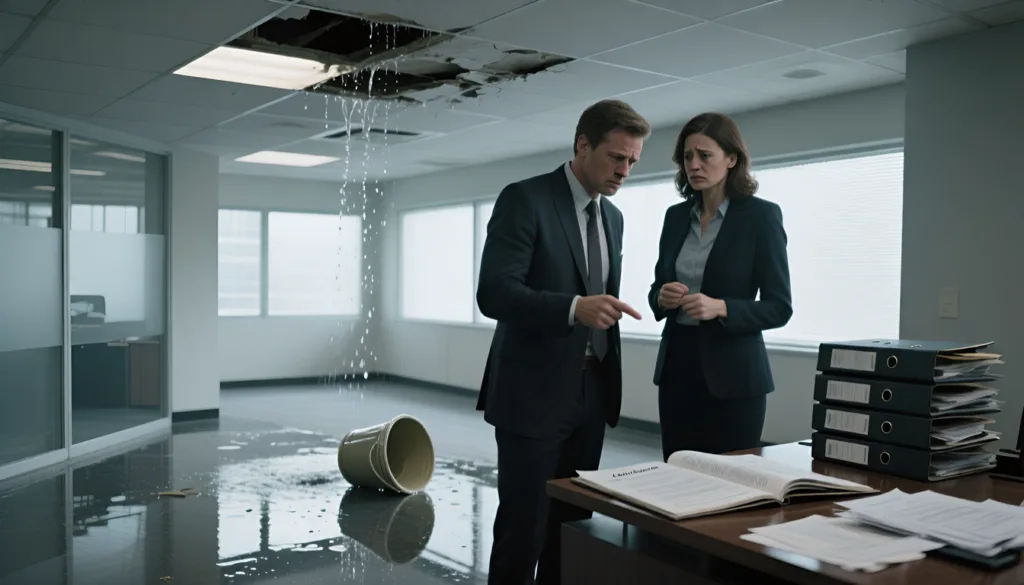
Responsibility depends on control of the area where the incident occurred.
If a customer slips inside a retail store due to liquid on the floor, tenant exposure usually applies. The tenant controls daily operations, housekeeping, and customer interaction. The landlord does not run your mop schedule. A landlord can barely run an email thread.
If a visitor trips in a poorly maintained common stairwell, landlord exposure may apply. Structural elements, shared passages, and exterior maintenance generally fall under landlord control.
The principle stays simple.
Liability follows control.
However, leases complicate simplicity. Many agreements shift maintenance obligations. Some require tenants to maintain internal plumbing. Others allocate responsibility for signage, balconies, or sections of roofing. Some leases read like they were drafted during a power outage using a candle and pure confidence.
Public liability insurance responds based on negligence and contractual obligation. The policy does not override the lease. It follows it.
Think of liability as attached to the hands holding the keys. Whoever controls the space carries the bigger share of exposure.
Tenant Public Liability: What It Covers
Tenants carry exposure linked to operations.
In a shopping centre in Johannesburg, a tenant may face claims if:
- A customer slips inside the store
- Shelving collapses
- Signage falls
- A staff member’s action injures a visitor
- A display becomes a surprise obstacle course
Tenant public liability insurance usually covers:
- Third-party bodily injury within leased premises
- Third-party property damage caused by tenant activities
- Legal defence costs
- Settlements or court awards up to policy limits
The key factor is operational negligence. If injury arises from how the tenant runs the business, liability often sits with the tenant.
Many tenants assume the landlord’s insurance extends to them. It rarely does.
Landlord policies protect landlord exposure. They do not automatically extend to tenant operations. Shared walls do not create shared insurance. If only property law worked through vibes.
The cleanest approach is separate cover aligned to separate exposure.
Landlord Public Liability: Where Exposure Sits
Landlords carry responsibility for structural and common-area risk.
In an office complex in Cape Town, landlord exposure may include:
- Poorly maintained lifts
- Broken stair rails
- Defective exterior lighting
- Uneven paving in shared walkways
- Roof leaks creating hazards in common areas
Landlord public liability insurance usually responds to third-party injury or damage arising from failure to maintain structural elements or common areas.
The duty of care extends to visitors using shared facilities. A landlord cannot ignore a broken step and hope people simply become more agile.
However, landlords are not responsible for tenant operations. If a restaurant tenant leaves cables exposed across a floor, landlord liability usually does not attach.
The boundary rests on maintenance responsibility and control.
Understanding this division prevents incorrect claim submission and reduces cross-party disputes.
Shared Spaces and Blurred Lines
Most disputes arise in transitional areas.
Entrances. Parking areas. Corridors. Service passages.
If a roof leak damages tenant stock, is it structural neglect or tenant failure to report? If a slip occurs near the threshold between store and passage, whose floor was it?
Insurance follows documented responsibility.
Lease agreements often outline maintenance obligations in detail. Some are drafted with admirable precision. Others are written with optimism and crossed fingers.
Public liability policies operate within regulated insurance conduct standards overseen by the Financial Sector Conduct Authority, which governs intermediary and insurer conduct under national compliance frameworks (https://www.fsca.co.za). Regulation sets conduct rules. It does not rewrite your lease.
Where leases are unclear, disputes increase.
Clarity at inception reduces negotiation later.
How Lease Agreements Shape Public Liability Exposure
Public liability disputes rarely begin with dramatic negligence. They begin with paperwork.
Lease agreements quietly decide who maintains what. One clause assigns responsibility for plumbing. Another shifts signage obligations. A third outlines common-area contributions. Then there is always a clause with language so carefully vague it could be used to describe a cloud.
These clauses shape liability.
If a lease places responsibility for internal ceilings and lighting on the tenant, and a fixture falls, tenant exposure may arise. If structural waterproofing remains landlord responsibility and a roof leak creates hazard, landlord exposure may follow.
Commercial leases often include indemnity clauses. These clauses may require one party to compensate the other under specific conditions. Without careful review, a business may accept broader responsibility than expected, then discover the meaning during a claim. Nobody enjoys learning legal concepts while a third-party attorney waits on hold.
Insurance responds to negligence aligned with legal duty of care. If contractual wording expands your duty, your insurance must align with that expansion.
Many business owners sign leases focusing on rental escalation and deposit terms. Liability wording sits several pages later, living quietly like a spider in a corner. It rarely receives equal attention.
Insurance follows legal obligation. Legal obligation often hides in paragraph twelve.
And paragraph twelve rarely feels important until someone falls.
Risk Prevention for Tenants and Landlords
Insurance stabilises after an incident. Prevention reduces the chance of one.
Tenants can reduce exposure through:
- Routine floor inspections
- Staff training on hazard response
- Immediate clean-up protocols
- Proper signage placement
- Securing shelving and displays
- Keeping maintenance logs
Landlords can reduce exposure through:
- Scheduled structural inspections
- Lift and stairwell maintenance
- Exterior lighting checks
- Drainage and roofing oversight
- Contractor supervision
- Documented maintenance schedules
Documentation protects both sides. Maintenance logs demonstrate diligence. Inspection reports support defence positioning. Clear communication between landlord and tenant reduces unresolved hazards.
Public liability insurance performs best alongside disciplined upkeep.
Think of insurance as a seatbelt. It protects during impact. It does not steer the car. It also does not mop the floor, even if the premium feels like it should.
Buildings rarely become safer by accident. They become safer because someone checked the railing twice.
Quiet diligence often beats loud litigation.
Mont Blanc Financial Services reviews lease agreements when structuring liability cover. Maintenance clauses, indemnity wording, and operational exposure are assessed before placement. Tenant obligations align with tenant cover. Landlord exposure is mapped separately. Where grey areas exist, limits and extensions are discussed openly. The objective is not assigning blame. It is preventing confusion during a claim.
Before closing, here are the questions business owners ask most often about tenant vs landlord public liability.
This article is part of our complete guide to general liability insurance.
Frequently Asked Questions
Who is responsible when someone is injured in leased premises?
Responsibility for an injury in leased premises depends on who controlled the area where the incident occurred, rather than on who owns the building. The guiding principle is that liability follows control and duty of care. If a customer slips on liquid inside a retail store, the exposure usually falls to the tenant, because the tenant controls daily operations, housekeeping, and customer interaction within the leased space; the landlord does not manage the tenant’s cleaning schedule. If, instead, a visitor trips in a poorly maintained common stairwell or is hurt by a structural defect, the exposure may fall to the landlord, since structural elements, shared passages, and exterior maintenance generally sit under landlord control. The simple version is that liability follows control. The complication is that leases frequently modify this default, shifting specific maintenance obligations between the parties. So while control is the starting point, the lease wording must be read to see where responsibility has actually been allocated. Determining who controlled the relevant area, as adjusted by the lease, is what answers who responds to the claim.
How does a lease affect tenant vs landlord public liability?
A lease can significantly alter the default allocation of public liability between tenant and landlord by shifting maintenance and control obligations in its wording. While liability ordinarily follows control, many lease agreements reassign specific responsibilities: some require tenants to maintain internal plumbing, others allocate responsibility for signage, balconies, or sections of roofing, and the precise split varies from one agreement to another. This means the lease, not a general assumption, often determines who carries a given exposure. A tenant who has contractually taken on maintenance of an area may carry liability for an incident there even if it might otherwise have seemed the landlord’s responsibility, and vice versa. Because of this, the lease wording is central to understanding the liability position, and it should be read carefully rather than assumed. Where the lease allocates a maintenance obligation, the associated public liability exposure tends to follow it. The practical implication is that both parties need to know what their lease actually says about maintenance and control, since that wording shapes who responds when a third party is injured.
Should tenants and landlords both carry public liability insurance?
In most cases both tenants and landlords benefit from carrying their own public liability insurance, because each typically retains some exposure within a leased arrangement. The tenant controls the internal operating environment, daily housekeeping, customer interaction, the placement of stock and equipment, and therefore carries exposure for incidents arising from that control. The landlord retains responsibility for structural elements, common areas, and exterior maintenance, and carries exposure for incidents there. Since the two sets of responsibilities are distinct and a lease can divide them in detailed ways, neither party can safely assume the other’s cover will respond to a claim that falls within their own area of control. Each carrying cover matched to their actual obligations ensures that whoever is found responsible has a policy that responds. The key is that the insurance should mirror the contractual allocation in the lease, so that cover and responsibility line up. A gap appears when one party assumes the other is covering an exposure that the lease has in fact assigned to them. Both carrying appropriate cover closes that gap.
How can tenants and landlords avoid public liability disputes?
Tenants and landlords avoid public liability disputes by establishing clearly, before any incident, where control and maintenance responsibility sit, and by aligning their insurance with that allocation. The disputes that follow an injury, each party pointing at the other and at the lease, arise precisely because responsibility was never clarified in advance. The remedy is clarity at the outset: a lease that sets out plainly who maintains what, who controls which areas, and therefore who carries which exposure. With that established, both parties can arrange public liability cover that mirrors their actual obligations, so that when an incident occurs the responsible party has a policy ready to respond and there is little to argue about. Reviewing the lease and the insurance together, rather than treating them as separate matters, is the practical step. Clarity before a claim removes the tension after one, turning what would have been a drawn-out dispute over responsibility into a straightforward matter of the right policy responding. The work of defining responsibility is far easier done in advance than litigated afterward.
Conclusion
A ceiling tile, a puddle, a misaligned step.
Responsibility in leased premises depends less on ownership and more on control.
Tenant vs landlord public liability is not about argument. It is about mapping duty before harm occurs. Leases define boundaries. Insurance must follow those boundaries with equal precision.
Clear structure reduces dispute.
And fewer disputes make for better mornings.
You shouldn’t discover gaps in liability cover during a tenant-landlord dispute, with a third party waiting for answers and everyone suddenly reading the lease like it is a thriller. With structured review and aligned policies, you won’t face uncertainty when responsibility gets questioned.
You shouldn’t have to argue over a lease while an injured visitor’s invoices pile up. With Mont Blanc Financial Services you won’t.
Contact Mont Blanc Financial Services to align your public liability cover with exactly what your lease makes you responsible for, tenant or landlord.

Nicola Iozzo
Founder & CEO, Mont Blanc Financial Services
Nicola has spent his career reading the policy wording most people skip, and writes here so you don't discover at claim stage what page 14 meant.
This blog is here to inform, not advise. Think of it as a guidebook, not a contract. For decisions affecting your world, have a chat with your broker or financial professional.
Mont Blanc Financial Services (PTY) Ltd. is an authorised financial services provider. FSP 8271