Public Liability Insurance
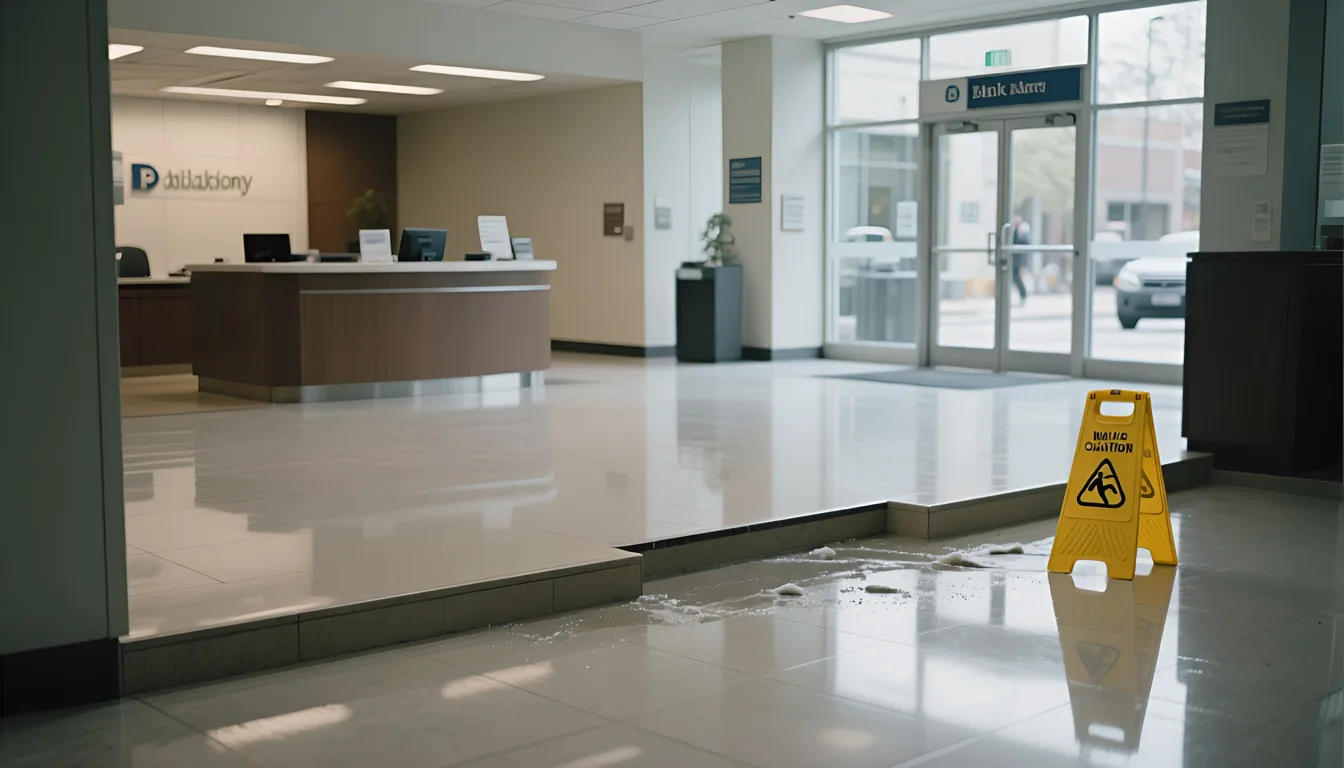
Most business risks announce themselves: a fire alarm, a collision, a flood dramatic enough for a news helicopter. Public liability risk prefers subtlety. It arrives disguised as normal, a floor cleaned five minutes ago, a step walked past for years, a sign standing where it always stood until the day someone slips beside it. Nothing looked dangerous and no one expected paperwork, yet everyday activity carries legal responsibility the moment the public enters the space.
What is public liability insurance?
Public liability insurance protects a business when a third party suffers bodily injury or property damage and holds the business legally responsible. A third party is anyone who is not the business or its employees, including customers, visitors, suppliers, and members of the public. It covers legal defence costs, court fees, medical expenses, and settlement or compensation amounts.
Key Takeaways
- Public liability insurance responds when a third party suffers injury or property damage through the business and holds it legally responsible.
- A third party is anyone who is not the business or its employees: customers, visitors, suppliers, contractors, and the public.
- Cover includes legal defence costs, court fees, medical expenses linked to the injury, and settlement or compensation amounts.
- Claims generate cost long before fault is established, since defending a claim is expensive even where the business is not liable.
- The cover rests on duty of care, the reasonable steps the law expects a business to take to prevent foreseeable harm.
What Public Liability Insurance Covers
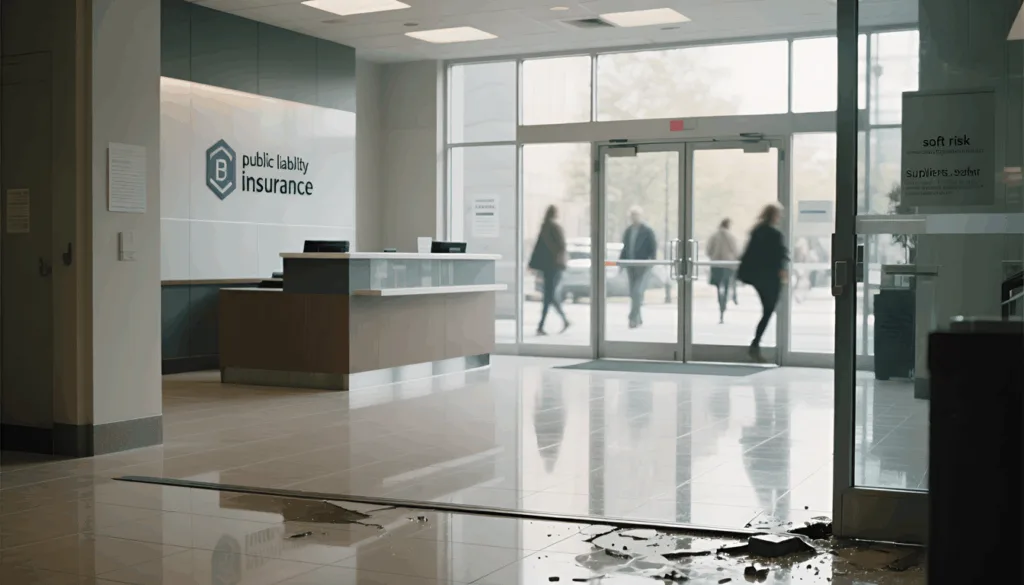
Public liability insurance protects you when a third party suffers bodily injury or property damage and holds you legally responsible.
A third party includes anyone who is not you, your business, or your employee.
This includes customers, visitors, suppliers, contractors, and members of the public.
If a claim is made, public liability insurance covers:
- Legal defence costs
- Court fees
- Medical expenses linked to the injury
- Settlement or compensation amounts
Claims generate cost long before fault is established.
The Legal Basis: Duty of Care
Why Responsibility Exists Even Without Intention
Public liability insurance rests on one central legal idea: duty of care.
In simple terms, duty of care means this:If you operate a business or control a space where the public enters, the law expects you to take reasonable steps to prevent foreseeable harm.
This principle forms part of South African civil law and negligence doctrine, applied daily by the courts. It is not about perfection. It is about reasonableness.
The courts do not ask whether you meant for someone to be hurt. They ask whether a reasonable person, in your position, should have foreseen the risk and acted to reduce it. This approach sits within the broader civil liability framework explained through legislation administered by the Department of Justice and Constitutional Development.
Foreseeability, Not Fault
Duty of care is built on foreseeability.
If harm could reasonably have been anticipated, responsibility may follow. This applies even when:
- The incident was accidental
- The risk appeared minor
- No similar incident had occurred before
- No warning was issued by anyone else
South African courts do not require businesses to predict exact outcomes. They assess whether a risk should have been recognised and managed, using established civil liability principles explained within South Africa’s broader civil litigation framework.
A wet floor after cleaning is foreseeable.Uneven paving in a public walkway is foreseeable.An unsecured fixture near pedestrian traffic is foreseeable.
Reasonable Steps, Not Extreme Measures
Duty of care does not require eliminating all risk. Businesses are not expected to operate inside padded rooms.
The legal test asks whether reasonable steps were taken, given:
- The nature of the business
- The environment
- The volume of public interaction
- The practicality of preventative measures
Warning signage.Routine maintenance.Clear walkways.Secure fixtures.Controlled access to hazardous areas.
These are not excessive precautions. They are ordinary safeguards. When they are absent, liability becomes easier to establish.
Why Claims Succeed Even When No One Was Negligent
This is the point many business owners struggle with.
A public liability claim can succeed even when no one acted recklessly or carelessly in the everyday sense. Legal negligence is narrower and more technical than moral blame.
Courts assess whether the duty of care was breached and whether that breach caused harm. If both are present, liability may follow.
Once a claim is brought, it moves through South Africa’s civil litigation process, as outlined in practical terms by Legal Aid South Africa.
At that stage, cost accumulates regardless of outcome. Legal defence begins long before fault is finally determined.
Why Duty of Care Makes Insurance Necessary
Duty of care explains why public liability insurance is not reserved for reckless operators.
It applies to:
- Careful businesses
- Well-run premises
- Long-established operations
- Owners with strong safety records
Because the standard is reasonableness, not innocence.
Public liability insurance exists to absorb the financial consequences when duty of care is questioned, tested, or challenged. It allows the legal process to unfold without placing the survival of the business at risk.
What Public Liability Insurance Does Not Cover
Public liability insurance is precise.
It does not cover:
- Injury to employees (covered under COIDA or employers’ liability)
- Damage to your own property
- Faulty workmanship itself
- Professional advice or design errors
- Intentional or unlawful acts
Policy wording governs response. Assumptions do not.
Who Needs Public Liability Insurance
Any business interacting with the public carries exposure.
This includes:
- Retail stores and shopping centres
- Restaurants and cafés
- Offices receiving visitors
- Contractors and tradespeople
- Property owners and landlords
- Event organisers
- Schools, churches, and community centres
- Cleaning, maintenance, and security companies
- Warehousing and logistics operations
If people enter your space or encounter your operations, liability exists.
Public Liability vs Professional Indemnity
These covers respond to different risks.
Public liability insurance covers physical injury and physical property damage.
Professional indemnity insurance covers financial loss caused by advice, design, or professional services, as outlined by the Insurance Institute of South Africa.
Many businesses require both to close exposure gaps.
Physical Harm Versus Professional Error
Public liability insurance and professional indemnity insurance are often mentioned together, but they protect against different risks.
The simplest way to understand the difference is this:
- Public liability insurance responds when someone is physically injured or when physical property is damaged.
- Professional indemnity insurance responds when someone suffers financial loss because of advice, design, or professional service.
One deals with bodies and objects.The other deals with decisions and consequences.
What Public Liability Insurance Responds To
Public liability insurance applies when injury or damage happens in the physical world.
Examples include:
- A customer slips on a wet floor in your premises
- A visitor trips over uneven paving
- Equipment damages a client’s vehicle
- A sign falls and injures a passer-by
- A delivery obstructs a public walkway and causes injury
In each case, the loss involves bodily injury or physical damage, and the claim arises from your duty of care to the public.
This distinction is clearly outlined in industry explanations of public liability insurance provided by the Insurance Institute of South Africa’s overview of insurance types.
What Professional Indemnity Insurance Responds To
Professional indemnity insurance applies when the loss is financial, not physical.
It protects professionals whose advice, services, or designs cause a client to lose money.
Examples include:
- Incorrect advice leading to financial loss
- Design errors requiring costly correction
- Omitted information affecting a client’s decision
- Professional services failing to meet required standards
In these cases, no one needs to be injured. Nothing needs to be broken. The harm exists in the balance sheet, not the emergency room.
Professional indemnity insurance exists because professional judgment carries consequences, even when exercised carefully.
Why One Does Not Replace the Other
This is a common misunderstanding.
Having public liability insurance does not protect you against professional errors.Having professional indemnity insurance does not protect you against physical injury claims.
They respond to different legal triggers.
For example:
- A client slips in your office reception area: public liability
- A client loses money due to incorrect advice you gave: professional indemnity
Both claims may involve the same client. They do not involve the same insurance policy.
Businesses That Often Need Both
Many businesses operate at the intersection of physical interaction and professional service.
These include:
- Consultants who meet clients on-site
- Property professionals
- Architects and engineers
- Financial and insurance advisers
- IT and systems providers
- Project managers
- Designers and technical specialists
Where the public enters your space and relies on your expertise, both exposures exist.
Industry guidance consistently reflects this separation of risk, as explained in practical terms by theInsurance Institute of South Africa.
Why This Distinction Cannot Be Ignored
Misunderstanding the difference between these covers often leads to uninsured claims.
A business may assume it is protected because “we have liability cover,” only to discover the claim falls outside the policy scope. At that point, legal costs and settlements fall directly on the business.
Understanding the boundary between public liability and professional indemnity allows cover to be structured correctly before risk turns into reality.
How a Public Liability Claim Develops
Claims rarely begin in court.
They usually start with a medical account, a legal letter, or a demand for compensation.
From there, the process follows South Africa’s civil litigation framework, as explained byLegal Aid South Africa.
The insurer manages:
- Investigation
- Liability assessment
- Legal defence
- Negotiation or litigation
- Settlement or judgment
Without insurance, these costs fall directly on the business.
Limits of Indemnity
Choosing the Right Amount of Cover
Public liability policies include a limit of indemnity, usually stated per event.
Common limits include:
- R1 million
- R2 million
- R5 million
- R10 million or more
Serious injury claims escalate rapidly through medical costs, legal fees, and compensation.
Adequate limits protect business continuity.
Contractual and Regulatory Requirements
Public liability insurance is often required by contract, even where not mandated by law.
This includes:
- Lease agreements
- Municipal permits
- Service contracts
- Event licences
- Construction and maintenance agreements
Failure to maintain cover may constitute breach of contract.
Property Owners and Public Liability
Property owners face specific exposure.
If injury or damage arises from poor maintenance, unsafe access, or structural defects, liability may attach to the owner even when a tenant occupies the premises.
Public liability insurance protects owners against claims arising from public access to property.
Public Liability and Riot or Unrest Damage
Public liability insurance excludes damage caused by riot, strike, civil commotion, or terrorism.
These risks fall under SASRIA, South Africa’s state-owned insurer created to address these exposures, as explained in SASRIA’s official product guidance.
Without SASRIA cover, liability protection remains incomplete during unrest-related events.
Why Public Liability Insurance Is Foundational Cover
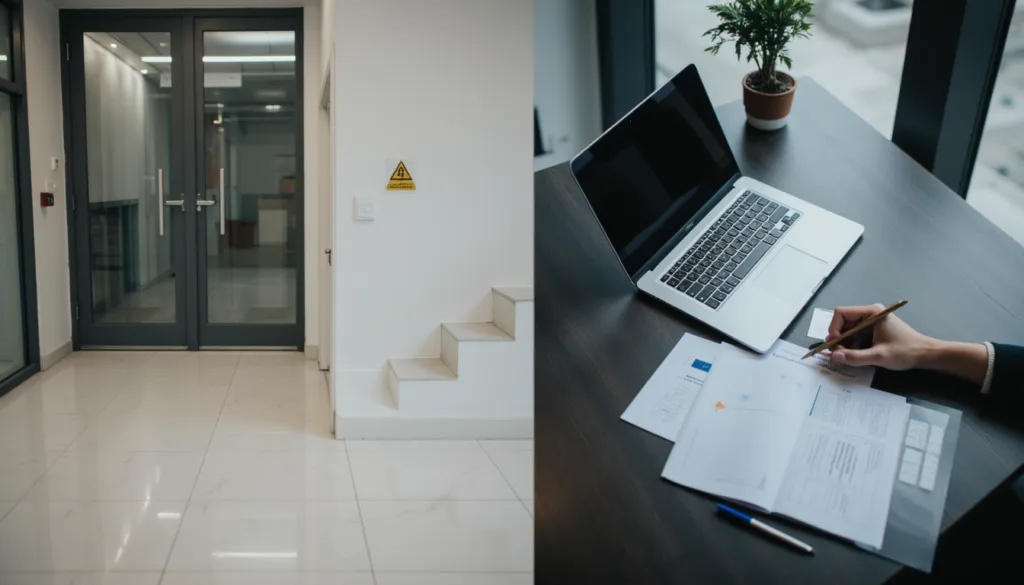
Public liability insurance exists because shared spaces create shared risk.
It protects:
- Cash flow
- Legal defence capacity
- Business continuity
- Personal assets
One unexpected incident should not dismantle years of work.
Protection must exist before responsibility appears.
Before we get to the questions, it helps to explain where these answers come from.
We spend our days helping business owners, property owners, and professionals understand how public liability exposure shows up in ordinary environments. This work includes reviewing cover before an incident, explaining policy wording in plain language, and supporting clients when claims arise and responsibility has to be examined.
Working this closely with public liability insurance means seeing how claims begin, how assumptions fall away under pressure, and how often the same questions surface once legal and medical processes start moving. The answers below reflect those patterns. They are shaped by real situations and by the practical way public liability insurance operates in South Africa.
With that context in place, these are the questions people usually ask next.
This article is part of our complete guide to general liability insurance.
A slip in a rented shop raises an old question, and who is liable, tenant or landlord rarely has the obvious answer.
What public liability insurance costs
Public liability premium is set by exposure rather than by the size of the business, which is why two firms with the same turnover can pay quite differently. A consultancy seeing three visitors a week and a retailer with a thousand people through the door carry the same legal duty and nothing like the same chance of someone being hurt on the premises.
Seven things decide the number:
- What the business does, since a contractor working at height is rated above an office
- Annual turnover, as a proxy for the scale of activity
- How much public access the premises allow, and how many people pass through
- The claims history, which counts for more than most owners expect
- The risk controls in place, from floor surfaces to signage and incident records
- The limit of indemnity selected
- The excess the business agrees to carry
The limit does most of the work on price, and it is where buyers tend to go wrong. Limits commonly begin at R1 million and step upward, and the lowest one usually produces the lowest premium, which is the appeal. A serious injury claim involving long-term medical treatment and loss of earnings can run well past that figure, and the shortfall is the business’s to find.
The sensible test is the realistic worst case on your own premises rather than the claim you expect. Ask for the premium at two or three limits on the same quotation. Seeing what the step from one limit to the next costs is usually the moment the decision becomes obvious, and raising a limit at renewal is straightforward where raising it after an accident is not possible at all.
Frequently Asked Questions
What does public liability insurance cover?
Public liability insurance covers a business when a third party suffers bodily injury or property damage and holds the business legally responsible. A third party is anyone who is not the business itself or its employees, which includes customers, visitors, suppliers, contractors, and members of the public. When such a claim is made, the cover responds to the legal defence costs, court fees, medical expenses linked to the injury, and any settlement or compensation amounts. An important feature is that claims generate cost well before fault is established, since defending a claim, gathering evidence, instructing lawyers, attending court, is expensive regardless of the eventual outcome. This means the cover has value even where the business is ultimately found not liable, because it absorbs the cost of the defence itself. Public liability is among the most common exposures any business with a physical presence faces, since it arises from ordinary interactions rather than unusual events. The cover exists because the moment the public enters a business’s space, the potential for a liability claim exists alongside the ordinary activity.
What is duty of care in public liability insurance?
Duty of care is the legal principle that public liability insurance rests on, and it explains why responsibility can exist even without any intention to cause harm. In simple terms, if a business operates or controls a space the public enters, the law expects it to take reasonable steps to prevent foreseeable harm. This principle forms part of South African civil law and negligence doctrine and is applied daily by the courts. Crucially, it is not about perfection but about reasonableness: the courts do not ask whether the business meant for someone to be hurt, but whether a reasonable person in the same position should have foreseen the risk and acted to reduce it. This is why a business can be liable for an accident it never intended, if it failed to take the reasonable precautions expected of it. Understanding duty of care clarifies what public liability cover actually protects against, namely the consequences of falling short of that reasonable standard. The specific application of the principle should be confirmed against current law, but reasonableness is its core.
Who counts as a third party under public liability insurance?
Under public liability insurance, a third party is anyone who is not the business itself or its employees. This broad category includes customers, visitors, suppliers, contractors, delivery personnel, and members of the public who interact with the business or enter its premises. The distinction matters because public liability cover responds specifically to claims from these third parties, injuries they suffer or property of theirs that is damaged, where the business is held responsible. Employees fall outside this category because injuries to staff are addressed through separate mechanisms rather than public liability cover. The breadth of who counts as a third party reflects how widely public liability exposure reaches: almost anyone who comes into contact with a business in the course of its activities could potentially bring a claim. This is why businesses with any public-facing presence, or whose activities affect people outside the organisation, carry meaningful exposure. Knowing who qualifies as a third party helps a business understand the scope of the risk the cover addresses, which extends to a wide range of everyday interactions.
Does a business need public liability insurance if an accident wasn’t its fault?
A business benefits from public liability insurance even when an accident was not its fault, because defending a claim generates significant cost regardless of the outcome. When a third party alleges injury or damage, the process of responding, investigating the incident, instructing legal representation, and potentially attending court, incurs expense long before any question of fault is settled. A business found entirely not liable can still face substantial legal defence costs, and public liability cover absorbs exactly these. This is a frequently misunderstood point: the cover is not only for paying out claims where the business was negligent, but for managing the cost and process of any claim brought against it. Given that the duty-of-care standard turns on reasonableness rather than intention, businesses can find themselves defending claims even where they acted responsibly. The cover therefore protects against the financial burden of the claim itself, not merely the liability at the end of it. For any business the public interacts with, that protection applies whether or not it was ultimately at fault.
How much is public liability insurance in South Africa?
It is rated on exposure rather than sold at a standard price, so the honest answer depends on what the business does and who comes near it. Seven inputs set the premium: the nature of the operation, annual turnover, how much public access the premises allow, the claims history, the risk controls in place, the limit of indemnity chosen and the excess accepted. The limit moves the figure more than the rest. Limits commonly start at R1 million and step upward, and the lowest limit naturally produces the lowest premium, which is why under-buying is the common mistake: a serious injury claim carrying long-term medical costs and lost earnings can exceed a low limit, and the balance falls on the business. Ask for the premium quoted at two or three limits side by side. The cost of stepping up is usually smaller than owners expect, and it can be raised at renewal but never after the accident.
Closing Reflection
Public liability insurance rarely feels urgent when everything is running smoothly. The floor is dry. The walkway is clear. The day passes as expected.
Responsibility enters quietly. Often without warning. Often without fault in the everyday sense.
What changes the experience is not whether an incident happens, but whether you were prepared for the legal and financial weight that follows. Clarity before pressure makes decisions calmer later. It allows you to focus on resolving a situation rather than scrambling to understand it.
Public liability insurance does not remove responsibility. It makes responsibility manageable.
You shouldn’t have to fund a legal defence out of working capital because someone slipped on your floor. With Mont Blanc Financial Services you won’t.
Contact Mont Blanc Financial Services to confirm your public liability cover matches the foot traffic and activity your business actually generates.

Nicola Iozzo
Founder & CEO, Mont Blanc Financial Services
Nicola has spent his career reading the policy wording most people skip, and writes here so you don't discover at claim stage what page 14 meant.
This blog is here to inform, not advise. Think of it as a guidebook, not a contract. For decisions affecting your world, have a chat with your broker or financial professional.
Mont Blanc Financial Services (PTY) Ltd. is an authorised financial services provider. FSP 8271