Refrigerated truck insurance: protecting cold chain fleets

Two degrees of drift over six hours can turn a full trailer of product into a total write-off. By then the reefer unit has been running warm for ninety minutes, and eighteen pallets of frozen prawns are on their way to being a health department problem rather than a supermarket order. The truck is insured. Whether the refrigeration unit, the temperature excursion, and the spoiled cargo are covered are questions nobody in the operations office has read the policy to answer.
What is refrigerated truck insurance?
Refrigerated truck insurance is a commercial motor policy built specifically for vehicles fitted with refrigeration units, known in the industry as reefer trucks. It goes beyond standard truck cover by addressing the vehicle, the mechanical refrigeration system, the temperature-sensitive cargo inside, and the liability flowing from delivering a product in a compromised condition. A standard truck policy covers collisions and theft; it rarely extends to what happens when the cold chain breaks.
Key Takeaways
- Standard truck insurance doesn't automatically cover refrigeration units or temperature-related cargo losses, these require specific extensions or standalone endorsements.
- Refrigerated cargo insurance is a related but separate policy covering the goods in transit; refrigerated truck insurance covers the vehicle and its reefer system.
- Mechanical breakdown of the refrigeration unit is a common exclusion in base motor policies and needs to be explicitly added.
- South African cold chain operators face unique exposures from load-shedding, extreme Highveld heat, and long-haul routes through areas with limited roadside assistance.
- An accurate declared value for the reefer unit is essential; underinsuring the refrigeration system triggers the average clause and reduces the claim payout proportionally.
- Temperature monitoring records and maintenance logs are the evidence a loss adjuster will ask for first, their absence is frequently the reason a spoilage claim is declined.
Why a standard truck policy leaves cold chain operators exposed

A standard commercial motor policy is written for a vehicle carrying goods from one place to another. The goods it imagines are boxes, pallets, or machinery, things surviving a delayed delivery or a detour without turning into a liability. A reefer truck is a different animal: it is a vehicle, a refrigeration plant, and a controlled-environment storage facility all in one, travelling at 90 km/h down a provincial road at midnight.
The consequence is that standard motor wordings treat the refrigeration unit as ancillary equipment. Some policies include it in the vehicle's declared value; others exclude it entirely or cap the payout at an amount bearing no relation to what a replacement Thermo King or Carrier unit costs in 2025. The compressor, the condenser, the evaporator coils, the electrical controls, these components together can represent a third of the truck's total value on a modern multi-temperature trailer. A policy treating them as an afterthought pays out accordingly.
Load-shedding compounds the problem in a way that seemed implausible when most standard policy wordings were drafted. A reefer truck plugged into a cold store overnight needs grid power to maintain temperature without running the diesel engine. When the grid drops and the driver is asleep, the unit either runs on battery for a limited time or the temperature climbs. The resulting spoilage isn't a collision claim, isn't a theft claim, and isn't a breakdown in the mechanical sense, which means several policy wordings don't respond to it at all.
The refrigeration unit: insuring the machine inside the machine
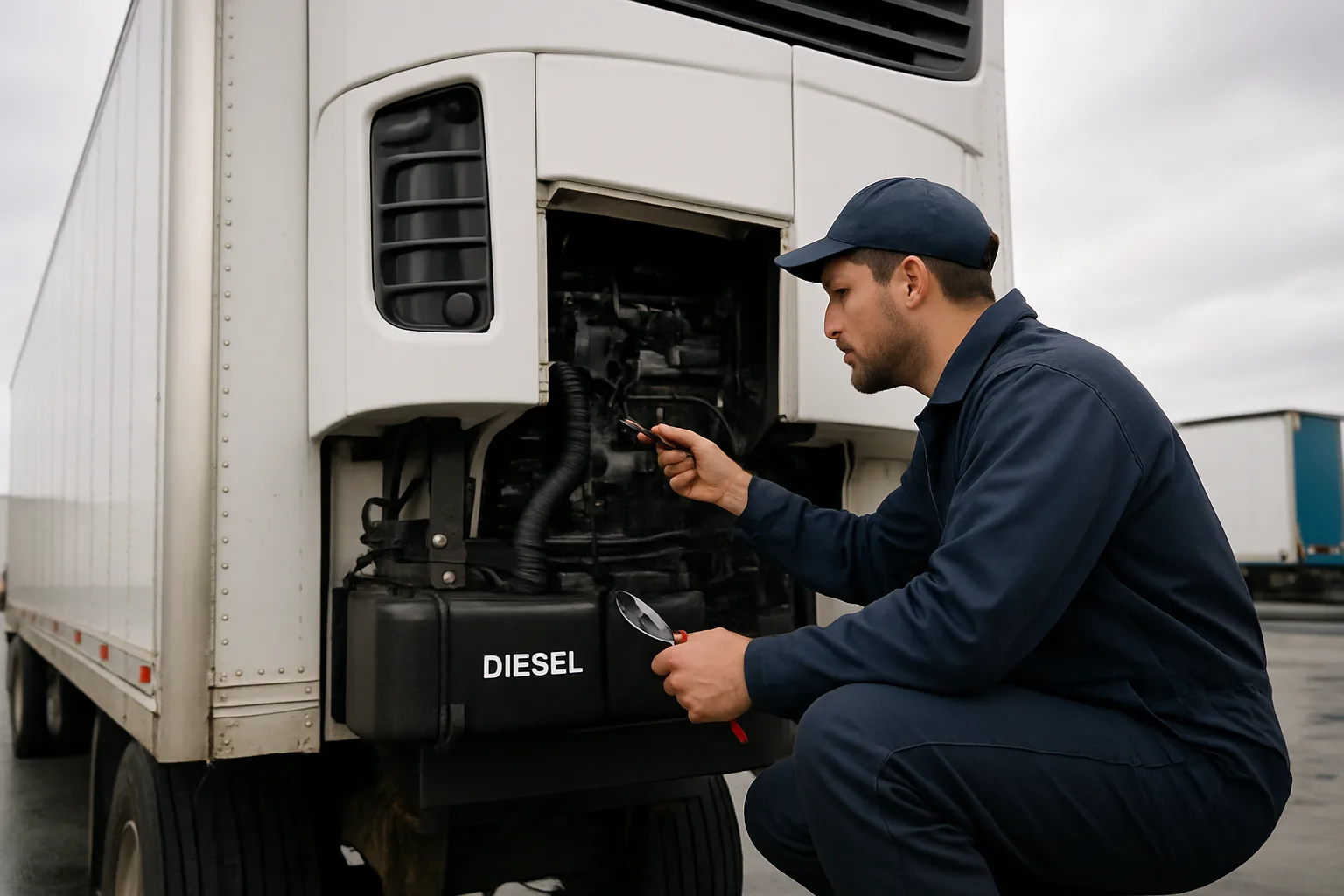
The reefer unit fitted to a refrigerated truck is a self-contained diesel or electric refrigeration system capable of holding cargo between -25°C and +15°C depending on the product requirement. Replacing a mid-range unit costs between R180,000 and R350,000 at current South African supplier prices, and a top-specification trailer unit for multi-temperature frozen goods can exceed R500,000 installed.
Insurers assess the reefer unit separately from the vehicle chassis in most specialist wordings. Your declared value for the truck should include the unit at current replacement cost, not at the figure entered when the policy was written three years ago. If the sum insured for the combined asset is R1.2 million and the actual replacement value is R1.8 million, the insurer applies average, a provision reducing every claim in the same proportion as the underinsurance. A R400,000 claim pays out at two-thirds, and the shortfall is your problem, not the insurer's.
Maintenance records for the reefer unit are as consequential to underwriters as service history is for the engine. An unmaintained compressor failing mid-trip is a foreseeable mechanical breakdown; a well-maintained unit failing due to an electrical fault is an insurable event. The distinction is made at claim stage, by a loss adjuster reading the service logs. Operators without those logs tend to find the distinction doesn't resolve in their favour.
Temperature excursion cover: when the cold chain breaks
A temperature excursion is any period during which cargo is held outside its required temperature range, whether from a mechanical failure, a human error (a door left open at a depot, a driver who switched the unit to standby at a rest stop), or an external cause such as a power outage at a cold store. The resulting spoilage can run from a partial loss on one pallet to a total loss of the entire load.
Common causes of temperature excursions in South African cold chain operations
| Cause | Frequency | Typical cargo at risk | Policy response |
|---|---|---|---|
| Reefer unit mechanical failure | High | Frozen seafood, meat, dairy | Covered with breakdown extension |
| Load-shedding at cold store | Medium-high | Fresh produce, pharmaceuticals | Excluded in most base wordings |
| Driver error (unit switched off) | Medium | All temperature-sensitive cargo | Excluded as human error |
| Fuel runout (diesel reefer unit) | Low-medium | Frozen goods on long haul | Excluded as operator negligence |
| Ambient heat exceeding unit capacity | Low | Fresh produce in summer | Covered if unit was functioning |
| Road accident damaging reefer unit | Low | All cargo | Covered under collision section |
Cover for temperature excursion losses typically sits in the refrigerated cargo insurance policy rather than the motor policy. These two policies, the truck cover and the cargo cover, need to be structured to work together, because a gap between them is where spoilage claims disappear. The cargo policy pays for the goods; the truck policy pays for the vehicle and the reefer unit. If the cargo policy has a sublimit for temperature losses and the truck policy excludes the reefer unit from mechanical breakdown cover, the operator carries the middle of the claim themselves.
Pharmaceutical cold chain operators face a specific version of this problem. Medicines experiencing a temperature excursion can't simply be re-frozen and delivered; the batch is destroyed, the client issues a shortage notification, and the liability question arrives within hours. A food-grade spoilage claim is painful. A pharmaceutical spoilage claim involving a controlled substance can trigger a regulatory investigation alongside the insurance claim.
Liability when the load arrives compromised
Delivering temperature-sensitive cargo in a compromised condition creates two distinct liability questions. The first is the cargo owner's claim against the transporter for the value of the spoiled goods. The second is the downstream liability: a retailer whose shelves go empty, a food processor whose production line stops, a hospital whose pharmacy is short on a critical medicine.
Goods in transit cover, the policy sitting alongside refrigerated truck insurance and responding to loss or damage to cargo while transported, typically includes a spoilage extension for temperature-related losses on reefer vehicles. The key word is "extension": it isn't automatic, and it carries conditions. Most spoilage extensions require proof the reefer unit was set to the correct temperature at the start of the journey, the unit was functioning and recently serviced, and temperature records were maintained throughout the trip. Without those records, the insurer has no basis to assess whether the loss was insured or excluded.
The Road Freight Association publishes operational guidelines for temperature-sensitive transport, and many insurers reference these when assessing cold chain claims. Operators whose procedures align with those guidelines tend to navigate the claims process more cleanly than those relying on the driver's word and a broken data logger.
Insuring the cold chain fleet: what your policy structure should include
A well-structured insurance programme for a refrigerated truck fleet combines several distinct covers, each responding to a different exposure. The most common mistake operators make is buying the cheapest motor policy and assuming the cargo cover fills the gaps. It rarely does, because the gaps are in the definitions, not in the premiums.
The minimum workable structure for a cold chain fleet includes: comprehensive motor cover for the vehicle chassis and cab; a reefer unit endorsement naming the refrigeration system at its current replacement value; a mechanical and electrical breakdown extension covering the reefer unit specifically; goods in transit cover with a temperature excursion or spoilage extension; and public liability cover responding to third-party claims arising from the delivery of compromised goods.
Fleet operators running more than three refrigerated vehicles should also consider business interruption cover linked to the cold chain operation. If a key vehicle is off the road for six weeks following an accident and the business loses the contracts it was servicing, the motor policy pays to fix the truck. The lost revenue is a separate question, and without a business interruption extension, it stays the operator's question.
Telematics data, GPS tracking, temperature logging, door-open alerts, has become material to underwriting in this class of risk. Insurers writing specialist cold chain fleets increasingly offer premium credits for operators with real-time temperature monitoring systems installed. The data also protects the operator at claim stage: a continuous temperature record showing the unit maintained -18°C from Johannesburg to Cape Town is the best possible evidence a spoilage claim arose from an event at the destination, not from something happening in transit.
The refrigeration unit is an addition to a policy already covering the truck and the load. The parent guide to trucking insurance explains what that underlying cover has to do.
Documentation and compliance: the evidence your claim will need
A cold chain insurance claim is assessed against evidence, not against the operator's account of events. The evidence the loss adjuster will ask for first is the temperature data log for the trip. The second is the service record for the reefer unit. The third is the bill of lading or waybill showing the cargo's required temperature specification and the condition in which it was received.
South Africa's food safety regulations under the Foodstuffs, Cosmetics and Disinfectants Act (Act 54 of 1972) require perishable goods to be transported at specified temperatures, and the Department of Health's regulations set out the documentation requirements for temperature-controlled transport of pharmaceutical products. An operator unable to produce trip temperature records isn't only at risk of a declined insurance claim; they're at risk of a regulatory finding the goods were transported outside legal requirements.
The Foodstuffs Act provisions on temperature control and the FSCA's conduct standards for claims handling both sit in the background of every cold chain claim, whether the operator knows it or not. An insurer assessing a spoilage claim will check whether the operator met their legal obligations before deciding whether the policy responds. A broker reading the wording before the claim is the cheaper way to find out where those lines fall.
Operators running pharmaceutical cold chain under contracts with medical aid schemes or public health facilities should verify their liability cover extends to claims arising from regulatory non-compliance, not only from physical damage. Some wordings exclude regulatory penalties; others include them as an extension. The difference runs to hundreds of thousands of rands and sits in a paragraph most operators have never read.
When the policy has to work as hard as the fleet does

Cold chain operations don't observe office hours. A compressor fails at 02:00, a depot loses power at 19:30, a summer storm closes the N1 and the truck sits for four hours in 38-degree heat. The insurance programme covering your fleet needs to have been built for that reality, not for a vehicle carrying pallets of building supplies between two depots on a Tuesday morning. The gap between standard truck cover and specialist cold chain cover isn't a technicality. It decides whether a claim pays or becomes an expensive lesson in what your policy actually says.
You shouldn't have to discover the limits of your cover at 02:00 on the side of the N3. With Mont Blanc Financial Services you won't.
Contact Mont Blanc Financial Services to have your refrigerated fleet's cover reviewed, your reefer unit valuations verified, and your spoilage extensions confirmed before the next temperature excursion does it for you.
Cold chain insurance is a specialist class, and the questions it raises are specific enough that they come up regularly. The most common ones are answered below.
Frequently Asked Questions
Does my refrigerated truck insurance automatically cover spoilage if the reefer unit breaks down?
Not automatically. Most base commercial motor policies cover the vehicle and may include the reefer unit in the declared value, but mechanical breakdown of the refrigeration unit is treated as a separate risk class. To have spoilage cover respond to a breakdown, your policy needs two things working together: a mechanical and electrical breakdown extension on the motor policy covering the reefer unit, and a goods in transit policy with a temperature excursion or spoilage extension covering the cargo. If either component is missing, the spoilage loss falls between the two policies. The critical step is to have both policies reviewed by the same broker at the same time, so the conditions in one align with the conditions in the other. A spoilage extension requiring proof of a functioning, recently serviced reefer unit is only useful if your maintenance records can supply that proof on the day the claim is lodged. Ask your broker to confirm both extensions are present and cross-referenced before your next renewal.
How is the reefer unit valued for insurance purposes, and what happens if I underinsure it?
The reefer unit should be insured at its current replacement cost, what it would cost to purchase and install an equivalent unit today, not what you paid for it four years ago. Refrigeration unit prices have risen with supply chain pressures and rand depreciation, so a declared value set at inception and never revised is almost certainly too low. If your combined truck and reefer unit is insured for R1.2 million and the actual replacement value is R1.8 million, the insurer applies the average clause. This provision reduces your claim payout in the same proportion as the underinsurance, a R400,000 claim pays out at roughly R267,000, and the R133,000 difference is yours to carry. Get the reefer unit valued by a specialist supplier at each renewal and update the declared value accordingly. It is one of the least expensive steps in cold chain risk management and one of the most consequential to skip.
What records do I need to keep to support a refrigerated cargo insurance claim in South Africa?
The loss adjuster assessing a cold chain claim will typically ask for four categories of evidence. First, the trip temperature data log showing the cargo's temperature history from loading to delivery, a continuous electronic record from a calibrated data logger is the standard. Second, the reefer unit's service history confirming the system was maintained and functioning before the trip. Third, the bill of lading or waybill showing the cargo's required temperature specification and its condition at loading. Fourth, any incident report from the driver, the depot, or the receiving party documenting when the temperature excursion was first detected and what action was taken. The Foodstuffs, Cosmetics and Disinfectants Act sets out minimum documentation requirements for temperature-controlled transport; meeting those requirements also positions your claim correctly. Operators without complete records frequently find claims declined on grounds unrelated to whether the loss itself was genuine.
Does refrigerated truck insurance cover load-shedding-related spoilage when the truck is parked at a depot?
This is one of the more common gaps in cold chain policies, and the answer depends on the specific wording. When a reefer truck is parked at a depot and connected to grid power overnight, a load-shedding event causing the temperature to rise typically isn't a collision, theft, or mechanical breakdown claim, it is a power interruption. Many standard motor and goods in transit wordings exclude losses caused by power outages originating outside the vehicle. Some specialist cold chain policies include a depot temperature excursion extension responding to this scenario, but it is an endorsement, not a default inclusion. Ask your broker specifically whether your current wording covers load-shedding-related temperature losses at your depots and at any third-party cold stores you use. If it doesn't, enquire whether the extension is available and what conditions it carries. Given load-shedding's frequency in South Africa, this gap deserves a direct answer before a claim requires one.
What is the difference between refrigerated truck insurance and refrigerated cargo insurance?
Refrigerated truck insurance covers the vehicle, including the chassis, cab, and refrigeration unit, against physical damage, theft, and mechanical breakdown of the reefer unit. It is a commercial motor policy. Refrigerated cargo insurance, sitting within the goods in transit class, covers the temperature-sensitive goods loaded onto the truck against loss, damage, or spoilage during transit. The two policies cover different things and are triggered by different events. A collision destroying the truck and the cargo simultaneously produces two separate claims: one under the motor policy for the vehicle, and one under the cargo policy for the goods. Most cold chain operators need both, structured so the conditions in each align. A gap in the conditions, the cargo policy requires a functioning reefer unit with a current service record, but the motor policy excludes the reefer unit from mechanical cover, is how operators end up carrying a spoilage loss appearing, on the surface, to have been insured. Your broker should review both policies at the same renewal to close that gap.

Nicola Iozzo
Founder & CEO, Mont Blanc Financial Services
Nicola has spent his career reading the policy wording most people skip, and writes here so you don't discover at claim stage what page 14 meant.
Everything on this blog is written to inform and educate. It is for information only. Nothing here is professional legal, financial, or technical advice. If you are making a significant business decision, speak to a qualified professional first. Mont Blanc Financial Services works hard to keep this content accurate and current, but is not liable for decisions made based on what you read here.
Mont Blanc Financial Services (PTY) Ltd. is an authorised financial services provider. FSP 8271