Goods in Transit (GIT) Insurance
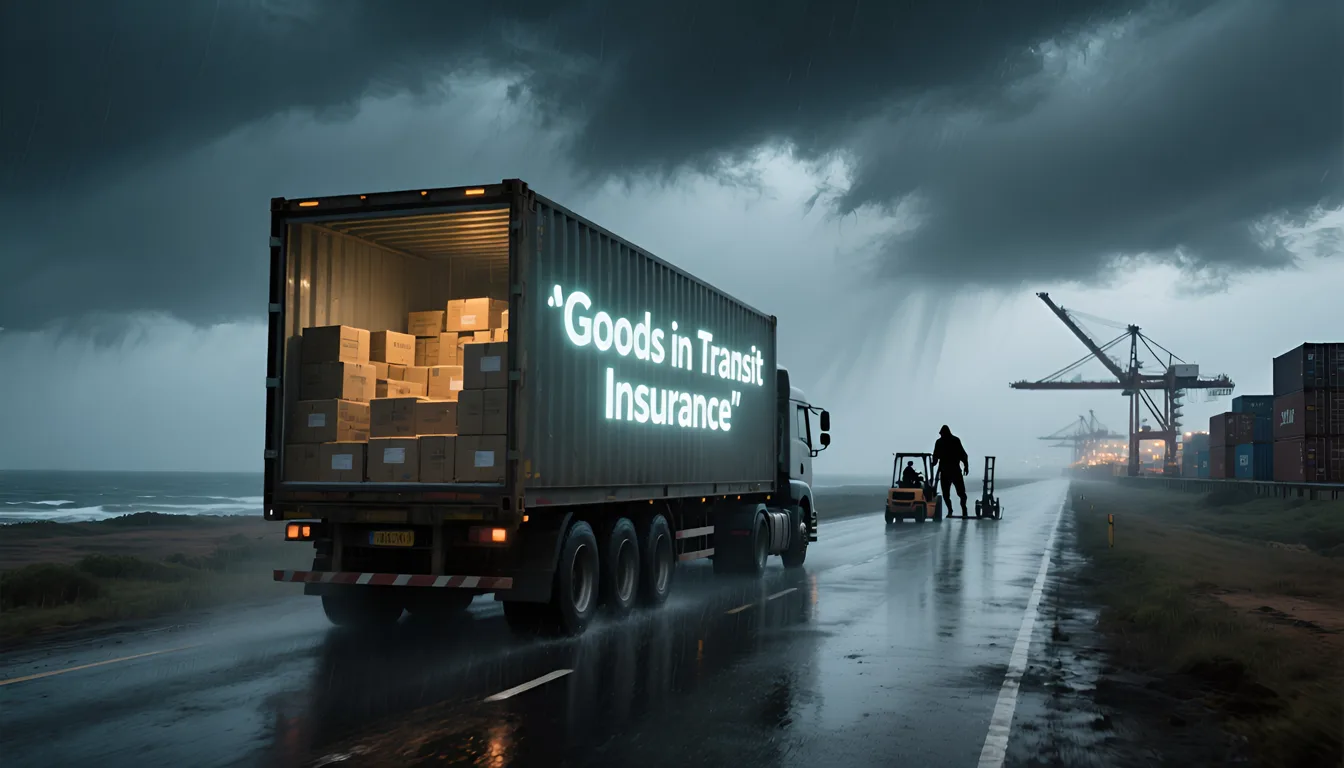
A truck and its cargo are insured as two separate things, and operators routinely protect the first while assuming the second comes with it. The vehicle policy answers for collisions and hijackings to the truck; the goods inside answer to no one unless separate cover is in place. Cargo can vanish between the harbour and the next town while the truck arrives unharmed. Most transporters find that gap only after a load is gone.
What is goods in transit insurance?
Goods in transit insurance covers physical loss of or damage to cargo from the start of a journey until the goods reach their final destination. It responds to theft, hijacking, accidents, overturning, fire, water damage, and damage during loading and offloading. It is separate from the vehicle’s own cover, protecting the load rather than the truck carrying it.
Key Takeaways
- Goods in transit insurance protects the cargo, not the truck, covering physical loss or damage from the start of the journey to final delivery.
- It responds to theft, hijacking, accidents, overturning, fire, water damage, and damage during loading and offloading.
- A carrier is responsible for goods belonging to clients, so a lost load becomes the transporter’s liability unless GIT cover is in place.
- Common exclusions include poorly packed goods, inherent vice (goods that self-destruct), and temperature failure unless a refrigeration extension is added.
- GIT is distinct from the vehicle policy: the truck can be undamaged while the cargo is a total loss, and only GIT responds to the latter.
What Goods in Transit Insurance Covers
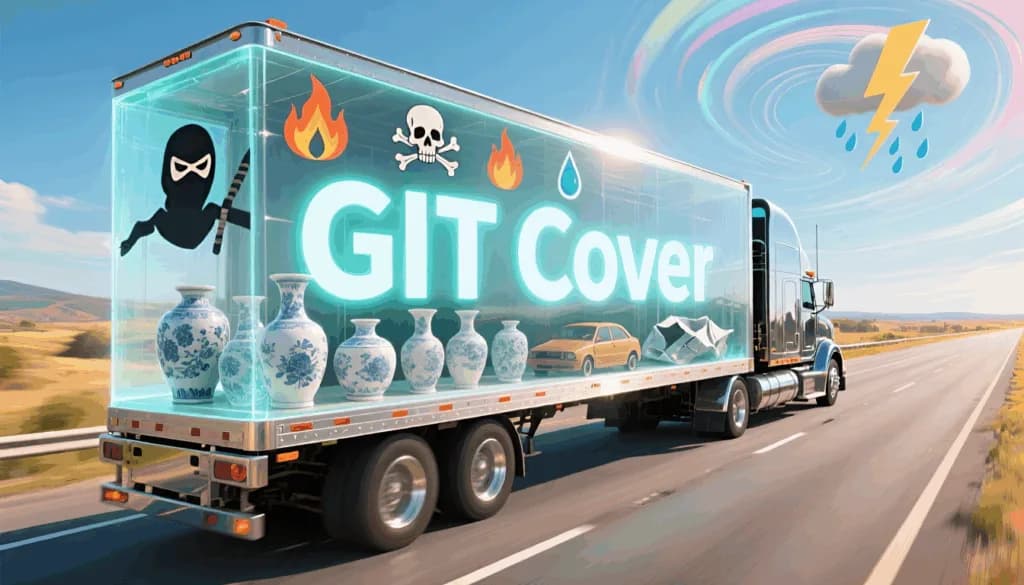
Goods in Transit insurance covers the physical loss or damage to cargo from the moment you begin the trip until the goods reach their final destination.
It protects cargo against:
- Theft
- Hijacking
- Accidents and collisions
- Overturning
- Fire
- Water damage
- Damage during loading and offloading
- Natural weather events
If you carry anything that belongs to someone else, you are responsible for it. Clients expect it to arrive the way they gave it to you. If it does not, they look at you and your insurer, not their own emotional support budget.
The truck may be fine. The cargo may be gone.This is why GIT is essential.
What Goods in Transit Does Not Cover
Goods in transit has exclusions that matter. These are the gaps that catch transporters by surprise.
1. Poor Packing
If the goods were packed badly by the client or by an external warehouse and collapse inside the vehicle, insurers do not cover it.Bad packing is not a risk. It is a choice.And insurers do not insure choices.
2. Inherent Vice
This is an elegant insurance term meaning the goods have a defect or property that naturally causes damage.For example:
- fruit that rots
- chemicals that corrode
- seeds that absorb moisture and expand
If the goods self-destruct, that is not on the insurer.
3. Temperature Failure (unless added)
Refrigerated trucks need a special extension.If the fridge unit fails, the goods spoil and the stock becomes an extremely expensive smoothie, standard GIT will not pay unless you have the extension.
4. Delays and Storage Beyond Time Limits
If goods sit too long at a depot because the client went home early or forgot to schedule offloading, insurers may decline the claim. GIT is built for movement, not storage.
5. Missing Documentation
If paperwork is wrong, incomplete or contradictory, a claim becomes a detective story.Goods must be declared truthfully.Values must match invoices.Load lists must be accurate.Insurance treats documentation like oxygen.
Goods in Transit vs Marine Cargo vs Warehouse Cover
Many transporters think these are the same.They are not.
If your goods travel a mixed route, you may need more than one policy to create a continuous chain of protection.
Transport ends where the offloading ends.Marine ends where land begins.Warehouse cover applies when everyone else goes home for the day.
Types of Goods in Transit Policies (Choose Carefully)
Not all GIT policies are created equal.Choosing the wrong one is like choosing a life partner after checking only their Instagram profile.
1. Open Annual Policy
This covers all trips within a year.Perfect for fleets and frequent transporters.
2. Single Transit Policy
This covers one trip only.Useful for high value, once off loads.
3. All Risk Policy
Covers almost everything unless specifically excluded.The safest option, especially for mixed or unpredictable loads.
4. Restricted Cover
Covers only specific risks like collision and overturning.Cheaper but dangerous for valuable stock.Often used for low value goods or internal movements.
Extensions You Should Seriously Consider
Extensions are not decorations. They are the parts of the policy that make sure the insurer cannot say, “Unfortunately this is excluded.”
1. Temperature Failure Insurance
If you carry food, medicine, flowers or frozen goods, this is non negotiable.
2. Debris Removal
When a load spills across the N3 and the scene looks like a warehouse exploded, somebody needs to clean it.Debris removal is expensive.Make sure it is not you.
3. Deterioration of Stock
Covers spoilage due to delays or environmental exposure.Helpful for perishable or semi perishable goods.
4. Cross Border Transit Extension
If your route touches another African country, you need this.Borders always add complexity.Claims take longer.Risks increase.Cover must follow.
5. Temporary Warehouse Cover
Sometimes goods pause between trucks or wait for clients.A short term extension covers these pauses without requiring full warehouse insurance.
How Loads, Packaging and Routes Affect GIT Premiums
Pricing is not random. Insurers study risk like teachers studying exam scripts.
Premiums increase if:
- goods are high value
- goods are theft prone
- routes include known hijack zones
- the trip includes informal border crossings
- documentation is weak
- drivers have poor track records
- packaging is inconsistent
- the company has a history of shortfall disputes
Premiums decrease if:
- loads are uniform
- tracking is strong
- routes follow controlled corridors
- telematics show safe driving
- yard procedures are disciplined
The insurer is not judging your business.They are judging your risk.It is not personal.It just feels that way sometimes.
Contractual Liability: The Secret Source of GIT Disputes
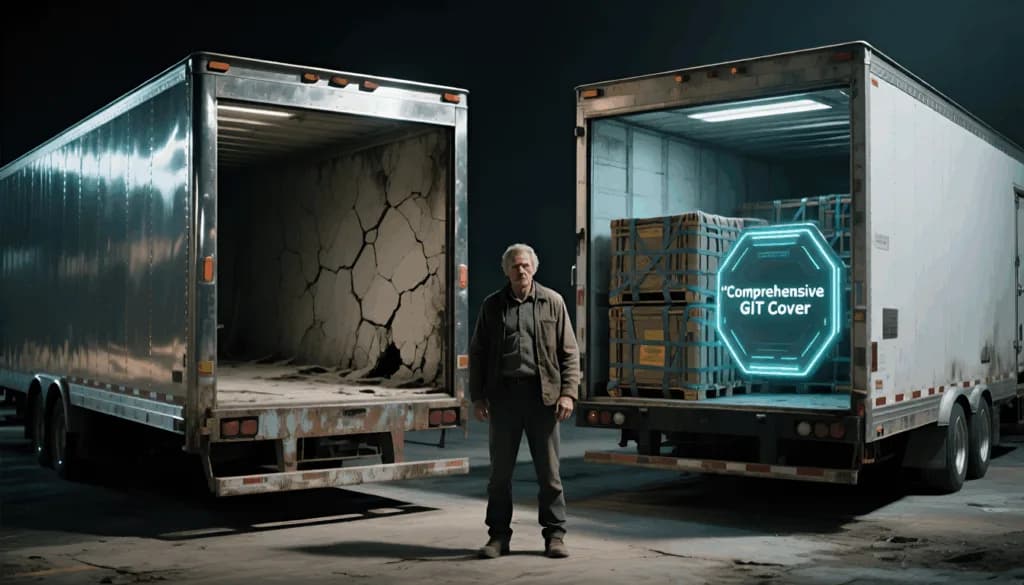
Clients often insert liability clauses into contracts that require transporters to accept more responsibility than their GIT policy covers.
For example:
- You accept liability for any damage during loading.
- You accept responsibility for incorrect packing.
- You accept liability for late deliveries.
- You accept liability for temperature failure.
- You accept liability for packaging shortages.
If your GIT policy does not match the contract, the insurer may decline the claim and the liability returns to you.
This is why Mont Blanc reads contracts before placing Goods in Transit cover.Nobody should sign away liability without knowing who will pay for it.
Loading, Offloading and Human Nature
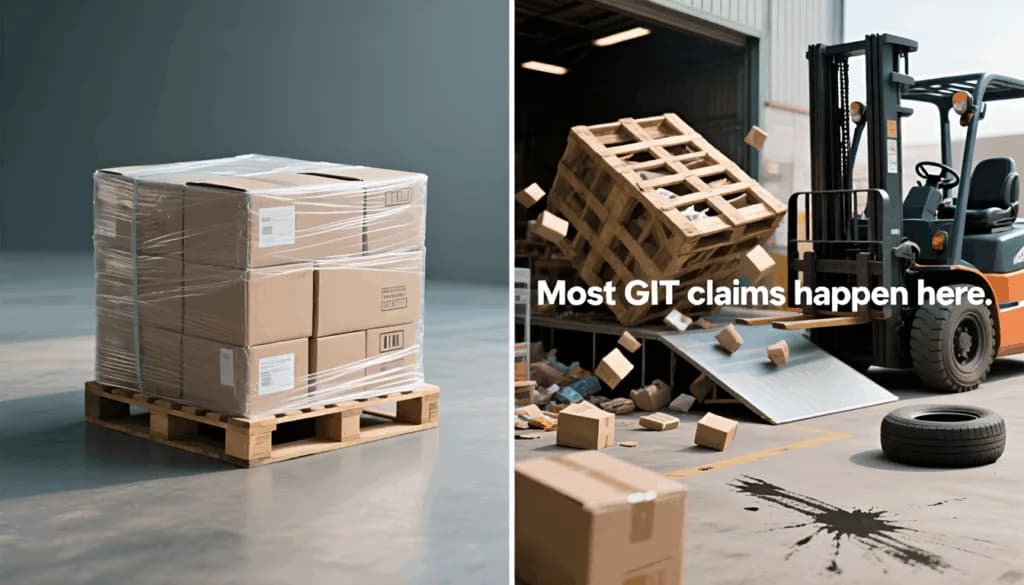
Most GIT claims happen during loading and offloading, not during the trip.Why?Because humans lift things, drop things, stack things, rush things and then hope for the best.
Common loading risks:
- forklift punctures
- pallets collapsing
- goods torn by machinery
- incorrect stacking
- goods pushed off ramps
- packaging damage that later leads to disputes
GIT can include loading and offloading, but it must be specified.
The world assumes the transporter is at fault.GIT protects you from assumptions.
Cross Border GIT: A Different Planet
Cross border loads need a different level of attention.Once a truck leaves South Africa, risk becomes unpredictable.
Common issues include:
- police escorts
- corrupt border officials
- counterfeit paperwork
- tracking blind spots
- slow recovery
- missing documentation
- incorrect permits
A cross-border GIT extension is not optional.It is self-defence.
Why Every Transporter Needs Goods in Transit Insurance
Transporters carry risk that belongs to other people.Clients do not care about excuses.They care about their goods.
Without GIT, you become the insurer.That is never a good business plan.
GIT gives you:
- financial protection
- client confidence
- contract compliance
- predictable risk
- peace of mind
Without GIT, one incident can shut down your entire operation.
The MBFS Approach to GIT (Why Our Clients Sleep Better)
We do GIT differently.We do it properly.
MBFS checks:
- load types
- packaging
- route patterns
- driver consistency
- tracking strength
- client contracts
- cross border movement
- storage expectations
- yard behaviour
We find the gaps before the insurer does.And when something happens, we stand in the gap during the claim.
That is what We Care means.It is not a slogan.It is a practice.
The full picture lives in our guide to trucking insurance.
The cover changes the moment goods leave the yard, which is the line drawn in goods in transit versus marine cargo.
Paperwork gets stolen as often as cargo, so licence fraud on the road belongs in the same risk review.
Is goods in transit insurance compulsory?
No law requires a transporter to carry goods in transit cover. The obligation arrives through the contract instead, and in practice it arrives on nearly every load worth carrying.
Shippers and freight forwarders write it into their transport agreements, usually with a stated minimum limit and sometimes naming the insurer. Retailers and manufacturers moving stock set their own requirement before a vehicle is loaded. A broker or clearing agent appointing a subcontractor will ask for a certificate before releasing the consignment. The requirement is routine enough that an operator without cover is excluded from the work rather than fined for the omission.
There is a second reason beyond the contract. Carrier liability at common law is narrower than most transporters assume, and a transporter can be liable for a load without any policy responding, which is a worse position than being uninsured and not liable. Where a client asks for proof of GIT, they are protecting themselves; where a transporter buys it, they are protecting a balance sheet which would otherwise carry the value of other people’s goods.
Hijacking and cargo theft: what the cover does
Theft of a load is the loss transporters ask about first and the one where the policy wording does most of the work. An all risk GIT policy generally responds to theft and to hijacking, while a restricted policy covering named perils may respond to fire and collision and leave theft outside, so the type of policy decides the answer before the circumstances do.
Two conditions usually sit behind the cover. The first is tracking: an approved, live, monitored unit, with the claim tested against whether it was working at the time. The second concerns the unattended vehicle, where cover for a load left in a parked vehicle is frequently restricted to secured premises or excluded outright, which catches overnight stops more than hijackings.
Hijacking is treated as theft with violence rather than as a separate class, and the practical difference shows in recovery rather than in cover: a hijacked vehicle with a working tracker is often recovered with part of the load, which reduces the claim. Where a route is known for it, insurers tend to price the route rather than decline the risk.
Frequently Asked Questions
What does goods in transit insurance cover?Goods in transit insurance covers the physical loss of or damage to cargo from the moment a journey begins until the goods reach their final destination. It responds to a broad range of transport risks: theft, hijacking, accidents and collisions, overturning, fire, water damage, and damage that occurs during loading and offloading. The cover follows the cargo rather than the vehicle, which is the essential distinction, since a truck can be fully insured while the goods inside it are not. Anyone carrying goods that belong to someone else is responsible for delivering them in the condition received, and if they do not arrive, the client looks to the transporter and the transporter’s insurer. GIT is what stands behind that responsibility. Without it, the loss of a load falls directly on the carrier, regardless of whether the truck itself was insured or undamaged. The cover exists precisely because the value in transit is often separate from, and greater than, the vehicle carrying it.
What does goods in transit insurance not cover?
Goods in transit insurance has specific exclusions that catch transporters by surprise. Poorly packed goods are a common one: if cargo is badly packed by the client or a warehouse and collapses or is damaged as a result, insurers treat it as a choice rather than a risk and do not cover it. Inherent vice is another, an insurance term for a defect or natural property of the goods that causes them to deteriorate, such as fruit that rots or chemicals that corrode; if the goods effectively self-destruct, that is not the insurer’s responsibility. Temperature failure is excluded unless a specific refrigeration extension is added, so a fridge unit failing and spoiling a perishable load will not be paid under standard GIT. Delays and storage beyond the transit itself may also fall outside cover. The pattern is that GIT covers the risks of transit, not defects in the goods or failures in how they were prepared. Knowing these gaps before carrying a load is what prevents an uncovered loss.
Why do transporters need goods in transit insurance separately from truck cover?
Transporters need goods in transit insurance separately because the truck and the cargo are two distinct exposures, and the vehicle policy does not cover the load. A standard truck policy responds to damage to the vehicle, collisions, hijackings affecting the truck itself, but the goods inside are a separate value with their own risk. The truck can arrive undamaged while the cargo is stolen, spoiled, or destroyed, and in that situation the vehicle cover does nothing for the lost load. Because a carrier is legally and commercially responsible for the goods entrusted to it, that loss falls on the transporter unless GIT is in place. This is why GIT exists as its own policy rather than an add-on assumed to come with the truck. The two covers work together, the vehicle policy for the truck, GIT for the cargo, and a transporter relying only on the first carries the full value of every load as an uninsured liability. Most discover this only after losing one.
Does goods in transit insurance cover refrigerated or temperature-sensitive cargo?
Goods in transit insurance covers temperature-sensitive cargo only when a specific refrigeration or temperature extension is added; standard GIT does not. A refrigerated load depends on the fridge unit functioning throughout the journey, and if that unit fails, the goods spoil and become a total loss, an expensive one for high-value perishables. Standard goods in transit cover responds to transit risks such as theft, accident, and fire, but it treats a refrigeration breakdown as outside its scope unless the extension is in place. This is a frequent and costly gap, because a transporter carrying perishable goods may assume their GIT policy covers the whole risk when it covers only part of it. The remedy is straightforward: confirm whether the policy includes a temperature or refrigeration extension before carrying perishable cargo, and add it where needed. For any operator regularly moving chilled or frozen goods, the extension is not optional detail but the part of the cover that addresses their core exposure.
Is goods in transit insurance compulsory in South Africa?
Not by law, but close to it in practice. No statute requires a transporter to hold goods in transit cover. The requirement comes from the contract instead: shippers, freight forwarders, retailers and clearing agents commonly specify a minimum limit and ask for a certificate before a vehicle is loaded, so an operator without it tends to lose the work rather than face a penalty. There is also an exposure argument independent of any client. Carrier liability at common law can leave a transporter answerable for a load with no policy responding, which is a worse position than carrying the risk knowingly. For most operators the useful question is not whether GIT is required, but what limit the contracts being signed call for, and whether the policy in place meets it.
Closing Thoughts: GIT Is Not a Luxury. It Is Protection Against Reality.
Goods move.Goods disappear.Goods get damaged.Goods cause arguments.
GIT exists because transport is unpredictable and the value you carry belongs to someone else.
A transporter without GIT is one accident away from closing their business.A transporter with proper GIT has protection, credibility and stability.
“You shouldn’t have to absorb the value of a vanished load because only the truck was insured. With Mont Blanc Financial Services you won’t.
Contact Mont Blanc Financial Services to confirm your goods-in-transit cover matches the value you carry, not just the vehicle that carries it.”

Nicola Iozzo
Founder & CEO, Mont Blanc Financial Services
Nicola has spent his career reading the policy wording most people skip, and writes here so you don't discover at claim stage what page 14 meant.
This blog is here to inform, not advise. Think of it as a guidebook, not a contract. For decisions affecting your world, have a chat with your broker or financial professional.
Mont Blanc Financial Services (PTY) Ltd. is an authorised financial services provider. FSP 8271