Plant all risks insurance claims: how the process works
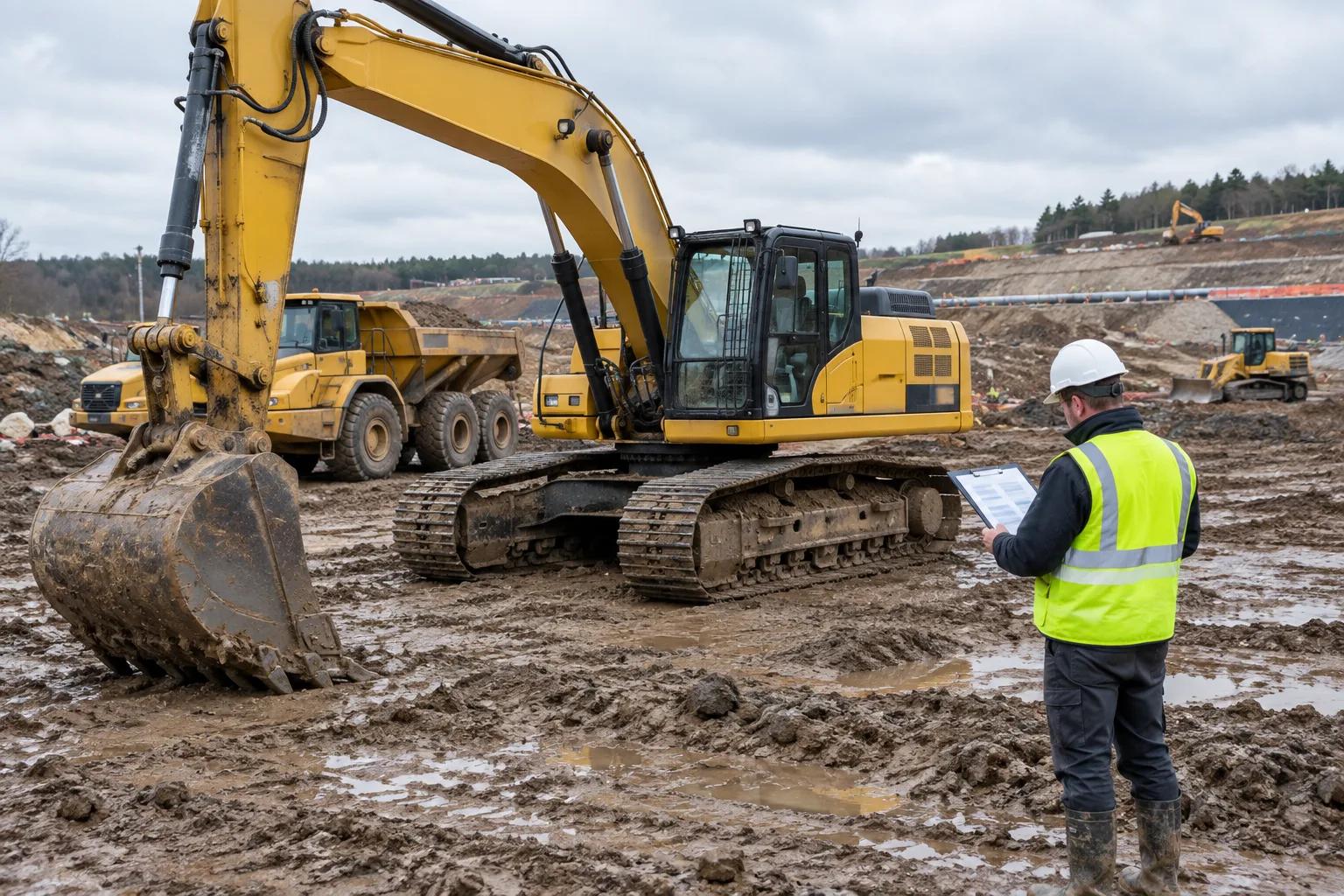
The excavator sits at the bottom of a two-metre drainage trench in Ekurhuleni on a Wednesday, the arm at an angle no manufacturer intended. Your operator is uninjured, the site foreman has taken photographs, and you are already calculating the delay costs. What follows, the call to the broker, the assessor's visit, the back-and-forth over the cause of loss, will take longer than the rescue operation, and the outcome depends almost entirely on decisions made in the first forty-eight hours. Contractors who understand the claims process beforehand tend to recover faster and argue less.
What are plant all risks claims?
A plant all risks claim is a formal request to your insurer for indemnity, meaning compensation, following physical loss or damage to insured construction plant or equipment. The claim triggers when a covered peril such as accidental damage, theft, fire, or flood causes a loss, and it follows a defined process: notification, assessment, proof of loss, and settlement. The process isn't automatic; each step requires action from the insured.
Key Takeaways
- Notify your insurer or broker within the timeframe your policy specifies, typically 24 to 48 hours after discovering the loss.
- Preserve the scene and gather photographic evidence before moving or repairing the equipment.
- A loss adjuster appointed by the insurer assesses quantum and cause, not your broker; the two roles are different.
- Underinsurance triggers average, which reduces the settlement proportionally. An insured value set below replacement cost becomes your problem at claim time.
- Disputes most commonly arise from mechanical or electrical breakdown exclusions, maintenance-linked causes, and the absence of documentation for the equipment's condition before the loss.
- Theft claims require a police report; without one, the claim stalls regardless of how obvious the theft was.
Notifying the insurer: the forty-eight-hour rule

Your first obligation after a loss is to notify your insurer or broker as quickly as the policy requires, and most plant wordings set that window at twenty-four to forty-eight hours from the time you discover the damage or theft. Missing that window doesn't automatically void your claim, but it gives the insurer grounds to argue prejudice, meaning the delayed notification deprived them of the chance to assess the scene while evidence was intact. In practice, an assessor standing in front of fresh damage reaches firmer conclusions than one working from photographs taken a week later.
The notification call is the start of a paper trail. Note the date and time you called, the name of the person you spoke to, and the reference number they give you. If you notify by email, keep the sent copy. A claim becoming disputed later lives or dies on documentation, and the notification record is the first page of that file. Tell your broker what happened in plain terms: where the machine was, what peril caused the loss, and what condition the equipment was in immediately before the incident. Resist the temptation to diagnose the cause yourself; state the facts and let the assessor reach the conclusion, because an incorrect cause stated in the notification can create a coverage problem that didn't exist.
Securing the scene and gathering evidence
Before anything is moved, cleaned, or repaired, take photographs. This sounds obvious until a site foreman, under pressure from a principal contractor, clears the damage to keep the programme moving. Once the physical evidence is disturbed, cause of loss becomes a matter of competing accounts rather than observable fact, and those disputes rarely resolve in the insured's favour.
Photograph the equipment from multiple angles, including the surrounding terrain, any other plant or structures involved, and the approach routes or operating conditions. If the loss involves a collapse or rollover, capture the gradient of the site and the ground conditions. If it involves theft, photograph the storage area, any cut locks or broken fencing, and the access points. Where the site has CCTV, secure the footage before it overwrites; most systems cycle within 72 hours. CCTV footage is among the first things a loss adjuster requests and among the first things an unguarded system deletes.
Alongside the photographs, compile the equipment's service and maintenance records for the preceding twelve months. Insurers and loss adjusters examining a mechanical loss will ask for these regardless, and producing them quickly signals the maintenance obligation in the policy was being met. A machine without a current service record walks into the assessment carrying a disadvantage it didn't need to bring.
The loss adjuster's role and what to expect
Once you notify the insurer, they appoint a loss adjuster, an independent specialist whose job is to assess the quantum of a valid claim. The loss adjuster works for the insurer, not for you. Their mandate is to establish what happened, whether the loss falls within the policy cover, and what it would cost to indemnify it. They aren't there to advise you on how to maximise the settlement, and treating them as if they are will cause friction in every conversation.
What the loss adjuster typically does: inspects the equipment and the site, reviews the maintenance and service records, considers the cause of loss against the policy wording, and produces a report recommending either acceptance, partial acceptance, or repudiation of the claim along with a quantum figure. Where the cause of loss is straightforward, an accidental impact, a fire from an external source, a confirmed theft, the report arrives relatively quickly. Where the cause is contested, mechanical failure, operator error, or a grey area between a covered peril and an excluded one, the process takes longer and sometimes involves an expert engineer's report commissioned by either party.
You are entitled to respond to the loss adjuster's findings. If the quantum figure is lower than your own assessment of the repair or replacement cost, you can submit counter-evidence: a second repair quote, a valuation, or the insured value set in the schedule. Keep every exchange in writing.
Submitting the proof of loss and supporting documents
The formal claim submission, often called the proof of loss, is a written statement of the facts supported by documentation. What goes into it determines how smoothly the assessment moves.
Standard documents for a plant all risks claim include:
- The completed claim form supplied by the insurer
- Photographs of the damage and the site
- A repair estimate from a qualified repairer, or a replacement quotation if the equipment is beyond economical repair
- The service and maintenance records for the equipment
- The police report (mandatory for theft and, in most wordings, for any loss involving vandalism or third-party involvement)
- Proof of ownership: purchase invoice, hire purchase agreement, or asset register entry
- The operator's licence and qualifications, where the cause involves operation rather than an external peril
For theft specifically, SAIA industry claims data on mobile assets points consistently to documentation gaps, missing police reports, absent serial number records, and unverifiable ownership as leading causes of delayed or disputed settlements. A plant claim without a CAS number (the South African Police Service case number) is almost always deferred until one exists.
Comparative overview of documentation requirements by claim type
| Claim type | Police report | Service records | Repair quote | Operator licence |
|---|---|---|---|---|
| Accidental damage | Not required | Required | Required | Required |
| Theft | Mandatory | Required | N/A, replacement | Not applicable |
| Fire | Not required | Required | Required | May be requested |
| Flood / storm | Not required | Recommended | Required | Not applicable |
| Malicious damage | Mandatory | Recommended | Required | Not applicable |
How plant all risks claims settlement amounts are calculated

The settlement figure the insurer offers isn't simply the repair quote. It reflects the policy's indemnity basis, the principle on which loss is measured, and any deductions the wording allows.
Most plant all risks policies settle on an indemnity value basis, meaning the insurer pays the cost of reinstating the machine to its pre-loss condition, taking into account its age, condition, and depreciation. A four-year-old excavator isn't settled at the price of a new one; it is settled at what a machine in equivalent condition would cost in the open market, less the excess stated in the schedule. The excess is the first portion of every claim the insured carries. If your excess is R25 000 and the repair costs R180 000, the insurer pays R155 000. These figures are illustrative.
Where the policy has been written on a replacement value basis, the settlement is closer to the cost of a like-for-like replacement, and underinsurance has less impact. On an indemnity basis, underinsurance has considerable consequences. The average clause, the mechanism reducing a claim proportionally when the sum insured is below the insured value, operates as follows (illustrative): suppose your R4 million roller was insured for R2.5 million. You are carrying 37.5 percent of the risk yourself. A R600 000 repair claim pays out at 62.5 percent of that figure, roughly R375 000, and the R225 000 shortfall is yours. The clause is arithmetic, not a penalty, and it applies regardless of whether the underinsurance was intentional. For a detailed explanation of how underinsurance affects settlements more broadly, plant insurance cover principles provide useful background.
The FSCA's conduct standards for short-term insurers require settlement offers to be made within a reasonable period and policyholders to be given reasons in writing for any reduction or repudiation. If the offer arrives without a written explanation of how the figure was reached, you are entitled to ask for one before accepting.
Common reasons plant all risks claims are disputed or declined
Most disputed plant claims trace back to a handful of recurring causes, and knowing them in advance is cheaper than learning them during an assessment.
Mechanical or electrical breakdown is the most frequent point of contention. Standard plant all risks wordings cover sudden and accidental physical damage from external causes but typically exclude loss arising from mechanical or electrical failure, wear, gradual deterioration, or a fault developing over time. A hydraulic pump failing because a seal has been wearing for months isn't the same event as a pump destroyed when the machine rolls over. The assessor's job is to determine which category the loss falls into, and that determination turns on the service records, the operator's account, and sometimes an engineer's opinion. The plant insurance exclusions article covers this category in detail.
Maintenance obligations are a related issue. Most policy wordings require the insured to maintain the equipment in a roadworthy or serviceable condition. A loss traced to deferred maintenance, a tyre blowout on a machine whose tyre pressures hadn't been checked in six weeks, or a fire from an unserviced engine, can result in a reduced settlement or a repudiation, because the insured failed a condition the policy imposed.
Operator qualifications and authorisation create a narrower but real exposure. Some wordings require the plant to be operated by a qualified and authorised person. Where the operator was unlicensed or operating outside their competency, the insurer has grounds to decline on the basis a policy condition was breached.
Non-disclosure and misrepresentation at inception are less common in claims disputes but significant when they arise. If the information provided at inception understated the risk, a machine described as yard-based yet routinely deployed on remote or high-risk sites, the insurer may invoke the misrepresentation provision. The SASRIA claims guidance illustrates the principle in the context of special-risk cover: a claim is only as strong as the accuracy of the information on which the policy was written.
Settlement timelines and what moves them
An uncomplicated plant all risks claim, clear cause, full documentation, no coverage dispute, can settle in four to eight weeks from notification. A contested claim involving a mechanical breakdown dispute or a question about operator authorisation can run considerably longer, particularly if either party commissions an independent engineer's report.
Complete documentation submitted at first request tends to accelerate settlement. A police report lodged within 24 hours of discovering a theft helps, as do maintenance records showing regular servicing and prompt responses to the assessor's requests. Missing documents delay settlement, as does a genuinely ambiguous cause of loss, a quantum disagreement between the repair estimate and the insurer's own assessment, and any indication a policy condition may not have been met.
If the claim is taking longer than the timeframes your policy specifies, your broker can intervene formally on your behalf. If the dispute escalates beyond the insurer's internal process, the National Financial Ombud Scheme provides a free, independent complaints resolution service for policyholders. A complaint to the Ombud doesn't require a lawyer, and the scheme has jurisdiction over most short-term insurance disputes.
What the assessment measures
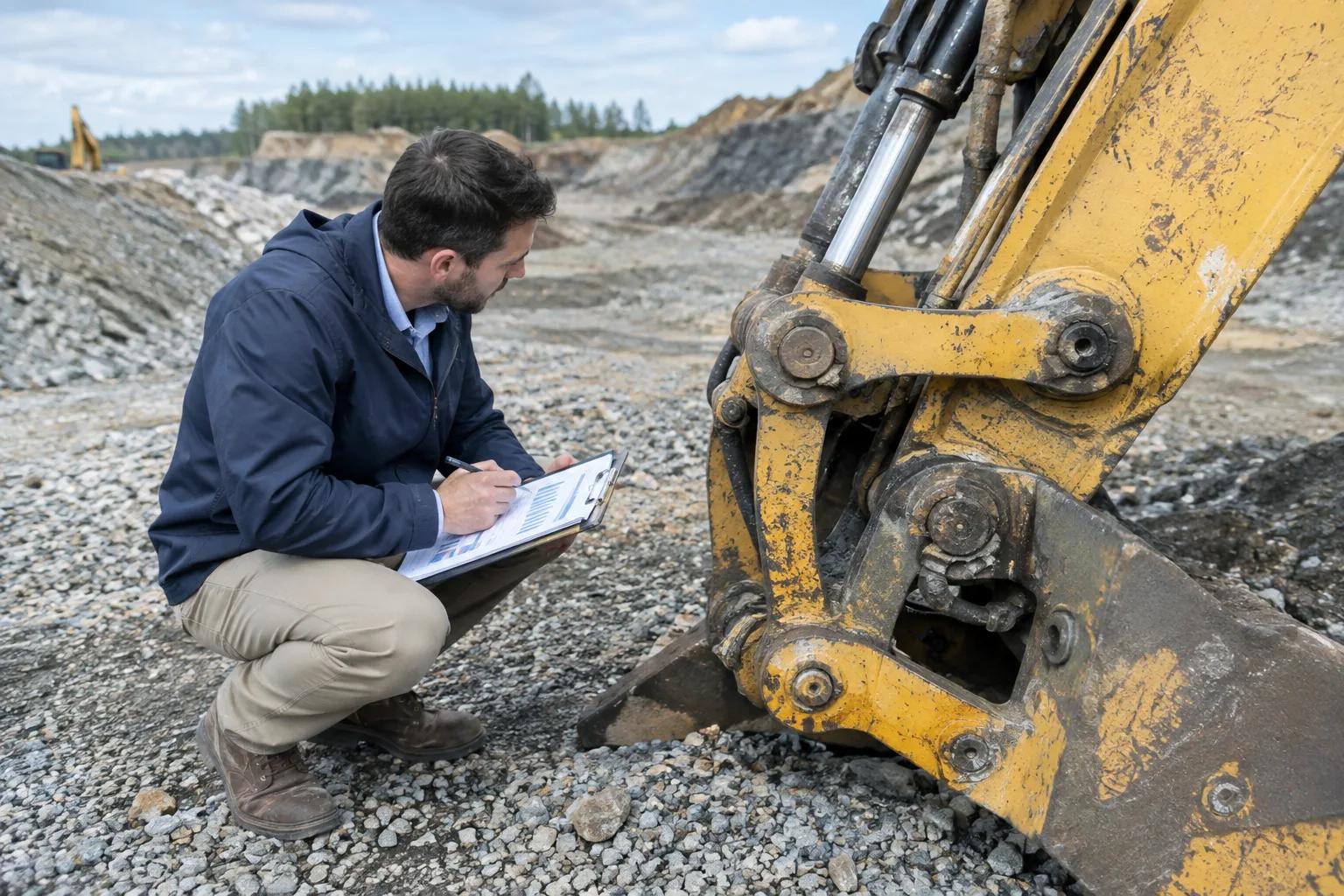
A plant all risks claim assessment isn't a negotiation, though it sometimes feels like one. It is a reconstruction: the loss adjuster working backwards from what they observe to determine whether the peril causing the damage is the same peril the policy agreed to cover. The gap between what you believe is covered and what the wording covers only becomes visible when someone works through that reconstruction, and the time to close it is before the machine goes into the trench, not after. Keeping service records current, updating insured values at renewal, and reading the conditions section of the policy once before it is needed won't prevent a loss. Those steps will, however, give the reconstruction a much tidier answer.
You shouldn't have to discover your policy's conditions in the middle of a claim. With Mont Blanc Financial Services you won't.
Contact Mont Blanc Financial Services to have your plant cover reviewed, your sums insured tested, and your claims obligations explained before the first machine goes down.
The questions below reflect what South African contractors and plant owners ask most often about plant all risks claims, including what typically goes wrong and what the process looks like from the other side of the assessor's clipboard.
Frequently Asked Questions
How quickly do I need to report a plant all risks claim after a loss?
Most plant all risks policy wordings in South Africa require notification within 24 to 48 hours of discovering the loss or damage. Some policies allow up to seven days, but that is less common in commercial plant cover. The clock starts when you become aware of the incident, not when you finish assessing the damage yourself. Delayed notification gives the insurer grounds to argue they were prejudiced, meaning the opportunity to inspect the scene in its original condition was lost, and that argument can affect settlement even if the underlying claim is valid. The safest approach is to call your broker the same day the incident occurs, even if you don't yet have all the details. A preliminary notification followed by a full submission is far better than a full submission two weeks later. If the loss involves theft, lodge the police report and notify the insurer simultaneously; waiting for the CAS number before making the call costs time the policy timetable doesn't allow. Keep a record of every notification contact, including the name of the person you spoke to and any reference number provided, because that record becomes part of your claim file.
What happens if my plant was underinsured at the time of the loss?
If the sum insured on your policy is below the actual replacement or indemnity value of the equipment, the insurer applies what is known as the average clause. This means the settlement is reduced in proportion to the degree of underinsurance. As an illustration: if your machine is worth R5 million and you insured it for R3 million, you have covered 60 percent of the risk. A R900 000 repair claim would settle at 60 percent of that figure, roughly R540 000, and the R360 000 shortfall falls to you. The average clause isn't a penalty the insurer applies selectively; it is a standard provision in most South African plant all risks wordings, and it applies regardless of whether the underinsured value was deliberate or simply never updated. The practical remedy is to review and update your insured values at every renewal, and to ask your broker to benchmark the declared values against current market replacement costs. A valuation reflecting prices from several years ago may fall well short of what the same machine costs to replace today, leaving you exposed at the worst possible moment.
Can a plant all risks claim be declined if the operator was not qualified?
Yes. Many plant all risks policies include a condition requiring the insured equipment to be operated by a qualified, competent, and authorised person. Where the assessor establishes the operator didn't hold the appropriate licence or was operating beyond their permitted competency, the insurer has grounds to decline the claim on the basis a policy condition was breached. This applies most directly to plant with a formal licensing requirement, excavators above a certain lifting capacity, cranes, and certain elevated work platforms, but the principle of authorised operation appears in many wordings beyond those specific categories. Check the conditions section of your policy schedule for the exact wording, and ensure your employment and subcontractor records can demonstrate operator qualification for every machine in your fleet. Where the cause of loss is clearly unrelated to operator error, the qualification condition carries less weight in the assessment, but it remains a factor the loss adjuster will examine and document. Keeping qualification certificates on file for every operator is a straightforward precaution with a direct bearing on claim outcomes.
Does a plant all risks claim cover theft from an unattended site?
Cover for theft from an unattended site depends on the wording and on what security conditions the policy imposes. Most plant all risks policies cover theft, but many include conditions about how the equipment must be secured when left unattended, such as immobilisers engaged, cabs locked, keys removed and stored off-site, or physical security measures such as chains or ground anchors in place. If the theft occurred while those conditions weren't met, the insurer may reduce or decline the settlement on the basis the security obligation was breached. Additionally, all theft claims require a police report: a CAS number logged with the South African Police Service is a standard condition of proof, and a claim without one is typically deferred until the report is available. SASRIA's underwriting guidance reflects the same principle across its own cover classes: the obligation to take reasonable precautions is a near-universal condition in South African short-term insurance. Review your policy's security conditions before leaving plant on site overnight, not after a theft is discovered.
What can I do if I disagree with the settlement offer on a plant all risks claim?
Start with the insurer's internal dispute resolution process. Request a written explanation of how the settlement figure was calculated, including the basis of indemnity, any average clause calculation, and the quantum figures the assessor used. If you have a repair estimate or a valuation differing materially from the insurer's figures, submit it formally in writing and ask for a written response. If the internal process doesn't resolve the dispute, you can refer the matter to the National Financial Ombud Scheme, which handles short-term insurance complaints at no cost to the policyholder and has jurisdiction over most commercial plant claims. The Ombud's process is independent of the insurer, and the insurer is bound by the outcome within the scheme's mandate. Before escalating, ask your broker to intervene; a broker with a relationship with the relevant underwriter can often resolve a quantum dispute faster than a formal complaint process, and that conversation costs nothing. Document every step of your dispute, including dates, names, and the substance of each exchange, so the file is complete if the matter does reach the Ombud.

Nicola Iozzo
Founder & CEO, Mont Blanc Financial Services
Nicola has spent his career reading the policy wording most people skip, and writes here so you don't discover at claim stage what page 14 meant.
Everything on this blog is written to inform and educate. It is for information only. Nothing here is professional legal, financial, or technical advice. If you are making a significant business decision, speak to a qualified professional first. Mont Blanc Financial Services works hard to keep this content accurate and current, but is not liable for decisions made based on what you read here.