Equipment breakdown insurance for South African businesses

The compressor on a Durban cold-storage facility stops at 11 pm on a Friday. By Saturday afternoon the temperature inside is two degrees above the safe threshold for the stock. The repair quote arrives on Monday morning at R180,000, and the engineer adds, almost as an afterthought, that the lead time on the part is six weeks. The standard commercial property policy covers fire, flood, and theft. It doesn't cover the thing that failed on its own. The gap between what the asset insures for and what the business needs is where equipment breakdown insurance begins.
What is equipment breakdown insurance?
Equipment breakdown insurance covers the sudden and unforeseen physical damage caused by a mechanical or electrical failure inside a machine. It pays for the cost of repairing or replacing the damaged component, the labour to restore the machine to working order, and in most forms the income the business loses while the machine is out of service. It doesn't cover ordinary wear and tear, gradual deterioration, or maintenance deferred indefinitely.
Key Takeaways
- Standard commercial property policies exclude mechanical and electrical breakdown, so a machine failing on its own leaves the business without recourse unless a separate equipment breakdown section is in place.
- Equipment breakdown insurance covers sudden failure of machinery, boilers, pressure vessels, electrical switchgear, refrigeration plant, and production equipment.
- Business interruption losses linked to the breakdown are covered under most equipment breakdown policies, either within the same section or as a separately rated extension.
- The cover applies to the cause of loss inside the machine, not to fire or flood following the breakdown, those claims revert to the property policy.
- South African businesses running load-shedding mitigation equipment, including generators and UPS systems, carry a specific breakdown exposure this cover is designed to address.
- Getting the sum insured right means valuing the machine at replacement cost, not book value, because depreciation lives in the accounts, not on the workshop floor.
Why commercial property policies leave machinery exposed
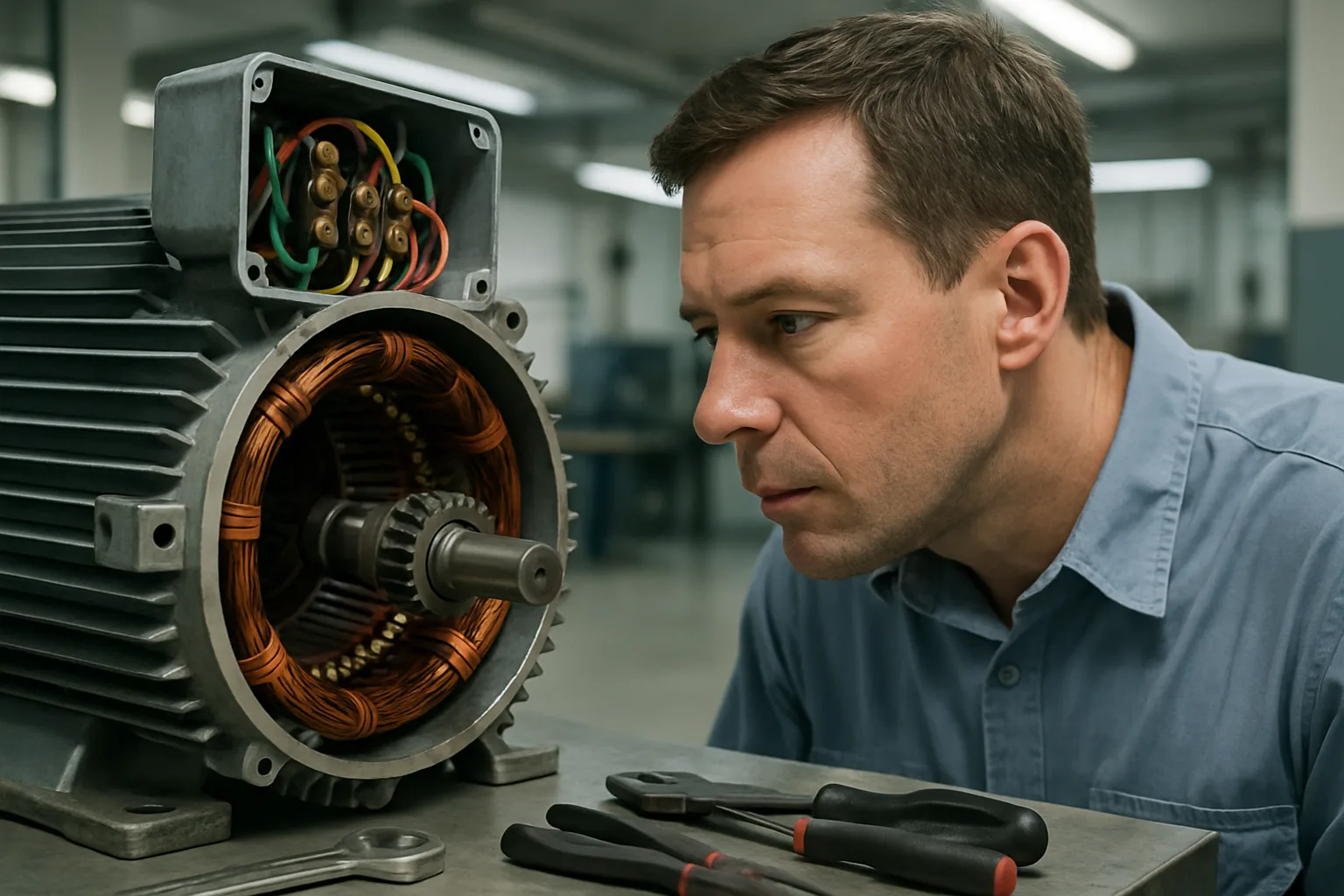
Standard commercial property cover is built around external perils: fire, lightning, storm, flood, malicious damage, and theft. When a motor burns out because of an internal winding fault, or a refrigeration compressor seizes without any external event, the property policy has nothing to offer. The mechanism behind the gap is simple: the property section responds to something happening to the asset from outside; equipment breakdown cover responds to something happening inside it.
This distinction has the sharpest teeth in sectors where machinery is the business: food processing, cold storage, manufacturing, printing, textile production, and any operation where the production line stops when one machine does. South African manufacturing contributed roughly R460 billion to GDP in 2023 according to Stats SA's GDP production data, and a large share of that value travels through equipment carrying no breakdown cover at all.
The absence of cover is rarely a deliberate choice. Most business owners renew a property policy, read the schedule, and assume the machines are somewhere in there. They are listed as contents or as plant and machinery under the property section. What that listing gives them is cover against fire and flood. What it doesn't give them is cover against the machine deciding, entirely on its own initiative, to stop working.
What equipment breakdown insurance covers
Equipment breakdown insurance responds to the sudden and unforeseen physical damage of a covered machine caused by a mechanical or electrical breakdown, including tearing, bursting, short circuits, overheating, and operator error in some wordings. The cover typically extends to:
- Boilers and pressure vessels
- Refrigeration and air-conditioning plant
- Electrical switchgear, transformers, and distribution boards
- Production machinery, presses, and conveyor systems
- Generators and uninterruptible power supply (UPS) systems
- Computer and process-control equipment where the breakdown is mechanical or electrical rather than a software failure
The policy pays for the cost to repair or replace the damaged parts, the labour to complete the repair, and where the wording includes a business interruption extension, the gross profit lost during the period the machine is out of service. The indemnity period on the interruption extension is the number of weeks or months the policy will pay for income loss. Set it too short and the claim runs out before the machine is back in production; the remaining lost income is the business's to absorb.
The load-shedding exposure most businesses have missed
South Africa's extended load-shedding cycle between 2022 and 2024 pushed most commercial businesses to install generators, inverters, automatic transfer switches, and battery storage systems. The same equipment introduced a new class of breakdown risk, because every power restoration event puts a surge through the system, and every start-up cycle on a generator puts mechanical stress on components not always designed for daily switching.
The FSCA's conduct standards for short-term insurers don't prescribe how mitigation equipment is treated in policy wordings, so whether a generator is covered under the property section, the equipment breakdown section, or neither depends entirely on how the specific wording is drawn. Some property policies include generators as contents. Some exclude them from breakdown cover on the grounds that the cause is the power grid, not an internal fault. Some equipment breakdown sections cover generators without restriction. None of these positions is unusual, and all three can be found in active South African commercial policies.
The practical result is a machine a business depends on every day sitting in a grey zone between two sections. Checking where the generator, the inverter, and the transfer switch sit in the current wording costs less than finding the answer during a claim.
How the indemnity period determines what you actually recover
Most equipment breakdown claims are straightforward on the repair side. The engineer quotes, the insurer approves, the parts arrive, and the machine returns to service. The difficulty arrives when the equipment controls a process and the process stopping has cost the business income it can't recover in a short window.
The indemnity period on the business interruption extension works the same way as it does on a standard business interruption policy: it is a clock, not a guarantee. It starts on the day the machine fails and stops on the date the policy names. If the wording says four weeks and the specialist component ships from Germany in six, the last two weeks of lost income are uninsured.
Common indemnity period options for equipment breakdown extensions
| Indemnity period | Suitable for | Risk of shortfall |
|---|---|---|
| 4 weeks | Simple equipment, local parts supply | High if specialist components required |
| 8 weeks | Most general manufacturing plant | Moderate for imported components |
| 13 weeks | Production-critical plant, refrigeration | Low for most scenarios |
| 26 weeks | Specialist industrial equipment | Low, adequate for most long lead-time parts |
| 52 weeks | Bespoke or custom-built machinery | Low, including import delays |
The table is a prompt, not a recommendation, because the right period depends on what the machine does, what it takes to repair it, and how long the business can run at reduced capacity before the income loss becomes structural. These are questions worth asking before renewal, not after the compressor stops.
What equipment breakdown insurance does not cover

Understanding the exclusions is as useful as understanding the cover, and in some policies the exclusion section is where the real decisions were made. The standard exclusions across most South African equipment breakdown wordings include:
Wear and tear and gradual deterioration. A machine reaching the end of its service life doesn't become an insurance claim. The cover is for sudden and unforeseen failure, not the predictable consequence of age or use.
Lack of maintenance. If the manufacturer specifies a service interval and the business hasn't followed it, the insurer's assessment of the claim will include a review of the maintenance records. A gap in the service log doesn't automatically void a claim, but it gives the loss adjuster a reason to look more carefully at whether the failure was truly unforeseen.
Consequential loss beyond the policy's interruption extension. The equipment breakdown policy pays for the machine and for the income extension it carries. Penalties under a supply contract, client claims for late delivery, and reputational damage are consequential losses sitting outside the section unless specifically included by endorsement.
Cosmetic damage. Scratches, dents, and surface damage without mechanical effect are excluded.
Electrical supply failure as the cause. Many wordings exclude a claim where the cause of failure is a fault in the incoming power supply, on the grounds that the exposure belongs to the property policy's special perils section or to a separate power surge endorsement. Load-shedding reconnection damage sits in a contested space here, and the wording needs to be read carefully.
The SAIA's published guidelines on equipment breakdown underwriting acknowledge that policy wordings vary materially across the South African market, which is the polite way of saying that two businesses in the same industry with policies placed at the same premium can end up with meaningfully different cover.
Getting the sum insured right
Setting the sum insured for equipment breakdown cover is one of those tasks sliding to the bottom of the renewal to-do list every year, because the machine is running and nobody wants to think about when it won't be. The consequence of leaving it there is the same consequence applying to underinsurance across every class: the average clause.
The average clause means that if your machine is insured for R600,000 and its replacement cost at the time of the claim is R1,000,000, you are treated as having carried 40 percent of the risk yourself. A R400,000 repair claim pays out at R240,000. The shortfall isn't a dispute; it is arithmetic.
Replacement cost isn't book value. A machine depreciated to R200,000 in the accounts may still cost R1,000,000 to replace. The correct basis for the sum insured is what it costs to buy and install a machine of equivalent specification today, not what the accountant's depreciation schedule says it is worth. For older or specialist equipment, a formal valuation from a mechanical engineer is the only reliable route to the right number. Under the Prudential Authority's solvency and technical provisions framework, insurers price for adequately valued assets, which means the insured carries the underinsurance risk, not the insurer.
Machinery cover sits inside a broader commercial programme, and the gaps tend to appear between sections. Our guide to general business insurance shows where the seams are.
The policy wording most owners never read until a machine stops
The policy wording on an equipment breakdown section isn't light reading. It defines "sudden and unforeseen" with precision, specifies which machine categories are covered by name, sets out the basis of settlement (reinstatement value or indemnity value), and contains the maintenance and inspection conditions required for cover to respond. Most business owners encounter it for the first time when the loss adjuster puts it on the desk.
A broker who reads the wording before placement asks whether the generator and the UPS are explicitly scheduled, checks that the indemnity period on the business interruption extension matches the realistic lead time for critical parts, and verifies that the sum insured reflects replacement cost rather than book value. The broker performs the function the document is supposed to perform before it is needed. The alternative is a conversation nobody enjoys having, in a workshop gone quiet for the wrong reasons.
The machine keeping the business running deserves the same attention as the building housing it

A factory's walls are insured carefully because everyone can see them. The compressor in the basement, the transformer on the roof, and the conveyor moving R6 million of product last year sit in the same building and carry ten times the operational risk, yet in most South African businesses they receive less scrutiny at renewal. Equipment breakdown insurance isn't the most complicated section on a commercial policy. It is often the one deciding whether a breakdown becomes an inconvenience or a crisis.
You shouldn't have to discover what your policy excludes while standing next to a machine that has stopped. With Mont Blanc Financial Services you won't.
Contact Mont Blanc Financial Services to have your current equipment cover read, tested against your actual machinery list, and corrected before the next failure makes the question urgent.
If you're wondering how this cover sits alongside your property policy, what happens when a generator fails during load-shedding, or whether your sum insured reflects what replacement costs today, the questions below address the ones businesses ask most often.
Frequently Asked Questions
Is equipment breakdown insurance the same as my machinery cover under the property policy?
No, and the difference is the one deciding most claims. Your commercial property policy covers machinery against external perils: fire, flood, storm, and theft. Equipment breakdown insurance covers internal failure, a motor burning out, a compressor seizing, a transformer developing a fault, where no external event caused the damage. Both sections can appear on the same policy schedule, but they respond to different causes of loss. A machine destroyed in a fire claims under the property section. A machine failing without any external cause claims under the equipment breakdown section. If your policy carries only the property section and the machine fails on its own, the claim has no section to land in. Checking whether both sections are in place is the first question worth asking at your next renewal. A broker who reviews your schedule before the renewal date, rather than after a failure, can identify the gap and close it while there is still time.
Does equipment breakdown insurance cover the income I lose while the machine is being repaired?
It can, but only if your policy includes a business interruption extension on the equipment breakdown section. The extension pays for the gross profit your business loses during the period the covered machine is out of service, up to the indemnity period named in the wording. Gross profit in this context means your revenue minus the direct costs you save because production has stopped, so it covers the fixed overheads and net profit you can't recover. The indemnity period is the critical variable: if parts take longer to arrive than the period allows, the remaining income loss is uninsured. Most South African commercial insurers offer indemnity periods ranging from four weeks to twelve months on equipment breakdown business interruption extensions, and the right period depends on the lead time for your most critical component. A food processor waiting six weeks for a refrigeration compressor shipped from Europe needs a period reflecting that lead time, not a standard four-week default.
Does equipment breakdown insurance cover generator and inverter failures from load-shedding?
This depends entirely on how your specific policy wording defines the cause of loss and which equipment categories are scheduled. Some wordings cover generators and UPS systems without restriction. Others exclude failure caused by an external power supply fault, on the grounds that the incoming grid is the cause rather than an internal breakdown. Load-shedding reconnection surges sit in a grey area: the surge is external, but the damage occurs inside the machine. Some policies resolve this through a power surge endorsement on the property section; others include it within the equipment breakdown section. There's no market-wide standard position, so the wording needs to be read and the cover confirmed before a claim tests it. The FSCA's published conduct requirements require that policy terms are clear and not misleading, but they don't standardise the coverage position on this specific risk. Ask your broker to confirm in writing which section responds to generator failure before assuming the machine is covered.
What happens if my machine is underinsured at claim time?
The insurer applies the average clause, and the claim pays out at a proportion of the loss reflecting the proportion of the risk you insured. If your machine would cost R1,200,000 to replace and you insured it for R800,000, you covered two-thirds of the risk. A R600,000 repair claim pays out at R400,000, and the remaining R200,000 is yours to fund. The sum insured should reflect current replacement cost, what it would cost to source and install a machine of equivalent specification today, not the depreciated book value or the original purchase price. For specialist or ageing equipment, a formal engineering valuation gives the only reliable figure. Insurers settling equipment breakdown claims under the Insurance Act 18 of 2017 are entitled to apply average where underinsurance is demonstrated, and the shortfall isn't a negotiating position. Reviewing the sum insured at each renewal, rather than carrying the figure forward unchanged, is the most reliable way to avoid a partial settlement when a claim arrives.
Which industries in South Africa need equipment breakdown insurance most urgently?
Any business where a single machine controls production, storage, or service delivery carries a concentrated breakdown risk. Cold storage and food processing operations are near the top of the list, because a refrigeration failure has a short window before it becomes both a machinery claim and a stock loss. Manufacturing businesses with single-point-of-failure equipment, printing and publishing operations, healthcare facilities running diagnostic or life-support equipment, hospitality businesses depending on kitchen plant, and data centres running cooling systems all carry material exposure. Industry loss data consistently shows equipment breakdown claims in South Africa concentrated in food, beverage, and manufacturing sectors, where downtime translates directly into lost production and contractual penalties. For any operation where stopping the machine stops the business, your best course is to treat the cover as a practical necessity rather than an optional extra, and to confirm that the business interruption extension carries an indemnity period long enough to cover the realistic repair window for your most critical asset.

Nicola Iozzo
Founder & CEO, Mont Blanc Financial Services
Nicola has spent his career reading the policy wording most people skip, and writes here so you don't discover at claim stage what page 14 meant.
Everything on this blog is written to inform and educate. It is for information only. Nothing here is professional legal, financial, or technical advice. If you are making a significant business decision, speak to a qualified professional first. Mont Blanc Financial Services works hard to keep this content accurate and current, but is not liable for decisions made based on what you read here.
Mont Blanc Financial Services (PTY) Ltd. is an authorised financial services provider. FSP 8271