Commercial property reinstatement value: avoiding underinsurance

Your architect quotes R18 million to rebuild the warehouse. The policy schedule sitting in the lever-arch file still shows the figure your broker entered at inception in 2019: R9.5 million. No one updated it because no one was asked to, and the premium stayed low because the number stayed low. When the fire assessor walks the site and pulls out a calculator, the shortfall is no surprise to him. It becomes one to you. The insurer applies the average clause, pays out proportionally, and the remaining gap is yours to carry for as long as the rebuild takes.
What is reinstatement value insurance?
Reinstatement value insurance is a policy basis that pays the full cost of rebuilding your property from the ground up, using current labour rates and current material costs, on the same footprint, to the same standard. It doesn't pay what you originally paid for the property, what it would sell for today, or what a valuer might say it is worth on the open market. It pays what it would cost to demolish the remaining structure, clear the site, and construct an equivalent building from scratch.
Key Takeaways
- Your sum insured must reflect the rebuild cost, not the purchase price or the market value. These three figures can differ by millions on the same property.
- Reinstatement value insurance is the correct basis for commercial buildings. An indemnity-value policy (one factoring in depreciation) often leaves a significant gap at claim time.
- Building costs in South Africa have risen sharply since 2020. A figure set three or four years ago is almost certainly wrong today.
- The average clause means underinsurance isn't a discount, it is a penalty applied at claim time, proportional to the gap between your sum insured and the true rebuild cost.
- A professional reinstatement cost assessment, carried out by a qualified quantity surveyor, is the most reliable way to set the correct figure and defend it if the insurer's loss adjuster challenges it.
- You should review your reinstatement figure at every renewal, and commission a full professional assessment at least every three to five years.
Why the purchase price is the wrong starting point

The figure you paid for a commercial property has almost nothing to do with what it would cost to rebuild it. These are two entirely different calculations measuring two entirely different things, and confusing them is one of the most consistent causes of underinsurance among commercial property owners in South Africa.
When you buy a building, you are paying for its location, its land, the state of the local market, the motivated or unmotivated seller across the table, and the timing of the transaction. When you insure a building for reinstatement purposes, none of those factors counts. The insurer isn't buying the land again, because land survives a fire. The insurer isn't compensating you for market movements, because the market isn't what burned. What burned is the structure, and rebuilding it involves demolition contractors, civil engineers, materials with their own supply chains and their own price inflation, and tradespeople who charge by the hour at current rates.
A factory in Pinetown costing R6 million to buy in 2017 might carry a land component of R2 million, a market premium from a competitive bidding process, and a building structure costing R11 million to replicate today, given construction cost inflation since then. Insuring it at R6 million because that is what you paid, or at R8 million because that is what it would sell for now, leaves the actual exposure uncovered. Research into commercial property underinsurance consistently shows the sum insured should reflect full rebuild cost, not acquisition cost or disposal value.
The difference between market value and reinstatement cost
Market value and reinstatement cost aren't different names for the same thing. They answer different questions entirely, and your policy is built on one of them.
Market value answers: what would this property fetch if you sold it today? It reflects supply and demand, comparable sales nearby, the desirability of the area, and current economic conditions. It rises and falls with the market. It includes the land. A valuer assessing market value produces a figure you might use to set an asking price or to satisfy a bank's mortgage requirements.
Reinstatement cost answers: what would it cost to rebuild this structure from scratch today? It reflects construction rates, material costs, professional fees, and demolition. It excludes the land. It tends to rise steadily over time as building costs increase, regardless of what the property market is doing. According to guidance on market value versus reinstatement cost, the Royal Institution of Chartered Surveyors recommends commercial property owners commission a full on-site reinstatement cost assessment every three to five years, with desktop reviews in between to account for inflation and changing building costs. This is the figure your insurer needs.
One of the most persistent causes of underinsurance, noted by reinstatement specialists including Kroll's fixed asset advisory team, is the confusion between three values: market value, mortgage value, and insurance reinstatement value. They aren't connected. A mortgage valuation satisfies a lender. A market valuation satisfies a buyer. Neither satisfies an insurer at claim time.
The table below illustrates how these three figures can diverge on the same commercial property.
| Valuation basis | What it measures | Includes land? | Relevant for insurance? |
|---|---|---|---|
| Purchase price | What you paid at transaction | Yes | No |
| Market value | What it would sell for today | Yes | No |
| Mortgage valuation | What the lender would lend against | Yes | No |
| Reinstatement cost | What it would cost to rebuild today | No | Yes |
How the average clause turns underinsurance into a maths problem
The average clause is the mechanism making underinsurance expensive at claim time. Understanding it removes any temptation to let the sum insured drift below the true rebuild cost.
The average clause works as a ratio. If your building would cost R20 million to rebuild and you have insured it for R10 million, you have covered half the risk. When a claim arises, the insurer treats you as your own insurer for the uncovered half. A R5 million claim pays out R2.5 million. The missing R2.5 million isn't a penalty the insurer is imposing on you. It is a calculation reflecting the share of the risk you chose to carry, even if you didn't know you were carrying it.
The clause appears in most commercial property policies as standard wording, and it applies to partial losses as well as total losses. A fire destroying a third of your building still triggers the calculation if your sum insured is below the true reinstatement figure. You don't have to lose everything to feel the consequences of getting the number wrong.
This is why insurers and brokers with commercial property experience, including guidance published by Aon on preventing underinsurance, stress keeping pace with reinstatement valuations is not optional housekeeping. It is the difference between a claim putting your business back on its feet and one leaving you short by an amount not visible until the assessor finishes his calculation.
What a professional reinstatement cost assessment includes
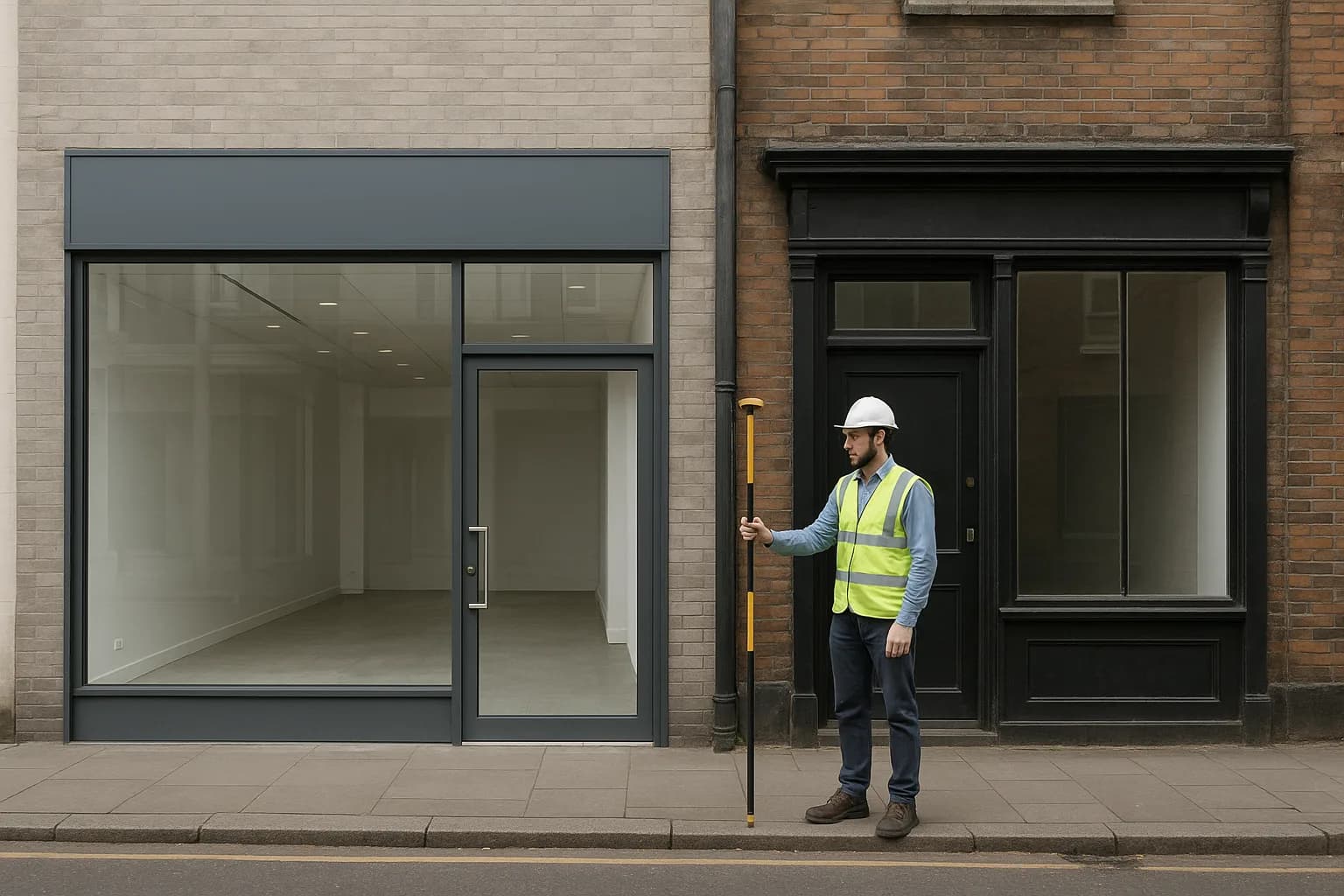
A reinstatement cost assessment, often abbreviated to RCA, is a formal calculation produced by a qualified quantity surveyor after a physical inspection of your building. It isn't an estate agent's opinion, an online tool, or the figure your neighbour arrived at by multiplying floor area by a rough rate per square metre. It is a line-by-line build-up of what it would cost to reconstruct your building today.
A thorough RCA covers the structure: foundations, walls, floors, and roof. It covers finishes: the tiling, the ceilings, the glazing, and the internal fit-out appropriate to the building's use. It covers services: electrical installation, plumbing, fire suppression, air conditioning, and lifts where present. It covers professional fees, the architect, the engineer, and the project manager needed to oversee the rebuild. It covers demolition and rubble removal, which can be substantial for older or larger structures. And it accounts for the time the rebuild will take, because costs at the start of a two-year rebuild aren't the same as costs partway through it.
The assessment produces a figure your broker can place on the policy schedule with confidence, and one a loss adjuster would struggle to dispute. Without it, the number on your schedule is a guess, and the average clause applies to guesses exactly as it applies to deliberate decisions.
Building cost inflation and why last year's figure is already wrong
South African construction costs don't stay still. Labour, materials, and professional fees all move, and they have moved substantially upward over the past several years. A reinstatement figure set in 2020 almost certainly understates the true rebuild cost today, even if the building hasn't changed at all.
Steel prices, cement costs, and the wages of skilled tradespeople have all increased since the disruptions of 2020 through 2022. Load-shedding has added cost and time to construction projects across the country: generators, extended schedules, and contractors pricing risk into their rates. A building costing R15 million to rebuild in 2021 may require R19 or R20 million today, depending on the specification and the region.
A policy renewed year after year on the same sum insured silently accumulates underinsurance, even if you have never changed anything about the property and have never missed a premium. The Geneva Association's research on the value of insurance in a changing risk landscape highlights the gap between insured values and actual replacement costs has widened across property classes globally, and South Africa isn't insulated from that trend.
The practical response is straightforward: at every renewal, your broker should ask whether the sum insured has been reviewed. At least every three to five years, commission a fresh RCA from a quantity surveyor. In the years between, apply an inflation factor, your broker can advise on an appropriate index, and adjust the schedule before the renewal goes through.
What happens when the indemnity period and the reinstatement value don't align
A commercial property policy typically has two figures working together: the reinstatement value for the building, and the indemnity period for any Business Interruption cover attached to the policy. The indemnity period is the window of time during which the policy pays for trading losses while the building is being rebuilt. If these two figures are out of step, the physical cover and the revenue cover run out at different times.
A warehouse taking eighteen months to rebuild needs an indemnity period of at least eighteen months on the Business Interruption section, ideally longer to allow for the time needed to win back customers and stabilise turnover. An indemnity period set at twelve months because that was the default at inception, a limitation the Msunduzi Municipality's commercial insurance schedule wording illustrates clearly in its business interruption conditions, pays for trading losses only until the clock runs out, regardless of whether the building is finished or the business has recovered. The business interruption cover stops. The rebuild continues. The shortfall is yours to carry.
Getting the reinstatement value right is necessary. Pairing it with an indemnity period reflecting how long an actual rebuild would take completes the picture.
The reinstatement figure belongs on your agenda before the next renewal

A commercial property owner who hasn't reviewed the reinstatement value on their schedule in the past two or three years is carrying underinsurance on a building they may believe is fully covered. The policy doesn't warn you. The premium doesn't warn you. The warning arrives in the form of a loss adjuster's calculation on the day a claim is assessed, and by then the time to fix it has passed.
The conversation to have with your broker before the next renewal is a short one: when was the reinstatement figure last professionally assessed, and does it reflect what it would cost to rebuild this building today? If the answer to the first question is "I'm not sure" and the answer to the second is "possibly not", the cost of a quantity surveyor's assessment is a fraction of the shortfall the average clause would produce on a significant claim.
You shouldn't have to fund the gap between what your policy pays and what your building costs to rebuild. With Mont Blanc Financial Services you won't.
Contact Mont Blanc Financial Services to have your current commercial property sum insured reviewed, your reinstatement figure tested against today's building costs, and your cover structured so the number on your schedule is one you can rely on at claim time.
The questions commercial property owners ask most often about reinstatement value insurance follow a few consistent patterns: what the terms mean, how the calculation works, and what to do when the figure on their current schedule looks like it was last touched during a different government.
Frequently Asked Questions
What does 'reinstatement cost' mean in a reinstatement value insurance policy?
Reinstatement cost is the full amount it would cost to rebuild your commercial property from the ground up, using current labour rates and current material costs, on the same site, to an equivalent standard. It starts from demolition of whatever structure remains after a loss and ends when the building is ready for occupation again.
The figure includes the structure, all internal finishes, building services such as electrical and plumbing installations, and the professional fees of the architect, engineer, and project manager overseeing the work. It doesn't include the land, because land isn't destroyed by fire or flood.
In a reinstatement value insurance policy, this is the figure your insurer commits to pay in the event of a total loss, provided the sum insured on your schedule accurately reflects it. If the sum insured is lower than the true reinstatement cost, the average clause reduces your payout proportionally, regardless of how carefully you have maintained your premiums. The reinstatement cost is a moving target rising with construction cost inflation, which is why it needs to be reviewed regularly rather than set once and left to age in a folder. A quantity surveyor's assessment every three to five years, with inflation-adjusted reviews in between, keeps the figure defensible and the cover genuine.
What is the key difference between reinstatement value and market value for reinstatement value insurance?
Reinstatement value and market value answer fundamentally different questions, and only one of them counts to your insurer at claim time.
Reinstatement value asks: what would it cost to rebuild this structure today? It excludes land, reflects current construction rates, and rises with building cost inflation regardless of the property market. This is the figure your commercial property policy should be built on.
Market value asks: what would this property sell for today? It includes land, reflects supply and demand in the local property market, and can move in either direction depending on economic conditions and buyer interest. A bank uses market value to decide how much to lend. An estate agent uses it to set an asking price. An insurer doesn't use it to settle a claim.
The gap between the two can be substantial. A well-located industrial property in a high-demand area may carry a market value well above what rebuilding the structure would cost, because buyers are paying for the location. A specialist building in a low-demand area may carry a market value well below its reinstatement cost, because the structure is complex or expensive to replicate. In both cases, insuring at market value rather than reinstatement cost produces the wrong figure, and the wrong figure at claim time isn't corrected by goodwill. Your broker should confirm in writing which basis your current policy uses.
Which valuation basis should I use for reinstatement value insurance: reinstatement value or indemnity value?
For most commercial property owners, reinstatement value insurance is the correct basis, and it is what most commercial property policies default to. The alternative, indemnity value, applies a depreciation factor reducing the payout based on the age and condition of the building. An older building insured on an indemnity basis may pay out significantly less than the cost of rebuilding it, leaving you to fund the difference.
Reinstatement value insurance removes the depreciation calculation. It pays the full rebuild cost at current rates, which is what most owners need to put their building back into service after a major loss.
The indemnity basis is sometimes appropriate where a building is old, hasn't been maintained, and would realistically be rebuilt to a lower specification after a loss. Your broker should explain which basis applies to your policy and why. If you are unsure which basis your current schedule reflects, check the wording. The basis of settlement clause will name it. If it says "reinstatement", you are on the right basis, provided the sum insured accurately reflects the true rebuild cost. If the sum insured is stale, the basis alone doesn't protect you. Ask your broker to run an indicative rebuild cost check before the next renewal, so the figure on your schedule is one you've tested rather than inherited.

Nicola Iozzo
Founder & CEO, Mont Blanc Financial Services
Nicola has spent his career reading the policy wording most people skip, and writes here so you don't discover at claim stage what page 14 meant.
Everything on this blog is written to inform and educate. It is for information only. Nothing here is professional legal, financial, or technical advice. If you are making a significant business decision, speak to a qualified professional first. Mont Blanc Financial Services works hard to keep this content accurate and current, but is not liable for decisions made based on what you read here.
Mont Blanc Financial Services (PTY) Ltd. is an authorised financial services provider. FSP 8271