Business Interruption Cover: Counting the Hidden Costs
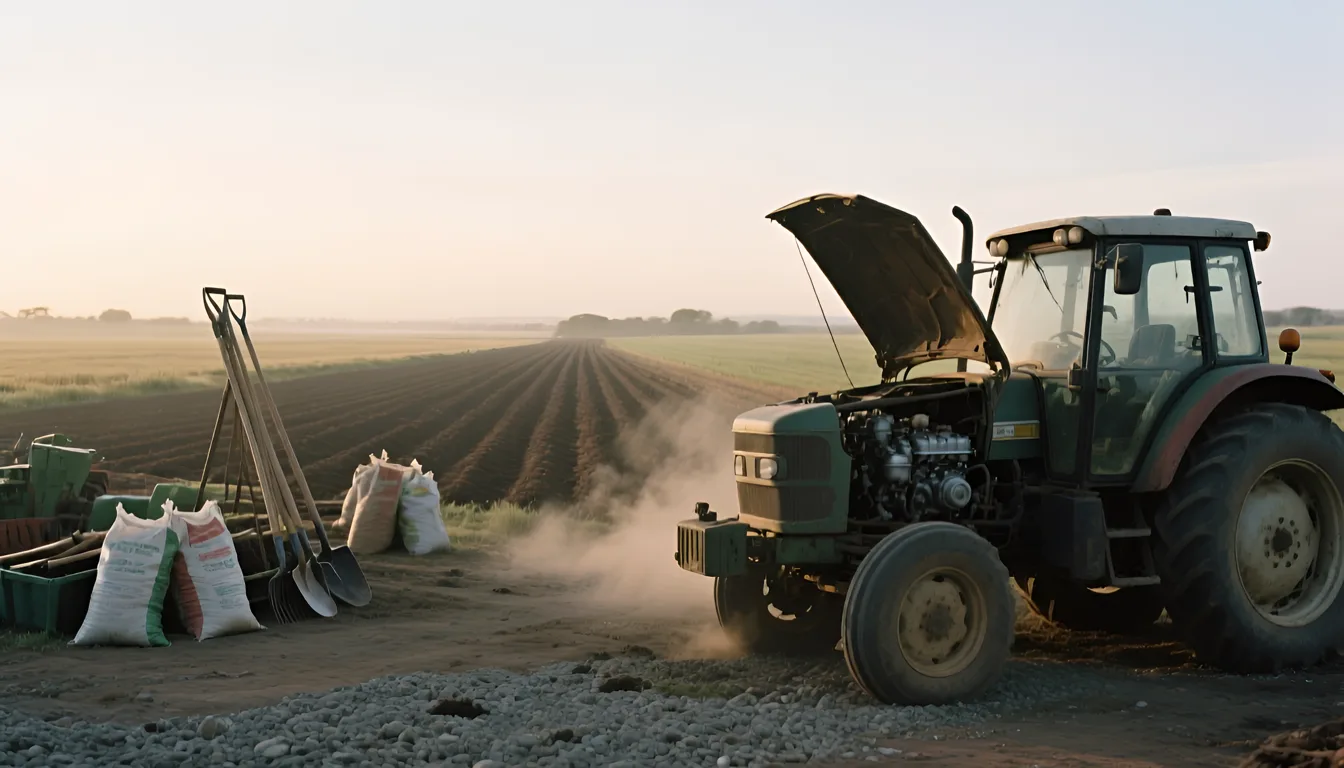
A farm is rarely broken by the disaster itself but by the days after it, when time turns into loss and loss into debt. A failed tractor at planting, a dead cold room in citrus season, three days without power, none of these destroy a physical asset the way a fire does, yet each can cost more than the asset would. Standard cover pays for damaged property; it does not pay for the weeks the operation cannot run.
What is business interruption insurance for farms?
Business interruption insurance for farms covers the income a farming operation loses while it cannot run normally after an insured event, as distinct from the cost of the physical damage itself. It responds to lost production and continuing expenses during recovery, when a fire, flood, breakdown, power outage, or disease outbreak halts operations rather than merely damaging an asset.
Key Takeaways
- Business interruption insurance for farms covers lost income during recovery, not the physical damage itself, which standard property cover already addresses.
- Much of a farm’s loss occurs after the event, not during it, as machines wait for repair, supply chains falter, and yields drop.
- Agriculture runs on a fixed calendar, so a missed planting window or a cold room failing in season cannot simply be caught up later.
- Cover responds to events such as fire, flood cutting road access, machinery breakdown, power outages affecting cooling, and disease outbreaks.
- Farms with business interruption cover tend to recover materially faster from shocks than those without.
The Cost No One Sees Until It Arrives
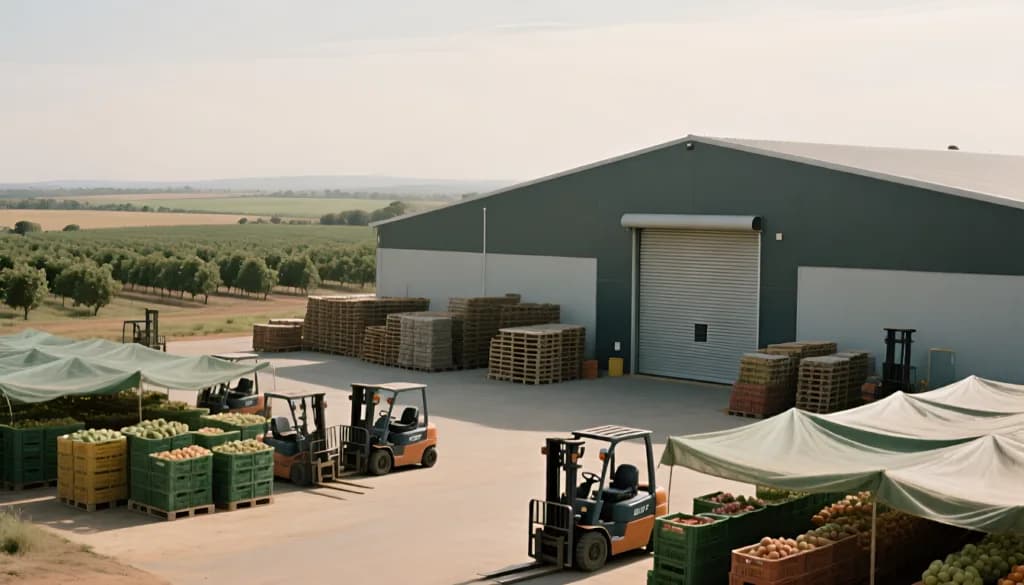
Most farmers can point to a field, a barn, or a tractor and tell you its value down to the last rand. Few can tell you the cost of one week without working irrigation, one month without cool storage, or three days without a functioning power supply.
The Bureau for Food and Agricultural Policy (BFAP) reports which over 60 percent of South African agricultural losses occur after the event, not during it. Machines break, roads wash away, supply chains falter, and yields plummet while everyone waits for repairs.
Standard insurance pays for damaged property.Business interruption cover pays for the time you lose while waiting for life to behave again.
There is a difference between a burnt packhouse and two months of lost exports. One is a claim. The other is a catastrophe.
Why Farmers Need Business Interruption Protection More Than Ever
Agriculture is a calendar which refuses to shift. If you miss planting, you do not simply “catch up.” If your cold room dies during citrus season, the fruit does not politely wait for Eskom to recover.
The National Agricultural Marketing Council (NAMC) notes which farms with business interruption cover recover up to three times faster from shocks than those without.
Business interruption insurance steps in during events such as:
- Fire destroying equipment
- Floods cutting road access
- Machinery breakdown halting production
- Power outages damaging cooling or irrigation
- Disease outbreaks stopping sales
- Delays during major repairs
- Supplier failures which ripple through operations
It covers lost income, fixed expenses, staff wages, and loan payments, all the things which continue charging rent in your life while the disaster naps on your couch.
When a Small Problem Becomes a Big One
If you want to understand the importance of this cover, speak to anyone who has experienced a seemingly minor issue snowball into financial chaos.
A farmer in Mpumalanga once called his broker after a power surge fried his irrigator. The repair took two weeks. “I knew the machine cost money,” he said. “I did not know not having it would cost more.”
In those two weeks he lost:
- Part of his crop
- A supplier contract
- His temper
- And possibly three years of life expectancy
Business interruption cover pays for the invisible losses: lost yields, cancelled orders, labour costs, and the gap between “we will fix it soon” and “we can finally start again.”
This is insurance for the days which disappear, the days where nothing moves except the debt.
The MBFS Difference: Real Income Protection You Can Use
Business interruption cover is famous for being misunderstood. Some farmers believe it pays only when buildings burn down. Others imagine it requires a consultant, a calculator, and possibly divine intervention.
We do things differently.We calculate cover using simple questions:
- How much income does your farm generate each week?
- How long would it take to rebuild key infrastructure?
- Which operations are most vulnerable?
- Which contracts cannot afford disruption?
We map out downtime scenarios with you, using data from BFAP, AgriSA, and your own books. Once the numbers make sense, we structure cover which keeps cash flow moving while you get back on your feet.
It is not complicated. It is customised.
When the rain fails, parametric drought cover pays on the weather data rather than a loss adjuster's visit.
The same shift runs through climate-smart farming, where new methods change what a policy needs to cover.
Closing Reflection
Every farmer knows the visible costs of disaster. The hidden costs are the ones which steal sleep.Business interruption insurance fills the gap between “something broke” and “we are back in business.” It protects the days when nothing happens except the bank balance shrinking.
“You shouldn’t have to fund the weeks of lost production after a farm disaster out of your own reserves. With Mont Blanc Financial Services you won’t.
Contact Mont Blanc Financial Services to structure business interruption cover around the downtime that follows a farm event, not just the damage.”
For the bigger picture, start with our full guide to agricultural insurance.
Frequently Asked Questions
What is business interruption insurance for farms?
Business interruption insurance for farms covers the income an operation loses while it cannot run normally after an insured event, which is a separate exposure from the physical damage itself. Standard property cover pays to repair or replace a damaged barn, tractor, or cold room; business interruption cover pays for the time the farm loses while waiting for that recovery. This distinction matters because much of a farm’s loss occurs in the period after an event, not in the moment of damage, as production halts, supply chains stall, and yields fall while repairs are made. A burnt packhouse is a property claim; two months of lost exports while it is rebuilt is the kind of loss business interruption cover addresses. The cover therefore protects the continuity of the operation rather than its assets alone. For a farm, where the financial impact of downtime can exceed the cost of the damage, this is often the difference between a recoverable setback and one that ends the business.
Why do farms need business interruption insurance more than other businesses?
Farms have a particular need for business interruption cover because agriculture runs on a fixed calendar that does not allow lost time to be made up. If a planting window is missed because equipment failed, the season cannot simply be restarted; the opportunity is gone until the next cycle. If a cold room fails during citrus season, the fruit does not wait for power to be restored, it spoils. This time-sensitivity means that downtime on a farm translates directly and often irreversibly into lost production, in a way that a business able to catch up later does not experience as sharply. The biological and seasonal nature of farming makes the period after an event especially costly, since nature keeps its own schedule regardless of repairs. Business interruption cover addresses exactly this exposure, supporting the operation through the downtime that the calendar makes so damaging. For farms, where a few days or weeks lost at the wrong moment can cost a season, the cover is closely matched to the genuine risk.
What events does business interruption insurance for farms cover?
Business interruption insurance for farms responds to events that halt or disrupt the operation following an insured incident, covering the income lost during the resulting downtime. Typical triggering events include fire destroying equipment or buildings, floods cutting road access and isolating the farm, machinery breakdown halting production at a critical point, power outages damaging cooling or irrigation systems, and disease outbreaks that stop sales or force quarantine. In each case, the cover addresses not the physical damage, which property cover handles, but the financial consequence of the operation being unable to run normally while it recovers. The common thread is interruption: the farm’s ability to produce and sell is paused, and the cover supports income through that pause. The specific events and conditions covered depend on the policy, so the wording should be confirmed, but the principle is that business interruption cover follows the operational consequence of an insured event. It is the cover that recognises a halted farm loses money even when no further asset is damaged.
How much faster do farms with business interruption cover recover?
Farms with business interruption cover tend to recover from shocks materially faster than those without, because the cover provides the income that funds and sustains the recovery. Without it, a farm hit by a major event must absorb both the cost of the damage and the loss of income during downtime from its own reserves, which can stall or prevent recovery entirely. With cover in place, the income support bridges the period when the operation cannot run normally, allowing repairs, replanting, or restocking to proceed without the business collapsing under the financial pressure of the pause. Industry observations suggest the difference in recovery speed is significant, though specific figures should be verified against current sources rather than treated as fixed. The underlying logic is clear regardless of the exact multiple: a farm that can draw on income support during downtime is far better placed to come back than one left to fund recovery alone. The cover converts a potentially terminal interruption into a manageable, survivable one.

Nicola Iozzo
Founder & CEO, Mont Blanc Financial Services
Nicola has spent his career reading the policy wording most people skip, and writes here so you don't discover at claim stage what page 14 meant.
This blog is here to inform, not advise. Think of it as a guidebook, not a contract. For decisions affecting your world, have a chat with your broker or financial professional.
Mont Blanc Financial Services (PTY) Ltd. is an authorised financial services provider. FSP 8271