Marine Liability Insurance: What P&I, GIT, and Charterers’ Cover Respond To

The container caught fire in the stack, three days out of Durban. It wasn’t the operator’s cargo, and it wasn’t the operator’s ship. It was a box they’d booked space for, mislabelled at origin, and the claims came from every direction: the vessel owner, the other shippers, the port. None of it touched the hull policy or the cargo cover.
The operator had insured the goods they owned and the vessels they ran. What they hadn’t priced was the harm a single booking could do to everyone else’s property. That bill arrived under a different heading, and the heading was liability.
What is marine liability insurance?
Marine liability insurance covers what a vessel owner, charterer, or transporter owes to other parties, rather than damage to their own ship or goods. It responds to third-party injury, death, property damage, pollution, wreck removal, and cargo liability, up to the limits set in the policy. Protection and indemnity, charterers’ liability, and goods-in-transit liability are its main forms.
Key Takeaways
- Marine liability insurance covers harm to third parties, not damage to the insured’s own vessel or cargo.
- Protection and indemnity (P&I) is the shipowner’s and charterer’s mutual cover for operating liabilities: crew, pollution, cargo, and collision liability beyond the hull policy.
- Charterers’ liability covers a party that hires a vessel or space but still carries legal responsibility if something goes wrong.
- Goods-in-transit and carrier’s liability cover the transporter’s exposure to other parties’ goods, often on the road and rail legs.
- A hull policy’s collision clause covers only part of collision liability. The balance, plus pollution and wreck removal, sits in liability cover.
- These are short-term insurance classes in South Africa, and the contract terms decide as much as the policy wording.
What marine liability insurance covers
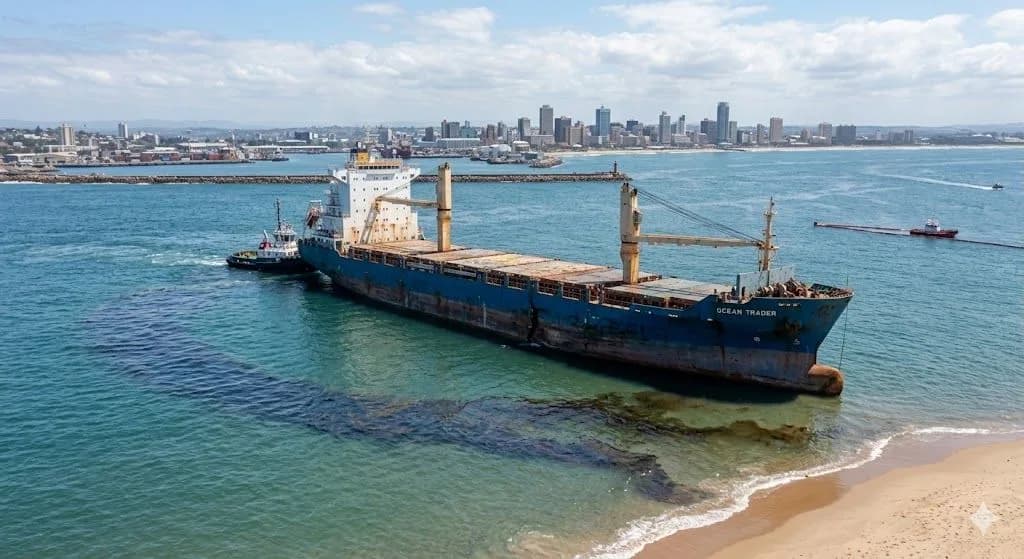
Marine liability insurance covers what the insured owes others, not what they lose themselves. Hull cover answers for the vessel. Cargo cover answers for the goods. Liability cover answers for the damage those operations do to third parties. That can mean a crew member injured, another vessel struck, or a quay damaged. It can mean oil in the water, or a cargo owner’s goods lost in the insured’s care. The market reports it as its own line; the IUMI Stats Report tracks marine liability separately from hull and cargo. It isn’t a feature of the hull policy. It’s a different contract with a different trigger.
That trigger is legal liability. The cover responds when the insured is held responsible, by law or by contract, for loss suffered by someone else. The figure that settles it is a limit of liability, not an agreed value, and the limit can be tested by a single large event.
If you carry marine hull cover and cargo cover and assume the liabilities ride along, the safer reading is that they don’t. They sit in their own section, under their own limit, and they answer a different question.
Protection and indemnity: the shipowner’s liability cover
Protection and indemnity is the cover that answers for a shipowner’s operating liabilities. P&I is mutual cover, provided by associations called P&I clubs, where the members are shipowners, operators, and charterers rather than shareholders. The International Group of P&I Clubs insures around 90% of the world’s ocean-going tonnage through this structure. It covers what hull and cargo policies leave out. That includes injury or death of crew and passengers, pollution, and wreck removal. It also picks up damage to fixed objects and liability for the cargo carried.
It also picks up part of the collision exposure. A hull policy’s running-down clause covers a portion of collision liability, commonly three-fourths, and stops there. P&I covers the remaining quarter and the liabilities a collision creates beyond the other vessel itself.
The reason P&I sits apart is the shape of the risk. Hull and cargo are known, quantifiable values. Third-party liability is open-ended, and a single pollution incident can run past the value of the ship. That open end is why the cover is mutual, and it’s why the limits sit so high.
Charterers’ liability: when you don’t own the vessel but still carry the risk
A charterer can be liable without owning the ship. A party that hires a vessel, or books space on one, takes on responsibilities the owner’s policy doesn’t cover for them. Under many jurisdictions a charterer is treated as a carrier, which brings liability for cargo, for damage to the chartered vessel, and for third parties. A fire that traces to mislabelled cargo, an off-hire dispute, a claim from another shipper: these land on the charterer, not the owner.
Charterers’ liability cover answers that exposure. It responds to the charterer’s liability to the vessel owner, to cargo interests, and to third parties. It also carries a defence component for the disputes a charter party generates. Hire, freight, laytime, speed and consumption: each can turn into a claim.
The owner’s P&I doesn’t extend to the charterer’s own liabilities. A business that charters tonnage and assumes it sits under the owner’s cover has read the relationship the wrong way round. The charterer needs its own placement, sized to the contracts it signs.
Goods in transit: liability for cargo on the inland leg
Goods-in-transit cover and carrier’s liability protect the transporter’s exposure to other parties’ goods, mostly on the road and rail legs. The two aren’t the same thing, and the difference decides who gets paid. A goods-in-transit policy is peril-based and benefits the goods owner. A carrier’s or haulier’s liability policy protects the transporter against claims when goods are lost or damaged through the transporter’s fault. These liability covers are short-term insurance classes in South Africa, regulated under the Short-term Insurance Act 53 of 1998.
Carrier’s liability turns on the contract of carriage. Cover usually depends on the transporter operating under Standard Trading Conditions or a specific written contract, approved by the insurer. No written terms, and the cover can fall away.
This is the seam where marine cargo meets road transport, and it’s where Incoterms decide who insures the cargo across each leg. The full comparison sits in when goods-in-transit cover applies instead of marine cargo. For a transporter, the practical question is which contract terms are in force, because they decide whether the liability cover responds at all.
Where the liabilities split from hull and cargo
Liability cover fills the gap that hull and cargo leave open. Hull insures the vessel as property. Cargo insures the goods as property. Neither answers when the insured is the cause of someone else’s loss. That’s the split: own property in one set of policies, harm to others in another. The collision clause in a hull wording is the one place they touch, and it touches only partly, at three-fourths of collision liability.
An independent broker places the liability cover alongside the hull and cargo, so the boundary is mapped before an incident tests it. In South Africa the intermediaries who place these covers work under the conduct standards set by the Financial Sector Conduct Authority. The recommendation should follow the exposure, not the simpler renewal.
The clean way to read a marine programme is by question. What protects the vessel? What protects the goods? What answers when the operation harms a third party? The vessel sits under hull cover. The goods sit under what marine cargo insurance covers. The harm to others sits under liability, and together they form the wider marine and cargo programme. A gap in any one of them is usually found the same way: during a claim.
How a marine liability claim is handled
A marine liability claim turns on fault, contract, and the limit in the wording. The first question is whether the insured is legally liable, by negligence or by the terms of a contract of carriage or charter party. The second is how much: liability cover pays up to a limit, and international conventions cap some maritime liabilities by tonnage or by category. Defence costs sit alongside the liability itself, which is why the cover often funds the legal fight even where the claim is contested.
In South Africa the shipowner’s liability frame runs partly through the Merchant Shipping Act 57 of 1951, alongside the international conventions the country applies. The wording sets the limit. The convention may cap it. The contract decides who carried the duty in the first place.
So the documents written long before the incident tend to decide the claim as much as the policy does. The bill of lading, the Standard Trading Conditions, the charter party: each shapes the outcome. A liability claim is read backwards from the contract. The operator who knows what those contracts committed them to knows where the cover has to answer.
What the claim asks that the schedule doesn’t
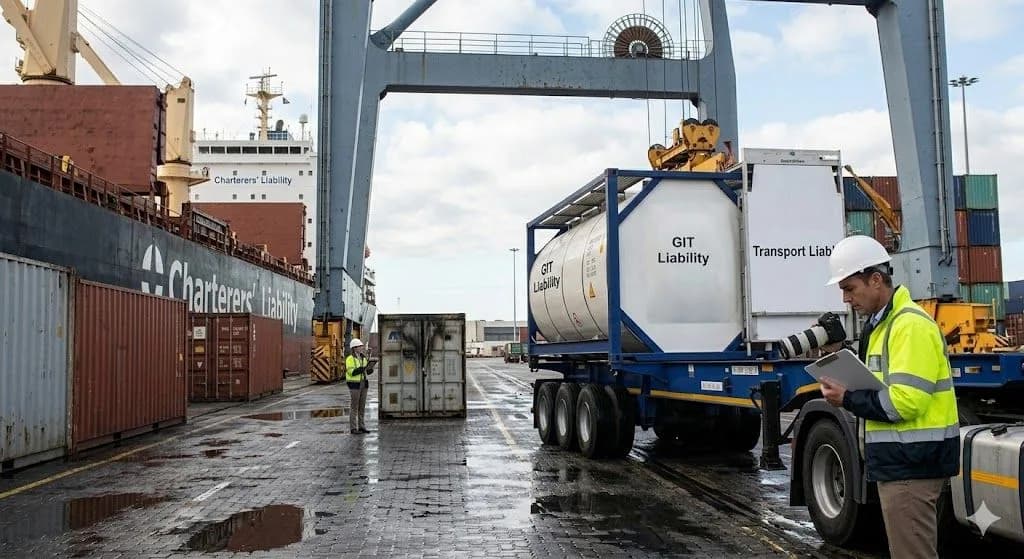
Hull and cargo answer a simple question: what did the insured lose? Liability answers a harder one: what did the insured owe? The first is settled against a value. The second is settled against fault, a contract, and a limit, and it arrives with lawyers attached. An operator can insure every vessel and every box and still meet a liability that none of those policies was built to carry. The schedule lists the property. It rarely shows the exposure that sits between the insured and everyone else they deal with.
Liability follows the freight onto the road, so moving goods by road belongs in the same policy conversation.
The handover point is everything, which is why where GIT stops and marine starts settles who pays.
You shouldn’t have to discover the liability sat outside your hull and cargo cover during a claim. With Mont Blanc Financial Services you won’t.
Contact Mont Blanc Financial Services to map where your marine liabilities sit, and confirm which policy answers when the loss belongs to someone else.
Operators arranging liability cover for the first time tend to ask the same questions before they sign. These come up most.
This article is part of our complete guide to marine and cargo insurance.
Frequently Asked Questions
What does marine liability insurance cover in South Africa?
Marine liability insurance covers a vessel owner’s, charterer’s, or transporter’s legal liability to third parties. It responds to claims for bodily injury or death, and for damage to other vessels or property. It also covers pollution and clean-up, wreck removal, and loss of or damage to cargo carried in the insured’s care. It does not cover damage to the insured’s own vessel, which is hull insurance, or the insured’s own goods, which is cargo insurance. The main forms are protection and indemnity for shipowners and charterers, and charterers’ liability for those who hire vessels or space. Goods-in-transit and carrier’s liability cover transporters. In South Africa these are short-term insurance classes. Cover responds up to a limit of liability set in the policy, and international conventions can cap certain maritime liabilities. Because liability follows fault and contract, the terms of the bill of lading, charter party, or trading conditions shape what the policy pays.
What is the difference between marine liability insurance and hull cover?
Marine liability insurance covers harm to third parties, while hull cover insures the insured’s own vessel. Hull responds to physical loss or damage to the ship and its machinery, up to an agreed value. Liability responds when the insured is legally responsible for someone else’s loss. That can mean injury, pollution, wreck removal, or cargo claims. It can also mean the collision liability a hull policy does not fully carry. The two meet at one point only. A hull policy’s collision, or running-down, clause covers a portion of collision liability, commonly three-fourths, and the rest falls to liability cover such as protection and indemnity. They are designed to work together, not as substitutes. An operator with hull cover alone is protected for the vessel but exposed for the much larger, open-ended liabilities the vessel can create. Reading the two policies side by side shows where one stops and the other has to begin.
Does marine liability insurance cover charterers who don’t own the vessel?
Charterers are covered under charterers’ liability insurance, a form of marine liability cover written for parties that hire a vessel or book space rather than own it. A charterer can be held legally responsible for damage to the chartered vessel, for cargo, and for third-party claims. Under many jurisdictions a charterer is treated as a carrier. The vessel owner’s protection and indemnity cover does not extend to the charterer’s own liabilities. Charterers’ liability responds to those exposures and usually includes a defence component for disputes under the charter party, such as hire, freight, laytime, and performance claims. A business that charters tonnage and assumes it sits under the owner’s policy has misread the arrangement. The practical step is to place charterers’ liability sized to the contracts the charterer signs, because the contract terms determine the scope of the exposure being insured.
How does goods-in-transit cover relate to marine liability insurance?
Goods-in-transit and carrier’s liability are the marine liability covers that apply to the inland legs of a journey, mainly road and rail. A goods-in-transit policy is peril-based and benefits the owner of the goods. A carrier’s or haulier’s liability policy protects the transporter against claims when goods in their custody are lost or damaged through fault. The two are not the same, and many goods-in-transit policies state plainly that they are not carrier’s liability cover. In South Africa, carrier’s liability usually depends on the transporter operating under Standard Trading Conditions or a specific written contract of carriage approved by the insurer. Without those terms in force, the cover can fall away. For a business moving cargo across sea and land, the first question is which party bears the risk on each leg. The contract that governs each leg decides whether marine cargo cover or a transit liability policy responds.

Nicola Iozzo
Founder & CEO, Mont Blanc Financial Services
Nicola has spent his career reading the policy wording most people skip, and writes here so you don't discover at claim stage what page 14 meant.
This blog is here to inform, not advise. Think of it as a guidebook, not a contract. For decisions affecting your world, have a chat with your broker or financial professional.
Mont Blanc Financial Services (PTY) Ltd. is an authorised financial services provider. FSP 8271