Crop insurance in South Africa: what farmers need to know
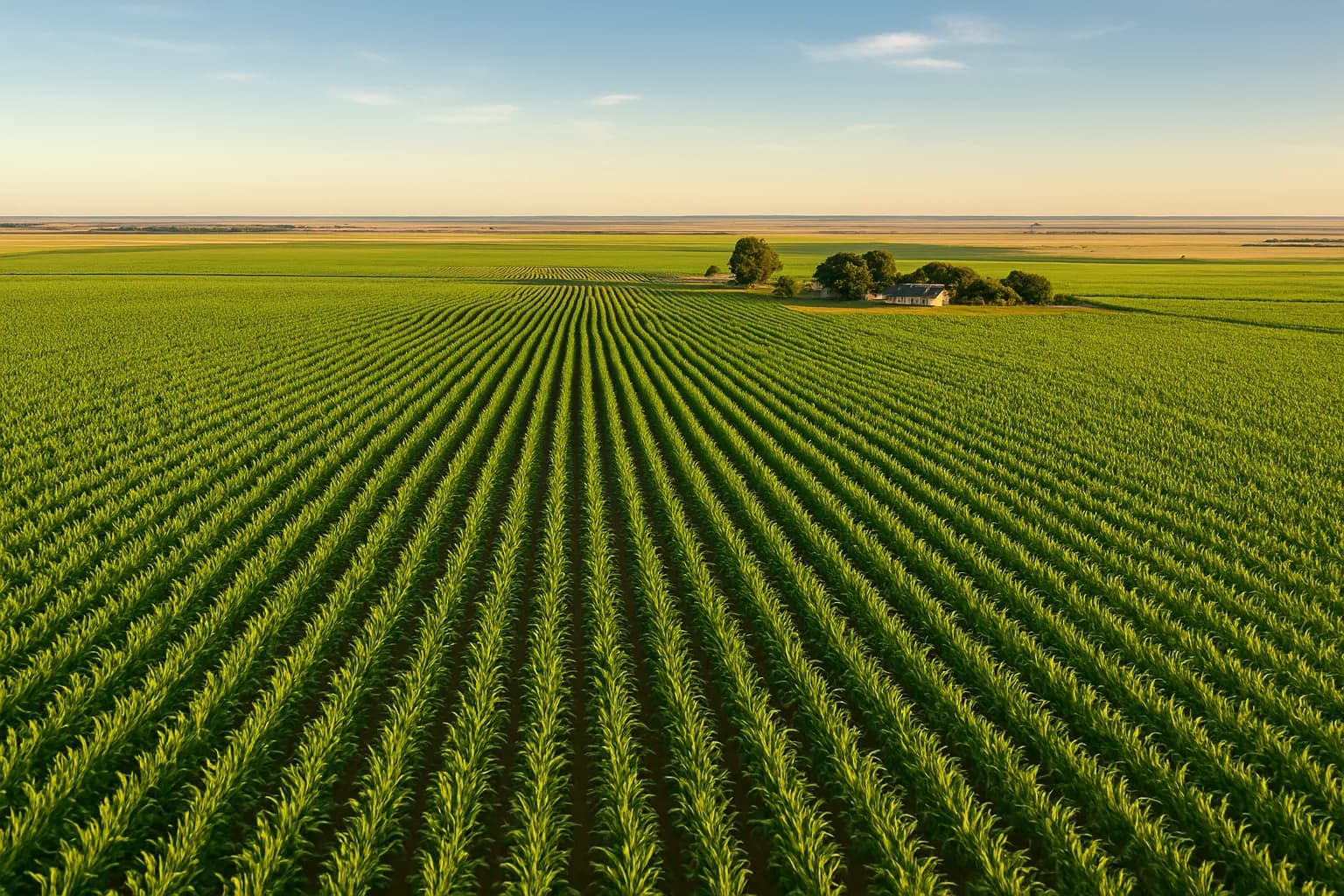
You planted in September, primed the irrigation in October, and watched the canola come up cleaner than it had in three seasons. By February, hail moved through in thirty minutes and left the field looking like a car park. Your bond repayment doesn't pause for weather, your input costs are already sunk, and the bank's patience isn't unlimited. The mechanism turning a weather event into a financial catastrophe isn't the storm, it's the absence of a policy translating what the sky does into something the books can absorb.
What is crop insurance?
Crop insurance is a formal policy compensating a farmer for yield loss, revenue loss, or physical damage to a standing or harvested crop caused by named perils, such as hail, drought, fire, or disease. The policy ties a payout to what was lost and what the crop was worth, measured against an agreed value or a yield benchmark set at inception. Understanding what your policy covers before the season starts gives you the clearest picture of where your financial exposure sits.
Key Takeaways
- Crop insurance covers the gap between what your harvest earns and what your production costs require, but only for the perils and quantities named in the policy.
- South Africa has no universal state crop indemnity scheme; private and co-operative insurers carry most of the market, with limited government-backed programmes targeting emerging farmers.
- Hail is the most commonly insured peril; drought cover is available but structurally more complex and usually delivered through multi-peril or parametric products.
- Underinsurance is as dangerous in crop cover as in any other class: if the sum insured doesn't reflect current input costs and expected yield, average applies and the shortfall is yours.
- The policy wording governs the claim, not the verbal assurance at sign-up. Read the exclusions before the growing season starts, not after it ends.
The main types of crop insurance available to South African farmers
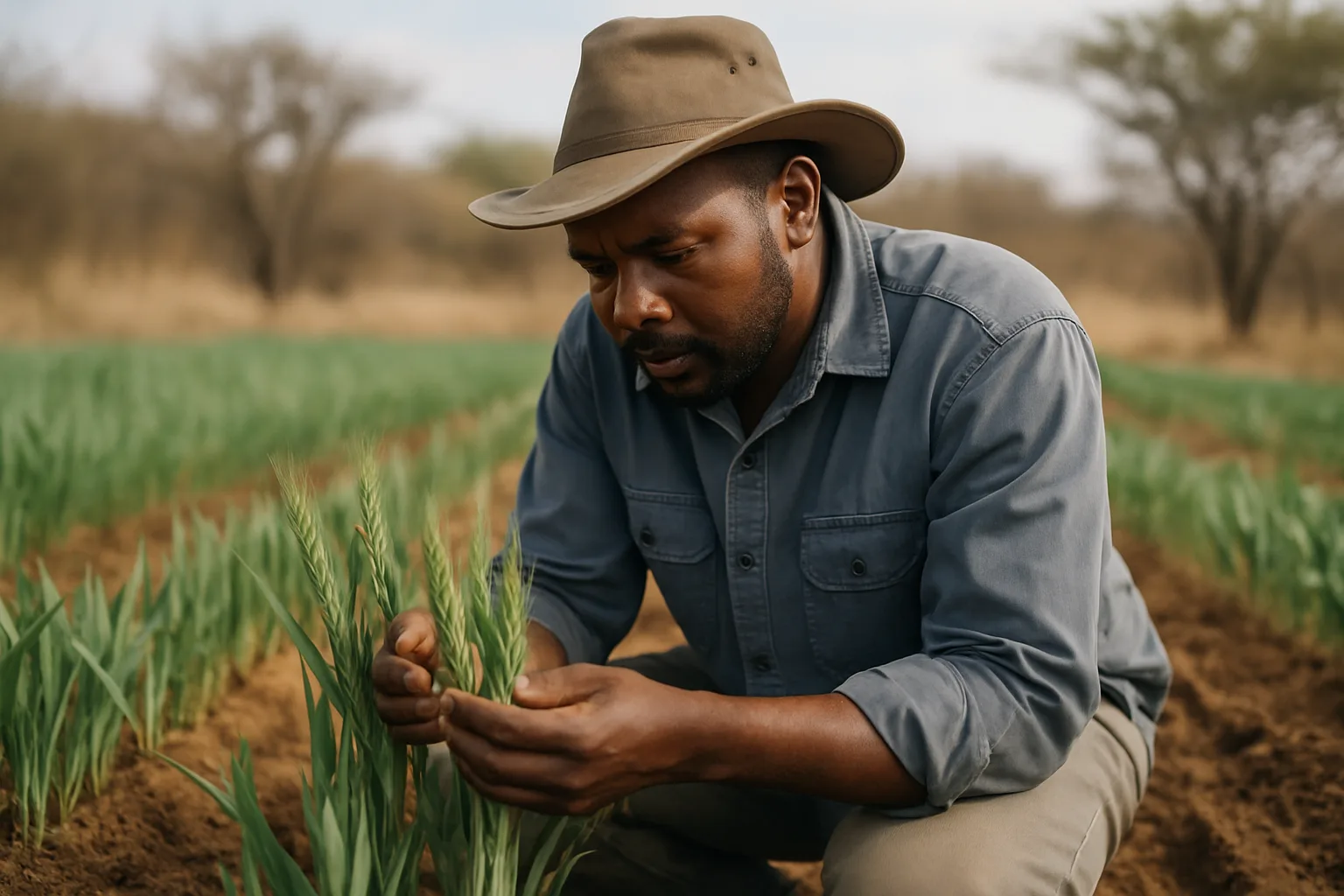
South African farmers have access to three principal crop insurance structures, and knowing which one you're buying counts before you name a premium.
Named-peril cover is the most common entry point. It indemnifies the farmer for losses caused by specific, listed events: hail, fire, wind, frost, and, in some policies, flood. If the peril isn't named, the claim won't respond. A hail policy pays for hail damage; it has nothing to say about a fungal blight taking out the same block two weeks later. Named-peril products are comparatively affordable because the insurer's exposure is defined and measurable. They suit dryland grain and horticultural crops where hail is the dominant production risk.
Multi-peril crop insurance casts a wider net. It covers yield loss from a broader range of causes, drought, excessive rain, disease, pest pressure, and multiple weather events in a single season, and typically measures the outcome against a guaranteed yield threshold rather than an event-by-event assessment. Because the insurer carries more uncertainty, the premium is higher and the underwriting process is more detailed. The multi-peril crop insurance structure suits irrigated operations and high-value horticultural enterprises where a single bad season can outrun the farmer's reserves.
Parametric policies work differently from both. Instead of assessing what was lost, they pay when a measurable index, rainfall recorded at a nearby weather station, temperature hours below a threshold, or a satellite-derived vegetation score, crosses a pre-agreed trigger point. The farmer doesn't need to prove crop damage; the payout follows the index. That speed is the advantage. The basis risk, meaning the gap between what the index records and what your specific farm experienced, is the trade-off. Parametric products are covered in more detail in the parametric insurance article in this cluster.
How crop insurance policies are structured and what the sum insured should reflect
A crop policy lives and dies on two numbers: the sum insured per hectare and the yield guarantee. Get either wrong at inception and the claim arithmetic works against you regardless of how bad the season was.
The sum insured should reflect your actual input costs per hectare, seed, fertiliser, crop protection chemicals, planting and harvesting labour, and a contribution toward fixed overheads, plus the expected market value of the yield at harvest. Insurers in South Africa typically allow you to insure up to 100 percent of expected gross value, but many farmers insure only production costs, which limits the payout to cost recovery rather than income replacement.
Production cost comparison for a typical dryland summer grain farm
| Input category | Estimated cost per hectare (2025) | Notes |
|---|---|---|
| Seed | R1,800 – R2,400 | Variety and inoculant dependent |
| Fertiliser | R3,200 – R4,800 | Basal and top-dress combined |
| Crop protection | R900 – R1,600 | Fungicide, herbicide, insecticide |
| Planting and harvesting | R1,400 – R1,900 | Contractor or own equipment |
| Fixed overhead contribution | R800 – R1,200 | Pro-rated per hectare |
| **Total production cost** | **R8,100 – R11,900** | **Excluding land cost and finance charges** |
Source: figures indicative, based on published Grain SA and Agri SA production cost benchmarks for the 2024–25 summer season. Verify current figures with your agronomist before setting your sum insured.
Average applies when the sum insured falls short of the actual value at risk. If you insure R9,000 per hectare against a true exposure of R12,000 per hectare, the insurer treats you as carrying a quarter of the risk. A R9,000 per hectare loss claim settles at R6,750. The missing R2,250 isn't a rounding error; it is the arithmetic consequence of a number chosen too low.
What crop insurance typically excludes
Exclusions reveal the policy's real shape, and they vary enough between products that reading two policies side by side can feel like reading two different languages.
The most consistent exclusions across the South African crop insurance market are:
- Gradual deterioration and inherent vice: slow soil degradation, nutrient depletion, and losses attributable to poor agronomic practice sit outside most policies. The insurer covers events, not management decisions.
- Pre-existing disease or pest pressure: a crop showing signs of rust, aphid infestation, or nematode damage before the policy incepts, or before the growing season's cover kicks in, is typically excluded. Declaration at inception counts.
- War, civil unrest, and malicious damage to crops: SASRIA, South Africa's state-owned special-risk insurer, is the mechanism for political violence and social unrest cover. Standard crop policies don't carry this exposure, which means a SASRIA endorsement needs to be discussed separately, particularly on farms in provinces with a history of labour action.
- Load-shedding and power surge losses on irrigation infrastructure: the crop may be covered for heat stress under a multi-peril product, but the pump, the motor, and the pivot controller damaged by an Eskom surge are an engineering or plant all-risks question, not a crop insurance one.
- Failure to mitigate: if a reasonable intervention, such as applying a fungicide at first sign of disease, would have reduced the loss and you didn't make it, the insurer may challenge the quantum of the claim on that basis.
Check the exclusion list before you plant, not when you call in the loss.
The role of independent crop assessors and how claims are validated

When a crop claim is lodged, the insurer appoints a loss assessor, an independent specialist who inspects the damaged crop, estimates the yield loss, and produces a report the insurer uses to quantify the payment. The assessor works for the insurer, not for you. Their mandate is accurate assessment, not advocacy.
This is consequential in practice because the assessor's report is almost never successfully appealed on the grounds of "it felt worse than that." It can be contested on the basis of measurement methodology, sampling location, or a failure to account for the full extent of the affected area. Keeping your own records helps: field scouting notes, yield maps from prior seasons, input invoices, and photographs taken immediately after the event all form the factual floor the assessor is working from. A farmer who can hand over three seasons of yield data and a GPS plot of the damaged area is in a fundamentally different position from one whose records are verbal.
For major claims, a hailstorm across multiple fields, a drought affecting an entire enterprise, it is worth asking whether the situation warrants an independent public adjuster or a specialist agricultural claims consultant acting in your interests. The cost is a fraction of the difference between a well-supported claim and an unsupported one.
Emerging farmer access to crop insurance and government-backed schemes
Access to crop insurance for smallholder and emerging farmers in South Africa has historically been limited by premium affordability, lack of formal credit histories, and the absence of the yield records insurers use to underwrite the risk. The commercial market has adapted partly but not fully to this reality.
The Land Bank offers agricultural finance products including insurance requirements as a condition of lending, which has pushed some emerging farmers into the formal crop insurance market for the first time. The Land Bank's AgriInsurance division facilitates cover for qualifying borrowers.
The Department of Agriculture, Land Reform and Rural Development (DALRRD) has published frameworks for a national crop insurance support scheme targeting smallholder farmers, but implementation at scale remains partial. The DALRRD's agricultural risk management documentation outlines the policy intent; practical delivery through provincial extensions varies by province and season.
Co-operative insurance models, where groups of emerging farmers pool premiums and risk through a registered entity, have gained traction in the Northern Cape, Free State, and KwaZulu-Natal grain belts. The co-operative farm insurance article in this cluster covers the mechanics and the risks of those arrangements.
Commercial crop insurers including Santam Agri, Mutual & Federal Agri (Old Mutual Insure), and specialist underwriters operating through agricultural brokers have also developed simplified named-peril products with lower entry sums insured, intended for smaller operations. These products trade breadth of cover for affordability, which is a legitimate choice as long as the limitation is understood at sign-up.
Choosing the right crop insurance policy: what to check before you sign
Buying crop insurance isn't like buying vehicle cover, where the product is largely standardised and the main variable is price. Two crop policies at the same premium can respond very differently to the same loss, and the difference lives in the definitions, the yield guarantee methodology, and the loss assessment process.
Before you commit to a policy, work through these questions with your broker:
What perils does the policy name, and are drought and disease included? A hail-only product is the right answer for some operations and the wrong one for others. Know which one applies to you.
How is the yield guarantee calculated? Some policies use a five-year average of your actual recorded yields. Others use a regional average. The difference is consequential when your farm's productivity diverges from the district mean.
What is the deductible? The deductible in a crop policy (the portion of the loss you carry before the insurer pays) functions similarly to an excess in a vehicle policy. A 10 percent deductible on a R2 million claim means the first R200,000 is yours. Some multi-peril products carry deductibles as high as 20 to 30 percent to keep the premium within reach.
What are the inspection and notification obligations? Most crop policies require you to notify the insurer within a specified period of a loss event and to preserve the damaged crop for inspection. Missing the notification window can void the claim.
Does the policy carry a replanting benefit? Some named-peril products include a payment for the cost of replanting after a qualifying event. Whether the growing season allows it and whether the benefit is adequate are both worth verifying.
The SASRIA component deserves a separate conversation. If your farm is in a region with documented history of labour unrest or trespass and crop destruction, the SASRIA cover question needs to be asked explicitly, because the standard crop policy won't answer it.
Crops are one line in a farm's cover, alongside buildings, machinery, and livestock. Our guide to agricultural insurance sets out how the sections fit together.
When the numbers on paper decide what survives the season

A farm can produce a good biological yield and still report a bad financial year. The numbers going into the policy at inception, the hectares, the expected yield, the production cost per hectare, are the same numbers the claim is measured against. If those figures were set three seasons ago and inputs have moved 30 percent since, the policy is carrying a 2022 farm while the hail hit a 2025 one. The review conversation isn't complicated. It tends to be the one most farmers have at the wrong end of a bad season rather than the right end of a good one.
You shouldn't have to find out at claim time that your sum insured stopped reflecting your operation two growing seasons ago. With Mont Blanc Financial Services you won't.
Contact Mont Blanc Financial Services to review your current crop cover, check the sums insured against this season's input costs, and confirm the perils you face are the perils the policy names.
The questions most farmers ask about crop insurance tend to arrive after they've looked at the policy for the first time in years. Here are the ones that come up most consistently.
Who qualifies for crop insurance, and how to arrange it
Eligibility turns on the crop and the record rather than on the size of the farm. An insurer looks first at whether the crop is insurable in your region, since the same cultivar can be written in one province and declined in another on rainfall and hail history alone. Planting dates come next, measured against the recommended window for the area, because a crop planted outside it carries a risk the insurer has not priced.
Yield history follows, usually several seasons of it, which is the point where emerging farmers meet the obstacle. Where no history exists, some insurers rate on regional averages or on a scheme built for the purpose, though the terms differ from a conventional policy and are worth comparing before signing.
Arranging cover is a question of timing more than paperwork. Quotation needs the planted hectares, the cultivar, the planting date, the expected yield and the location of each land. Cover generally has to be in place before a stated growth stage, and hail cover before the crop reaches a given height, so a policy arranged after emergence may attach later than the farmer assumes. The practical rule is to start the conversation before planting, not after the first storm warning.
Frequently Asked Questions
Is crop insurance compulsory for South African farmers?
Crop insurance isn't legally compulsory in South Africa. No statute requires a farmer to hold a crop policy as a condition of farming. However, it is frequently a practical requirement. The Land Bank and most commercial agricultural lenders require proof of adequate crop insurance as a condition of production finance, so if your operation carries seasonal debt, the policy may be mandatory under your loan agreement rather than under law. Some agri-processing off-take contracts also specify insurance requirements as a production risk management condition. The FSCA regulates the insurers and intermediaries operating in this space under the Insurance Act 18 of 2017, but the legislation governs the conduct of the industry, not whether individual farmers must participate. Before you assume your operation doesn't need a crop policy, check both your lending agreement and any off-take contract in place, the compulsion, where it exists, typically arrives through those documents rather than through statute.
How does crop insurance pay out, is it per hectare or per ton?
Crop insurance payouts in South Africa are calculated in one of two ways, depending on the product structure. Named-peril policies typically pay on a per-hectare basis: the agreed sum insured per hectare, multiplied by the percentage of yield loss assessed in the damaged area, minus the deductible. Multi-peril yield-guarantee products pay the difference between the guaranteed yield threshold, usually 50 to 70 percent of your average historical production, and the actual yield achieved at harvest. Revenue protection products, less common but available for high-value horticultural crops, pay on the difference between the expected revenue and the actual revenue, which incorporates both yield loss and price movement. Your policy schedule will specify which basis applies. If the schedule isn't clear, that is the first question to put to your broker before the season starts, not after a loss event forces the conversation. Knowing the basis in advance lets you set the sum insured correctly from the outset.
What is the difference between a hail policy and multi-peril crop insurance?
A hail policy is a named-peril product responding only to physical damage caused by hail. If a hailstorm causes 40 percent yield loss in a field, the policy pays on that loss. If a drought two weeks later reduces the remaining crop by a further 30 percent, the hail policy is silent on the matter. Multi-peril crop insurance covers yield loss from a wider range of causes, typically including drought, excessive rain, frost, fire, pest damage, and disease, subject to the policy's specific definitions and exclusions. The premium for multi-peril cover is higher because the insurer is carrying more types of risk across a longer period of exposure. The right choice depends on your crop, your region, and your dominant production risks. A dryland maize farmer in the Free State, where hail is the single biggest threat, may find a named-peril product adequate. A subtropical horticultural producer, where disease and pest pressure are as dangerous as weather, typically needs the broader product. Discuss your specific risk profile with your broker before choosing between the two.
Does crop insurance cover loss of income if I can't sell the crop due to market collapse?
Standard crop insurance covers physical yield loss and, in some revenue-protection products, a guaranteed price floor. It doesn't cover a fall in commodity prices or a market paying less than expected. If maize drops from R4,800 per ton to R3,200 per ton between planting and harvest, a standard crop policy has nothing to say about the income difference. Revenue protection products, available through specialist agricultural insurers, lock in a minimum price alongside a minimum yield, and the payout reflects both. These products are more expensive and more complex to administer. A general commodity price decline is a market risk crop insurance isn't designed to carry; a revenue product hedges against the combination of a physical loss and a price event in the same season. If price exposure is a concern for your operation, ask your broker whether a revenue protection product is available for your crop type, and compare the premium against the cost of leaving the price risk unhedged.
Can I claim on crop insurance and still receive a disaster relief grant from government?
Receiving a government disaster relief grant and holding a crop insurance policy aren't mutually exclusive, but they interact in a way worth understanding before a disaster arrives. Most government disaster relief mechanisms operate as last-resort support for uninsured or underinsured farmers. If you hold a crop insurance policy and receive a full indemnity payout, a subsequent government grant application for the same event is unlikely to succeed, because the purpose of the grant is to fill the gap the private market couldn't. If your policy paid out partially, because the sum insured was below the true loss or because the deductible left a meaningful balance uncovered, a grant may be available for the residual shortfall, subject to provincial disaster management processes and the DALRRD's relief scheme criteria. The interaction between private insurance and public relief isn't always clearly communicated at provincial level, so raise the question with your broker before a disaster rather than during one.

Nicola Iozzo
Founder & CEO, Mont Blanc Financial Services
Nicola has spent his career reading the policy wording most people skip, and writes here so you don't discover at claim stage what page 14 meant.
Everything on this blog is written to inform and educate. It is for information only. Nothing here is professional legal, financial, or technical advice. If you are making a significant business decision, speak to a qualified professional first. Mont Blanc Financial Services works hard to keep this content accurate and current, but is not liable for decisions made based on what you read here.
Mont Blanc Financial Services (PTY) Ltd. is an authorised financial services provider. FSP 8271