Shared Risk, Shared Reward: Co-operative and Emerging Farmer Insurance Models
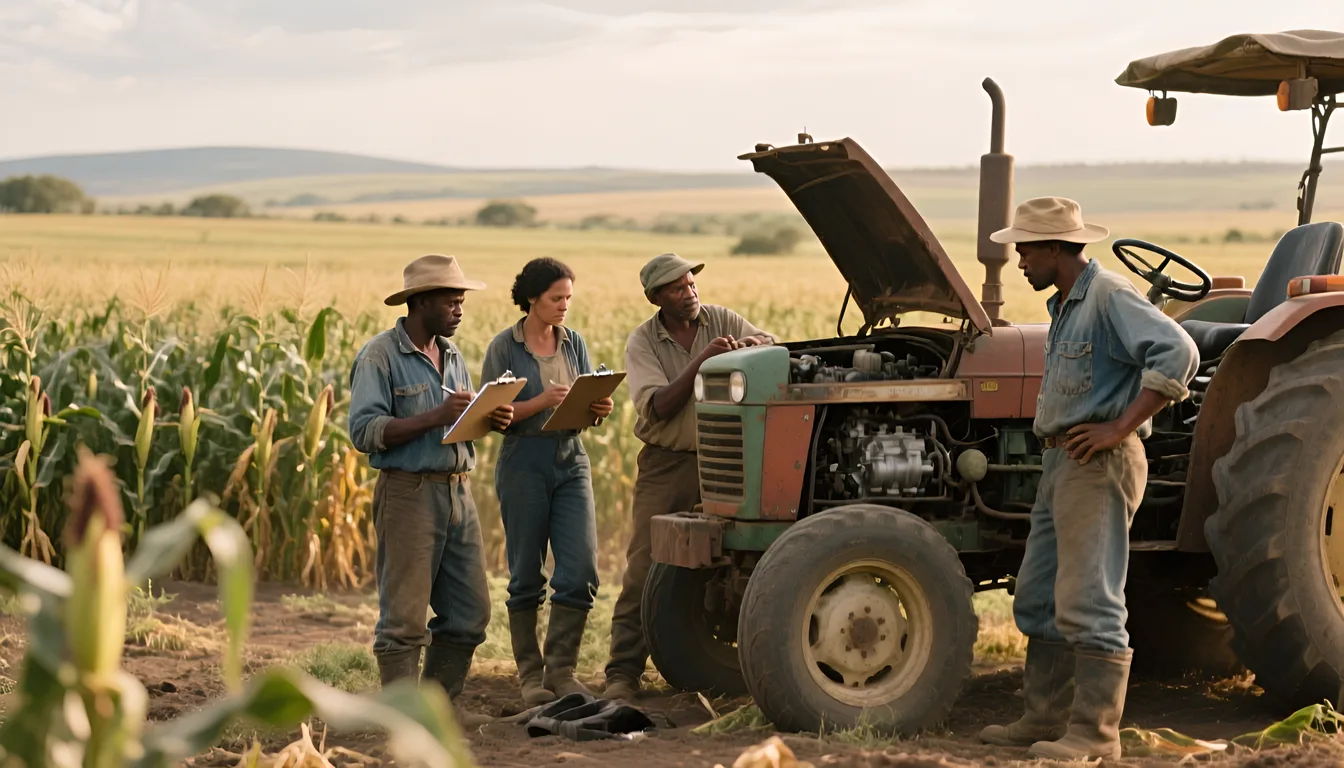
A single tractor shared between several emerging farmers is efficiency and fragility in one machine: when it fails, every operation depending on it stops at once. That shared dependence is the reality co-operative farming runs on, and insuring each farmer in isolation misreads it. When farmers operate alone, every disaster is personal and absorbed alone, which is precisely why emerging farmers tend to lose far more after a disruption than established ones. Shared risk, structured properly, changes that equation.
What is co-operative farm insurance in South Africa?
Co-operative farm insurance in South Africa is a pooled model in which co-operatives, farmer clusters, and community farms share cover rather than each farmer carrying it alone. It spreads risk across all participants, lowering premiums, speeding claims, and making cover accessible to emerging farmers who could not afford it individually.
Key Takeaways
- Co-operative farm insurance pools cover across a group of farmers, spreading risk rather than leaving each farmer to carry it alone.
- Pooling lowers premiums, speeds up claims processing, and makes cover accessible to emerging farmers who could not afford it individually.
- Emerging farmers operating alone tend to lose far more revenue after a disruptive event than established commercial farms, largely because they carry risk individually.
- Pooled models commonly combine crop cover, livestock protection, shared-equipment cover, and group business interruption policies.
- Shared equipment, weather stations, and resources are natural fits for co-operative cover, since the loss affects the whole group at once.
- When risk is shared, the whole group stands a better chance of finishing a season intact.
Why Shared Risk Insurance Works Better Than You Expect
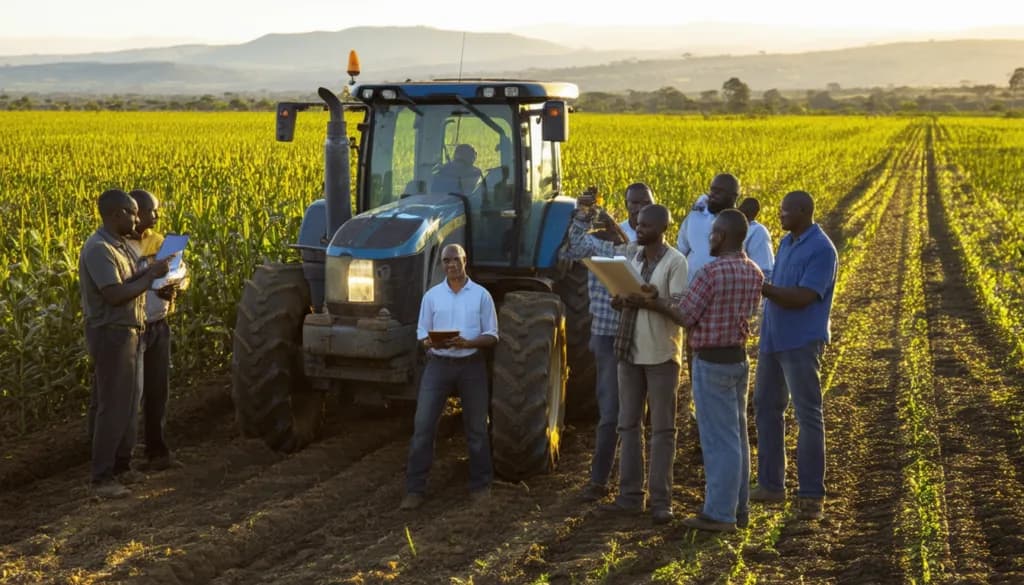
When farmers operate alone, every disaster becomes personal. A broken pump, a stolen cow, a drought which overstays its welcome, all translate into immediate financial damage. The International Fund for Agricultural Development (IFAD) reports which emerging farmers lose more than twice as much revenue compared to commercial farms after disruptive events, largely because they carry risks individually.
Shared insurance flips the equation.Instead of everyone facing loss in isolation, co-operatives and farmer groups spread risk across all participants. Premiums decrease, claims processing speeds up, and coverage becomes accessible to new farmers who could not afford it before.
We work with co-ops and clusters to design pooled agricultural insurance, which includes crop cover, livestock protection, shared equipment cover, and group business interruption policies. When risk is shared, everyone stands a better chance of finishing the season still standing.
What Co-operative Insurance Looks Like
Co-operative insurance is more than a group discount. It is a structured model of protection shaped around the realities of South African farming. In these models, farmers share:
- Weather stations which provide regional rainfall and wind data
- Machinery pools for tractors, irrigators, sprayers
- Storage and packhouse space
- Transport routes
- Training programmes
- Risk management systems
- Insurance pools designed by brokers who understand rural dynamics
The FAO Co-operative Development Report highlights which community-based agricultural models recover faster from drought, disease, and market disruptions because overheads and losses are distributed rather than absorbed individually.
For South Africa, where land reform meets climate volatility, shared insurance is one of the few systems which creates both affordability and resilience.
How Risk Pooling Models Strengthen Emerging Farmers
Emerging farmers often face three challenges:
- Limited capital
- Limited historical data for insurers
- Limited access to financing
Group insurance responds to all three.The AgriSA Transformation Desk confirms which emerging farmers with co-op-linked insurance are more likely to receive funding from banks and development agencies. Underwriters also prefer group applications because risk is measurable and distributed.
MBFS brokers work with emerging farmer groups to:
- Build combined risk profiles
- Align policies with mentorship programmes
- Integrate livestock and crop schedules
- Structure premiums around seasonal income rather than monthly cycles
- Create documentation systems which support claims transparency
Together, these features give emerging farmers a fighting chance not only to survive agricultural risks but to build long-term commercial operations.
The Power of Shared Risk Cover
Agriculture is a community, not a competition.We have seen first-hand how emerging farmers thrive when risk is shared rather than carried alone. We work with co-operatives, mentorship networks, community projects, and land-reform beneficiaries to develop insurance ecosystems which allow entire groups to grow at the same pace.
Our work includes:
- Helping co-ops set up insurance-ready governance
- Designing shared machinery cover for communal tractors and irrigators
- Developing group asset registers
- Integrating disease protocols for livestock clusters
- Building affordable business interruption models for group processing facilities
Shared Risk becomes stronger when people work together. So do farms.
A co-op outside Bethlehem carries risk a Ceres orchard never sees, so where a farm sits shapes its exposure long before a premium is set.
Shared buying power helps, yet members still overlook the diesel rebate owed to farmers, money that can cover a season of repairs.
Closing Reflection
Farming alone may feel noble, but farming together is sustainable. Co-operative insurance models remind us which risk becomes lighter when carried by many hands.Shared protection keeps tractors moving, herds growing, and communities thriving.
You shouldn’t have to carry every farm risk alone when shared cover would protect the whole group. With Mont Blanc Financial Services you won’t.
Contact Mont Blanc Financial Services to structure pooled cover around how your co-operative or farming cluster actually operates.
It sits within our broader guide to agricultural insurance.
Frequently Asked Questions
What is co-operative farm insurance in South Africa?
Co-operative farm insurance in South Africa is a model in which a group of farmers, through a co-operative, cluster, or community farm, shares insurance cover rather than each member holding a separate individual policy. Instead of every farmer facing risk alone, the group pools its exposure, so a loss is spread across all participants rather than falling entirely on one. This structure is more than a group discount; it is a way of organising protection around the realities of how these farmers actually operate, often sharing equipment, markets, and resources. Pooled cover typically combines crop protection, livestock cover, shared-equipment cover, and group business interruption policies into a single arrangement designed for the collective. The model lowers premiums, speeds up claims, and brings cover within reach of emerging farmers who could not afford it individually. At its core, it revives an old principle, that shared risk creates shared resilience, and applies it through formal insurance. For farming communities working together, it aligns the cover with the cooperative way the operation already runs.
Why does co-operative farm insurance work better for emerging farmers?
Co-operative farm insurance works well for emerging farmers because it addresses the central weakness of farming alone: carrying risk individually. When an emerging farmer operates in isolation, every disruption, a broken pump, a stolen animal, a drought, lands entirely on that one operation, and emerging farmers tend to lose substantially more revenue after such events than established commercial farms precisely because they have no way to spread the loss. Pooling cover across a group flips this. Risk is shared among all participants, so a single member’s loss is absorbed collectively rather than individually, premiums fall because the risk is distributed, and claims processing can be faster within a structured group arrangement. Crucially, pooling makes cover affordable for farmers who could not have obtained it alone, bringing protection to operations that would otherwise have none. For emerging farmers, who are both more exposed and less able to absorb a shock, this shared structure can be the difference between recovering from a setback and being ended by it. The model fits their risk profile far better than individual cover.
What does co-operative farm insurance in South Africa cover?
Co-operative farm insurance in South Africa typically covers the same risks an individual farm policy would, but structured around the group and its shared resources. Pooled models commonly include crop cover protecting members’ harvests against weather and other perils, livestock protection for animals, shared-equipment cover for the machinery the group uses collectively, and group business interruption cover supporting income when an event halts production. Shared assets such as equipment and weather stations are natural fits for this approach, since their loss or failure affects the whole group at once rather than a single member. The cover is designed around the cooperative structure, recognising that resources, and therefore risks, are held in common. This means the policy reflects how the group genuinely operates, with collective ownership and shared exposure built into the cover rather than forced into an individual-farm template. The specific components are tailored to the co-operative’s actual activities and assets, so the protection matches the way the group farms, which is the central advantage of the pooled model over a collection of separate individual policies.
How is a co-operative farm insurance claim handled in South Africa?
A co-operative farm insurance claim is handled within the structure of the group arrangement, which can make the process faster and more accessible than individual claims, though the principles of a valid claim remain the same. Because the cover is pooled and structured, the administrative framework for lodging and processing claims is already in place across the group, which can speed handling compared with each farmer navigating a claim alone. The substance of a claim, documenting the loss, showing it falls within the cover, and providing the supporting evidence, follows the same logic as any insurance claim, but the group structure provides shared support in meeting those requirements. How a loss affecting shared assets is attributed and settled depends on how the pooled policy is set up, which is why the arrangement needs to be structured clearly from the outset. For the members, the practical benefit is that the cooperative absorbs some of the complexity an individual farmer would otherwise face. The clarity of the initial structure is what keeps claims workable when a loss occurs.

Nicola Iozzo
Founder & CEO, Mont Blanc Financial Services
Nicola has spent his career reading the policy wording most people skip, and writes here so you don't discover at claim stage what page 14 meant.
This blog is here to inform, not advise. Think of it as a guidebook, not a contract. For decisions affecting your world, have a chat with your broker or financial professional.
Mont Blanc Financial Services (PTY) Ltd. is an authorised financial services provider. FSP 8271