Parametric Insurance: When the Sky Turns Hostile
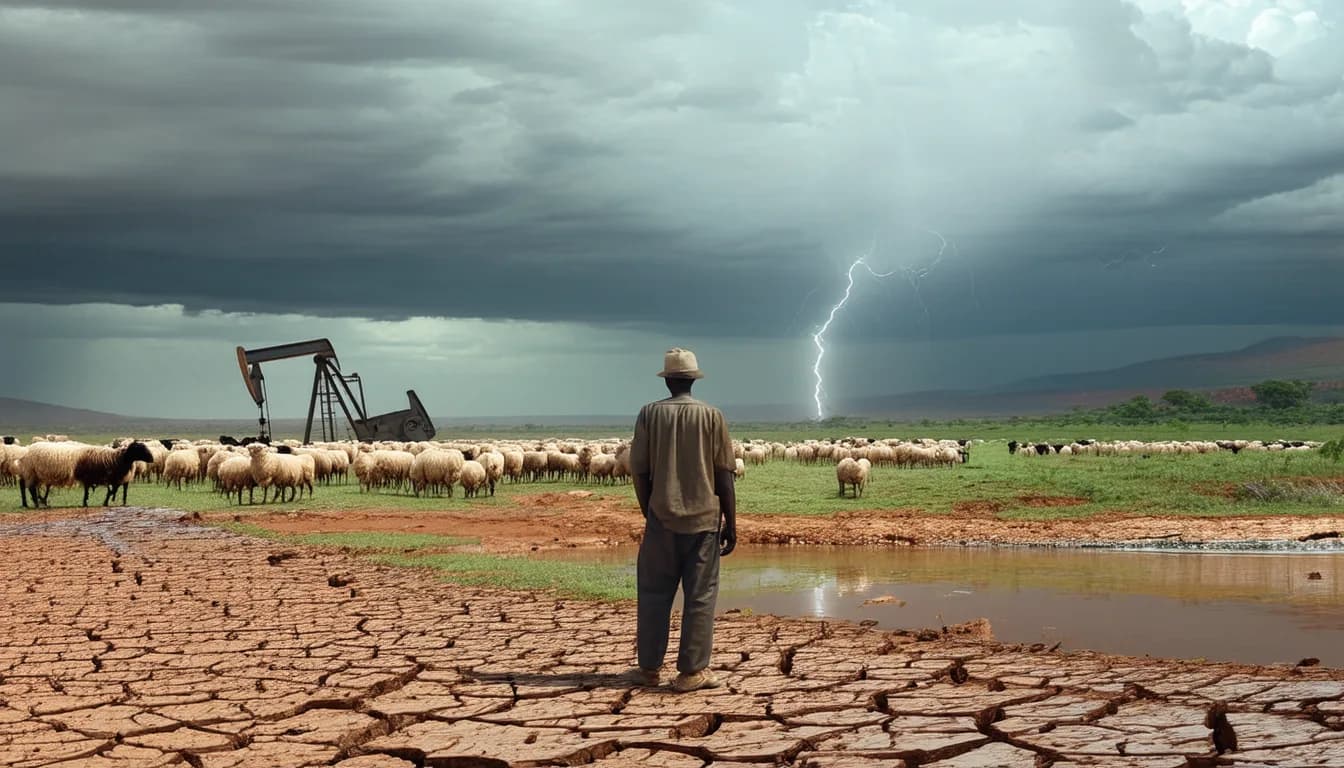
By the height of a drought, a farmer stops scanning the horizon: the dam cracks, the irrigation pump becomes an expensive paperweight, and the loss is already counted in litres and rands. Traditional crop cover tries to help but often moves slower than the disaster, waiting on an assessor’s visit and a report. By the time payment arrives, many have borrowed to replant or walked away. That gap is the one parametric cover is built to close.
What is parametric insurance in South Africa?
Parametric insurance in South Africa is cover that pays out automatically when a measurable trigger, such as rainfall, temperature, soil moisture, or river flow, crosses a pre-agreed threshold, rather than paying against an assessed loss. It replaces field surveys and claims arguments with data: when the readings cross the agreed line, the policy activates and pays.”
Key Takeaways
- Parametric insurance pays out when a measurable trigger crosses a pre-agreed threshold, rather than paying against a surveyed and assessed loss.
- It replaces field assessments and claims disputes with data: rainfall, temperature, soil moisture, or river flow readings determine payment.
- Payouts are automatic and fast once the threshold is crossed, avoiding the delays of traditional claims processing.
- It suits weather-driven risks such as drought, where the loss is widespread, measurable, and slow to assess by conventional means.
- The trade-off is basis risk: the payout follows the measured trigger, not the actual loss, so the two may not match exactly.
- It complements rather than replaces traditional cover, addressing the speed and certainty that conventional crop insurance struggles to provide.
The Sky Problem: When Rain Becomes a Rumour
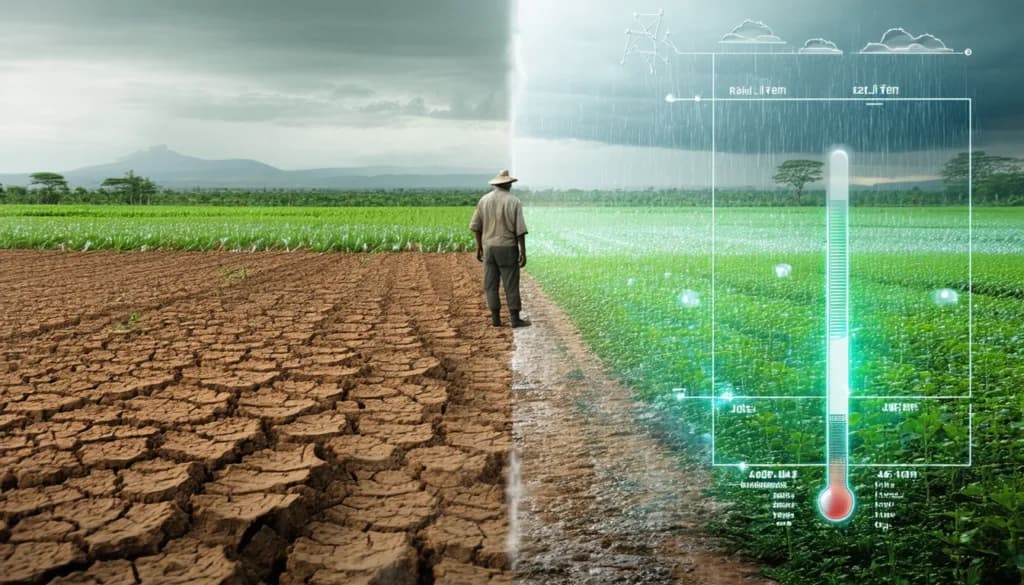
Drought is not new, but its impact has grown faster than the solutions designed to stop it. One bad season once meant a smaller harvest; now it can mean bankruptcy. According to Agri SA, extreme weather events have doubled in frequency over the past decade, costing the sector billions each year.
Traditional crop insurance tries to help but often moves slower than the disaster. An assessor must visit the field, verify losses, argue about percentages, and write a report thicker than a Bible. By the time payment arrives, many farmers have borrowed to replant or walked away.
Parametric insurance reverses the process. It does not ask how much you lost but measures what happened in numbers, rainfall, temperature, soil moisture, or river flow. When those readings cross a pre-agreed threshold, the policy activates automatically. There are no arguments, no paperwork, and no waiting for someone else’s calendar.
How Parametric Insurance Works (and Why It Feels Like Science Fiction)
Think of it as “if-this-then-that” for weather.If rainfall in your area drops below 60 millimetres during the planting period, the policy activates. The trigger is based on verified data from satellites, weather stations, or your own sensor system. Once verified, the funds are transferred directly to your account.
The payout focuses on risk measurement rather than physical inspection. You receive money quickly enough to buy seed, feed, or water before the season collapses completely.
That speed is priceless. During the 2023 Free State drought, some farmers using parametric cover received payments within two weeks of verification. Others waited months for traditional claims.
We work with underwriters using rainfall and temperature-index models so each policy reflects local climate behaviour. The result is protection built on accuracy rather than averages.
For an overview of index-based insurance globally, the Food and Agriculture Organization of the United Nations (FAO) provides excellent resources explaining how data-driven cover helps small and commercial farmers recover faster after climate shocks.
The Economics of a Dry Season
Drought dries more than soil; it empties bank accounts.Farmers face triple pressure: lower yields, rising input costs, and climbing interest on loans. A bad season ripples through the economy. Transporters idle, co-ops tighten credit, and workers lose jobs.
Parametric insurance acts as a stabiliser. Because payouts arrive faster, farms stay liquid. Employees remain employed, suppliers stay paid, and the rural economy keeps breathing.
Banks have begun to notice this reliability. Financial institutions increasingly view insured farms using parametric data as lower-risk borrowers. It becomes easier to finance the next crop when you can prove the previous one failed despite solid preparation, not poor management.
In other words, the data that once measured loss now underwrites confidence.
For independent market insight, see The Bureau for Food and Agricultural Policy (BFAP) reports, which analyse South Africa’s agricultural profitability trends and climate risk.
Why Traditional Cover Still Matters
Parametric insurance complements traditional cover rather than replacing it.Think of it as the early safety net before the full rebuild. A sound agricultural policy layers protection in three stages:
- Parametric cover provides rapid liquidity when drought or heat stress strikes.
- Comprehensive crop insurance protects against physical yield losses caused by hail, frost, or flood.
- Business interruption cover ensures cash flow continues when production halts.
Mont Blanc brokers design these layers to work together. You do not need a law degree to survive a dry season; you only need a broker who understands the rhythm of your land.
Challenges and Common Myths
- Parametric cover guarantees profit.No. It provides a fast financial response, not a windfall. The payout compensates expected impact, not full replacement value.
- It is only for big farms.Incorrect. MBFS designs regional and co-operative solutions so smaller farms share one weather network, making cover affordable.
- Data cannot be trusted.Modern satellite readings are precise within a few kilometres, verified across multiple providers, and publicly available for review through the South African Weather Service.
- It is too complex.Not when explained properly. Your broker translates rainfall thresholds and trigger points into simple tables you can read without a dictionary.
Closing Reflection
When the clouds forget their job, farmers cannot afford to forget theirs: to prepare.Parametric insurance will not make it rain, but it will make sure your story continues when the sky falls silent. It turns uncertainty into numbers, numbers into stability, and stability back into courage: the same courage keeping South African farms alive.
You cannot control the weather.You can control your cover.
You shouldn’t have to borrow to replant while a traditional drought claim crawls through assessment. With Mont Blanc Financial Services you won’t.
Contact Mont Blanc Financial Services to explore whether parametric cover can sit alongside your existing crop insurance for faster drought response.
For the bigger picture, start with our full guide to agricultural insurance.
Frequently Asked Questions
What is parametric insurance in South Africa?
Parametric insurance in South Africa is a form of cover that pays out based on a measurable event crossing a pre-agreed threshold, rather than on an assessment of the actual loss suffered. Instead of sending an assessor to inspect a field and calculate damage, a parametric policy watches defined data, rainfall, temperature, soil moisture, or river flow, and activates automatically when those readings cross the agreed line. The principle works like an if-this-then-that arrangement for weather: if rainfall in an area falls below a set level during a defined period, the policy pays. This removes the survey, the negotiation over percentages, and the long wait for a report that characterise traditional claims. For weather-driven agricultural risks such as drought, where losses are widespread and slow to assess conventionally, this approach offers speed and certainty. The payment depends on the data, not on a clipboard-bearing stranger’s calendar. It is a fundamentally different model from indemnity insurance, designed to respond quickly to measurable events rather than to reimburse a precisely assessed loss.
How does parametric insurance work for drought in South Africa?
Parametric insurance works for drought by tying the payout to measurable weather data rather than to an assessment of crop loss. A policy defines a trigger and a threshold, for example, rainfall in a specified area falling below a set number of millimetres during the planting season, and when monitored data shows the threshold has been crossed, the policy pays out automatically. The data may come from satellites, weather stations, or other reliable sources, which is why parametric cover is sometimes described as replacing surveys with satellites. For drought specifically, this approach fits well: drought is widespread, develops measurably, and is exactly the kind of slow, broad loss that traditional assessment handles poorly. Rather than a farmer waiting for an assessor to quantify damage across a parched region, the policy responds to the rainfall data itself. The threshold and trigger are agreed at the outset, so both parties know in advance what activates payment. This makes the response fast and predictable, which is precisely what a farmer facing drought needs when borrowing to replant is the alternative.
What are the advantages of parametric insurance over traditional crop insurance?
The main advantages of parametric insurance over traditional crop cover are speed, certainty, and the removal of claims disputes. Traditional crop insurance requires an assessor to visit the field, verify losses, negotiate percentages, and produce a report, a process that can move slower than the disaster itself, leaving farmers to borrow or abandon the season before payment arrives. Parametric cover reverses this by paying automatically when agreed data crosses a threshold, so there is no survey, no argument over how much was lost, and no waiting on someone else’s schedule. This speed matters enormously in agriculture, where timing determines whether a farmer can replant or recover. The certainty is also valuable: because the trigger and threshold are agreed in advance, the farmer knows what will activate a payout. The trade-off is that the payment follows the measured event rather than the actual loss, so the two may not align perfectly, but for fast, predictable response to weather events, parametric cover addresses gaps that traditional insurance has long struggled with.
What is the downside of parametric insurance in South Africa?
The principal downside of parametric insurance is basis risk, the possibility that the payout does not match the actual loss because it is tied to a measured trigger rather than to the damage suffered. Because a parametric policy pays when data crosses a threshold, a farmer could experience a real loss that does not quite trigger the payment, or receive a payout that does not fully cover the damage, since the two are calculated differently. The accuracy of the cover therefore depends heavily on how well the trigger and threshold are designed to reflect genuine loss conditions in the specific area. This is why parametric cover is generally best seen as a complement to traditional insurance rather than a complete replacement: it provides speed and certainty for measurable events, while conventional cover can address losses that the parametric trigger may not capture. A farmer considering parametric cover should understand the basis risk and ensure the thresholds are set sensibly for their conditions. Used with that understanding, it is a powerful tool; used blindly, it can disappoint at the margin.

Nicola Iozzo
Founder & CEO, Mont Blanc Financial Services
Nicola has spent his career reading the policy wording most people skip, and writes here so you don't discover at claim stage what page 14 meant.
This blog is here to inform, not advise. Think of it as a guidebook, not a contract. For decisions affecting your world, have a chat with your broker or financial professional.
Mont Blanc Financial Services (PTY) Ltd. is an authorised financial services provider. FSP 8271