Agriculture and Farming Insurance
South African agriculture contributes a modest share of GDP yet feeds the nation, sustains exports, and employs across rural economies far beyond its headline size. It runs on narrow margins and broad risk: drought, fuel costs, load-shedding that interrupts irrigation, theft, and markets that move without warning. Cover for the sector has to answer that full range, and most farm policies are assembled piecemeal. The gap between what a farm faces and what its policy addresses is where claims fail.
What is agriculture and farming insurance?
Agriculture and farming insurance is a class of cover protecting farming operations against the financial risks specific to the sector: crop loss, livestock loss, equipment and machinery damage, and the liability and interruption exposures of running a farm. It is structured around the operation’s mix of crops, animals, assets, and location rather than offered as a single standard policy.
Key Takeaways
- Agriculture and farming insurance protects farming operations against sector-specific risks: crop loss, livestock loss, equipment damage, and farm liability and interruption.
- South African farming runs on narrow margins and broad exposure, drought, fuel costs, load-shedding, theft, and volatile markets, all of which the cover must reflect.
- Cover is structured around the individual operation’s crops, livestock, machinery, and location, not offered as a single standard policy.
- The sector spans high-technology, capital-intensive farms and smaller hand-worked operations, with very different risk profiles and cover needs.
- Matching the policy to how a farm actually operates is what determines whether it responds when a loss occurs.
The Roots of South African Agriculture
Before tractors, before spreadsheets, before government permits which take longer to grow than maize, there were people simply feeding their families. Agriculture in South Africa began long before anyone called it a “sector.” Indigenous communities planted sorghum and millet, herded cattle, and traded across dusty routes which connected tribes long before the first ship arrived from Europe. It was sustainable, local, and run on something rarer than diesel: respect for balance.
Then came the colonial era and, with it, a new idea of farming, one that wore boots, carried ledgers, and measured success in export weight. The Dutch planted wheat near the Cape in the 1600s, followed by vines which turned out to be the best idea they ever had. The British added fences, laws, and taxes, proving once again every empire eventually finds a way to complicate a perfectly good thing.
By the twentieth century, farming had become a patchwork of contrasts. Large white-owned commercial farms sprawled across the interior, powered by mechanisation and, later, subsidies. Meanwhile, Black farmers worked smaller, fragmented plots in “homelands,” often on poor soil and without access to modern tools or markets. It was a system built on inequality but kept alive by the same determination still driving farmers today: grow, or go hungry.
Mechanisation arrived like a new religion. Diesel engines replaced oxen, and suddenly the man with the biggest tractor had more power than the local councillor. Irrigation projects carved green veins through arid land, turning parts of the Karoo into temporary oases. When the rain failed, as it often did, the dams emptied faster than political promises, and everyone went back to watching the sky.
The soil remembers it all. It has seen colonial crops, liberation dreams, and a thousand policies promising transformation. Some worked. Many didn’t. Yet through every regime, every drought, and every miracle of rain, South Africans kept planting. It’s what we do.
Today’s agricultural landscape still carries those old fault lines but also a sense of renewal. Emerging Black farmers are reclaiming space through land reform and mentorship programmes. Technology is sneaking into fields once ploughed by hand. And somewhere between traditional wisdom and modern science, a new story of farming in South Africa is taking root, a quieter revolution led not by slogans but by people who simply want the soil to give back what it used to.
History leaves a mark, even in the sand. Our challenge is to keep planting beyond it. Because whether your field is two hectares or two thousand, the same truth applies: the ground doesn’t care who owns it, only who tends it well.
South Africa’s Agricultural Map
If you ever drive across South Africa, you’ll start to see a pattern. Every province seems to believe it is the real breadbasket of the nation. The Free State says it grows the heart of the country. The Western Cape says it pours the wine that keeps everyone else tolerable. Limpopo insists its avocados are what make middle-class life possible. They are all right, in their own way.
The Grain Belt – Free State, North West, and Mpumalanga
The Free State is a land of wide skies and straight lines. Here, grain farming looks like someone ironed the earth. Maize and wheat fields stretch until they meet the horizon, and small towns huddle nearby like forgotten punctuation marks. Every year the farmers watch the weather like gamblers at a roulette wheel, hoping for a few more millimetres of rain and one less surprise from Eskom.
This is where commercial farming in South Africa shows its industrial side. Massive combines crawl through the dust, GPS systems hum, and the yield monitors tell you more about nitrogen than most politicians know about numbers. Yet for all the technology, the risk never changes. A single hailstorm can turn a million-rand season into bird food. Still, they plant again, after all what else do you do in a place where hope comes in 50 kg bags of seed?
The Fruit Kingdom – Western Cape and Limpopo
Further south, the Western Cape lives a more glamorous farming life. Think vineyards, olive groves, and orchards straight out of lifestyle magazines. The soil smells faintly of money and fermented grapes. The region produces the citrus, wine, and table grapes that keep South Africa on the export map. Somewhere in a Dutch supermarket, a shopper is squeezing a lemon from Ceres without knowing it survived three border inspections and a week at sea.
Limpopo tells a different story. It is humid, stubborn, and busy turning sunlight into mangoes, avocados, and macadamias. Horticulture exports from this province are booming, mostly because someone finally realised the world loves guacamole. But farming here is not easy either. Elephants sometimes wander into fences, boreholes dry up, and farmers quickly learn solar panels don’t work well when baboons decide they look tasty.
The Livestock Lands – Eastern Cape, Northern Cape, and KwaZulu-Natal
Then there’s livestock farming in South Africa, where the animals rule and the humans pay for the feed. The Eastern Cape carries generations of cattle herding tradition, the Northern Cape specialises in sheep with fashion-grade wool, and KwaZulu-Natal does its best to keep the country in chicken and dairy. Each has its rhythm.
Drive through the Karoo and you’ll see more sheep than people. The farmers can tell you every one of them by ear tag and attitude. They wake before dawn, count the animals, and debate with neighbours about the fleeting promise of rain. In KZN, the pastures stay greener, but the humidity breeds every pest known to science. It’s a constant tug-of-war between nature and persistence.
The Sugar and Wine Corridor
Finally, we reach the sugarcane fields of KwaZulu-Natal and the vineyards of the Cape. The two crops couldn’t be more different, yet both are expert in testing patience. Sugar farmers face global price crashes every time someone invents a new diet. Wine farmers battle weather, labour shortages, and the annual temptation to drink their profits.
Both industries anchor thousands of rural jobs and add value far beyond the farm gate. Cane turns into ethanol and refined sugar, while grapes become bottles carrying South Africa’s reputation across oceans. In a way, they show what farming in South Africa could become everywhere else, diversified, export-ready, and occasionally profitable enough to replace a bakkie before it collapses.
Across these regions, from the dry heartland to the coastal valleys, you see one truth repeated: the country’s farms are not merely pieces of land. They are ecosystems of history, resilience, and mild insanity, all stitched together by people who still believe in the next harvest.
Key Crops and Livestock
If you ever need proof farmers are both practical and slightly mad, look at what they plant. The country’s soil swings from fertile river valleys to dry dust that laughs at the idea of rain, yet someone, somewhere, insists on making it work. Agriculture has learned the fine art of growing hope on borrowed water.
The Big Six of the Field
Start with maize, the national comfort food. It appears in every pantry, lunchbox, and roadside vetkoek stand. The Free State alone grows enough maize to feed half the continent and still have a few kernels left to get stuck in your teeth. Farmers here dream in shades of yellow. When the rains arrive, the fields turn gold; when they don’t, you’ll hear language which could peel paint off a barn.
Next comes wheat, a crop so dignified it refuses to rush. Most of it grows in the Western Cape, where cool winters and clay soils reward patience. Flour mills hum through the night, quietly keeping the nation’s toast supply intact.
Sugarcane thrives in KwaZulu-Natal, the rebel child of agriculture. Sweet, fast-growing, and politically complicated, it has built fortunes and frustration in equal measure. Every harvest brings the same debate: how to make it profitable again without turning it into a tourist attraction.
Citrus earns foreign currency and bragging rights. South Africa is one of the world’s top orange exporters, with crates stamped “From Sundays River with Love” leaving for Europe every season. Add table grapes from the Western Cape and avocados from Limpopo, and you have a fruit bowl keeping customs officials very busy.
And then there’s soybean, the quiet newcomer. Once ignored, now indispensable for animal feed and plant-based everything. Farmers who laughed at it ten years ago are now Googling “best combine settings for soybeans” at midnight.
The Creatures That Pay the Bills
If crops are patience, livestock is personality. South African farmers raise an impressive collection of animals that moo, bleat, cluck, or sometimes refuse to do any of the above on command.
Cattle are everywhere, from feedlots in Mpumalanga to the open veld of the Eastern Cape. Beef exports are climbing and so are input costs. The average farmer spends as much time managing veterinary records as accountants spend with spreadsheets.
Sheep dominate the Karoo and Northern Cape, producing the finest lamb which makes Sunday lunch a national sport. They also produce escape plans. Ask any farmer how many gates they’ve fixed this month and watch the smile twitch.
Poultry is the crowded cousin. Broiler houses line parts of Gauteng and Northwest, producing millions of birds each cycle. It’s a fast-moving, energy-hungry business where timing is everything.
Dairy still holds steady in KwaZulu-Natal, where rolling hills keep cows happy and tourists envious. But it’s a hard game; every litre is a small miracle of feed, fuel, and faith.
Where the Field Meets the Factory
Raw produce rarely travels alone. Grains turn into bread, fruit becomes juice or wine, and cattle end up as biltong, which in South Africa counts as both snack and national treasure. The agro-processing industry adds billions to GDP, linking rural soil to urban supermarkets and export markets abroad. Every bottle of olive oil, carton of milk, or bag of maize meal is proof farming here stretches far beyond the fence line.
South Africa’s mix of crops and livestock may not always be predictable, but it works. It’s a living experiment in adaptation: one part science, one part stubbornness, and one large part belief next season will be better.
The Role of Technology and Innovation
Once upon a time, a farmer’s most advanced tool was a spade and a good memory. Now he checks soil moisture on his phone before breakfast. If the app says the maize looks thirsty, he can open the irrigation valves from bed, which sounds impressive until Eskom decides to join the conversation.
Technology has crept into agriculture the way cats quietly, curiously, enter a kitchen. It began with GPS-guided tractors and satellite imagery, toys only the wealthy could afford. These machines didn’t just plough straight lines; they drew art across the veld. Old farmers scoffed until they saw how much diesel the younger ones were saving. Then they asked for a tutorial.
Today, precision farming is no longer futuristic; it is survival. Farmers map every hectare, measure soil acidity, and plan fertiliser like accountants balancing ledgers. Drones buzz overhead, spraying crops with uncanny accuracy. A single flight covers what used to take a day with a backpack sprayer and a bad back. The only risk is confusing the drone’s remote with the TV remote, which has ended more than one Sunday braai.
In livestock farming, technology has turned cows into data points. RFID tags track grazing patterns and health, and software predicts when a calf will arrive better than any neighbour’s guess. In the Karoo, sensors measure borehole levels in real time, saving farmers the heartbreak of discovering a dry well in forty-degree heat.
Then there’s the agritech start-up crowd, a breed of entrepreneurs who see farming as the next frontier of software. Platforms like Khula, Aerobotics, and Nile.ag connect farmers to markets, buyers, and crop insights without leaving the stoep. A farmer in Polokwane can now sell avocados to a retailer in Cape Town while arguing with the bank about interest rates. That is progress of a sort.
Renewable energy has also joined the team. Solar panels line sheds, biogas digesters bubble quietly behind barns, and wind turbines spin in places where only dust devils once danced. According to the Agri SA Renewable Energy Desk, hundreds of farms now generate part of their own electricity, reducing dependence on the national grid and stabilising production during load-shedding. Farmers have learned if you want reliability, you might as well make your own power.
Not every innovation works. Some gadgets cost more than a bakkie and last half as long. But slowly, the digital layer is weaving into the daily rhythm of farming. Weather data meets intuition, spreadsheets meet soil, and WhatsApp groups share more rainfall reports than gossip.
Technology may never replace the feel of dirt under a fingernail, but it is changing the conversation. Farming in South Africa is no longer merely about muscle and timing. It is about data, resilience, and knowing when to reboot both your modem and your faith in the weather forecast.
Sustainable and Climate-Smart Farming
Every farmer in South Africa has two bosses: the market and the weather. One can be reasoned with. The other laughs in your face. As the climate grows more unpredictable, farming here has become less about control and more about cooperation with a sky refusing to sign a contract.
According to the Food and Agriculture Organization (FAO), South Africa’s rainfall pattern is already shifting, with droughts stretching longer and floods arriving harder. In short, we now get all our rain at once or not at all. The country’s Department of Agriculture, Land Reform and Rural Development (DALRRD) has called for “climate-smart” approaches, which is government language for “prepare for anything and keep your receipts.”
When Water Becomes Gold
Water scarcity is the number-one villain in this drama. Agri SA reports that irrigation uses more than sixty percent of the nation’s fresh water, much of it lost through leaks or bad scheduling. Enter the new generation of drip systems and soil-moisture sensors. They allow farmers to deliver water drop by drop instead of bucket by bucket. One citrus farmer in the Sundays River Valley joked his trees now drink with better manners than his teenage son.
Some have turned to rain-harvesting and dam-lining projects, supported by provincial conservation agencies. Others experiment with drought-tolerant crops such as sorghum and cowpeas, rediscovering varieties their grandparents once swore by. The old wisdom is making a quiet comeback: plant what survives, not what looks pretty on Instagram.
Regeneration, Not Just Production
A growing number of farmers are moving beyond “sustainable” to “regenerative.” The idea, promoted by the South African Regenerative Agriculture Association, is to restore what decades of tilling and chemical use have stripped away. Cover crops protect the soil, cattle are rotated instead of confined, and compost piles are treated like treasure chests.
The results are subtle but real. Earthworms return. Birds follow. Yields steady. It is slower than conventional farming but far less likely to leave a field looking like the moon. Some farmers joke they now talk more to their soil than to their spouses.
Energy from the Sun and Wind
Sustainability isn’t only about water and soil; it’s also about keeping the lights on when Eskom doesn’t. Renewable projects are popping up across the countryside. Agri SA’s Renewable Energy Desk estimates solar installations on farms have doubled since 2022. Panels perch on packhouses, sheds, and even chicken coops. The birds don’t care, but the accountants do. Biogas digesters turn manure into methane, powering pumps and heating systems. A few daring farmers in the Northern Cape have even added small wind turbines, though they admit the noise frightens the ostriches.
Knowledge and Cooperation
Sustainability thrives when information flows. The University of Pretoria’s Centre for Environmental Economics and Policy in Africa works with farmers to test conservation strategies, while NGOs like WWF South Africa offer training on soil health and biodiversity. Across WhatsApp groups and co-ops, farmers now trade advice on compost teas the way they once compared fertiliser prices.
Sustainable farming is less a trend than an act of survival dressed as optimism. It asks farmers to work smarter, consume less, and plan as if the weather might be lying. And somehow, they still smile for the harvest photo. Maybe it’s denial. Or maybe it’s faith that if they keep caring for the land, the land will return the favour.
Of course, sustainability isn’t only about what happens in the field. It’s also about mindset. The new generation of farmers is learning the real harvest isn’t measured in tonnes but in time; how long the soil will keep giving. Every decision, from seed choice to pesticide use, adds or subtracts from that invisible bank account beneath our feet.
South Africa’s future in agriculture will depend on how wisely it spends those deposits. The good news is that farmers are practical people. They may joke about the weather and curse the diesel price, but they know the truth: the earth doesn’t negotiate. Treat it badly, and it stops answering your calls.
Land Reform and the Human Side of Farming
Every conversation about agriculture in South Africa eventually circles back to the same plot of land. It’s the one everyone wants, everyone argues about, and no one fully agrees how to share. You can’t discuss farming here without walking through the field of land reform, and yes, the ground is still uneven.
According to the Department of Agriculture, Land Reform and Rural Development (DALRRD), roughly 20 percent of commercial farmland has been transferred to Black ownership since 1994. The goal is thirty, but progress moves at the speed of paperwork. Some projects flourish; others fall apart before the ink dries. The reasons are familiar: lack of finance, limited mentorship, and bureaucratic layers making a lasagne look simple.
The idea behind reform is noble, to correct the historical imbalance which left most of South Africa’s fertile land in the hands of a few. The practice, however, is complicated. Land without capital is just scenery. Land without water is a heartbreak waiting to happen. The Parliamentary Portfolio Committee on Agriculture, Land Reform and Rural Development has held countless hearings on how to make the process work better, but farmers in the field often rely more on neighbours than on new policies.
The People Behind the Policies
Behind the statistics are real people. A young farmer in Limpopo receives her first plot under a redistribution programme. She spends the first year fighting off both drought and paperwork. By the second year, she’s harvesting spinach, selling to local schools, and uploading photos to social media because marketing is now part of the job. Her success isn’t in the headlines, but her spinach shows up in the cafeteria.
Meanwhile, in the Eastern Cape, an older farmer mentors a group of new landholders through a LandCare South Africa initiative. They share tractors, labour, and the occasional family lunch. The difference between failure and progress often lies in these small, unglamorous partnerships.
When Policy Meets Reality
Financing remains the largest pothole on the road to transformation. Commercial banks prefer collateral; most new farmers have dreams instead. The Land Bank tries to bridge the gap but demand far exceeds what any single institution can carry. As a result, many projects rely on joint ventures where established commercial farmers provide management while new beneficiaries learn the ropes. It isn’t perfect, but it beats leaving land idle.
Critics say land reform has been too slow, supporters say it has been too cautious, and the farmers simply want to get back to planting. In the end, everyone agrees on one thing: land matters. It feeds not only families but identity.
The Ground Truth
Land reform is not only a transfer of property; it’s a transfer of trust. For every failed project there’s another quietly succeeding, often without fanfare or funding. The headlines may focus on conflict, but the real story is written in soil turned by people who refuse to give up.
Whether you’ve inherited a thousand hectares or been granted five, the same law applies. The land listens to those who work it, and it rewards effort more than history.
Challenges Facing South African Farmers
Farming in South Africa is a little like driving on a pothole-ridden road. You stay alert, hold your breath, and pray the suspension survives. Every farmer knows the list of challenges by heart: weather, water, fuel, load-shedding, prices, policy, and paperwork. What changes each season is which one keeps you awake at night.
Climate and Water Scarcity
The weather no longer behaves like a polite guest. One year brings drought cracking the soil; the next, floods turning fields into soup. The South African Weather Service warns temperature averages are climbing, pushing planting seasons out of sync. According to the FAO, South Africa’s water resources are already stretched, and irrigation consumes over half of what’s available.
Farmers have responded with ingenuity and mild panic. Drip systems, lined dams, and soil-moisture sensors now operate where guesswork once reigned. Yet even technology has limits. You can’t irrigate a dry river. When the Vaal or Orange runs low, everyone in agriculture becomes an amateur hydrologist and part-time philosopher.
Infrastructure and Energy
Load-shedding is the invisible farmhand who never clocks out. Every outage halts irrigation, cool-chain storage, and feed-mixing machines. A 2023 Agri SA report estimated that power cuts cost the sector billions in lost output. Some farmers installed solar, others bought generators, and the rest developed a twitch every time the lights flickered.
Transport is another saga. The South African National Roads Agency (SANRAL) maintains main routes, but secondary farm roads often resemble archaeological digs. When trucks carrying perishable produce hit those ruts, you can almost hear the fruit bruising. Port congestion adds insult to injury; citrus containers sometimes wait weeks in Transnet yards before sailing.
Input Costs and Market Volatility
Farmers joke they buy everything at retail and sell everything at wholesale. The Bureau for Food and Agricultural Policy (BFAP) reports fertiliser prices have doubled in recent years, driven by global supply shocks. Diesel follows its own rhythm, rising when optimism does. A single week of price spikes can wipe out months of planning.
Currency swings make exporting both opportunity and roulette. When the rand weakens, profits sparkle; when it strengthens, margins vanish. Farmers have become reluctant economists, tracking exchange rates the way gamblers watch a roulette wheel.
Policy Uncertainty and Bureaucracy
Government support exists but so do forms which require a compass and a translator. The DALRRD rolls out programmes for land reform, food security, and mechanisation, yet implementation often slows at provincial desks. Regulations shift faster than rainfall predictions. Farmers say they don’t mind rules; they just want them to last longer than a crop cycle.
Export standards and phytosanitary rules add another layer. Meeting the European Union’s agricultural import standards means more paperwork, more audits, and a new vocabulary involving acronyms no one can pronounce.
Skills and Labour Shortages
The average commercial farmer in South Africa is pushing sixty. Young people prefer city jobs that come with Wi-Fi and shade. The Agricultural Sector Education and Training Authority (AgriSETA) runs training programmes, but replacing decades of experience isn’t simple. Farm labour, meanwhile, faces its own hardships, low wages, seasonal insecurity, and long distances from clinics or schools. When workers move to cities, farmers lose more than hands; they lose local knowledge that can’t be taught in a workshop.
Resilience, in Spite of It All
And yet, somehow, the industry keeps going. Farmers adapt, improvise, and occasionally swear creatively. Co-ops share fuel; neighbours lend generators; WhatsApp groups trade weather updates faster than the news. In the words of one weary Free State grain farmer, “If you can farm here, you can survive anywhere, except maybe Parliament.”
Challenges in South African agriculture are relentless, but so is the will to continue. It’s not blind optimism. It’s the quiet understanding that if the seed goes in, there’s always a chance. And that chance, thin as it may be, is what keeps the countryside alive.
The Future of Farming in South Africa
Predicting the future of farming in South Africa is like trying to forecast the weather in the Karoo: everyone has an opinion, and they’re all wrong by lunchtime. Still, the signs are there if you know where to look, in soil sensors, export data, and the unshakeable optimism of people who plant things for a living.
According to the Bureau for Food and Agricultural Policy (BFAP), agriculture is expected to grow steadily over the next decade, driven by strong global demand for fruit, nuts, and high-value crops. South Africa remains one of the world’s top citrus exporters, with expanding markets in Asia and the Middle East. The Department of Trade, Industry and Competition (DTIC) forecasts that agricultural exports will keep rising as trade agreements within the African Continental Free Trade Area (AfCFTA) open new markets across the continent.
Technology at the Helm
The next generation of farmers will be part grower, part coder. Drones, AI, and machine learning will become as ordinary as tractors. Platforms like Aerobotics are already using artificial intelligence to detect crop stress from satellite images, while Nile.ag connects farmers directly to buyers without the middleman markup. Even livestock are going digital, tracked by sensors that measure everything from heart rate to wandering habits.
But the biggest shift will be cultural. The stereotype of the solitary farmer is giving way to networks, cooperatives, and shared knowledge. Young people entering the field bring new energy, and social media accounts. It turns out you can explain soil regeneration in an Instagram reel if you have enough daylight and a sense of humour.
Green Horizons
The future is also greener. Renewable energy, regenerative agriculture, and low-carbon supply chains are no longer buzzwords; they are survival plans. Agri SA and the FAO continue to push for sustainable practices that protect soil and water while keeping farmers profitable. The country’s renewable energy capacity is expected to double by 2030, and farms will play a major part in that growth.
Hope, Stubborn and Growing
Despite the risks, farming in South Africa has a curious way of reinventing itself. Every generation faces a different crisis, drought, markets, or politics, and still the fields are planted. The next era won’t be easy, but it may be smarter, more connected, and slightly less lonely.
As one farmer in the Western Cape said during a sustainability workshop, “We used to watch the sky. Now we watch the data. But either way, we still pray.”
Opportunities and Investment Outlook
If farming in South Africa has taught us anything, it’s that crisis and opportunity often share a fence. On one side, you have drought, policy shifts, and load-shedding. On the other, you have an industry quietly reinventing itself while everyone else is still arguing about the rain.
According to the Agricultural Business Chamber of South Africa (Agbiz), the sector remains one of the country’s most resilient investment frontiers, consistently outperforming national GDP in post-pandemic recovery years. It’s not just the traditional exports, fruit, nuts, wine, driving this. Investors are eyeing agri-tech, renewable energy, and agro-processing, the parts of agriculture that add value long after the tractor has gone home.
Seeds of Growth
Government incentives are starting to look tempting again. The Department of Trade, Industry and Competition (DTIC) offers export support and funding for agro-processing facilities, while the Industrial Development Corporation (IDC) finances renewable and climate-smart farming projects. Even the Land Bank, after its financial stumbles, has returned to the lending table with renewed focus on blended finance, where public and private funds share the risk.
The South African Investment Portal lists agriculture as a “priority sector,” highlighting export-ready industries such as macadamia nuts, citrus, table grapes, and high-value horticulture. For anyone with patience and a reliable borehole, the opportunities are as broad as the Karoo sky.
The Rise of Green Investment
Sustainability is no longer a charity project; it’s a profit centre. A World Bank analysis estimates that every rand invested in sustainable agriculture yields up to five in long-term productivity and resilience. Investors now favour farms with renewable power, carbon-smart soil management, and traceable supply chains. ESG (Environmental, Social, and Governance) has become the new yield.
Private equity firms are beginning to notice. Some have launched dedicated agri funds focused on climate adaptation and digital transformation. A few even visit the farms, although not without sun hats and insurance waivers.
A Market That Still Feeds Hope
There’s a saying among farmers: “The best time to plant a tree was twenty years ago. The second-best time is today.” South Africa’s agricultural sector embodies that proverb. Despite the hurdles, it remains fertile ground for investment, innovation, and plain human grit.
The next wave of opportunity won’t come from expanding land, it will come from expanding value: smarter water use, smarter energy, smarter data. Those who understand this balance between old soil and new technology are the ones who’ll harvest more than crops. They’ll harvest the future.
The Safety Net: Why Agricultural Insurance Is Essential
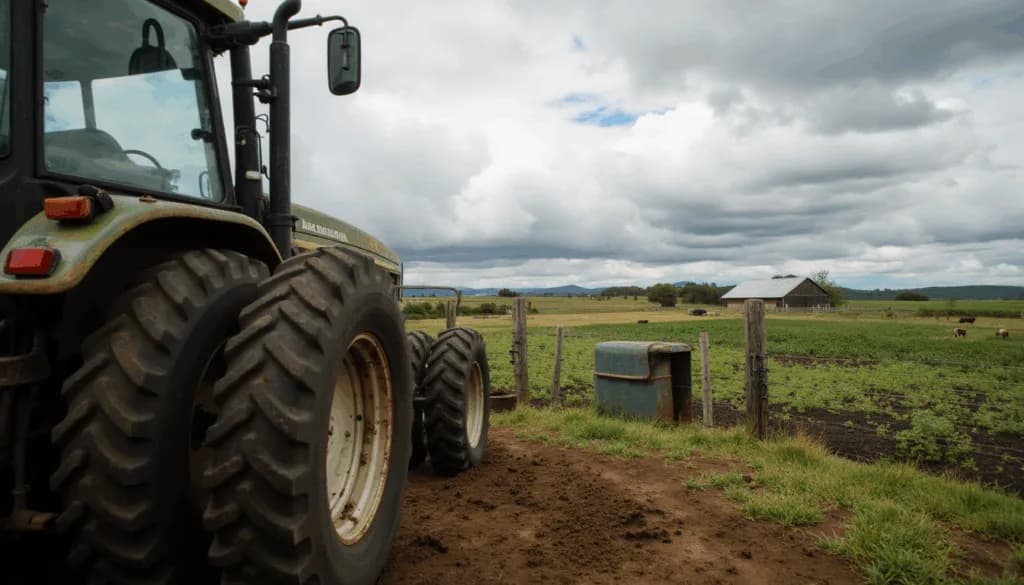
Farming is the original risk management exercise. You plan, plant, and then watch the weather decide whether to reward or ruin you. It’s a business model built on faith and forecasting, two things that don’t always cooperate. This is where insurance quietly walks in, holding a clipboard and a cup of coffee.
Agriculture in South Africa carries more moving parts than a combine harvester. Tractors break, storage burns, hail arrives sideways, and sometimes an entire season disappears under a dry sky. According to Agri SA, extreme weather events have doubled in the past decade. The South African Insurance Association (SAIA) warns that uninsured agricultural losses now cost billions annually, money that could have been replaced with the right cover instead of regret.
The good news is that farming insurance has evolved almost as fast as farming technology. Crop insurance now uses satellite data to assess damage accurately, cutting down on long waits and long arguments. Asset and equipment insurance protects tractors, irrigation systems, and packhouses. Livestock insurance can cover disease outbreaks, accidents, and even theft (because yes, cows sometimes vanish).
Then there’s business interruption cover, which replaces income when disaster strikes at the wrong time. Add liability and transport insurance, and you’ve got a safety net sturdy enough to carry a season.
At Mont Blanc, we see insurance as partnership. It’s the difference between starting over and starting again. Farmers already manage risk every day; we simply help them move the odds in their favour.
Because in farming, peace of mind isn’t a luxury. It’s part of the yield.
Crop insurance: a targeted layer your farm policy may not include
Most general agricultural policies cover the farm as a whole, and that breadth is precisely where gaps appear. A tractor stolen from the shed is straightforward; a maize stand destroyed by hail three weeks before harvest is a different category of loss, one tied to yield projections, planting costs, and bank covenants rather than a simple replacement value. Crop-specific cover addresses the gap by insuring the biological and financial exposure sitting in the ground, not only the assets above it. South Africa's summer grain regions, particularly the Highveld maize belt, carry concentrated weather risk a standard multi-peril farm policy often excludes or sub-limits heavily. Without dedicated crop insurance, a single hail event or unseasonal frost can erase an entire season's input costs before a single bag reaches the silo. The pain isn't abstract: input costs for maize have risen sharply alongside fuel and fertiliser prices, meaning your rand exposure per hectare is meaningfully higher than it was a decade ago. Our crop insurance guide unpacks how these policies are structured, what triggers a claim, and where the exclusions tend to hide.
Closing Reflection
If you drive far enough across South Africa, you’ll eventually pass a farm that looks like every headline you’ve ever read: resilience, risk, drought, hope. It’s there in the cracked soil that still somehow yields maize, in the farmer waving from a tractor that has seen more sunsets than service intervals, and in the quiet rhythm of people who plant, wait, and believe.
Agriculture in South Africa isn’t a story of wealth or romance; it’s a story of endurance. Against climate swings, power cuts, and policy puzzles, the country still produces enough to feed itself and send a little hope abroad in the form of oranges, wine, and wool. The numbers, GDP percentages, export volumes, job stats, tell one version of the tale. The land tells another, quieter one: keep going.
Technology hums, policies shift, and new markets open, but farming’s real currency remains faith, in rain, in soil, in tomorrow. That faith doesn’t come from boardrooms or trade summits; it comes from the person in gumboots checking a fence at dawn, deciding once again that this patch of earth is worth the effort.
So, if you’re reading this from a city desk, sipping coffee that started life on someone’s farm, here’s your reminder: every meal is a collaboration between land, labour, and a fair amount of stubbornness. Support local produce, buy from nearby markets, and back the people who feed the nation through good years and grim ones.
Because South African farming isn’t merely about growing crops. It’s about growing courage and that harvest is worth investing in.
“You shouldn’t have to discover your farm policy was assembled around a template rather than your operation. With Mont Blanc Financial Services you won’t.
Contact Mont Blanc Financial Services to review how your agricultural cover maps onto the crops, livestock, and risks your farm actually carries.”
Explore the full agricultural insurance series
Each guide below takes one part of agricultural insurance and works through it in practical detail.
- Cheap Agricultural Insurance South Africa
- The MBFS Farmer’s Guide to Agricultural Insurance
- Land, Legacy, and Agricultural Insurance
- Farm Insurance: Fire, Flood, and Foot-and-Mouth
- Livestock Insurance: When Livestock Is Your Living
- New Science of Farming, Technology, Climate
- Roots, Regions, and the Rhythm of Farming
- Multi-Peril Crop Insurance: The Price of a Perfect Storm
- Unlocking Savings: The Diesel Rebate for Farmers
- Business Interruption Cover: Counting the Hidden Costs
- Shared Risk, Shared Reward: Co-operative and Emerging Farmer Insurance Models
- Renewable Energy Insurance
- Underinsurance in Farming: The Audit No One Expects
- Parametric Insurance: When the Sky Turns Hostile

Nicola Iozzo
Founder & CEO, Mont Blanc Financial Services
Nicola has spent his career reading the policy wording most people skip, and writes here so you don't discover at claim stage what page 14 meant.
This blog is here to inform, not advise. Think of it as a guidebook, not a contract. For decisions affecting your world, have a chat with your broker or financial professional.
Mont Blanc Financial Services (PTY) Ltd. is an authorised financial services provider. FSP 8271