Multi-Peril Crop Insurance: The Price of a Perfect Storm
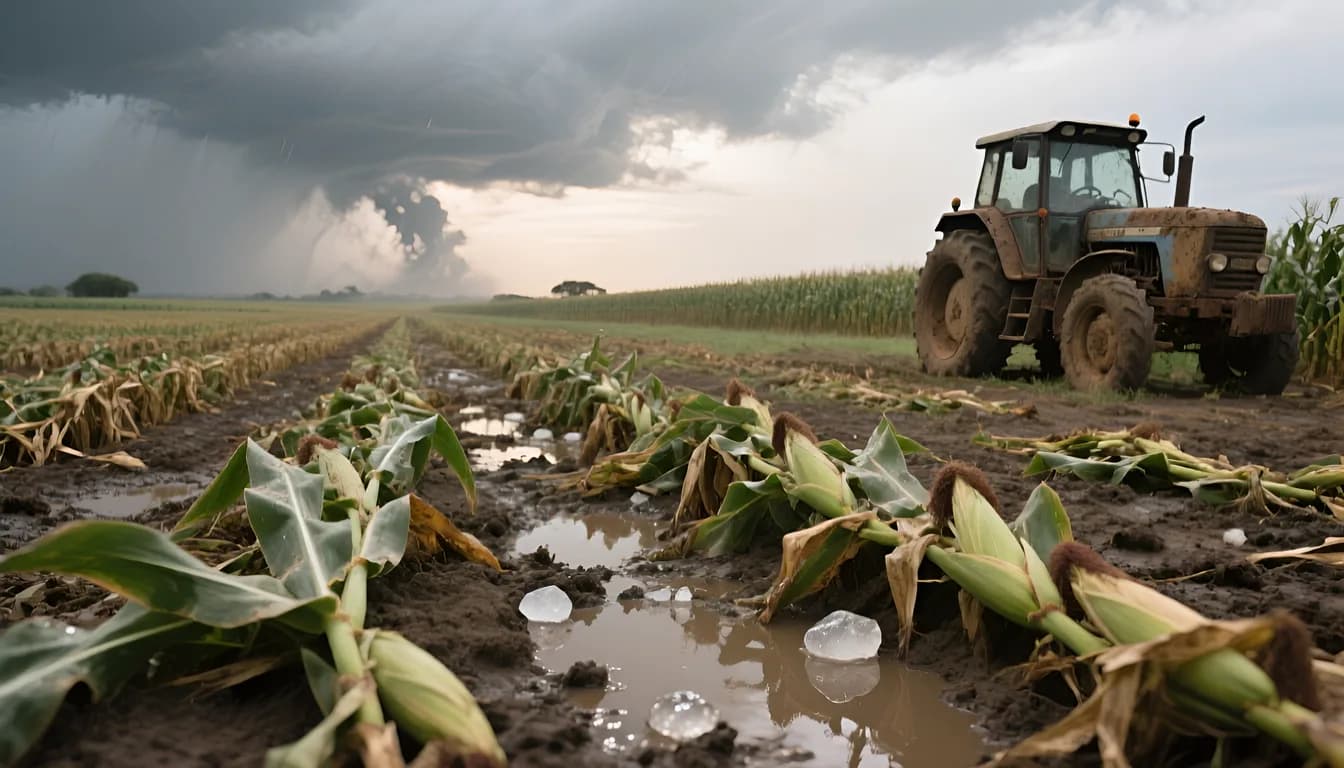
A single freak weather event can erase a season in minutes, and traditional single-risk crop cover often leaves most of the damage unpaid. Hail flattens a maize field that drought had already threatened and frost would have finished; a policy covering only one peril answers for only one. Weather no longer follows a predictable script, and the perils increasingly arrive together. That gap is where crop losses go uncovered.
What is multi-peril crop insurance in South Africa?
Multi-peril crop insurance in South Africa is cover protecting a crop against several risks under one policy rather than a single named peril. It typically responds to drought, flood, frost, hail, fire, and wind, and often to pest or disease outbreaks, recognising that crop losses rarely arise from one cause alone.
Key Takeaways
- Multi-peril crop insurance covers several risks under one policy, drought, flood, frost, hail, fire, and wind, rather than a single named peril.
- It exists because crop losses rarely arrive from one cause alone; a single season can bring several events in sequence across a region.
- Traditional single-risk policies might cover hail or drought but leave the other perils unprotected, creating gaps that surface after a loss.
- Cover can extend to fire, accidental destruction, and pest or disease outbreaks, broadening protection beyond weather alone.
- For an increasingly erratic climate, multi-peril cover matches the reality that no single risk arrives in isolation.
Why Farming Has Become a Game of Weather Roulette
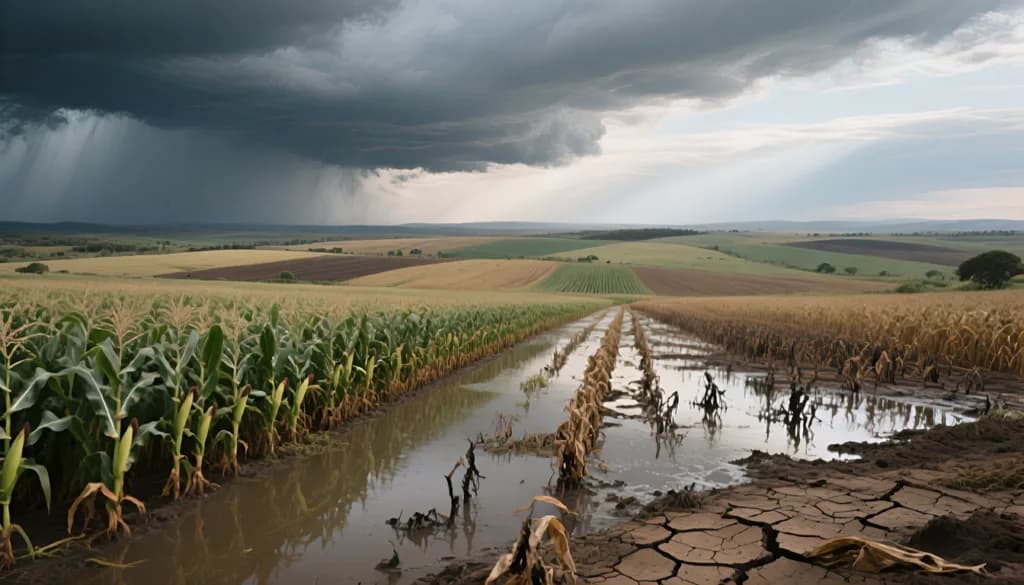
Farmers have always gambled on weather, but the odds are getting worse.According to the Department of Agriculture, Land Reform and Rural Development (DALRRD), South Africa’s agricultural seasons are growing shorter and more erratic. Droughts linger, rain arrives in bursts, and frost now visits provinces once considered immune. The result is a production environment where each year feels like a coin toss.
Multi-peril crop insurance exists because no single risk arrives alone. A wet season may drown crops in one region while frost burns them in another. Fuel hikes, pest outbreaks, and market shifts usually follow. Traditional single-risk policies might cover hail or drought but leave the rest unprotected.
We use data from agricultural bodies and the World Bank Climate Data Portal to assess risk clusters by region. This allows each policy to respond to multiple events in sequence rather than one disaster at a time.
What Multi-Peril Crop Insurance Covers
Multi-peril cover is like a toolbox, filled with different instruments working together. The most common inclusions are:
- Weather events: drought, flood, frost, hail, lightning, or wind damage.
- Fire and accidental destruction: crop fires started by lightning or machinery.
- Pest or disease outbreaks: sudden infestations that cause measurable yield loss.
- Market interruptions: in some cases, extended cover for lost income when transport or storage is affected by an insured event.
Unlike basic hail insurance, a multi-peril policy measures the yield gap between what you expected and what you harvested after the disaster. If the shortfall exceeds a set percentage, the insurer pays for the difference.
MBFS partners with underwriters who use regional yield data and verified weather indices, ensuring payouts are tied to science, not sympathy. For a detailed explanation of how claims are structured, see the South African Insurance Association (SAIA) guidelines on agricultural products.
The Economics of Risk: Why One Policy Is Better Than Six
Running separate policies for hail, drought, and fire may seem practical until you start paying six premiums and juggling six claim forms. Multi-peril crop insurance simplifies that chaos.Premiums may appear higher initially, but the cost per covered risk is often lower. More importantly, you avoid coverage gaps where one policy ends, and another begins.
A farmer in Mpumalanga who took out multi-peril insurance through MBFS said, “It’s like having one strong umbrella instead of six small ones with holes.”
The Organisation for Economic Co-operation and Development (OECD) notes that countries using bundled agricultural insurance models see faster recovery and stronger rural credit systems. South Africa’s farming banks echo the trend: insured clients maintain better credit ratings and qualify for refinancing after disasters.
Multi-peril policies also protect seasonal cash flow. Instead of waiting for disaster-specific claims, farmers receive a single consolidated payout covering total yield loss.
When to Consider Multi-Peril Crop Cover
The best time to buy insurance is before you need it, which unfortunately is also when optimism is high and rainfall looks promising. Multi-peril cover should be considered when:
- Your farm relies on consistent annual yields for debt repayment.
- Your area faces multiple weather threats rather than a single recurring pattern.
- You run mixed crops that share the same irrigation or storage infrastructure.
- You plan to expand or seek financing, as lenders prefer bundled risk management.
We evaluate each farm’s exposure using data from CropLife South Africa and local agri-co-ops. This allows customised cover matching both crop type and region.
In provinces like the Free State or North West, where drought alternates with hailstorms, multi-peril insurance is no longer luxury, it is survival strategy.
The MBFS Difference: Cover Built Around Real Seasons
Mont Blanc Financial Services approaches risk from the ground up. Our brokers are trained to speak both insurance and agriculture fluently. We analyse rainfall records, soil types, and market exposure before structuring cover. Policies are adjusted each season to reflect new threats, not recycled templates from last year.
We align coverage with your planting calendar, ensuring premiums make sense for cash-flow cycles. Each client receives a clear breakdown of what triggers a payout, how yield loss is calculated, and what evidence is required. No jargon, no guesswork, and no chasing signatures when you should be checking fields.
Insurance should feel like partnership, not paperwork.
Crop cover reads differently across the country, which is why South Africa's farming regions shape how a policy is built.
Input costs bite every season, so the diesel rebate for farmers is worth claiming before the next planting.
Frequently Asked Questions
What does multi-peril crop insurance in South Africa cover?
Multi-peril crop insurance in South Africa covers a crop against several distinct risks under a single policy, rather than protecting against just one named peril. The most common inclusions are weather events: drought, flood, frost, hail, lightning, and wind damage, which together account for much of the loss a crop can suffer. Cover often extends to fire and accidental destruction, including crop fires started by lightning or machinery, and to pest or disease outbreaks that cause measurable damage. The defining feature is breadth: instead of responding to one risk, the policy wraps multiple perils into one safety net. This reflects the reality that a growing season can bring several threats, sometimes in sequence, and that a loss is rarely attributable to a single cause. By covering the range, multi-peril insurance avoids the situation where a farmer is protected against the peril that did not strike and exposed to the one that did. The exact perils included should be confirmed in the policy, but the principle is comprehensive coverage of the risks a crop genuinely faces.
Why do South African farmers need multi-peril crop insurance?
South African farmers increasingly need multi-peril crop insurance because the climate has become more erratic and the perils that threaten a crop rarely arrive alone. Agricultural seasons are reported to be growing shorter and less predictable, with droughts lingering, rain arriving in bursts, and frost reaching areas once considered safe. In this environment, a single growing season can present several risks in succession, a wet spell, a frost, a hailstorm, each capable of damaging the crop. Traditional single-risk policies, covering only hail or only drought, leave the rest unprotected, so a farmer can suffer a covered loss in one event and an uncovered one in the next. Multi-peril cover responds to this by protecting against the cluster of risks a season can bring, rather than betting on which single peril will strike. For farmers facing a production environment that increasingly feels like a coin toss, this breadth of cover matches the actual pattern of risk. It insures against the season as a whole, not one slice of it.
How is multi-peril crop insurance priced in South Africa?
Multi-peril crop insurance in South Africa is priced by assessing the cluster of risks a particular crop and region face, often drawing on agricultural and climate data to model that exposure. Because the cover responds to several perils, the assessment considers the combined likelihood and severity of drought, flood, frost, hail, fire, and other risks for the specific area, rather than pricing a single event. Regional data allows the policy to reflect the genuine risk profile of where the crop is grown, since perils fall unevenly across the country. The crop type, the size of the operation, and the history of losses also feed into the calculation. This data-driven, region-specific approach means the premium reflects the actual combination of risks the farm is exposed to, rather than a flat national rate. For the farmer, it means the cost is tied to genuine exposure, and that reducing risk where possible, or understanding which perils dominate in their region, helps make sense of the premium. The pricing follows the breadth and the location of the risk.
Is multi-peril crop insurance better than single-risk cover in South Africa?
Multi-peril crop insurance is generally better suited to the South African farming environment than single-risk cover, because it matches the way losses actually occur. Single-risk policies protect against one named peril, hail or drought, for example, which leaves a farmer exposed to every other risk a season can bring. Given that crop losses increasingly arise from multiple events in sequence, and that the climate has become less predictable, single-risk cover can pay out for the peril that did not cause the main damage while leaving the actual loss uncovered. Multi-peril cover addresses this by responding to a range of risks under one policy, closing the gaps that single-risk cover leaves open. It is not automatically the right choice for every operation, since a farm with a narrowly defined exposure might be adequately served by targeted cover, but for most operations facing variable weather, the broader protection reflects the genuine risk. The decision should follow the farm’s actual exposure, but for a season that can bring several perils, breadth tends to be the safer structure.
Closing Reflection
A perfect season exists only in memory. The rest are combinations of luck, skill, and survival instinct. Multi-peril crop insurance may not control the weather, but it stops one bad year from erasing ten good ones. It replaces panic with planning and uncertainty with continuity.
Farmers still pray for rain, but they no longer depend on it alone.
You shouldn’t have to discover your single-risk policy covered the one peril that didn’t arrive. With Mont Blanc Financial Services you won’t.
Contact Mont Blanc Financial Services to structure crop cover around the full range of risks a season can bring, not just one.

Nicola Iozzo
Founder & CEO, Mont Blanc Financial Services
Nicola has spent his career reading the policy wording most people skip, and writes here so you don't discover at claim stage what page 14 meant.
This blog is here to inform, not advise. Think of it as a guidebook, not a contract. For decisions affecting your world, have a chat with your broker or financial professional.
Mont Blanc Financial Services (PTY) Ltd. is an authorised financial services provider. FSP 8271