Commercial property insurance valuations: avoiding underinsurance
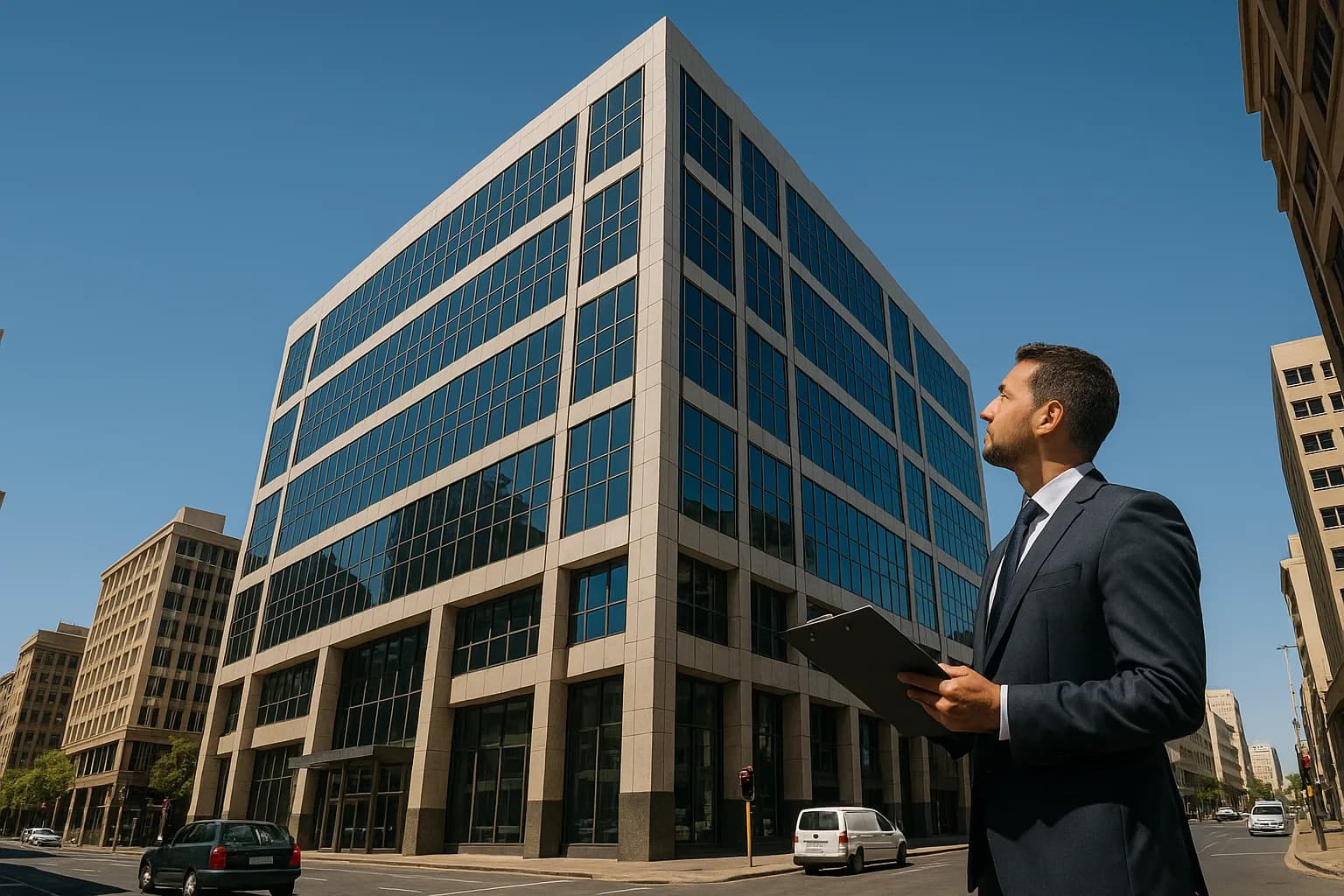
The number on your policy schedule looks fine. It has looked fine for three, four, perhaps six years, because no one has touched it and nothing catastrophic has happened. Then a fire starts in the plant room on a Wednesday night, and the loss adjuster arrives on Thursday morning with a clipboard, a rebuild quote, and news you weren't expecting: the replacement cost of your building is R18 million, and you're insured for R11 million. The insurer applies the average clause, a mathematical reduction treating you as having carried the uninsured portion yourself, and your R5 million claim settles at roughly R3 million. The gap is yours to fund, and it was never negotiable.
What is a property insurance valuation?
A property insurance valuation is a professional assessment of what it would cost to demolish and rebuild your commercial building from scratch, at current construction rates, including professional fees, compliance costs, and site clearance. It isn't the market value of the property, not the price you paid for it, and not the municipal valuation on the rates bill. It is the one number the insurer uses to determine whether your sum insured is adequate, and whether average applies at claim time.
Key Takeaways
- A property insurance valuation measures reinstatement cost, not market value or purchase price. These figures routinely diverge by millions of rands.
- South African building costs have risen sharply since 2020, driven by materials inflation and construction wage increases, so a valuation older than two to three years is likely understating your exposure.
- The average clause means underinsurance isn't a negotiating position, it is a formula. If you're insured for 70 percent of the true reinstatement cost, you recover 70 percent of every claim.
- A professional reinstatement valuation from a registered quantity surveyor is the most reliable way to set your sum insured correctly.
- Reviewing your valuation at every renewal, not at claim time, is the single most cost-effective risk management step a commercial property owner can take.
Why reinstatement cost and market value are not the same figure

Reinstatement cost and market value measure different things entirely, and confusing them is one of the most common sources of commercial underinsurance in South Africa.
Market value reflects what a willing buyer would pay for the property on the open market. It includes the land, the location, the demand in that precinct, and the economic conditions of the moment. Reinstatement cost ignores all of that. It asks only one question: if this building ceased to exist tomorrow, what would it cost to rebuild it to its current specification, using today's materials and labour, under current building regulations?
In a well-located commercial area, market value typically exceeds reinstatement cost because the land carries premium value. In a specialist industrial building, the opposite is often true: a food-grade production facility or a cold-storage warehouse can cost significantly more to rebuild than the property would fetch in a sale, because the specialised fitout, the refrigeration infrastructure, and the compliance requirements are embedded in the structure but not reflected in a market transaction.
A commercial property investor in the Reef industrial corridor who insures at municipal valuation, the figure on the rates notice, is almost certainly underinsured, because municipal valuations lag the market by years and measure something different from reinstatement cost regardless. Aon's underinsurance analysis, published on their global insights platform, identifies this conflation as one of the leading drivers of underinsurance gaps globally, and the South African commercial property market is not an exception.
How the average clause works in practice
The average clause is the mechanism turning underinsurance from a theoretical problem into a concrete financial loss at claim time. Understanding it before you need to is worth your time.
The clause reads simply enough in most South African policy wordings: if the sum insured is less than the full reinstatement value of the property at the time of loss, the insurer pays only the same proportion of the claim as the sum insured bears to the full value. The arithmetic does the rest.
Here is the clause in practice. A food manufacturing facility in Germiston is insured for R14 million. At claim time, a professional assessment puts the reinstatement cost at R20 million. The business suffered a fire in the processing hall and the restoration cost is R4 million. The insurer applies average as follows: R14 million divided by R20 million equals 70 percent. The R4 million claim pays out at R2.8 million. The remaining R1.2 million is the owner's shortfall, not a penalty, not a dispute, simply the formula applied to the facts.
The principle behind the clause is straightforward: the premium is calculated on the declared sum insured. If the insured has declared a lower value than the true exposure, they have paid a lower premium than the risk warranted, and the clause corrects for that at claim time. Average-clause application is standard in commercial property policies across most jurisdictions, and South Africa is no exception.
Key factors affecting reinstatement cost vs sum insured
| Factor | Effect on Reinstatement Cost | Common Insured Assumption |
|---|---|---|
| Building age and specification | Older buildings may cost more to reinstate to current code | Assumed to depreciate like assets |
| Materials inflation since inception | Increases reinstatement cost year on year | Sum insured left unchanged at renewal |
| Specialist fitout (cold rooms, clean rooms) | Significantly higher than standard construction | Often omitted or undervalued |
| Professional fees (architects, engineers) | Typically 10 to 15 percent of build cost | Often excluded from the sum insured |
| Site clearance and demolition | Added cost before a single brick is laid | Rarely included in the owner's estimate |
| Regulatory compliance upgrades | Post-disaster rebuild must meet current SANS standards | Ignored in older valuations |
Reinstatement cost components owners routinely omit or underestimate.
What drives underinsurance in commercial property
Underinsurance rarely happens because a property owner chose to take the risk. It accumulates over successive renewals, as the sum insured stays fixed while the cost of building materials, labour, and professional services moves upward.
South African construction costs have climbed consistently since 2020, driven by a combination of rand weakness affecting imported materials, domestic steel and cement price increases, and upward pressure on skilled-trades wages. A building valued for insurance purposes in 2021 and renewed on those same figures annually is likely sitting at a meaningful shortfall by 2025, before a single claim has been made.
The second driver is scope omission. A business owner estimating the reinstatement cost of their own building typically pictures the walls and the roof. They don't include the cost of demolition and rubble removal, which must happen before reconstruction begins. They don't include the architect and structural engineer fees, which industry guidance on commercial property cover consistently identifies as 10 to 15 percent of the gross rebuild cost. They don't include the tenant installation, the electrical reticulation, or the compliance upgrades required by current building regulations. Each omission erodes the adequacy of the sum insured, and the average clause captures all of them at once.
The third driver is inertia. Reviewing the sum insured at renewal requires someone to raise the question, and the question tends to feel abstract until it isn't. The SAIA's published insurance risk guidance identifies underinsurance as a structural risk across the South African commercial property market, and the mechanism is nearly always the same: a valuation done once, at inception, and never revisited.
How a professional reinstatement valuation is conducted
A professional reinstatement valuation is carried out by a registered quantity surveyor and measures reinstatement cost the way a loss adjuster would calculate it at claim time, from the ground up.
The surveyor inspects the building, records its dimensions, specification, construction method, and special features, and applies current unit rates for the relevant building type and region. The output is a reinstatement cost figure including demolition, professional fees, SANS compliance, and a reasonable contingency allowance for post-event cost escalation. It isn't a quick calculation, and it isn't the same as a desktop estimate based on floor area alone.
For most commercial buildings in South Africa, your broker should recommend a professional reinstatement valuation every two to three years. In periods of high building cost inflation, which describes most of the post-2020 environment, annual reviews are appropriate. Between full valuations, an escalation adjustment tied to the AECOM or Davis Langdon building cost index can serve as a reasonable interim update, but it is a proxy, not a substitute for a surveyor's assessment.
The cost of a professional valuation is a fraction of the premium on a well-insured building, and it is many orders of magnitude smaller than the shortfall a stale sum insured produces at claim time. It is one of the few risk management expenses with a mathematically demonstrable return.
SASRIA cover and the reinstatement value problem

SASRIA, the South African Special Risks Insurance Association, is the state-mandated insurer covering damage from civil unrest, riots, strikes, and public disorder. Think of it as a separate layer of cover sitting alongside your main commercial property policy: your commercial insurer collects the SASRIA premium on SASRIA's behalf, but SASRIA is the entity paying those specific claims.
The connection to property insurance valuation is direct and often overlooked. SASRIA pays claims on the same declared sum insured your main policy uses. If that figure is understated because the reinstatement valuation is stale, the SASRIA claim suffers the same average-clause reduction as the main property claim. A business whose property was damaged in the civil unrest of July 2021 and whose sum insured was set in 2019 would have faced this precise problem: the event triggering the SASRIA claim also revealed the underinsurance.
Keeping your reinstatement valuation current ensures both your commercial property cover and your SASRIA cover respond at full capacity when the event triggering them is large enough to count.
The broker's role in keeping your valuation current
A broker's job isn't to collect the renewal instruction and send the documents. It is to notice when the sum insured hasn't moved in three years and ask why.
At Mont Blanc Financial Services, the renewal conversation on a commercial building always includes a valuation review. We ask when the last professional assessment was done, we check the declared figure against current building cost indices for the relevant building type, and where the gap looks meaningful we recommend a formal reinstatement valuation before the renewal binds. This isn't a complicated process. It is the kind of question preventing a Thursday morning conversation with a loss adjuster from becoming a financial disaster.
The insurer's interest and the insured's interest don't always run in the same direction, but on this point they happen to align: an underinsured building costs the insurer credibility and produces a dissatisfied client after a claim. Recognised industry bodies are consistent on this point, adequate insurance to value benefits everyone in the chain, and the broker is the professional best placed to prompt the conversation.
An independent broker reviewing your sum insured isn't auditing you. They are doing the thing your policy schedule cannot do on its own: changing the number before the claim arrives.
When the numbers fall short, and how to recover
If you suspect your current sum insured is materially below the reinstatement cost of your commercial building, the time to act is before the next renewal, not after the next event.
Commission a reinstatement valuation from a registered quantity surveyor. Once you have the figure, instruct your broker to amend the sum insured on the policy schedule. Depending on the shortfall, the premium adjustment may be less significant than you expect, building cover premiums are typically calculated on a rate per thousand of the sum insured, and the rate often softens slightly as the insured value increases, particularly in a market where commercial property premiums have shown some moderation after several years of hardening.
The adjustment protects you in two ways: it removes the average clause trigger for the full shortfall, and it means a partial loss, the kind occurring far more often than a total loss, pays out without the discount underinsurance would otherwise apply.
One thing worth noting: amending the sum insured mid-term to reflect a professional valuation isn't a signal to the insurer you expect a claim. It is a standard policy maintenance instruction, and any broker suggesting otherwise isn't giving you sound advice.
Getting the valuation right before it has to perform
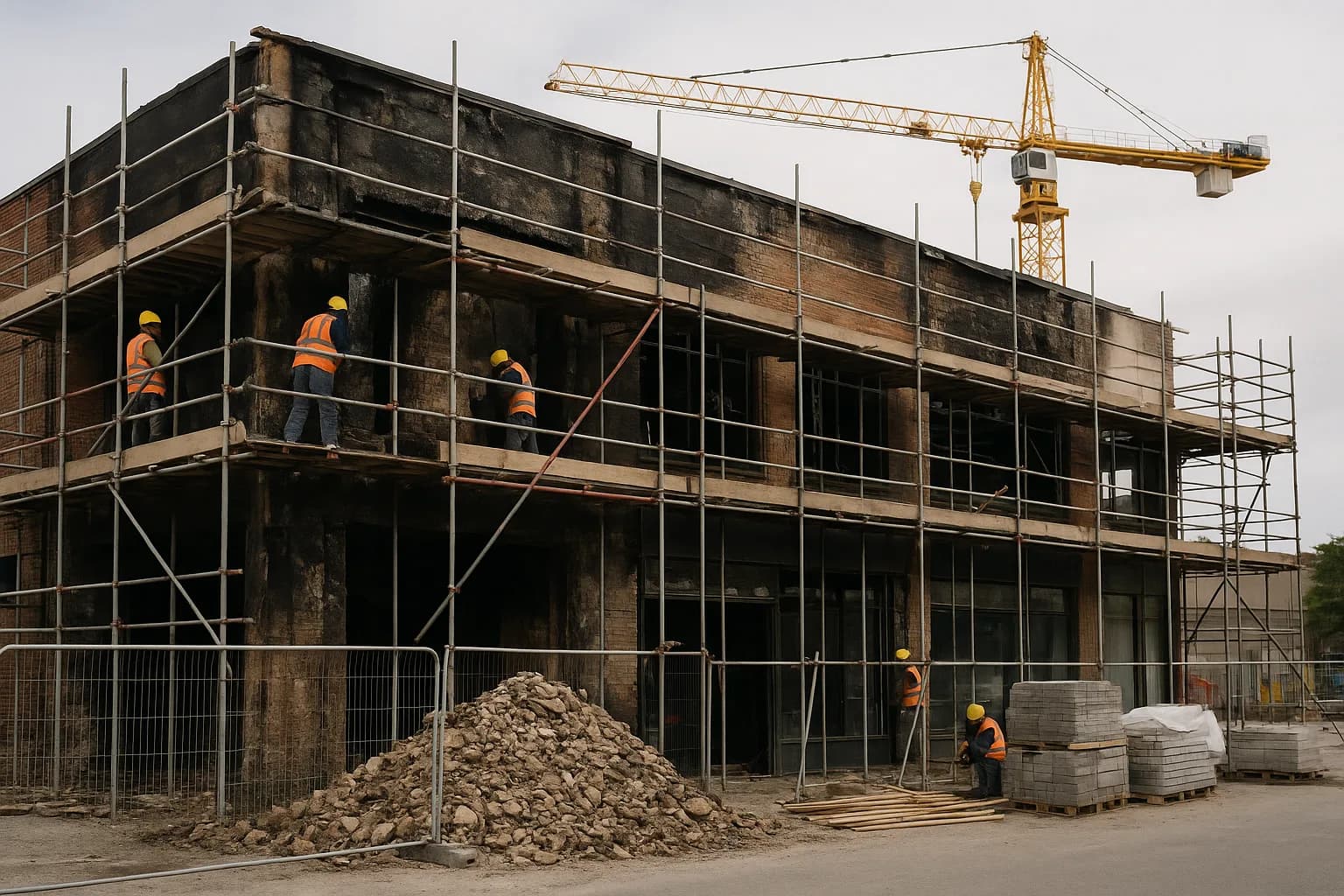
A commercial building is typically the largest single asset on a business owner's balance sheet. The number next to it on the policy schedule is either accurate or it isn't, and the difference between those two states only becomes visible on a day nobody planned for. The work of keeping it accurate isn't glamorous, it involves a quantity surveyor, a renewal conversation, and an instruction to your broker taking ten minutes to give. It is the kind of maintenance a property doesn't require and an insurance policy does.
You shouldn't have to discover your reinstatement value at claim time through a loss adjuster's calculation. With Mont Blanc Financial Services you won't.
Contact Mont Blanc Financial Services to review your current commercial property sum insured, identify any valuation gap, and arrange a professional reinstatement assessment before your next renewal.
The questions below address the specific valuation distinctions commercial property owners most often raise when they start thinking carefully about their cover.
Frequently Asked Questions
Is a property insurance valuation different from a standard real estate appraisal?
A property insurance valuation and a real estate appraisal measure entirely different things, and using one in place of the other is a reliable route to underinsurance.
A real estate appraisal estimates what a buyer would pay for the property in the current market. It includes the value of the land, the location, the demand in the area, and broader economic conditions. Land has no replacement cost in an insurance sense, if the building burns down, the land is still there. The appraisal figure is therefore not useful for insurance purposes.
A property insurance valuation measures reinstatement cost: what it would cost to demolish the existing structure and rebuild it to its current specification using today's materials, labour, and professional services, complying with current building regulations. It excludes land value entirely and includes items an appraisal ignores, demolition, rubble removal, architect fees, structural engineering, and SANS compliance upgrades. For commercial buildings with specialist fitout, the reinstatement cost often exceeds the market value by a substantial margin. Your broker should flag this distinction before you bind cover, not after a loss event forces the comparison. Insuring at the appraisal figure is one of the policy schedule's more expensive misunderstandings.
Which property insurance valuation method applies to home insurance?
For residential property insurance, the same reinstatement cost principle applies, though the valuation method is simpler than for a commercial building.
Residential insurers typically use one of three approaches: a professional reinstatement assessment by a quantity surveyor, a desktop estimate based on the floor area and construction type using a published cost-per-square-metre rate, or an insurer-provided online calculator. The desktop and calculator methods are proxies. They work reasonably well for standard residential construction but become unreliable for unusual homes, large properties, older homes with heritage features, homes with high-specification finishes, or buildings with non-standard materials.
The principle is the same as in commercial property insurance: the sum insured must reflect what the building would cost to rebuild, not what it would sell for. The SAIA's insurance risk guidance applies to residential cover as much as commercial. Homeowners who haven't reviewed their sum insured since before 2021 are likely underinsured, given the rate of building cost inflation in South Africa over the intervening years. A registered quantity surveyor can provide a reliable reinstatement figure for a residential property, and for a high-value home the cost of the assessment is a sensible precaution. Your broker can help you identify which method is appropriate for your property type.
How do insurers determine the property insurance valuation for a dwelling?
Insurers use reinstatement cost, not market value, to determine the appropriate sum insured for a dwelling or commercial building. The figure they work from is the one you declare on the proposal form or schedule, they don't independently assess the building's value at inception.
This places the responsibility for accuracy on you. At claim time, the insurer's loss adjuster will assess the actual reinstatement cost of the damaged structure. If that figure exceeds the declared sum insured, the average clause reduces the settlement proportionally. The insurer doesn't absorb the gap.
For a commercial building, the most reliable basis for the declared sum insured is a professional assessment by a registered quantity surveyor, updated every two to three years or whenever significant construction, fitout changes, or material cost escalation suggests the figure may have moved. Interim adjustments can be made using published building cost indices, the AECOM South Africa cost guide is a recognised reference, but these are approximations. The figure on the schedule at the time of loss is the figure deciding what the insurer pays, and the cost of getting it right in advance is lower than the cost of finding it wrong at claim stage. Discussing the review cycle with your broker at each renewal is the most practical way to stay ahead of the gap.

Nicola Iozzo
Founder & CEO, Mont Blanc Financial Services
Nicola has spent his career reading the policy wording most people skip, and writes here so you don't discover at claim stage what page 14 meant.
This blog is here to inform, not advise. Think of it as a guidebook, not a contract. For decisions affecting your world, have a chat with your broker or financial professional. Mont Blanc Financial Services works to keep this content accurate and current, but isn’t liable for decisions made on it alone.
Mont Blanc Financial Services (PTY) Ltd. is an authorised financial services provider. FSP 8271