Commercial Building Insurance
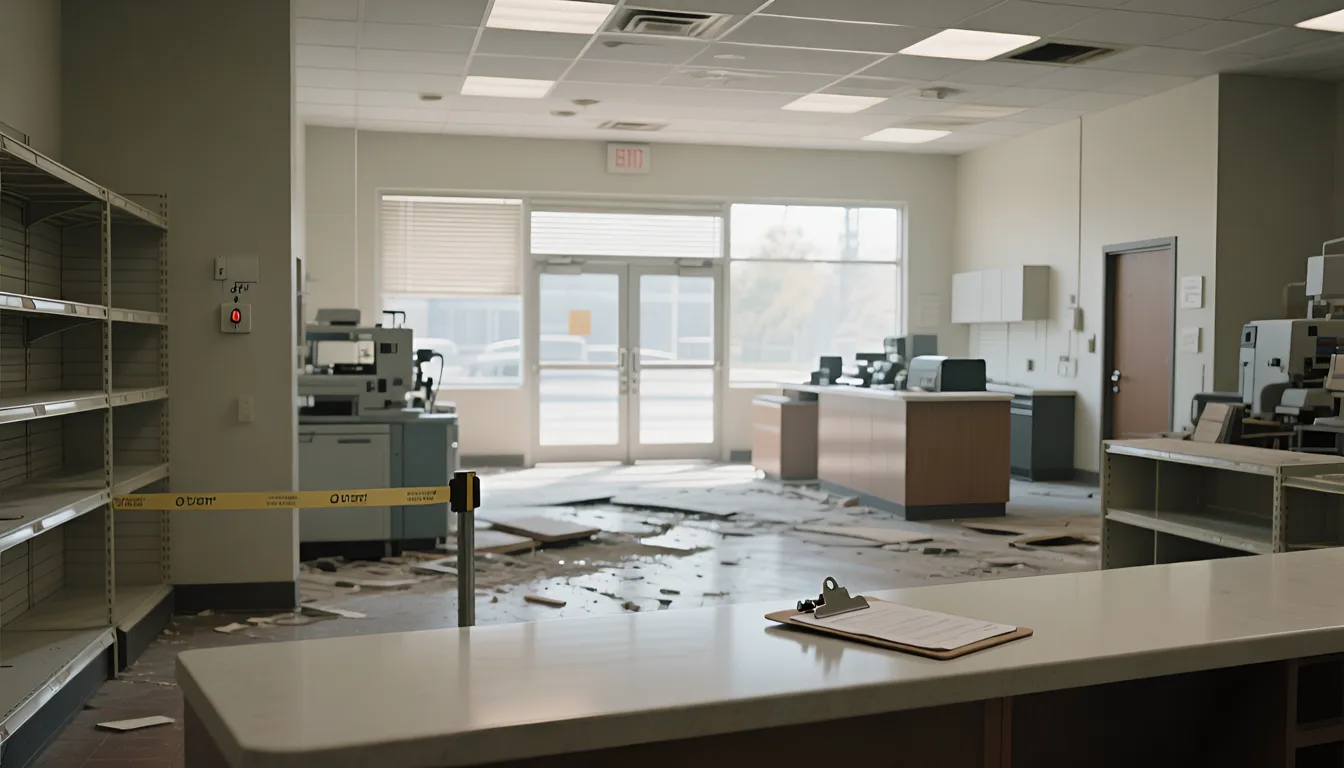
A commercial building fades into the background as long as it behaves, and most owners only notice how much depends on it when something interrupts the routine. A fire, a storm that settles in, a break-in, and the premises stop being invisible and start demanding decisions all at once. The disruption is not only the damage; it is the pause, and the realisation of how much of the operation rested on the building working.
What is commercial building insurance?
Commercial building insurance protects the physical premises and assets a business depends on, the building, stock, equipment, fittings, and signage, against insured events such as fire, storm, theft, vandalism, burst pipes, and accidental damage. It focuses on restoring the business to working order after physical loss, rather than on income or liability, which other covers address.
Key Takeaways
- Commercial building insurance covers the physical premises and assets a business relies on, the building, stock, equipment, fittings, and signage.
- It responds to insured events such as fire, storm damage, theft, vandalism, burst pipes, and accidental damage to the property.
- The cover focuses on restoring the business to working order, repairing what can be repaired and replacing what cannot.
- Property loss forces many decisions at once, about operating, staff safety, salvage, and repair, while the owner is still absorbing the interruption.
- South African insurers operate within a framework overseen by the Financial Sector Conduct Authority, intended to ensure fair treatment of policyholders.
What Commercial Property Insurance Protects
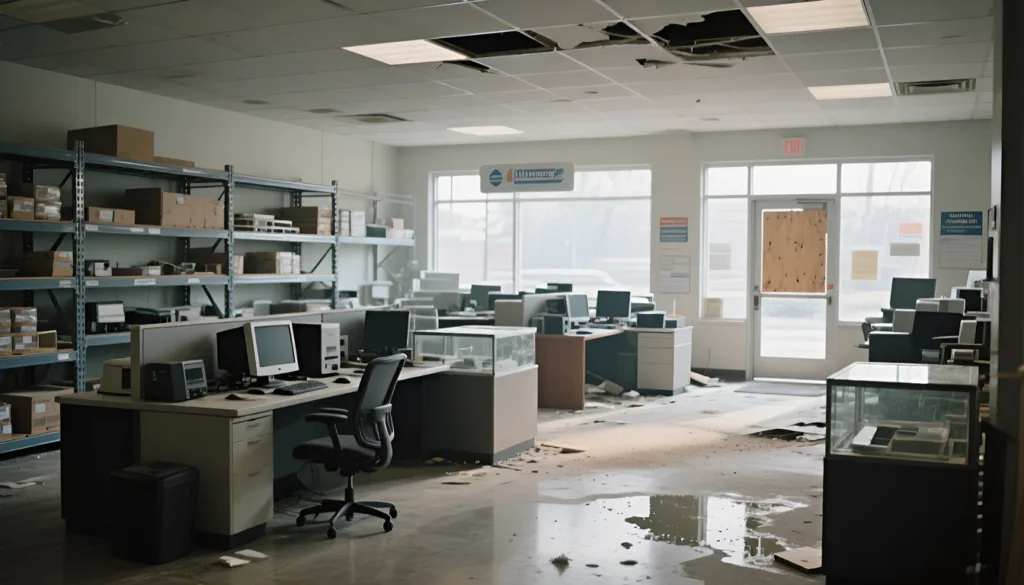
Your business relies on physical things, even if much of the work happens on screens or through people.
The building where you operate.The stock you sell or store.The equipment you rely on.The furniture, fittings, signage, and tools which make daily work possible.
When these are damaged, destroyed, or stolen, the business doesn’t slow down politely. It stops or stumbles. Sometimes immediately. Sometimes after a delay that feels worse.
Commercial property insurance responds to insured events such as fire, storm damage, theft, vandalism, burst pipes, and accidental damage. It focuses on restoring the business to working order.
Why Property Loss Hits Harder Than Expected
Most business owners know their premises and equipment matter. What often surprises them is how many decisions arrive at once after something goes wrong.
Can you still operate from the same space.Can staff work safely.Can stock be salvaged.Can equipment be repaired or does it need replacing.Can customers be served at all.
These questions arrive alongside assessors, contractors, and insurers. They arrive while you’re still absorbing the interruption.
Property risk is not abstract. In South Africa, insurers operate within a regulated framework overseen by the Financial Sector Conduct Authority, which exists to ensure policyholders are treated fairly, particularly during claims when pressure and delay place strain on businesses.
Property insurance doesn’t remove decisions. It makes workable answers possible.
Buildings and Fixed Structures
If you own the premises, business property insurance covers the structure.
Walls, roofs, floors, permanent fixtures, and built-in fittings fall into this category. Damage from insured events is assessed against repair or rebuild costs, not against original purchase price or accounting values.
If you lease premises, responsibility may still exist. Tenant improvements, internal fittings, and alterations you installed may not belong to the landlord. When they’re damaged, replacement often sits with you.
Property cover looks at responsibility, not assumptions.
Contents, Stock, and Equipment
Contents include everything inside the building that supports daily operations.
Stock on shelves or in storage.Machinery and tools.Office furniture.IT equipment.Point-of-sale systems.Signage and displays.
Loss here affects timing, delivery, and reputation. Replacing stock takes time. Sourcing equipment involves suppliers. Repairing machinery often requires specialists.
Property insurance steps in so recovery doesn’t rely only on cash reserves.
Replacement Value Versus Market Value
One of the quiet risks in property insurance sits in valuation.
Market value reflects what something might sell for today.Replacement value reflects what it costs to replace it with an equivalent item.
For businesses, replacement value usually determines recovery.
Guidance from the South African Insurance Association consistently identifies underinsurance as a leading cause of reduced claim settlements.
Second-hand machinery may have little resale value but replacing it costs real money. Stock written down in accounts still needs to be reordered at current prices.
Industry guidance from the South African Insurance Association consistently identifies underinsurance as a leading cause of reduced claim settlements, particularly where asset values haven’t kept pace with rising replacement costs.
Fire, Storm, and Accidental Damage
Fire remains one of the most damaging risks businesses face. Damage spreads quickly. Smoke lingers. Recovery stretches longer than expected.
Storm damage brings complications of its own. Roofs fail. Water travels. Stock that survived the wind may not survive what follows.
Accidental damage feels small until it isn’t. A burst pipe over a weekend. A dropped unit. A forklift clip.
Property insurance responds to the cost of putting things right, not to how the incident feels.
International loss data compiled by the International Association of Insurance Supervisors shows that fire-related property claims remain among the most severe in terms of recovery time and cost.
Theft and Vandalism
Theft rarely arrives neatly.
Locks are damaged. Wiring is pulled out. Stock disappears. Vandalism often causes more harm than the theft itself.
Beyond replacement costs, there’s interruption. Delayed openings. Cancelled orders. Time spent dealing with reports and repairs.
Property insurance covers insured theft and vandalism, so recovery doesn’t stall while responsibility is argued.
Temporary Locations and Extensions
Some businesses operate across multiple sites. Others move stock between locations. Some trade from temporary premises during renovations or expansion.
Property exposure doesn’t stop at one address.
Well-structured property insurance accounts for movement, storage, and operational change. Cover tied too tightly to one location can fail quietly as the business grows.
Underinsurance and Why It Happens
Commercial building underinsurance isn’t always deliberate.
Values drift. Prices rise. Stock increases. Equipment upgrades happen gradually. What was accurate years ago may no longer reflect reality.
When a claim occurs, underinsurance reveals itself through reduced settlements. Payouts shrink because insured values don’t match replacement costs.
Regular reviews don’t require constant adjustment. They require attention after growth, refurbishment, or expansion.
How Building Insurance Fits Into Risk Management
Property insurance doesn’t operate alone.
Damage to premises often leads to loss of income. That falls under business interruption insurance.
Injuries linked to property damage may involve public liability.
Stolen equipment may affect contracts, schedules, and reputation.
Property insurance handles the physical starting point. Other covers manage what follows.
When Property Cover Is Tested
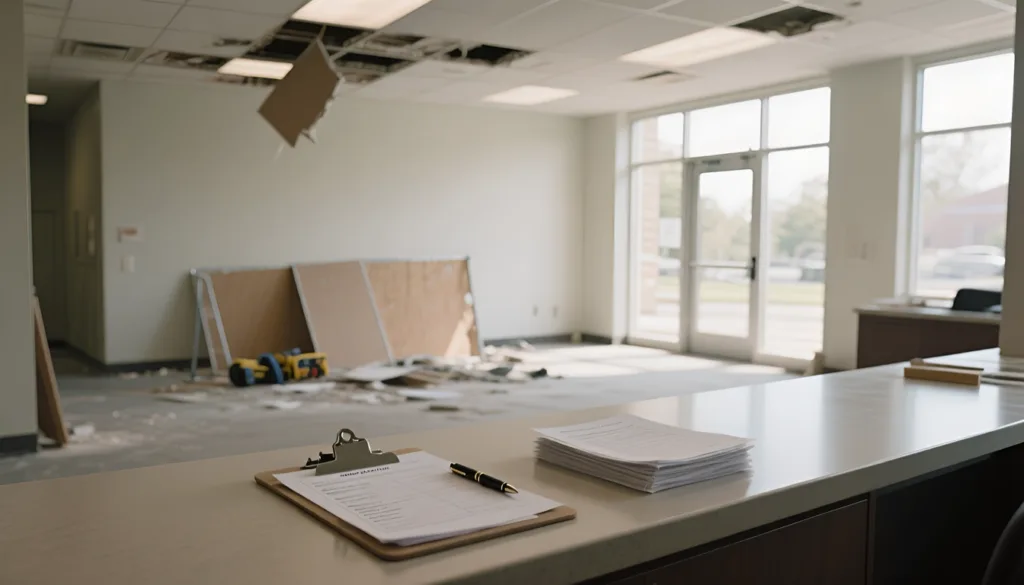
Claims test patience before they test wording.
Assessments take time. Contractors are busy. Supply chains move slowly. Decisions feel urgent while processes remain careful.
Good property insurance doesn’t promise comfort. It provides a path back to operation.
Questions around commercial building insurance usually surface after something goes wrong, not before.
Policies are often arranged quickly, then left alone while the business grows, moves, or changes shape. When damage occurs, uncertainty follows. What is covered. What is excluded. What applies now, not years ago.
The questions below address the issues business owners raise most often once property risk becomes real.
A finished building began as a site, and contractors insurance covers the risks that live between the two.
The wording rewards a close read, which is why what commercial building cover includes is worth an hour before signing.
Closing Reflection
You rely on your premises and equipment without thinking about them most days.
That’s how it should be.
Commercial property insurance exists so you can keep relying on them, even when something interrupts the routine. It absorbs shock, limits spread and supports recovery without demanding your full attention.
You shouldn’t have to find out your building was insured for the wrong value when the claim is already in. With Mont Blanc Financial Services you won’t.
Contact Mont Blanc Financial Services to confirm your commercial building cover is set on the right basis before a loss tests it.
The full picture lives in our guide to general business insurance.
Frequently Asked Questions
What does commercial building insurance cover?
Commercial building insurance covers the physical premises and the assets a business depends on to operate, restoring them after an insured loss. This includes the building itself along with the stock, equipment, furniture, fittings, signage, and tools that make daily work possible. The cover responds to insured events such as fire, storm damage, theft, vandalism, burst pipes, and accidental damage, focusing on returning the business to working order, repairing what can be repaired and replacing what cannot. It addresses the physical side of a business’s risk rather than its income or liability, which are handled by other covers such as business interruption and liability insurance. The distinction matters because a business needs each part of the framework for the exposure it addresses; building cover restores the premises and contents but does not, on its own, replace lost income during the downtime that follows. Understanding commercial building insurance as the cover for physical assets, working alongside other covers for other risks, is what allows a business to see where its protection is complete and where it has gaps.
Why does property loss hit a business harder than expected?
Property loss tends to hit a business harder than owners expect because it forces many urgent decisions at once, on top of the damage itself. When premises or equipment are damaged, the questions arrive together: whether the business can still operate from the same space, whether staff can work safely, whether stock can be salvaged, whether equipment can be repaired or must be replaced, and whether customers can be served at all. These decisions land while the owner is still absorbing the disruption, and they arrive alongside assessors, contractors, and insurers, each adding to the pressure. The loss is therefore not only the value of the damaged property but the operational paralysis and the volume of simultaneous decisions it triggers. This is why property risk is concrete rather than abstract: its impact is felt across the whole operation at once. Commercial building insurance helps by funding the restoration, but understanding the full weight of a property loss, the decisions as well as the damage, is part of appreciating why the cover matters.
How are commercial buildings insured in South Africa?
Commercial buildings in South Africa are insured through policies that respond to physical loss of the premises and contents, operating within a regulated insurance framework. Insurers offering this cover operate under the oversight of the Financial Sector Conduct Authority, which exists to ensure policyholders are treated fairly, particularly during claims. The cover itself is structured around the insured events that can damage a building, fire, storm, theft, vandalism, burst pipes, and accidental damage, and around restoring the business to working order afterward. A key consideration in how a building is insured is the basis of valuation, since the sum insured should reflect what it would cost to reinstate the property, and getting this right is essential to avoid underinsurance at claim stage. The regulated environment provides a measure of protection for the policyholder, but the adequacy of the cover still depends on how the policy is set up. The specific regulatory details should be confirmed against current FSCA information, as the framework governs how insurers must conduct themselves.Should a commercial building be insured for replacement or market value?A commercial building should generally be insured for its replacement value rather than its market value, because a claim needs to fund the cost of reinstating the property, not its sale price. Market value reflects what a building might sell for, which is influenced by location, demand, and land value, and can be quite different from what it would cost to rebuild it after a loss. Replacement value, by contrast, reflects the actual cost of reconstruction, materials, labour, and associated expenses, which is what the business needs to return to working order. Insuring on the wrong basis is a common source of underinsurance: a building insured at market value can fall well short of rebuilding cost, leaving the owner to fund the difference. Because building costs also rise over time, the replacement figure should be reviewed periodically rather than set once and forgotten. Confirming that a commercial building is insured for replacement cost, and keeping that figure current, is one of the most important steps in ensuring the cover actually responds adequately when it is needed.

Nicola Iozzo
Founder & CEO, Mont Blanc Financial Services
Nicola has spent his career reading the policy wording most people skip, and writes here so you don't discover at claim stage what page 14 meant.
This blog is here to inform, not advise. Think of it as a guidebook, not a contract. For decisions affecting your world, have a chat with your broker or financial professional.
Mont Blanc Financial Services (PTY) Ltd. is an authorised financial services provider. FSP 8271