Power surge insurance cover for business equipment
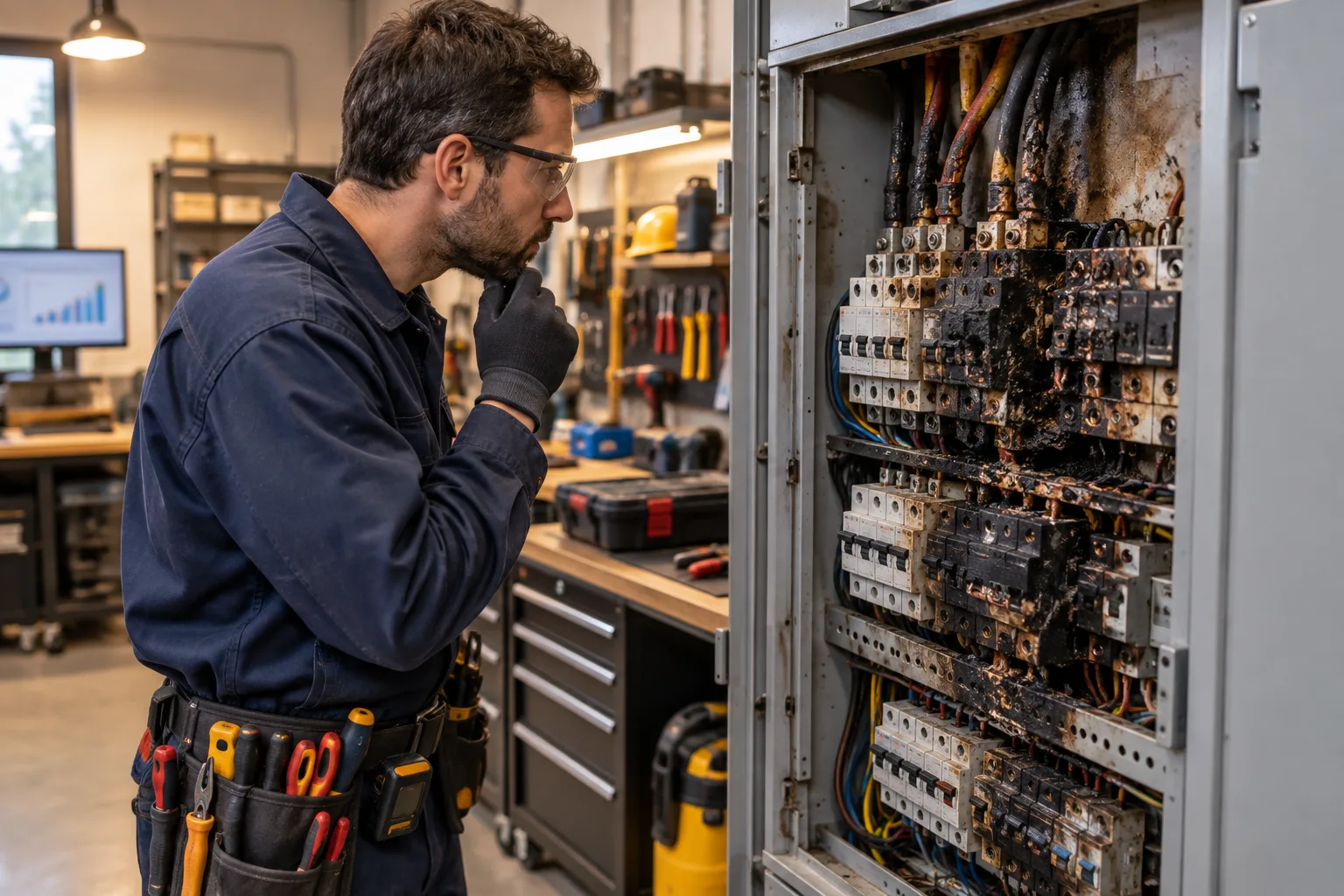
The reconnection surge arrives without ceremony. Eskom restores power to your Midrand office after a two-hour stage-six outage, and the UPS units supposed to absorb the spike are already depleted from four earlier cuts the same day. By the time the lights come back on, the workstation on your accountant's desk is dead, the network switch in the server room is unresponsive, and the production control terminal running your packaging line shows nothing but a blank screen. The hardware alone comes to R180 000. Your standard commercial property policy was designed for fire, flood, and theft, and it has little to say about what happens when the grid becomes the hazard.
What is power surge insurance?
Power surge insurance is specialised cover for damage to computers, servers, and other electronic equipment caused by sudden over-voltage events, whether from lightning, a returning municipal supply after load-shedding, or a fault on the distribution network. It sits within, or alongside, computer insurance and electronic equipment insurance policies, and it responds where standard property cover typically falls short.
Key Takeaways
- Standard commercial property policies often exclude surge damage as an electrical fault or a gradual process, leaving your computers and servers uninsured against the most common cause of electronic equipment loss in South Africa.
- Power surge insurance responds to sudden over-voltage events including lightning strike, grid reconnection after load-shedding, and distribution-network faults.
- The cover is most often written as part of a broader computer insurance or electronic equipment insurance policy, not as a stand-alone product.
- NFOSA case studies confirm that surge claims are routinely disputed on wording grounds, making the policy definition of "accidental damage" and "electrical surge" the critical line to understand before a loss occurs.
- UPS units and surge arrestors reduce your exposure but don't eliminate the risk the insurer is pricing; they may, however, improve the premium.
- The gap between what your equipment is worth today and what it was worth when the policy was written is where the average clause sits waiting.
Why standard property cover leaves surge damage out

Your commercial property policy wasn't designed with South Africa's grid in mind. The standard fire-and-perils wording covers destruction by defined events: fire, lightning striking the building fabric, explosion, storm, and flood. What it excludes, in most standard wordings, is damage arising from an electrical or mechanical breakdown, a voltage fluctuation, or an over-current event inside or entering the premises through the supply. The clause reads reasonably in a stable-grid context, because a surge used to be rare enough that underwriters could treat it as an engineering risk rather than a property one. In a market where some businesses endure more than two hundred days of load-shedding a year, the clause has become a significant structural gap.
The NFOSA case studies page records exactly this dispute in a complaint where a claimant sought indemnity for a microwave damaged by a power surge. The insurer repudiated on the grounds that the damage fell outside the policy's accidental-damage definition. The ombud's finding turned on the precise wording of the electrical-damage exclusion in that specific policy. The pattern repeats across commercial claims: the insurer and the claimant read the same clause and arrive at opposite conclusions, because neither read it carefully before the loss. The lesson for business owners is that surge cover isn't implied by the word "accidental" in a property policy; it requires a specific extension or a specialist policy written to include it.
How power surge insurance is structured in South Africa
Power surge insurance is rarely sold as a stand-alone product. In practice, it arrives as an extension to a computer insurance or electronic equipment insurance policy, or as a named peril within an all-risks electronics wording. The two structures behave differently, and the distinction counts at claim time.
A named-peril extension lists the events the policy responds to: lightning, surge on reconnection, and grid-fault voltage. If your loss arises from something not on that list, say a slow voltage fluctuation over several weeks gradually degrading a server's power supply, the extension stays silent. An all-risks wording, by contrast, covers any sudden and unforeseen physical damage except what is specifically excluded. The burden shifts: instead of proving the event matches a listed peril, you prove the loss was sudden, physical, and not excluded.
Comparison of policy structure approaches for power surge cover
| Structure | What triggers cover | Who carries the burden |
|---|---|---|
| Named-peril extension | Specific listed events only | Insured proves the event matches the list |
| All-risks electronics | Any sudden, unforeseen loss | Insurer proves the exclusion applies |
| Standard property policy | Fire, storm, explosion | Surge is typically excluded as electrical fault |
| Equipment breakdown endorsement | Mechanical or electrical failure | Often excludes external surge; check the wording |
The FSCA, which regulates how short-term insurers conduct themselves in South Africa, requires that policy wordings are clear on what is and isn't covered. In practice, "clear" is doing a lot of work in that sentence, and most business owners discover what their wording means by testing it with a claim rather than by reading it at inception.
What a power surge claim typically requires you to prove
When a surge takes out a piece of equipment and you lodge a claim, the insurer's loss adjuster needs to reconstruct the cause before the claim can be assessed. This isn't bureaucratic obstruction; it is the mechanics of how indemnity works. Indemnity is the principle restoring you to the position you were in before the loss, without putting you in a better one. The adjuster needs to establish the damage was caused by a sudden external over-voltage event, not by a pre-existing component failure, gradual deterioration, or operator error.
In practice, you should be able to provide the date and approximate time of the loss, an Eskom or municipality load-shedding record for your area confirming the outage and reconnection, a report from your IT service provider identifying the damaged components and the probable cause, and the equipment's original purchase invoices or a recent valuation. If you can't connect the damage to a specific event, the insurer has grounds to investigate whether the failure was gradual, and gradual deterioration is excluded in virtually every wording. Keeping a simple log of outages on your premises, timestamped and matched to municipal records, costs nothing and removes the most common point of dispute.
The load-shedding problem and why South African businesses need specialist cover
Load-shedding isn't a peril in the traditional insurance sense. It is a managed interruption of supply by the utility, followed by a reconnection, and it is the reconnection generating the risk. When a circuit is re-energised after a load-shedding event, the returning voltage can spike briefly above the normal 230-volt supply, and any equipment left switched on during the outage, or powering up automatically on return, is exposed to that spike. UPS units are a partial mitigation, but a UPS discharging through four consecutive outages in a day provides limited protection against the fifth reconnection.
The SAIA Annual Review noted the pressure on short-term insurers during periods of concentrated losses, and the operational strain accompanying high claims volumes across a single cause. The broader financial stability context, including the pressure on insurer reserves documented in industry reviews, means insurers managing surge-claim frequency will price the risk carefully and underwrite it selectively. For business owners, that translates to a market where good risk management, documented mitigation, and honest disclosure of your UPS infrastructure genuinely affects what cover you can buy and what you pay for it.
Coverage gaps you need to check before the next outage
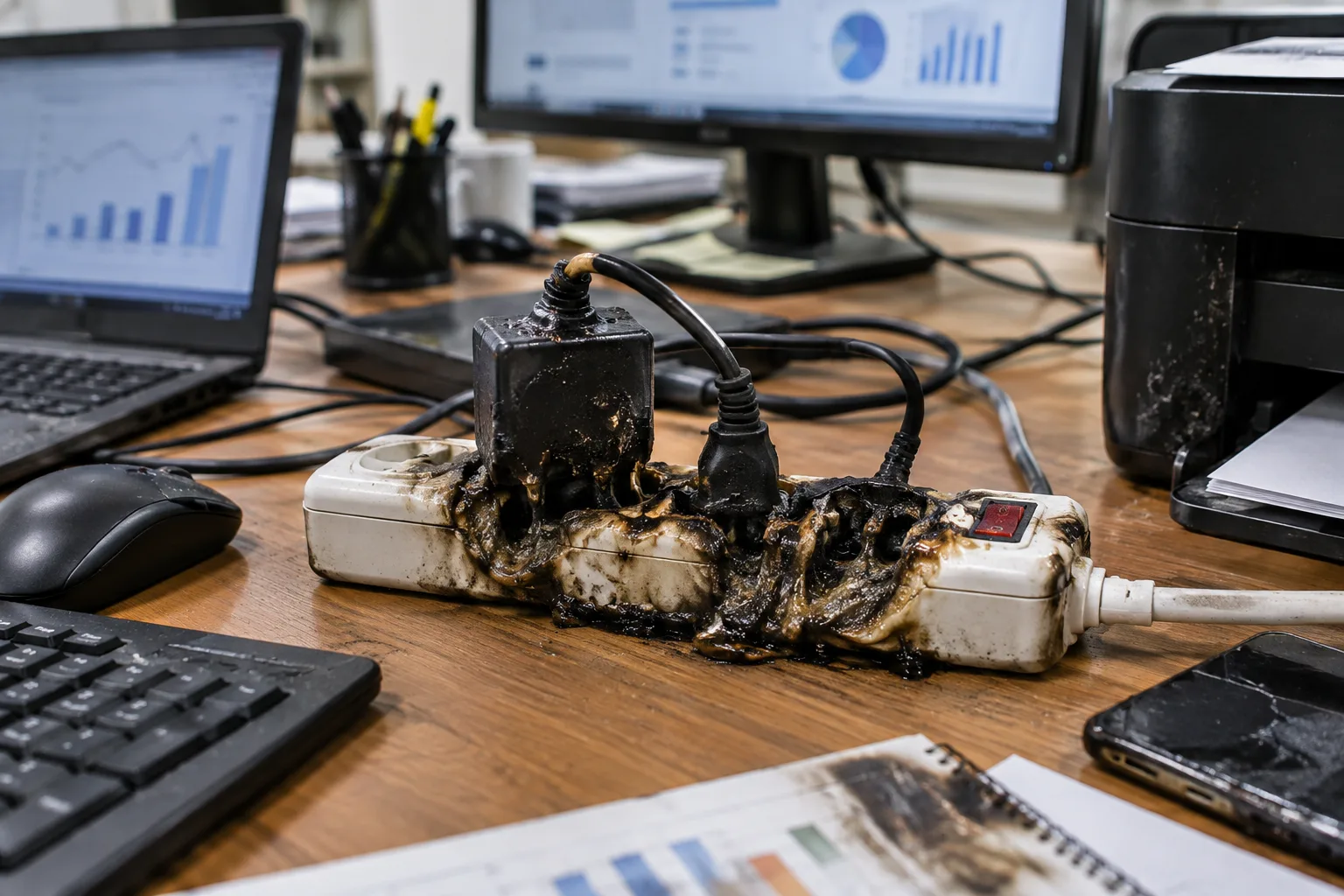
Three gaps appear frequently in power surge insurance claims, and all three are easier to close before a loss than after it.
The first is the sum insured. Electronic equipment depreciates on paper but inflates in replacement cost. A server worth R120 000 when the policy was written may cost R180 000 to replace at today's import prices, particularly given rand weakness against the dollar. If your sum insured hasn't been updated since inception, the average clause applies. The average clause is the provision reducing your claim in proportion to the degree of underinsurance, and the shortfall is yours. Computer insurance and electronic equipment insurance policies use either a replacement-value basis or an indemnity basis; know which one your policy uses, because they produce different outcomes at claim time.
The second gap is the business interruption extension. A surge killing your production control system isn't only a hardware loss; it is a revenue loss for every day the system is down. Standard power surge insurance covers the cost of repairing or replacing the equipment. It doesn't, on its own, cover the income you lose while the replacement is being sourced, configured, and reinstalled. A separate business interruption cover with a utilities-failure trigger, or a specific electronic equipment business interruption extension, is needed to sit alongside the hardware cover.
The third gap is data. The hard drive in the dead workstation held the client database, three years of job-costing records, and the artwork files your designer never archived to the cloud. Power surge insurance covers the physical medium. The cost of recreating the data, restoring it from backup, or engaging a specialist data-recovery firm is covered only if the policy specifically includes data reinstatement. Electronic data processing insurance sits in this space; it is a separate class and worth understanding alongside the hardware cover.
How the claims process works and where it tends to go wrong
A power surge claim follows the same broad sequence as any short-term insurance claim, but with a few pressure points specific to electronic equipment. You notify your insurer or broker as soon as the damage is discovered; delay in notification is a ground for dispute, and most wordings require prompt reporting. You preserve the damaged equipment rather than disposing of it, because the loss adjuster needs to inspect it. You engage a qualified technician to assess the damage and provide a written report identifying the cause, and you gather the supporting records described above.
Where surge claims go wrong most often is at the cause-of-loss stage. If the technician's report says "power supply failure" without connecting it to a specific external event, the insurer may treat the failure as mechanical or gradual, placing it outside the power surge extension. A report stating "power supply component failure consistent with over-voltage event on [date], corresponding with municipal load-shedding reconnection at [time]" is in a different evidential position. The cost of getting that specific language into a technician's report is usually nothing; it requires only asking the right question when you commission the assessment.
The ombud, operating as the National Financial Ombud Scheme, provides a free dispute-resolution process for policyholders whose claims have been repudiated or settled below expectation. It isn't a substitute for reading the policy correctly at the outset, but it is a meaningful backstop when a repudiation turns on an ambiguous wording.
The sum insured trap and how underinsurance applies
Underinsurance in electronic equipment cover is more common than most business owners realise, and it works against you in exactly the same way as underinsurance in any other class. Suppose your policy covers electronic equipment to a sum of R500 000, but an independent assessor would price the full replacement of your current equipment at R750 000. You are insuring 67 percent of the risk. A claim for R300 000 in surge damage isn't paid in full; the insurer applies average and pays 67 percent of the claimed amount, which is R201 000. The remaining R99 000 is your problem, and it arrives at the same time as the quotes to replace the equipment.
The fix is straightforward: review the sum insured at every renewal, ask your broker whether the basis of indemnity is replacement value or depreciated value, and if you have added equipment during the year, declare it. An asset register, even a simple spreadsheet, is the tool keeping the sum insured honest. A policy covering what you own, valued at what it costs to replace, leaves no room for the average clause to do its work.
When load-shedding protection becomes a business strategy
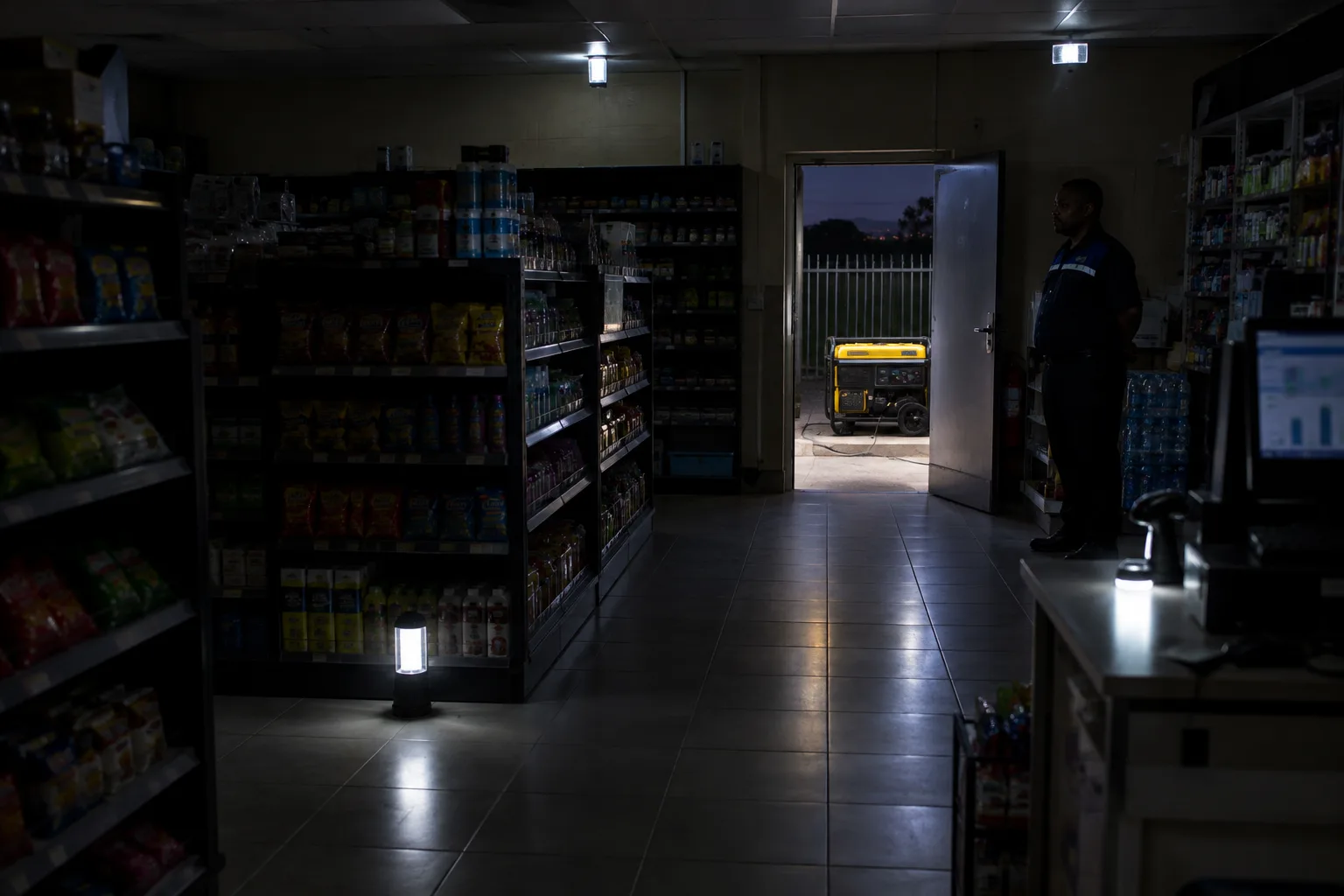
The businesses handling surge losses least badly aren't the ones with the most expensive UPS infrastructure. They are the ones matching their insurance to their actual asset base, documenting their mitigation measures, and reading their policy wording before the loss rather than after it. Power surge insurance is a specialist extension, and getting it right requires the same forensic approach as any commercial cover: understand what the wording covers, know where the definitions draw the line, and make sure the sum insured reflects today's replacement cost rather than the figure someone entered at inception four years ago.
You shouldn't have to discover what your policy excludes at the moment your server room goes dark. With Mont Blanc Financial Services you won't.
Contact Mont Blanc Financial Services to have your current electronic equipment cover reviewed, tested against your actual asset base, and aligned with the grid realities your business faces every day.
The questions below cover the ground coming up most often when business owners start thinking about surge cover for the first time.
Frequently Asked Questions
Does homeowners insurance cover power surges?
Standard South African homeowners insurance, written on a buildings-and-contents basis, typically doesn't include surge damage as a named peril. The standard wording covers fire, lightning striking the structure, storm, and flood, but an over-voltage event entering through the municipal supply is usually treated as an electrical fault and falls outside the accidental-damage definition in most off-the-shelf policies. Some insurers offer a power surge extension as an add-on, often for an additional premium. If your home policy doesn't specifically list surge, lightning surge, or reconnection damage as a covered peril, the default position is the claim will be assessed against the exclusions rather than the inclusions. Your best protection is to check the wording directly, or ask your broker to confirm in writing whether surge damage to home electronics is covered, before the next outage tests the question for you. A written confirmation from your broker costs nothing and gives you a clear record of what was agreed at inception.
Does home insurance cover power surge damage?
Home insurance responses to power surge damage in South Africa vary significantly between insurers and policy wordings, which makes a general answer less useful than reading your specific document. Where a policy does cover surge, it is usually written as an accidental-damage extension covering sudden and unforeseen external events, and the claim requires you to connect the damage to a specific over-voltage incident rather than gradual wear. What most home insurance policies don't cover, even where they include some surge provision, is the cost of recreating lost data, the cost of temporary equipment hire while repairs are carried out, or the consequential loss arising from equipment being unavailable. Those extensions are written separately and are worth asking about at renewal, when the cost of adding them is a fraction of what the gaps cost at claim time. Ask your broker to walk you through each exclusion clause, not only the cover summary, so you understand where the boundary sits before a loss forces the question.
What causes power surges in South Africa?
A power surge is a sudden, brief increase in voltage above the normal supply level, lasting anywhere from a few milliseconds to a few seconds. In South Africa, the most common causes are load-shedding reconnection (where the returning supply can momentarily spike above the standard 230-volt level), lightning strikes on or near the distribution network, faults on the local municipal supply grid, and large industrial equipment switching on or off in the same building or on the same feeder circuit. UPS units and surge arrestors absorb modest spikes, but a significant reconnection surge or a direct lightning event can overwhelm standard protective equipment. For power surge insurance purposes, the distinction between a lightning strike and a grid-reconnection surge can affect which section of the policy responds, so the cause of the event is worth establishing accurately when you commission a technician's report after a loss. Ask the technician to state the probable cause explicitly in writing, referencing the date and time of the event.
Home insurance and power outages: what does power surge insurance cover?
Power surge insurance, in its standard form, covers the cost of repairing or replacing electronic equipment physically damaged by a sudden over-voltage event. What it doesn't cover, in most standard wordings, is the loss of income while equipment is being replaced, the cost of recreating data held on damaged storage media, or the cost of hiring temporary equipment during the repair period. A power outage, the period during which the supply is simply off, isn't a covered peril under a surge policy; the cover responds to the damage caused by the return of power, not the absence of it. Business owners wanting cover for the full chain of consequences, hardware damage, data loss, and revenue interruption, need to assemble three separate extensions or policies and confirm they are designed to work together. That isn't complicated to arrange, but it doesn't happen by default. A broker familiar with electronic equipment cover can confirm whether your current policies dovetail or leave gaps between them.
Nicola Iozzo
Founder & CEO, Mont Blanc Financial Services
Nicola has spent his career reading the policy wording most people skip, and writes here so you don't discover at claim stage what page 14 meant.
Everything on this blog is written to inform and educate. It is for information only. Nothing here is professional legal, financial, or technical advice. If you are making a significant business decision, speak to a qualified professional first. Mont Blanc Financial Services works hard to keep this content accurate and current, but is not liable for decisions made based on what you read here.