What Does Marine Cargo Insurance Cover
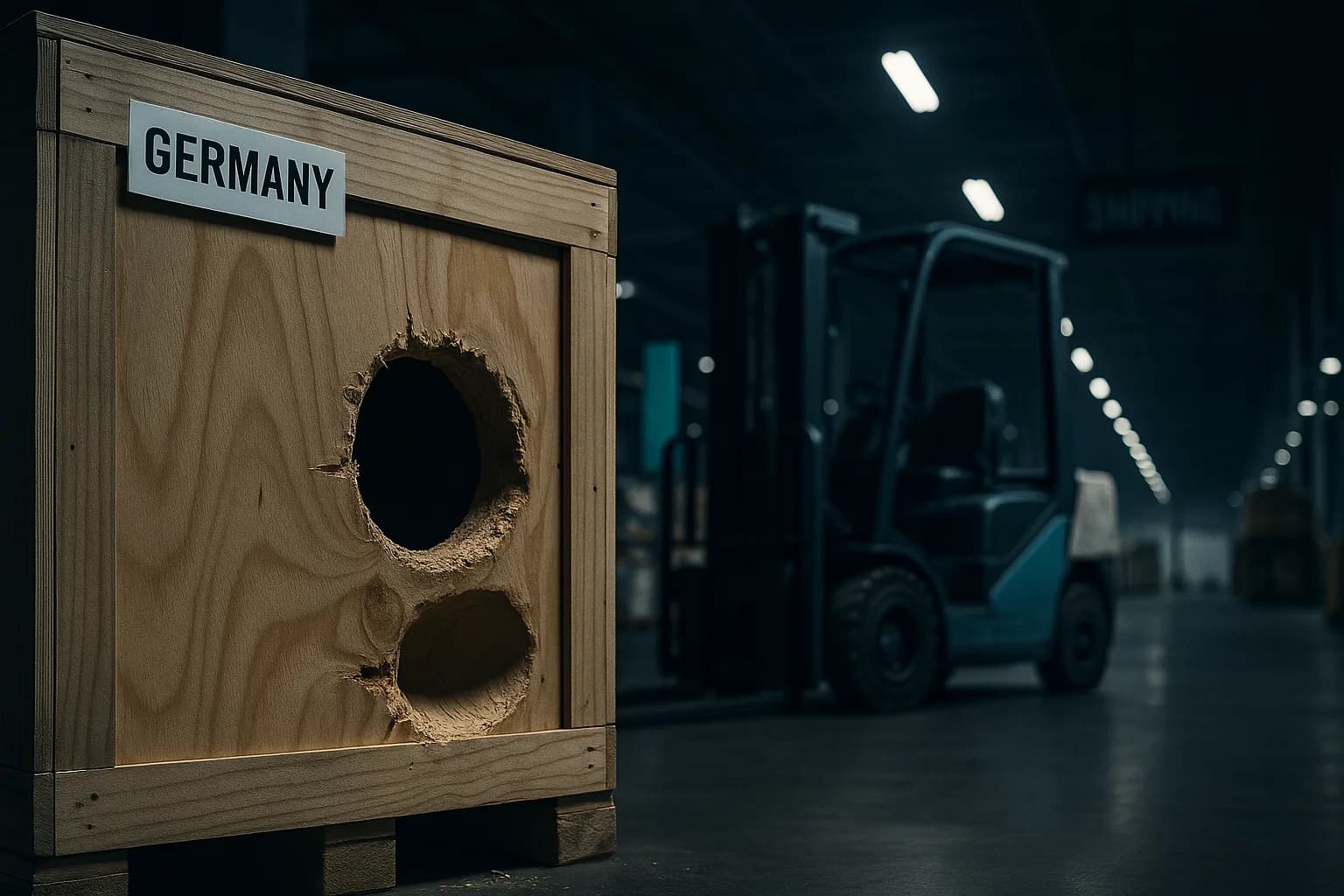
A crate of kitchen equipment from Germany can arrive with a clean hole punched through the timber, the work not of a sea monster but of a forklift during loading, long before the ship reached open water. Cargo faces risk at every lift, every hand, and every transfer between warehouses, most of it nowhere near the sea. Without proper cover, an importer takes delivery of nothing but regret and an unexpected bill.
What does marine cargo insurance cover?
Marine cargo insurance covers the physical loss or damage of goods during transit, responding to specific insured events from the point cover begins until it ends. These commonly include theft and hijacking, fire, water damage, and rough handling or impact. The exact protection depends on the policy wording and the Incoterms governing the shipment.
Key Takeaways
- Marine cargo insurance covers physical loss or damage during international movement, responding to defined insured events along the journey.
- Theft and hijacking are covered, including containers opened without permission and trucks lost on high-risk corridors such as the N3 and N1.
- Fire is covered, whether it strikes in a warehouse, a truck, a storage facility, or onboard a vessel.
- Water damage and rough handling or impact, the dents, drops, and crushing that handling produces, are common insured events.
- The exact protection depends on the policy wording and the Incoterms linked to the shipment, which determine responsibility at each stage.
- Cover follows the goods through airports, ports, trucks, warehouses, and customs, rather than attaching to a single leg.
What Marine Cargo Insurance Covers
Marine cargo insurance protects physical goods during international movement. It responds to accidental loss or damage from the moment cover begins until the moment it ends. Your exact protection depends on policy wording and the Incoterms linked to your shipment.
Below are the most common insured events.
Theft and Hijacking
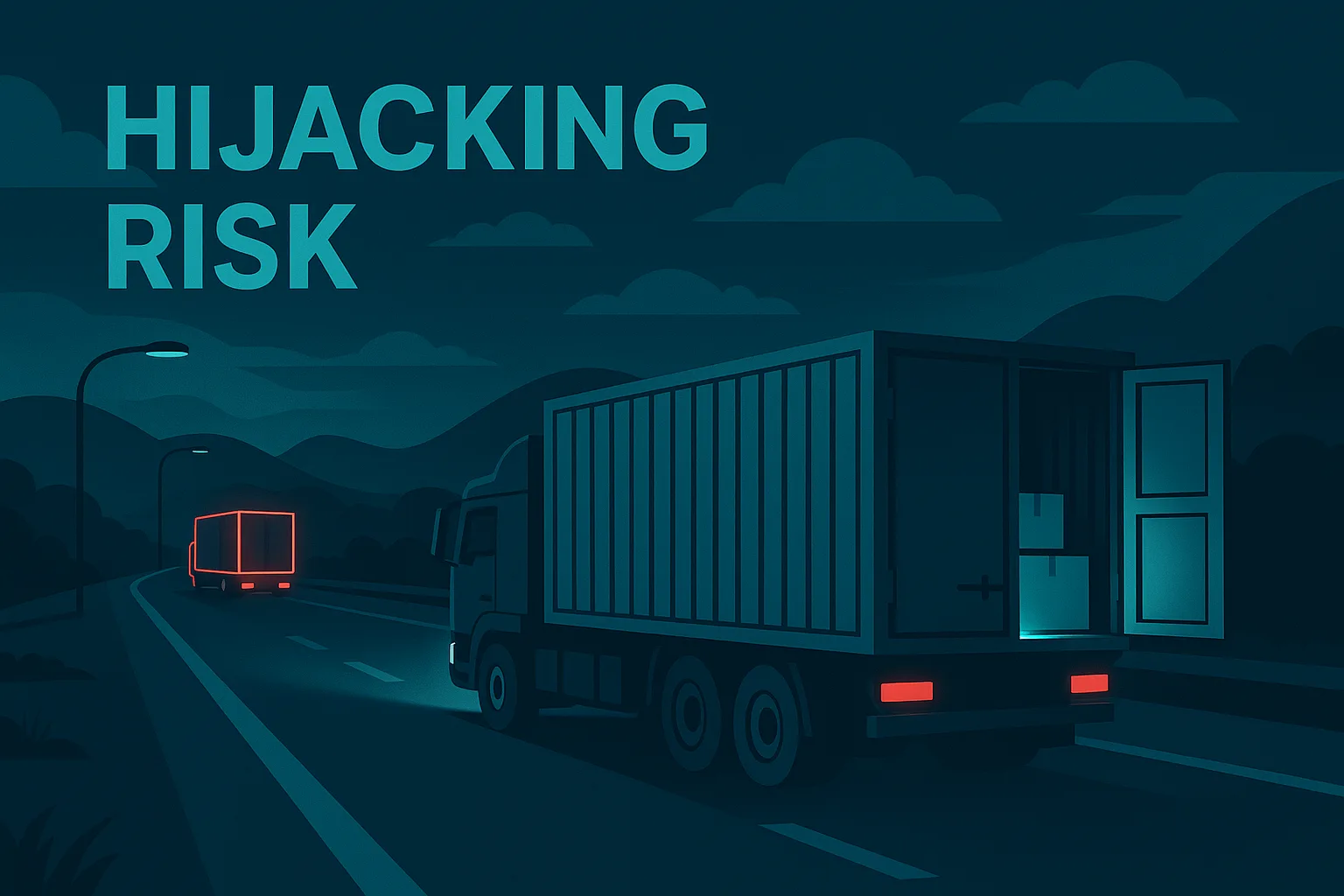
Cargo disappears in surprising ways. Containers open without permission. Trucks vanish during routine routes. Criminals step in on quiet highways such as the N3 and N1. Marine cargo insurance responds when goods are stolen or hijacked during movement.
Fire
Warehouses burn. Trucks catch fire. Storage facilities overheat. Ships experience onboard fires. Fire destroys cargo rapidly. If your shipment moves through older ports or high-density storage areas, fire becomes a real threat. Marine cargo insurance protects your goods when fire strikes.
Water Damage
Rough Handling and Impact
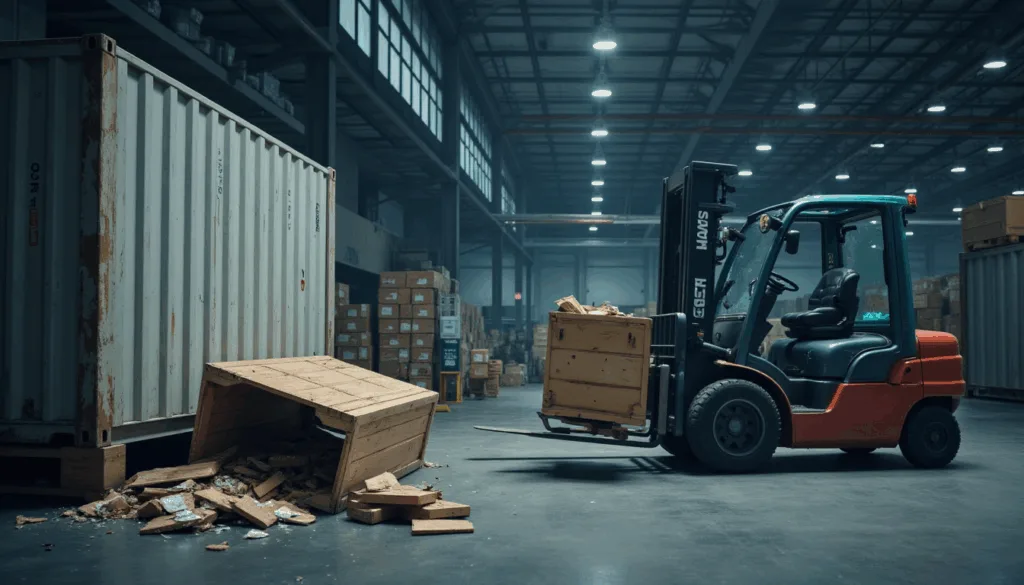
Forklifts misjudge distances. Crates fall. Trucks brake harder than planned. Containers shift during long voyages. Impact damage remains one of the most common claims. Marine cargo insurance covers dents, crushed packaging and broken items caused by accidental handling failures.
Storms, Heavy Weather and Perils of the Sea
Heavy weather causes vessels to tilt, stacks to move and containers to rub or strike each other. Perils of the sea include violent waves, water entering cargo areas and other natural ocean events. These risks fall within marine cargo protection unless poor packing caused the damage.
Loss of Entire Containers
Containers sometimes fall overboard during storms. They disappear within seconds. Marine cargo insurance responds to the declared value of goods lost during these events.
Damage During Loading and Unloading
Cranes lift containers at heights few people feel comfortable watching. Slings slip, straps break and miscalculations occur. Marine cargo insurance covers accidental damage during loading or unloading at ports and airports.
All Risks vs Named Perils, Why Your Choice Matters
Marine cargo insurance usually falls into two broad categories, and understanding the difference can determine whether you receive a smooth payout or an expensive disappointment. The names sound simple enough, but the gap between them is wide. Many importers choose a cheaper option without realising how much exposure remains hidden between the lines.
Below is a clear breakdown of both types of cover.
All Risks Cover
All Risks cover provides the widest protection available for cargo in international movement. It responds to accidental physical loss or damage during the journey unless your policy lists specific exclusions. For many businesses, this offers a level of comfort money cannot replace, since it covers the unpredictable moments cargo faces in warehouses, ports, depots and transit corridors.
This option suits goods with a higher chance of damage: fragile equipment, high-value electronics, specialised machinery, temperature-sensitive products and any cargo with moving parts or delicate components. It also suits importers moving goods through regions where handling quality varies or where weather creates unpredictable conditions.
With All Risks cover, you remove guesswork. If something goes wrong during movement, your insurer begins with a willingness to consider the claim rather than searching for gaps. You gain a broader safety net, faster claims, fewer arguments and clearer outcomes. Importers who ship complex cargo often prefer this option because one damaged shipment can wipe out profit from an entire order.
All Risks cover costs more than Named Perils, but the protection compensates for this difference many times over during real-world incidents where cause, timing and evidence remain unclear.
Named Perils Cover
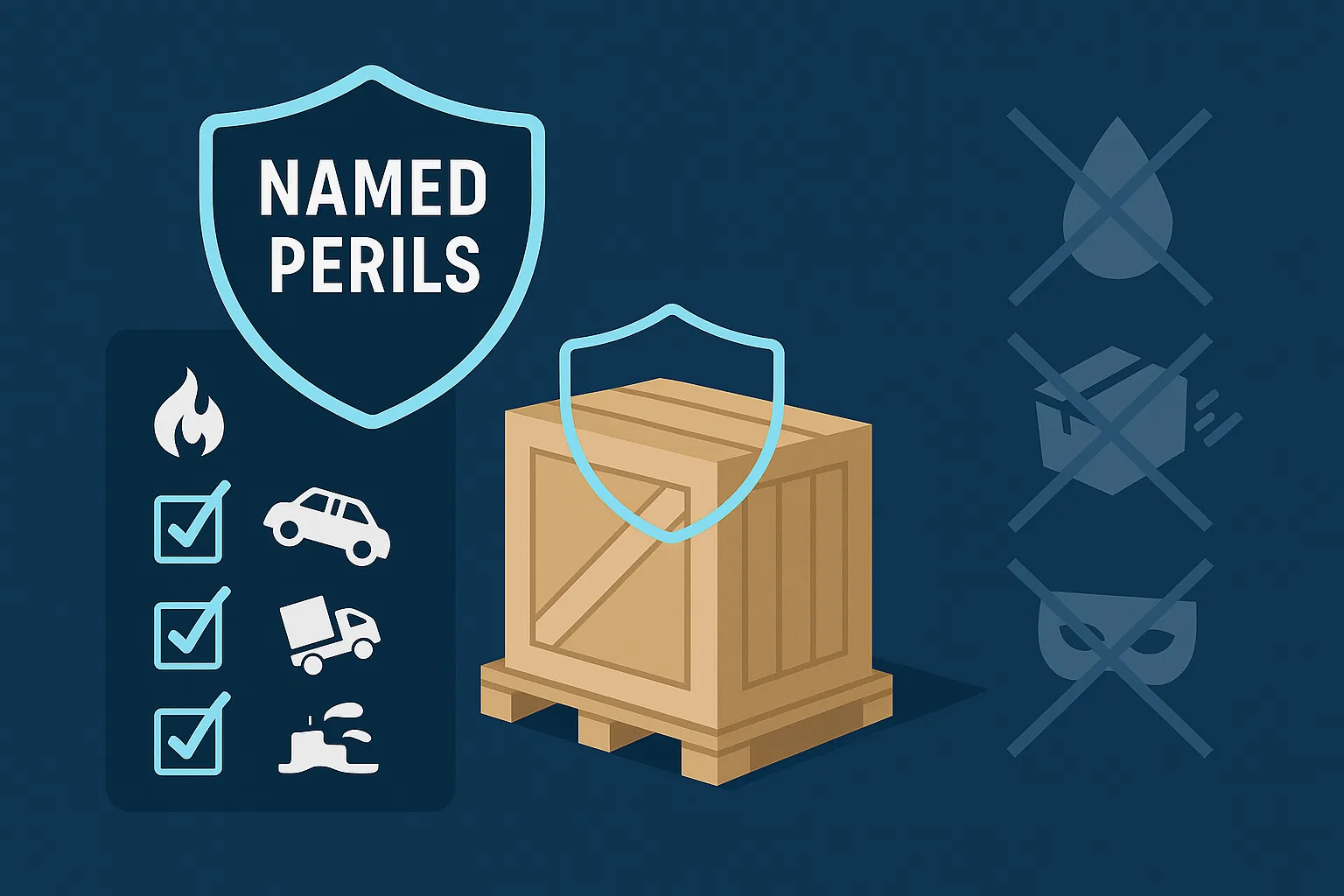
Named Perils cover protects your shipment only against the specific events listed in your policy. If a cause of loss does not appear in the list, the insurer will decline the claim. This option usually comes with a lower premium, which makes it attractive for cost-sensitive shipments or goods with minimal vulnerability. The trade-off involves accepting a narrower layer of protection.
Named Perils suits strong, durable cargo with low breakage risk, such as bulk materials, certain manufactured items, or goods with simple packing and low handling sensitivity. If your cargo can survive bumps, shifts, warehouse stacking and changes in climate without damage, Named Perils may be enough.
However, importers must understand the limits clearly. If an incident falls outside the named list, no payout follows, even when damage feels accidental or unfair. For example, if your policy lists fire, collision and overturning, but excludes water entry or rough handling, any loss from those events remains for your account.
Named Perils works when risk stays small and predictable. It becomes risky when cargo relies on careful handling or when movement passes through higher-risk areas within South Africa or abroad. For this reason, many businesses use Named Perils only when they know exactly which risks their goods face and feel confident those risks match the policy wording.
Domestic Movement vs International Movement
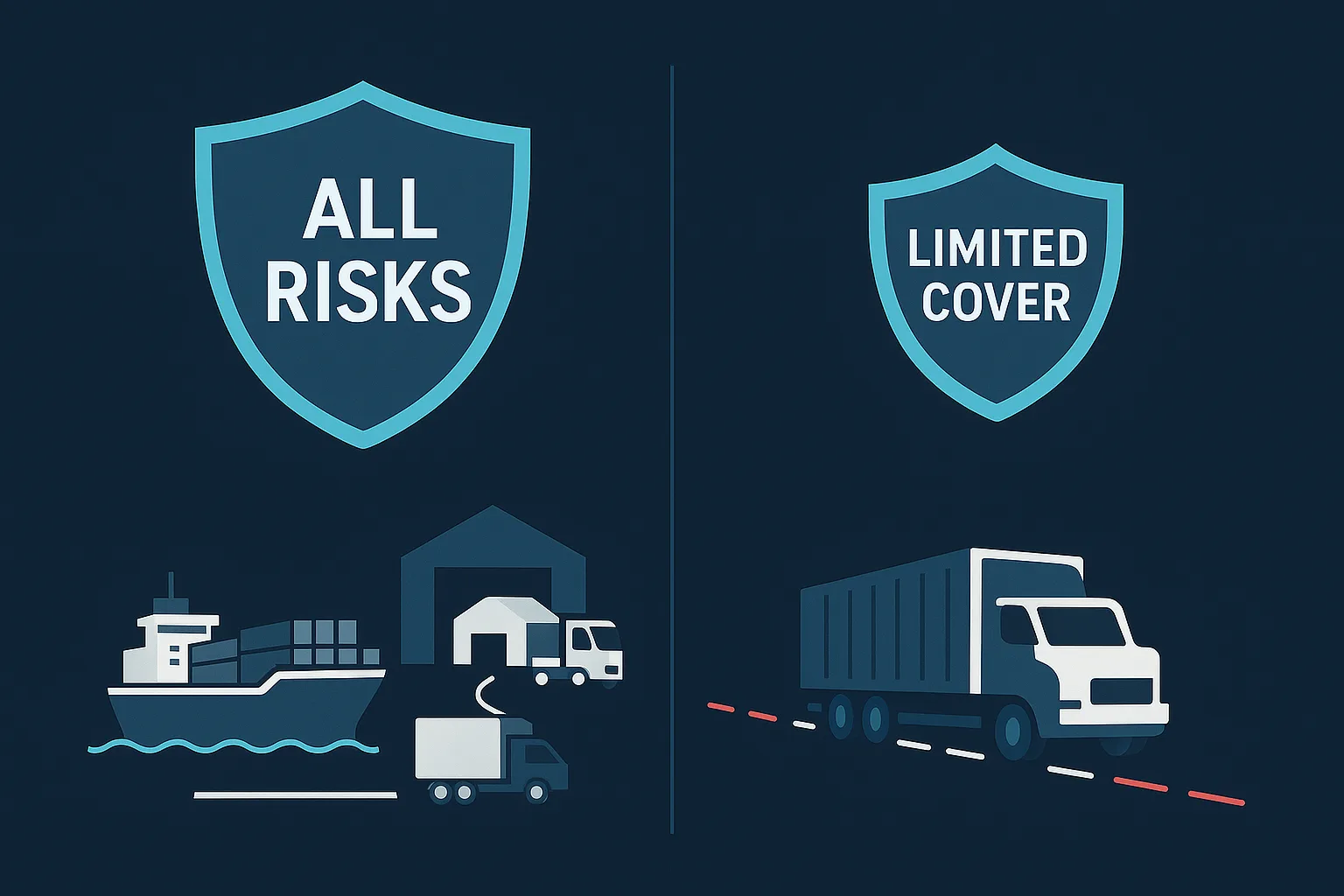
Many importers believe marine insurance covers the entire journey automatically. It does not. Marine insurance usually protects only the international leg. Inland movement requires separate domestic cargo cover unless you select a door-to-door plan.
Inland Risks Are Often Higher Than Ocean Risks
Hijacking, theft at rest stops, warehouse fires, load shifting on trucks and road accidents present serious exposure. If your cover stops at the port, you leave the most dangerous part of the journey unprotected.
When Door to Door Cover Makes Sense
Door-to-door cover follows cargo from the supplier’s warehouse to your own. It removes gaps between inland and international legs and improves claim processing. For fragile, high-value or perishable goods, door-to-door cover almost always makes better sense.
General Average, A Shared Loss at Sea
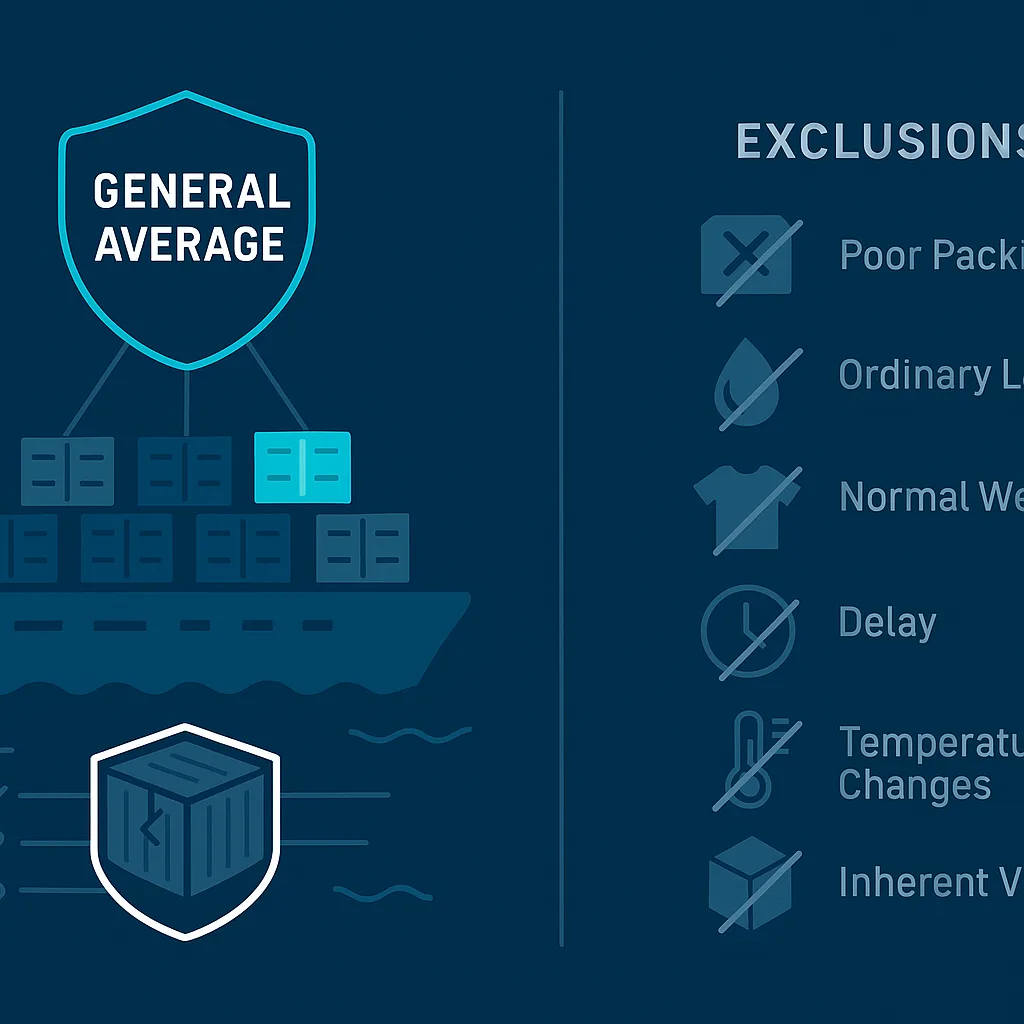
General Average is one of the oldest rules in shipping. When a vessel faces danger, the captain may sacrifice some cargo to save the ship. Losses from this action are shared among all cargo owners, even when your goods arrive without a scratch.
How General Average Works
When containers are jettisoned to stabilise a vessel, your goods may be held until you pay your contribution. Without marine cargo insurance, this contribution comes directly from your pocket.
Why General Average Surprises Many Importers
Many people assume they pay only for loss to their own goods. General Average proves otherwise. One crisis affects every shipment. This alone justifies proper marine cargo insurance.
Marine cargo insurance covers a wide range of risks, but no policy stretches endlessly. Understanding exclusions keeps you from expecting a payout where none can exist. Below are the exclusions importers must keep in mind, written in a way you will actually remember.
Poor Packing
Insurers expect your goods to begin the journey packed for survival. If the shipment leaves the supplier wrapped in hope instead of proper padding, responsibility shifts away from the insurer. Boxes filled with empty space, machines resting on flimsy supports or fragile items packed by someone guessing their way through the job all create easy excuses for a rejected claim. Poor packing turns an avoidable incident into a costly lesson, so make sure the supplier prepares the cargo with real-world handling in mind. Good packing prevents most heartbreak long before insurance ever becomes involved.
Ordinary Leakage or Natural Shrinkage
Some goods behave unpredictably during travel. Liquids evaporate a little, powders settle, fresh produce sweats and certain materials shrink or expand when temperatures shift. These changes occur naturally, no matter how careful the journey. Insurers call this ordinary leakage or natural shrinkage, and they exclude it for a reason. The policy responds to accidents, not the normal behaviour of the cargo. When you ship goods with built-in quirks, you need realistic expectations and careful packaging that minimises natural movement.
Delays
A late shipment can ruin plans, delay production, disrupt sales and frustrate everyone involved, but delays fall outside standard marine cargo cover. Insurance responds to physical loss or damage, not the financial consequences of a slow arrival. Whether the vessel missed a connection, customs took longer than expected or a truck broke down on the N3, delay alone does not trigger a payout. Businesses relying on time-sensitive imports need backup plans, not hope pinned on a policy that only covers physical events. Insurance protects cargo, not calendars.
War and Strike Events Without Extensions
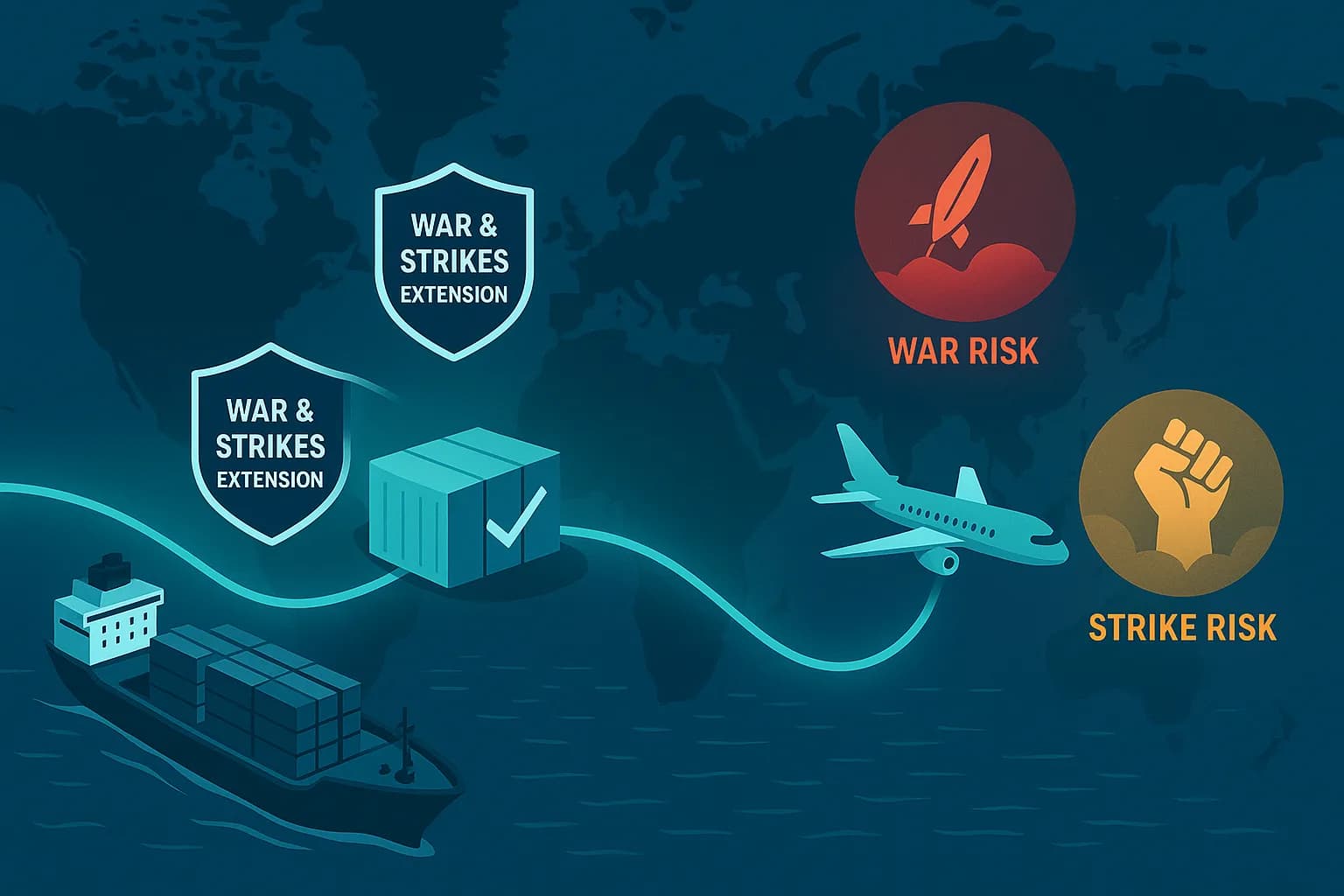
War zones, political unrest, strikes and civil commotion create risks beyond ordinary transit conditions. Insurers treat these events separately because they produce large-scale losses across many shipments. Standard policies do not include protection for these situations. Importers who ship through regions experiencing tension or unrest need specific extensions covering war and strike events. Without them, the policy remains silent when conflict or protest disrupts the journey. A simple conversation with your broker ensures you have the right add-ons before sending cargo into unpredictable environments.
Why Marine Cargo Insurance Matters for South African Businesses
Without marine cargo insurance, one incident can erase the profit from an entire shipment. This cover protects cash flow, strengthens supplier relationships and eases customs clearance. No business enjoys explaining damaged goods with no policy behind them.
It sits within our broader guide to marine and cargo insurance.
Frequently Asked Questions
What events does marine cargo insurance cover?
Marine cargo insurance covers a range of insured events that can cause physical loss or damage to goods during transit, with the specific protection depending on the policy wording and the Incoterms governing the shipment. The most common events include theft and hijacking, where cargo is stolen during movement or a truck is taken on a high-risk route; fire, which can strike in a warehouse, on a truck, in storage, or onboard a vessel; water damage, from sea conditions, leaks, or exposure; and rough handling or impact, the drops, crushing, and collisions that occur as goods are lifted and moved. The cover responds from the point it begins until the point it ends, following the goods through airports, ports, trucks, warehouses, and customs checkpoints. Because the exact events covered turn on the policy and the shipment terms, the wording should be checked against the specific consignment. The principle is that marine cargo insurance protects against the accidental loss or damage that transit exposes goods to.
Does marine cargo insurance cover theft and hijacking?
Marine cargo insurance covers theft and hijacking, which are significant risks in the South African context given the value of goods moving along major routes. Cargo disappears in a variety of ways: containers are opened without permission, goods are removed during handling or storage, and trucks are hijacked on busy corridors such as the N3 and N1, where criminal groups watch routes and wait for high-value loads. Marine cargo insurance responds when goods are stolen or hijacked during movement, providing financial protection for losses that, once they occur, rarely end in the cargo being recovered. This is one of the more important insured events for South African importers and exporters, since the road legs of a journey carry real exposure to organised theft. The cover treats these losses as part of the risk of transit rather than excluding them. For any business moving valuable goods inland, confirming that the policy responds to theft and hijacking, and across which legs of the journey, is an important part of matching the cover to the genuine route risk.
How do Incoterms affect what marine cargo insurance covers?
Incoterms affect marine cargo insurance because they determine where responsibility for the goods sits at each stage of the journey, which in turn shapes who needs cover and when. Incoterms are the standardised international trade terms that define the point at which risk and responsibility transfer between buyer and seller during a shipment. Because marine cargo cover responds to loss or damage while a party bears responsibility for the goods, the Incoterms agreed for a shipment directly influence which legs of the journey a given party needs to insure. A buyer and seller operating under one set of terms carry risk at different points than they would under another. This is why the exact protection a policy provides depends not only on its wording but on the Incoterms linked to the shipment. An importer or exporter needs to understand which terms apply to their consignment, so the cover aligns with the legs for which they are genuinely responsible. Misreading the Incoterms can leave a party exposed on a leg they wrongly assumed someone else was covering.What is not covered by marine cargo insurance?Marine cargo insurance covers accidental physical loss or damage during transit, but it has limits and exclusions that depend on the policy wording. Typical exclusions across cargo cover include losses arising from poor or inadequate packing, where the goods were not prepared to withstand normal transit; inherent vice, meaning a defect or natural property of the goods that causes them to deteriorate on their own; and certain delays or consequential losses that are not the direct physical damage the cover responds to. The precise exclusions vary between policies, so the wording must be read for any specific consignment. The general principle is that the cover responds to the external risks of transit, theft, fire, handling, water, collision, rather than to defects in the goods or failures in how they were prepared. Understanding what falls outside the cover is as important as knowing what falls within it, since the gaps are where uninsured losses occur. An importer should confirm both the insured events and the exclusions before relying on the policy for a valuable shipment.
If you want your goods moving across the world without confusion or guesswork, send us your shipping plan or current policy. We will guide you toward the right cover, explain your Incoterms, close gaps and keep you claims ready.
You shouldn’t have to find out which insured events your cargo policy actually responds to after the crate arrives wrecked. With Mont Blanc Financial Services you won’t.
Contact Mont Blanc Financial Services to confirm exactly what your marine cargo cover responds to, and across which legs, before you ship.

Nicola Iozzo
Founder & CEO, Mont Blanc Financial Services
Nicola has spent his career reading the policy wording most people skip, and writes here so you don't discover at claim stage what page 14 meant.
This blog is here to inform, not advise. Think of it as a guidebook, not a contract. For decisions affecting your world, have a chat with your broker or financial professional.
Mont Blanc Financial Services (PTY) Ltd. is an authorised financial services provider. FSP 8271