What Does Business Insurance Cover?

A break-in discovered on a Monday morning, glass across the floor, stock missing, customers and staff on the way, prompts the same hopeful sentence from most owners: at least I have insurance. The harder question is whether the policy actually covers the theft, the damage, the interrupted trade, and the costs that keep moving while the business recovers. A policy can look reassuring until a loss tests it. That gap between assumed and actual cover is where uncertainty lives.
What does business insurance cover?
Business insurance cover is the set of insured losses, costs, and risks a commercial policy agrees to pay for, subject to wording, limits, conditions, and exclusions. It usually protects three areas: assets (buildings, contents, stock, equipment), liability (third-party injury or damage claims), and continuity (the financial effect of disruption after an insured event).
Key Takeaways
- Business insurance cover usually protects three areas: assets, liability, and continuity, each addressing a different kind of loss.
- Assets cover includes buildings, contents, stock, equipment, and other insured property against insured events.
- Liability cover responds to third-party claims for injury or damage connected to the business.
- Continuity, or business interruption, covers the financial effect of disruption after an insured event halts trading.
- Most commercial policies are structured in sections, each with its own trigger, terms, and limits, so a claim succeeds only where the right section applies.
- One event, such as a break-in, can raise several sections at once: damage, theft, interruption, and a security condition in the wording.
Business Insurance Cover Protects Assets, Liability, and Continuity
Business insurance cover usually protects three areas of a business: assets, liability, and continuity. Assets include buildings, contents, stock, equipment, and other insured property. Liability covers claims by third parties for injury or damage. Continuity relates to the financial effect of disruption after an insured event.
Most commercial policies are structured in sections rather than as one broad promise. One section may respond to property damage, another to theft, another to liability, and another to interruption. Each section carries its own trigger, terms, and limits. A claim succeeds only where the selected section applies and the event fits the wording. Commercial insurance also operates within a regulated environment overseen by the Financial Sector Conduct Authority (FSCA).
A better question is not simply whether a business has insurance. A better question asks what the policy covers and under which section. A break-in can involve damaged glass, stolen stock, interrupted trade, and a security requirement in the wording. One event can raise several insurance issues at the same time.
Business insurance cover refers to the insured losses, costs, and events a commercial policy agrees to pay for, subject to limits, conditions, and exclusions.
What a Standard Business Policy Usually Covers
A standard business policy usually begins with property-related cover. If the business owns its premises, the building itself may be insured. If the business leases the premises, the focus often shifts to contents, fittings, equipment, and tenant’s improvements. Stock is usually treated separately because values change often and exposure differs from fixed contents.
Equipment forms another important layer of cover. Computers, tills, machinery, tools, and specialised devices often support daily operations. If those items are damaged or stolen through an insured event, disruption can be immediate. Depending on the operation and the selected sections, cover may also extend to money, glass, accidental damage, and goods in transit.
Liability cover addresses a different risk. A business that welcomes customers, works with contractors, supplies goods, or operates from a physical site can face a third-party claim. Public liability cover is designed to respond where the business is legally liable for injury to another person or damage to another person’s property.
Business interruption is often the least understood section. Business interruption is designed to assist when an insured event disrupts normal trading. Business interruption does not respond to every reduction in income. Business interruption responds within the terms of the policy and only where the required trigger, period, and conditions are met. Many owners who start with Business Insurance Basics later realise policy structure counts as much as policy presence.
Business Insurance Cover Does Not Pay for Everything
Business insurance does not respond to every financial loss. Business insurance responds to defined risks, under defined sections, subject to defined conditions. Many misunderstandings begin with the assumption that insurance answers any cost following a difficult event. Claim stage usually exposes the gap in that assumption.
Wear and tear is a common example. Poor maintenance is another. If damage develops over time, an insurer may treat the problem as a maintenance issue rather than an insured event. Insurance is designed for insured risk, not gradual deterioration that should be managed through upkeep.
Underinsurance creates a separate problem. A business can insure stock, equipment, or contents and still receive less than expected if declared values are too low. A section may respond, but the payment can still leave a shortfall. Limits can produce the same result. A category of loss may be insured, but only up to the amount shown in the schedule.
The policy section must also match the actual exposure. Property cover does not replace professional indemnity. Public liability does not resolve every dispute. Business interruption does not automatically respond to every slowdown, service failure, or loss of income. Excesses, exclusions, waiting periods, warranties, and security requirements all shape the outcome. A business should therefore understand Business Insurance Claims before a loss occurs, not only after one.
When Cover Becomes Practically Mandatory
Commercial insurance is not always mandatory in one universal legal sense. In practice, commercial insurance often becomes necessary before a business can operate smoothly. The requirement usually comes from lease terms, finance arrangements, contracts, or the practical demands of the work itself.
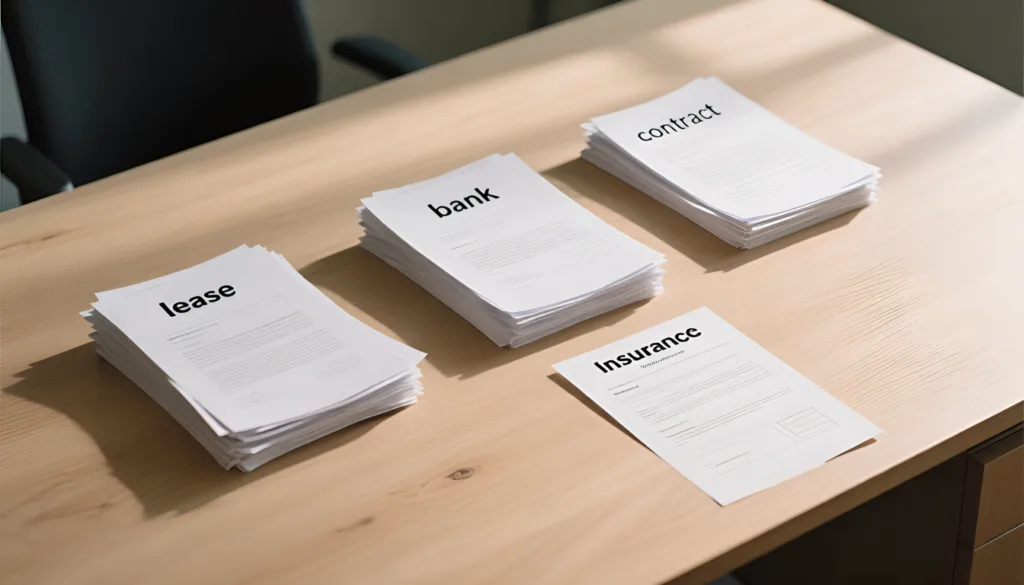
A landlord may require proof of insurance before occupation begins. A bank may require cover over financed assets. A client contract may require public liability or another section before work starts. Tender requirements may do the same. In each case, insurance becomes a condition attached to access, funding, or work.
Legal obligations can also sit alongside ordinary commercial cover. A business owner should not assume a standard policy addresses every issue involving employees. Workplace injury obligations sit within the Compensation Fund framework.
The distinction between legal, contractual, and practical obligations is important because many owners blend those obligations together. Many owners assume a business policy addresses every requirement around staff, premises, and contracts. The position is often more specific. Some obligations are legal. Some obligations are contractual. Some obligations come from sensible risk planning. The question behind Is Business Insurance Mandatory usually depends on operating context rather than a simple yes-or-no answer.
How Local Risk Changes What Sensible Cover Looks Like
The right structure of cover depends on the operating environment. Businesses with similar turnover can carry very different risks because activities, premises, stock profile, and customer exposure differ. A retail store, warehouse, workshop, and office do not need the same cover simply because each operation falls under a broad business category.
Local operating conditions sharpen those differences. Theft exposure, premises security, transport activity, customer access, and interruption risk all influence the choice of cover. Those are practical considerations. Those considerations affect which policy sections need closer review and what level of protection may be appropriate.
A business operating in Bedfordview may focus more closely on customer-facing exposure, office contents, electronics, and liability linked to public access. Digital exposure also changes the picture. A business that stores customer information or relies on digital systems has to think beyond visible property loss. A cyber event can interrupt operations, create response costs, and place pressure on reporting duties involving the Information Regulator.
Losses linked to unrest and related events may also require separate attention. Standard commercial wording may not answer every form of civil commotion or public disorder. Special-risk exposure can require protection through Sasria.
What to Check Before Buying or Renewing a Policy
Before buying or renewing a policy, a business should review cover against current operations. Renewal often carries old assumptions forward, which creates risk when the business has changed but the policy has not.
Start with insured values. Buildings, stock, equipment, furniture, and contents should be insured at realistic current amounts. Outdated figures can lead to underinsurance and weaker claim outcomes. Then review the excess. A policy may respond correctly, but the retained cost can still place pressure on cash flow if the excess is set too high. Excess and Deductibles deserves close review for that reason.
The conditions attached to each section also require attention. Theft cover may depend on alarms, gates, safes, or other security measures. Stock may require proper records. Business interruption may include waiting periods or limited indemnity periods. Those details often decide whether cover responds in practice.
Claims readiness also needs attention before any loss occurs. A business should know what must be reported, what records must be produced, and how quickly notice must be given. A business operating in Germiston, for example, may place greater weight on stock handling, machinery, storage, goods movement, and interruption planning. Growth, new equipment, fresh contracts, or a different premises profile can all change the risk profile. Reviewing cover at renewal is therefore a practical risk decision rather than an admin exercise.
Cover reaches past the premises to the ledger, where trade credit insurance guards against a buyer who never pays.
Closing Reflection
The owner standing in that damaged office does not need a slogan. The owner needs an answer. The owner needs to know whether the policy in the file matches the business being protected. The real test of commercial insurance is not whether cover appears on paper, but whether the policy answers the losses that count when a business has a difficult day.
A policy may be in place for years and still fail to meet expectations when wrong assumptions shape the structure. A better approach is to review the business as the business actually operates and make sure cover follows that reality.
This article is general information rather than legal or financial advice. Actual cover depends on policy wording, endorsements, insured values, underwriting facts, and the circumstances of the loss.
You shouldn’t have to find out which section your policy actually responds under while the glass is still on the floor. With Mont Blanc Financial Services you won’t.
Contact Mont Blanc Financial Services to map your cover section by section so you know what responds before a loss tests it.
For the bigger picture, start with our full guide to general business insurance.
Frequently Asked Questions
What does business insurance cover?
Business insurance cover is the set of insured losses, costs, and risks a commercial policy agrees to pay for, subject to its wording, limits, conditions, and exclusions. In practice it usually protects three broad areas. The first is assets: the buildings, contents, stock, equipment, and other insured property a business relies on, protected against insured events such as fire, storm, and theft. The second is liability: claims by third parties for injury or property damage connected to the business. The third is continuity: the financial effect of disruption after an insured event, where business interruption cover supports income while the business cannot trade normally. Most commercial policies are structured in sections rather than as one broad promise, with one section responding to property damage, another to theft, another to liability, and another to interruption. Each section carries its own trigger, terms, and limits, and a claim succeeds only where the selected section applies and the event fits the wording. Understanding business insurance as a set of distinct sections is the key to knowing what it actually covers.
How is a business insurance policy structured?
A business insurance policy is usually structured in sections rather than as a single broad promise, with each section addressing a specific type of loss and carrying its own trigger, terms, and limits. One section may respond to property damage, another to theft, another to liability, and another to business interruption, each on its own conditions. This sectioned structure matters because a claim succeeds only where the relevant section applies and the event fits that section’s wording. A loss that does not fall within any section, or that breaches a condition attached to the applicable section, may not be paid even though the business holds a policy. The practical implication is that the useful question is not simply whether a business has insurance, but what the policy covers and under which section. A single incident frequently engages more than one section at once: a break-in can involve damaged glass, stolen stock, interrupted trade, and a security requirement in the wording. Understanding the sectioned structure is what lets a business see how a real event maps onto its cover.
Does business insurance cover business interruption?
Business insurance can cover business interruption, but typically through a specific section dedicated to continuity rather than as an automatic feature of every commercial policy. The continuity area of cover addresses the financial effect of disruption after an insured event, supporting the business when an incident such as fire or major damage halts or reduces its ability to trade. This is distinct from the property section, which pays to repair or replace the damaged assets; interruption cover responds to the income lost and the continuing expenses incurred while the business cannot operate normally. Because it is a distinct section, a business needs to confirm that its policy actually includes it, since holding property cover alone does not provide interruption protection. The two work together: property cover restores the assets, while interruption cover supports the trading position during recovery. For many businesses the interruption element is as important as the property element, because the loss of income during downtime can exceed the cost of the physical damage. Confirming the continuity section is in place is part of understanding the cover.Why might a business insurance claim not be covered?A business insurance claim may not be covered when the loss does not fall within the applicable section, breaches a condition attached to that section, or is caught by an exclusion in the wording. Because commercial policies are structured in sections, each with its own trigger and terms, a claim succeeds only where the event fits the relevant section and the conditions of cover were met. A common reason for a shortfall or rejection is a condition that was not satisfied, for instance a security requirement specified in the wording that was not in place at the time of a theft. Exclusions also define the boundary of cover, and a loss in an excluded category will not be paid. Underinsurance is a further cause, where the sums insured fall short and a settlement is reduced. The recurring theme is that the policy responds as written, and the wording, conditions, and limits govern the outcome. Understanding what the policy covers, and on what conditions, before a claim arises is what prevents the surprise of a loss that sits outside the cover.

Nicola Iozzo
Founder & CEO, Mont Blanc Financial Services
Nicola has spent his career reading the policy wording most people skip, and writes here so you don't discover at claim stage what page 14 meant.
This blog is here to inform, not advise. Think of it as a guidebook, not a contract. For decisions affecting your world, have a chat with your broker or financial professional.
Mont Blanc Financial Services (PTY) Ltd. is an authorised financial services provider. FSP 8271