Computer and Electronic Equipment Insurance

The power comes back at 06:30, and for a moment the office in Centurion feels normal again. Then someone opens the server-room door and catches the smell of scorched plastic. The machines rode out the outage; the surge on reconnection is what cooked them. The payroll lives on those drives, along with the quotes, the client files, and eleven years of records. Replacing the hardware is an invoice. Replacing the downtime is the part nobody budgeted for.
What is computer insurance?

Computer insurance is cover for the physical electronic equipment your business runs on: desktops, laptops, servers, printers, and the drives and disks holding your data. It pays to repair or replace the hardware after damage or theft, and it can extend to reinstating lost data and the extra cost of keeping the business trading while you recover.
Key Takeaways
- Computer and electronic equipment cover protects the physical kit: the hardware, the drives and media carrying your data, and the cost of getting back to work.
- Surge damage on reconnection after load-shedding has become one of South Africa's most common electronics claims, and insurers have tightened excesses and conditions in response.
- This isn't cyber insurance: a stolen server is an equipment claim, a hacked one is a cyber claim, and each needs its own policy.
- Data reinstatement and increased cost of working are the extensions carrying most of the value, because downtime usually costs more than the machine.
- New-for-old replacement works only while your sums insured track current replacement prices.
What electronic equipment insurance covers
Electronic equipment insurance covers the machines your business can't trade without. Two more things come bolted to them: the data they carry and the cost of working while they're repaired or replaced. The schedule lists the physical kit: desktops, laptops, servers, printers, network equipment, and the drives, disks, and backup media holding your records. The perils are the everyday ones. Coffee finds a keyboard. A tablet leaves a technician's hands in a stairwell. A surge cooks a server, a storeroom fire takes the spare scanners, or the whole lot leaves through a window one long weekend. Most policies in this class are written on an all risks basis, which means everything is covered unless an exclusion names it, and the exclusions are where the reading starts. The policy covers the machines; the exclusions protect the insurer. Cover is only as strong as the schedule behind it, so equipment nobody listed is equipment nobody insured.
Power surges and load-shedding claims
The damage rarely happens when the power goes; it happens when the power comes back. Reconnection pushes a voltage spike through the wiring, and the spike reaches your equipment before your surge arrangements have an opinion. South Africa has given this mechanism plenty of practice. Stats SA's municipal electricity data records 62 days of load-shedding in the first half of 2022, and 180 in the first half of 2023. Insurers responded the way insurers do. The country's largest short-term insurer introduced power surge excesses on commercial policies after its surge claims rose about 50% in a year and more than 200% over three. An excess is the first slice of any claim you pay yourself; this one runs to 10% of the claim, minimum R5,000. Some wordings now exclude surge damage after an outage of more than 12 consecutive hours. Even wordings excluding grid failure typically treat the reconnection surge as its own insured event. Your surge conditions were probably rewritten while nobody was watching. Read them before the next stage announcement, not after the reconnection.
Laptops and devices away from the office
Cover for equipment often stops at your front door, and laptops are seldom behind it. The standard wording insures the contents of the premises named in the schedule. The machine in the boot on the N1, the tablet at a client's site, and the laptop working from a kitchen table in Bloemfontein may sit outside the cover entirely. Portable equipment cover is the extension carrying them: it follows the device wherever it goes, usually with conditions attached. The common ones require vehicles to be locked, devices to be out of sight, and nothing to sleep overnight in a parked car. A laptop's life is short and dramatic. It gets dropped, left in departure lounges, and borrowed by people with flexible ideas about returning things. Each ending is claimable only if the extension is there and its conditions were kept. List the portable items separately, and read the vehicle conditions before the trip rather than after the window glass.
Data reinstatement and increased cost of working
In most equipment claims the machine is the smallest number on the page. A server has a price; the eleven years of records on it don't, and the weeks of trading without it cost more than both. Two extensions carry this load. Data reinstatement pays the cost of getting your information back after insured damage. It funds the recovery specialists, the re-capturing of records typed in by hand, and the rebuilding of systems from the backups one person remembered to make. Increased cost of working pays whatever keeps you trading in the meantime: hired machines, temporary systems, weekend overtime, the courier fetching parts. Both come with their own limits, and the default limits tend to be token amounts, useful the way a hotel sewing kit is useful. Price a real recovery, in days and rands, then set the limits from the estimate. A limit chosen by default is a limit chosen by someone else.
Computer insurance vs cyber insurance
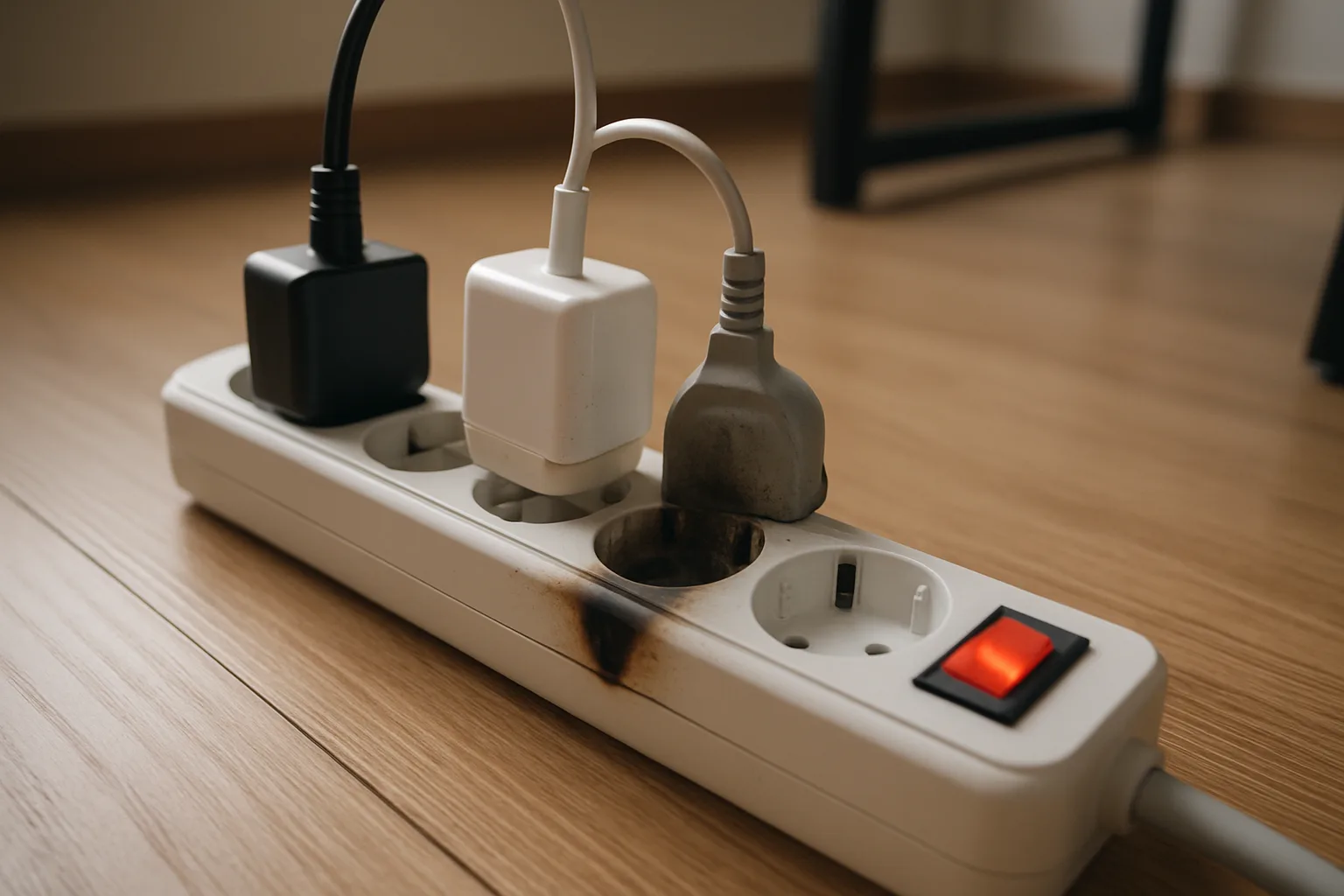
Computer insurance covers the machine; cyber insurance covers what happens when someone gets into it. They are separate products answering separate disasters, and owning one buys none of the other's protection. Equipment cover responds to physical events, the surge, the theft, the fire, the dropped laptop, and it restores the hardware and the data lost with it. Cyber cover responds to digital events, ransomware, hacking, data breaches, and it funds the incident response, the liability, and the awkward conversations required by South Africa's privacy law. The table below draws the line.
Where equipment cover ends and cyber cover begins.
| Question | Computer Insurance | Cyber Insurance |
|---|---|---|
| Trigger | Physical damage, theft, breakdown, surge | Hacking, ransomware, data breach |
| Pays for | Repair, replacement, data reinstatement, downtime costs | Incident response, liability, regulatory costs |
| Typical event | A surge cooks the server | Ransomware encrypts the server |
| The machine afterwards | Replaced | Undamaged; the problem lives inside it |
A fried server is an equipment claim. An encrypted one is a cyber claim, and it needs its own policy, which we arrange separately. The two failures can share a week, so we'd rather you had both answers before either question arrives.
Theft of office equipment and security requirements
Theft cover arrives with conditions, and the conditions decide the claim. The wording usually asks for forcible and violent entry, which means a break-in leaving evidence: the jimmied door, the broken window. It may also warrant an armed alarm, burglar bars, or specified locks. A warranty in insurance is a promise you make to the insurer. Break it, and the cover can fall away even when the promise had nothing to do with the loss. An office cleaned out over a long weekend while the alarm sat unarmed is the classic version. The National Financial Ombud's recent rulings repeat the same lesson across product lines. Exclusion clauses bind, obligations are enforced, and ambiguity gets argued about after the loss rather than before it. Security requirements get read the way terms and conditions get read: once, at speed, with one hand already signing. Read yours as instructions. The alarm contract and the installation certificate are claim documents wearing work clothes.
Lightning damage to electronics
Lightning doesn't need to hit your building to end your server. A strike on the Highveld can land a street away and still push a spike through the mains, the telephone line, or the network cabling. Electronics fail on the spot or, more insultingly, three weeks later. Summer storms make this a seasonal claims pattern across Gauteng, Mpumalanga, and the Free State. Insurers file lightning damage under different headings depending on the wording. Some treat it as a standard peril alongside fire; others park it under the surge section, with the surge section's conditions. Those conditions increasingly include a surge protection device installed by a licensed electrician, with a certificate to prove it. The device protects the equipment; the certificate protects the claim, so it belongs with the policy documents rather than in the drawer of miscellany. A strike is nobody's fault, but an uninstalled protector the policy asked for is somebody's, and the assessor will want to know whose.
New-for-old replacement and obsolescence
New-for-old means the insurer replaces your five-year-old machine with a new one, and the promise works only while the sum insured could buy that new machine. Electronics prices move with the rand, and models die young. A server insured for R80,000 against a current replacement cost of R120,000 leaves you carrying a third of the risk without knowing it. Insurers call this arithmetic average, and it pays a R60,000 claim at R40,000. Obsolescence adds its own twist. The model on your schedule was discontinued two product cycles ago, the nearest equivalent costs half again as much, and the gap belongs to whoever set the sum insured. An equipment schedule renewed unchanged for five years ages like the family photo on the mantelpiece: everyone in it has moved on except the picture. Revalue the schedule once a year at current replacement cost, in rands quoted this year. It is the cheapest hour your cover will ever get.
Servers, POS terminals and specialised equipment
Specialised electronics deserve their own line items, because replacing them is slower and dearer than replacing a desktop. A retailer's point-of-sale system, a dental practice's imaging unit, a studio's mixing console, and the controller running a packhouse line are all electronic equipment. None of them waits at a shop in the mall. They're imported, priced in dollars or euros, and delivered in weeks. Your increased cost of working limit has to fund the wait, not merely the weekend. A Paarl studio replacing a console from Germany trades for two months on hired kit; if the limit was set for two weeks, the other six are self-funded. We'll admit to asking too many questions here: serial numbers, invoices, lead times, the name of the supplier who'd replace it. The questions are tedious in the proposal and useful in the claim. Name the equipment, value it in this year's rands, and match the downtime cover to the real lead time.
Electronic equipment insurance for South African businesses
South African businesses carry a disproportionate share of equipment risk compared with peers in countries where the grid is stable and petty theft isn't a line item in the annual budget. Eskom's own data shows South Africa endured more than 200 days of load-shedding in 2023 alone, and every forced shutdown is an invitation for voltage irregularities to quietly destroy the electronics keeping your operation running. A generic assets policy won't always respond to that kind of attrition; electronic equipment insurance is structured specifically to cover the repair or replacement of equipment failing through electrical, mechanical, or accidental means, including the scenarios your standard fire policy considers someone else's problem.
The implications for businesses operating across multiple sites, or running point-of-sale systems, servers, and diagnostic equipment, are considerable. The wrong policy leaves you funding replacement hardware out of cash flow while your insurer explains, at length, why the clause you relied on doesn't mean what you thought. Our dedicated guide to electronic equipment insurance for South African businesses maps the coverage categories, common exclusions, and the questions worth asking before you sign.
Electronic data processing insurance: a closer look
Standard computer insurance covers the hardware sitting on your desk; it says rather less about what happens when the system processing your transactions, payroll, or inventory records fails mid-run. Electronic data processing insurance addresses that gap directly, treating the full data processing environment, hardware, software, storage media, and the cost of reconstructing corrupted records, as a single insurable unit. South African insurers writing this class typically follow the South African Insurance Association's guidance on equipment-related covers, which distinguishes conventional property loss from the operational losses triggered when processing capability drops away. The practical consequence for your business is significant: a server failure during month-end could halt billing, freeze stock management, and expose you to penalty clauses with clients. None of those exposures are something a standard office contents policy is designed to touch, which is the kind of discovery that lands hardest at 11 p.m. on the last working day of the month. Our dedicated guide to electronic data processing insurance for South African businesses unpacks the specific coverage triggers, the exclusions worth arguing about before you sign, and the documentation insurers will want when a claim lands on their desk.
Power surge insurance for business equipment
South African businesses face a surge risk most insurers on stable grids never had to price carefully. Eskom's own data shows voltage irregularities spike during load-shedding transitions, and a single poorly timed reconnection can destroy a server, POS terminal, or production controller in milliseconds. Standard fire-and-theft policies won't cover this loss; the damage is electrical in origin, which places it firmly in specialist territory.
The evidence sits in claims data: electronics claims in South Africa rose sharply after rolling blackouts became routine, with surge-related losses accounting for a disproportionate share of small-business equipment write-offs. Surge protectors reduce the frequency of damage but don't eliminate it, and insurers assess whether your protection measures meet policy conditions before they pay.
The implication is plain: "covered for electronics" isn't the same as "covered for surges." Your policy wording needs to state electrical damage explicitly, and sub-limits, excess structures, and reinstatement terms all deserve scrutiny before a claim arises. Our power surge insurance guide unpacks what those conditions look like in practice.
Accidental damage cover deserves its own policy conversation
Accidental damage is one of the most frequently misunderstood inclusions in a computer and electronic equipment policy. Many business owners assume standard all-risk cover automatically extends to drops, liquid spills, and unintentional impacts; it often doesn't, and the exclusion surfaces only when a claim is declined. A spilled cup of coffee onto a workstation, a laptop knocked from a desk, or a monitor cracked during an office move can each produce a repair bill substantial enough to disrupt cash flow for a small business. The gap between what you assumed was covered and what the policy schedule says is where the financial pain tends to sit. Accidental damage cover for business electronics addresses this gap directly, setting out which events qualify, what documentation insurers typically require, and how sublimits can cap your payout well below replacement cost. Policies marketed as comprehensive all-risk products don't always include accidental damage as standard: it's frequently an optional extension carrying its own premium and conditions. If your equipment is central to daily operations, reviewing this section before your next renewal is worth the time.
Portable equipment insurance for staff working outside the office
Equipment leaving your premises faces a category of risk your standard office policy was never designed to absorb. South African commercial short-term policies typically treat the office as the primary insured location, meaning laptops, tablets, cameras, and measurement devices carried by field staff often sit in a coverage gap the moment they cross the threshold. A claim submitted for a laptop stolen from a car or dropped at a client site can be declined on the grounds the loss occurred away from the scheduled address, leaving your business to absorb the full replacement cost.
The practical consequence is straightforward: if your staff work at client sites, travel between branches, or operate in the field, your equipment programme needs a portable equipment section written specifically for that exposure. Portable equipment insurance for South African businesses covers the policies, declaration requirements, and common claim pitfalls worth understanding before a loss occurs, not after one already has.
Frequently Asked Questions
Does insurance cover power surge damage after load shedding?
Often it does, but the conditions around surge claims have tightened. The damage tends to happen when the power comes back, as reconnection pushes a voltage spike through the wiring. After surge claims rose sharply, some insurers introduced surge excesses on commercial policies. One runs to 10% of the claim, with a minimum of R5,000. Some wordings now exclude surge damage after an outage of more than 12 consecutive hours. Many also expect a surge protection device installed by a licensed electrician, with a certificate to prove it. Read your surge conditions before the next outage, and keep that certificate with the policy.
Is my work laptop covered when I take it out of the office?
Not on a standard wording, which tends to insure contents at the premises named in the schedule. A laptop in the boot on the N1, at a client’s site or on a kitchen table at home can sit outside that cover. Portable equipment cover is the extension that follows the device wherever it goes. It usually carries conditions: vehicles locked, devices out of sight, and nothing left overnight in a parked car. A claim for a laptop stolen from a car can be declined if the extension is missing or a condition was broken. List portable items separately and read the vehicle conditions before the trip.
Does computer insurance pay to recover lost data?
It can, through an extension called data reinstatement, which pays to get your information back after insured damage. That covers recovery specialists, re-capturing records typed in by hand and rebuilding systems from backups. A second extension, increased cost of working, pays for whatever keeps you trading meanwhile: hired machines, temporary systems, overtime and couriers fetching parts. Both carry their own limits, and the default limits tend to be token amounts. In most equipment claims the machine is the smallest number, and the downtime is the largest. Price a realistic recovery in days and rands, then set the limits from that estimate.
If my computer gets hacked, does equipment insurance cover it?
No, a hack is a cyber claim, and it needs a separate cyber policy. Computer and electronic equipment insurance responds to physical events: a surge, a theft, a fire, a dropped laptop. It restores the hardware and the data lost with it. Cyber insurance responds to digital events such as ransomware, hacking and data breaches. It funds the incident response, the liability and the steps South Africa’s privacy law requires. A fried server is an equipment claim, while an encrypted one is a cyber claim. Owning one policy buys none of the other’s protection, and the two failures can arrive in the same week.
The machines were never the point

The office will fill with new equipment either way; hardware has a short memory and a shorter career. What persists is everything the machines were keeping for you: the records, the bookings, the invoices, the proof of eleven years of work. Equipment cover done properly is less about the boxes than about the distance between the loss and the first normal Tuesday afterwards. The businesses recovering fastest are rarely the luckiest ones. They're the ones whose schedules, limits, and certificates were boring long before the storm made them interesting.
Equipment cover rarely stands alone, so it belongs next to the wider business insurance your operation runs on.
A stolen laptop is a data problem too, so cyber liability cover often pairs with the equipment policy.
You shouldn't have to price a week of downtime from the car park while the server room airs out. With Mont Blanc Financial Services you won't.
Contact Mont Blanc Financial Services to have your equipment schedule, surge conditions, and data cover read and tested before the next reconnection does it for you.

Nicola Iozzo
Founder & CEO, Mont Blanc Financial Services
Nicola has spent his career reading the policy wording most people skip, and writes here so you don't discover at claim stage what page 14 meant.
This blog is here to inform, not advise. Think of it as a guidebook, not a contract. For decisions affecting your world, have a chat with your broker or financial professional. Mont Blanc Financial Services works to keep this content accurate and current, but isn’t liable for decisions made on it alone.
Mont Blanc Financial Services (PTY) Ltd. is an authorised financial services provider. FSP 8271