Commercial Building Insurance in South Africa
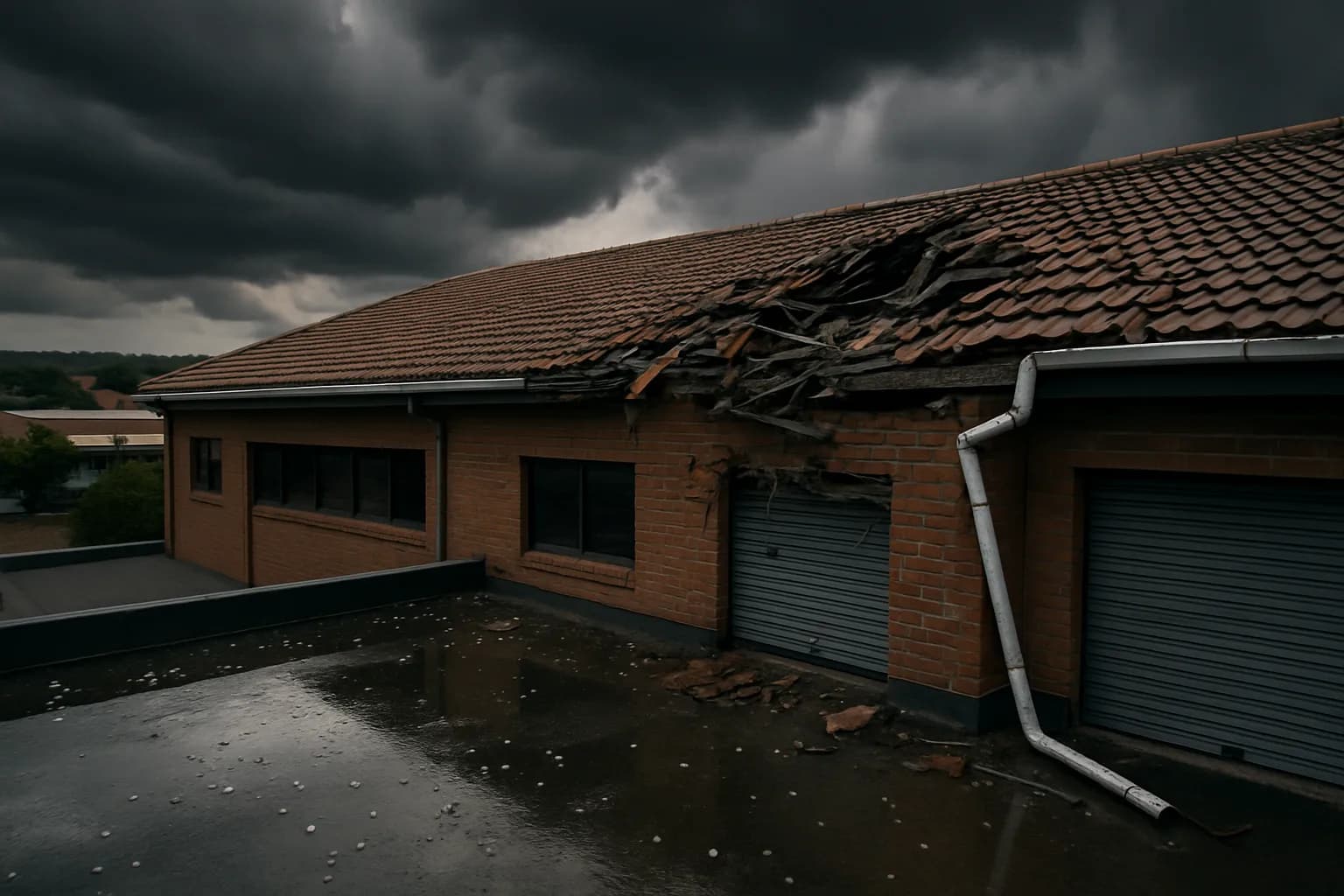
The hail arrives on a Thursday afternoon and is gone twenty minutes later. By Friday a Centurion warehouse owner stands under a hole in his own roof. The insurer's assessor explains, kindly enough, the amount the building was insured for was set in 2019, and the rebuild quote belongs to a different decade. The building was covered. The number next to it wasn't. The shortfall is his, and it isn't negotiable.
What is commercial building insurance?
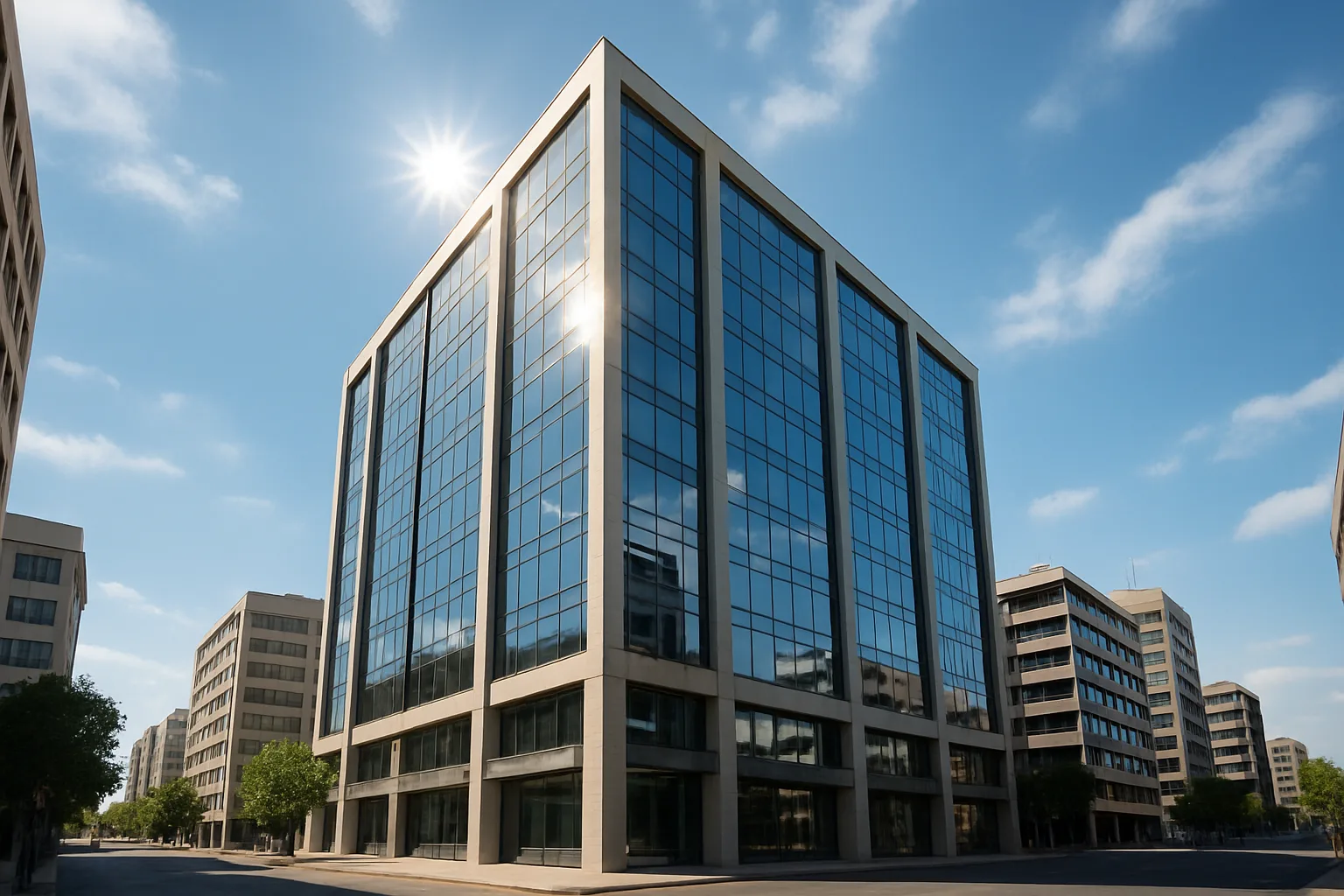
Commercial building insurance covers the physical structure of a business property, the walls, roof, fixtures, and permanent installations. Cover responds to defined events such as fire, storm, flood, and impact. It pays to repair or rebuild the structure, up to the sum insured, the amount on your policy schedule. It works alongside separate cover for contents, stock, and lost income.
Key Takeaways
- Your building must be insured for what it costs to rebuild, not what it would sell for; the two figures rarely match.
- Underinsurance is punished by arithmetic: insure two-thirds of the rebuild cost and the insurer pays two-thirds of every claim.
- SASRIA cover for riot and strike damage sits on a separate coupon attached to your policy; it doesn't arrive automatically.
- Sectional title schemes carry a legal duty to insure the buildings at replacement value, supported by regular valuations.
- The exclusions decide more claims than the perils; read the wording before the weather tests it.
Replacement value, market value and the average clause
The insurer settles a building claim against the cost of rebuilding. So the sum insured must be the rebuild figure, not the price the property would fetch. Market value and replacement value are different animals. Market value includes the land, and the land rarely burns. Replacement value includes everything a sale ignores: demolition, rubble removal, professional fees, municipal plan approvals, and rebuilding to today's building regulations rather than the ones in force when the slab was poured. A worn industrial building in Germiston can sell for less than half of what reconstructing it would cost. When the sum insured falls short, the average clause applies. Average is the discount the insurer applies when you under-declare: insure R6 million of a R10 million rebuild and you've carried 40 percent of the risk yourself. A R1 million storm claim then pays R600 000. It isn't a penalty; it's arithmetic. And it applies to partial claims too, which is the part owners find out about last.
Rebuild cost escalation and annual revaluation
A sum insured left untouched for three renewals tends to sit behind the real cost of rebuilding. Building costs move with cement, steel, labour and diesel, and none of those consult your renewal date. Stats SA tracks the movement in its monthly construction materials price indices, and the direction over any run of years is up. Renewal notices often add a flat inflation percentage chosen for the insurer's whole book, which has no relationship with your roof span, your province, or what contractors in your town charge. A schedule renews the way a gym contract renews: automatically, and with nobody looking at it. The fix is unglamorous. Get a professional replacement valuation every two to three years, and apply a credible index in the years between. Check the escalation figure on the renewal instead of filing it. An hour at renewal costs an hour, but a stale figure costs the difference at claim stage.
Sectional title and body corporate obligations
In a sectional title scheme, the duty to insure the buildings sits with the body corporate, not with you as the individual owner. A body corporate is the collective of all the owners in a scheme. Under the sectional title legislation it must insure the buildings and keep them insured at replacement value. Professional replacement valuations, tabled for the owners at regular intervals, support the figure. This governs the mixed-use schemes where many businesses sit: the shop below the flats, the office section in a suburban block, the mini-factory in a sectional industrial park. If the scheme underinsures, average applies to the whole building, and every owner shares the shortfall in proportion, including the ones who asked the right questions. Before you buy a unit, or renew your participation in silence, ask for the policy schedule and the date of the last valuation. The answers are sometimes older than the geyser.
Landlord and tenant responsibilities

The lease decides who insures what, and your policy must mirror the lease, because the space between the two documents is where claims get lost. A landlord typically insures the structure; a tenant typically insures contents, stock, and tenant's improvements, the shopfitting, partitions and counters the tenant paid for inside a building someone else owns. Those improvements are covered by nobody until someone names them in a policy. We ask a lot of questions about leases. Too many, tenants tell us. The table below shows the usual split, though the lease in your drawer outranks it.
Who typically insures what in a commercial lease
| Item | Usually the Landlord | Usually the Tenant |
|---|---|---|
| Structure, roof and boundary walls | Yes | No |
| Tenant's shopfitting and partitions | No | Yes |
| Plate glass and signage | Lease-dependent | Lease-dependent |
| Contents, stock and equipment | No | Yes |
| Loss of rent | Yes | No |
Where the lease makes you responsible for glass, or for a share of the building premium, your cover must say so in writing. A responsibility accepted in a lease and insured by nobody is a personal expense waiting for its date.
Geyser and water damage claims
Water produces the steadiest stream of building claims, and the geyser is the usual suspect. A geyser is the tank heating the building's water, and it fails the way milk goes off: on its own schedule, and usually discovered late. When one bursts, the policy typically covers the resultant damage, the ceilings, carpets and stock below, while the geyser unit is covered only where the wording or an extension says so. Most policies carry a separate geyser excess, the first amount of each claim you pay yourself. Wordings also exclude damage from rust, corrosion and gradual deterioration, which is how an aged geyser becomes a maintenance argument at claim stage. Burst pipes follow the same logic: sudden damage is claimable, while the slow drip behind a wall for eight months is a harder conversation. Know your geyser excess, know whether the unit is covered, and replace the ones past their service life before they choose the long weekend for you.
Storm, hail and flood cover
Storm, hail and flood are standard perils on a building policy, but what gets paid depends on maintenance, location and the wording's definition of flood. The April 2022 KwaZulu-Natal floods cost the economy R54 billion, with insurers carrying close to half of it, according to SAIA's guidance on climate risk. The industry has responded the way industries do: more inspections, sharper terms. Assessors now photograph gutters, roof fixings and waterproofing, because a claim can be reduced where neglected maintenance let the water in. Properties near flood lines, and coastal buildings exposed to storm surge, the sea pushed inland by a storm, attract higher excesses or specific conditions. Hail is its own economy in Gauteng, arriving most summers and leaving roof sheeting hammered from the inside. Check the excess for each weather peril on your schedule; they're often set per event, and a bad season contains several events.
Fire, thatch and lightning risk
Fire is still the peril able to take a building to the ground. Your policy's response is decided by compliance you attend to long before the smoke. Insurers ask about thatch because thatch burns enthusiastically: a thatched lapa near the main building brings premium loadings, lightning-conductor requirements, or specific conditions. An undeclared one gives the insurer a reason at claim stage. Lightning cover is standard, but the wording expects the declared risk to be the real one. Fire compliance runs further: serviced extinguishers, flammable liquids declared and stored to the policy's conditions, and the fire-safety requirements your municipality's bylaws set for your class of occupancy. None of this is decorative. A rejected fire claim rarely turns on the flames; it turns on the certificate nobody renewed or the storeroom nobody mentioned. Walk the building once a year with the policy conditions in one hand, and fix the mismatches while they're cheap.
Unoccupied building cover
Cover changes when a building stands empty, and most wordings restrict it after 30 to 60 days of unoccupancy. An empty building attracts three things: dust, cable thieves, and a clause nobody has read. Insurers respond to vacancy by suspending theft and malicious damage cover, raising excesses, or imposing conditions, regular inspections, active alarms, water and power isolated at the mains. The failure pattern is ordinary: a tenant leaves in March, and re-letting takes longer than the agent promised. By June the building stands open-mouthed with the insurer never told. The vandalism claim in July then meets the unoccupancy clause the owner reads for the first time in the rejection letter. Tell your broker the day a building falls vacant. The terms can usually be negotiated, and a higher excess agreed in advance beats a declined claim discovered afterwards.
Loss of rent cover
Loss of rent cover pays the rental income a damaged building can no longer earn while it's being repaired. When fire closes a Polokwane retail strip, the leases suspend rent for units nobody can trade from, but the bond, rates and security bills carry on regardless. Loss of rent responds for a set number of months, the indemnity period, which is the clock on the cover. It starts at the damage and stops when the months run out, ready or not. Owners tend to set it at twelve months because twelve is the default, yet rebuilds usually run longer. Plan approvals, contractor lead times and the municipality's own calendar all take their share. Set the period against a realistic rebuild of your actual building, then add margin for the approvals. Twelve months of cover against an eighteen-month rebuild leaves six months of bond repayments with no rent behind them.
Public liability for building owners
Owning a building creates legal exposure to people who never signed your lease, and building policies usually attach public liability cover for exactly this reason. Public liability is cover for claims by outsiders, a delivery driver, a customer, a passer-by. It responds where they are injured or their property is damaged in connection with your building. The loose balustrade, the falling signage, the polished stairwell in the common area after the cleaners have been: each one can produce a claim with legal costs attached. The legal costs arrive whether the claim succeeds or not. The cover funds the defence and any compensation, up to the limit on the schedule. Owners inherit the default limit and rarely look at it again, though injury claims are priced by courts, not by renewal notices. Test the limit against a serious injury on your premises, not a bruised knee, and raise it while raising it is cheap.
SASRIA cover for riot and strike damage
Riot, strike and public-disorder damage isn't covered by your ordinary building policy; in South Africa it's covered by SASRIA, a state-owned insurer created for this class of risk. SASRIA cover rides along with your main policy as a coupon, a small add-on your insurer administers: your broker arranges it, your insurer collects the premium, and SASRIA pays that class of claim. The July 2021 unrest showed the machinery working at scale, with R32 billion in claims. SASRIA reports 99 percent paid, per its published account of the 2021 unrest claims. Two checks decide whether it works for you. First, the coupon must exist; it isn't automatic, and buildings without it carried their own riot risk in 2021. Second, the SASRIA sum insured must track the main policy's, because a coupon set years ago covers the building of years ago. Confirm both at every renewal.
What commercial building insurance excludes
The exclusions decide more claims than the perils do, and a commercial building insurance wording excludes more than most owners expect. The pattern behind the list is simple: the policy insures the sudden, not the slow. Wear and tear, gradual deterioration, rust and corrosion are excluded, so the storm is claimable but the ten years of postponed roof maintenance the storm exposes is not. Subsidence and landslip, the ground shifting under the foundations, is excluded unless specifically bought back. Damage during unoccupancy meets the vacancy conditions. Riot and strike belong to SASRIA. War belongs to nobody, and defective design or workmanship generally travels back to the contractor and their insurance rather than yours. None of this makes the policy a trick; it makes it a contract with edges. Read the exclusions with your broker once a year, buy back the ones your building genuinely faces, and maintain your way out of the rest.
Commercial building cover: what the term signals

The phrase "commercial building cover" isn't interchangeable with "commercial building insurance," even though the two appear together constantly. Commercial building cover refers to the specific scope of protection written into your policy schedule: which structures are covered, under which perils, and up to which limits. The broader insurance contract may include sections for liability, loss of rent, or SASRIA, none of which form part of the cover applying to the physical building. South African insurers write these as distinct coverage sections, and a claim under the wrong section, or a section you didn't elect, produces a shortfall your balance sheet absorbs.
The practical consequence is straightforward: you can hold a comprehensive commercial building insurance policy and still carry a gap in your building cover if the schedule excludes a specific peril, structure, or use class. Insurance policies are, in this sense, remarkably good at covering everything except the thing you needed covered. Our guide to commercial building cover unpacks what that scope includes, where the standard carve-outs sit, and which questions to put to your broker before renewal. The reading time is short; the oversight it prevents is not.
Why property insurance valuation deserves its own scrutiny
Getting the insured value wrong is one of the most expensive mistakes a building owner can make, and it happens more often than the industry would like to admit. The average clause, which most commercial policies carry, means your insurer can reduce any claim payout proportionally if your sum insured falls short of the true replacement cost. A building insured for R8 million that should be valued at R12 million could see a R4 million claim settled at roughly R2.7 million, leaving you to fund the shortfall from your own balance sheet. The SASRIA and short-term insurer data on underinsurance compiled by SAIA suggest underinsurance is endemic across the commercial property sector, partly because valuations age quietly while construction costs don't. Failing to commission a professional rebuild-cost assessment at regular intervals isn't a paperwork oversight; it's a transfer of risk back to yourself, unannounced and usually discovered at the worst possible moment. Our dedicated guide on commercial property insurance valuation and underinsurance walks through the mechanics, the red flags, and what a credible valuation process should include.
Reinstatement value and the underinsurance trap
Insuring a commercial building for its market value and insuring it for what it costs to rebuild are two entirely different exercises, and confusing them is one of the more expensive mistakes a property owner can make. Reinstatement value covers the full cost of demolishing what remains, clearing the site, and reconstructing the building to its pre-loss specification using current labour rates and materials. Market value does none of those things: it reflects demand, location, and depreciation, none of which have any bearing on what a contractor will charge you after a fire. The gap between the two figures is where underinsurance quietly takes up residence.
When a claim arrives and your sum insured falls short of the actual reinstatement cost, your insurer applies the average clause proportionally, reducing the settlement by the same percentage your building was underinsured. A R12 million rebuild covered for R8 million doesn't produce a R8 million payout; it produces something considerably less, at precisely the moment you can least afford the shortfall. Our guide to commercial property reinstatement value explains how the calculation works and what a correct valuation should include.
What commercial building insurance won't cover: a closer look
Most commercial building policies list their exclusions in the fine print, which is precisely where they tend to stay until a claim brings them forward. The gap between what a policy covers and what it pays out is rarely dramatic in theory; in practice, it surfaces at the worst possible moment. South African insurers routinely exclude damage arising from gradual deterioration, faulty workmanship, tree root intrusion, and deliberate acts by the insured: categories most policyholders haven't read yet. SASRIA handles political riot and public disorder separately, but standard commercial policies won't pick up the shortfall if your SASRIA endorsement is missing or lapsed. The consequence is a building owner who believes they're covered, pays premiums faithfully, and then discovers the claim sits in a category the insurer never agreed to carry: a discovery that tends to arrive alongside a repair bill. Knowing precisely where cover stops is as important as knowing where it starts. Our detailed guide to commercial building exclusions maps each common exclusion against the exposure it leaves behind.
What shapes your commercial building premiums
Commercial building premiums aren't arbitrary: insurers price each risk individually, and the gap between two seemingly similar properties can be surprisingly wide. Underwriters weigh construction type, roof material, occupancy, location, claims history, and the sum insured when setting your rate. A concrete-framed office block in a low-crime suburb will attract a materially different premium from a mixed-use building with a timber roof in a flood-prone area, even if the two properties carry identical replacement values. The implication is direct: if you don't understand the rating factors applied to your building, you can't meaningfully challenge a renewal increase or identify where risk-mitigation spend would reduce your cost. Revaluation, security upgrades, and accurate occupancy declarations all feed back into what you pay each year. Our detailed guide on commercial building premiums and the cost factors driving them walks through each underwriting variable in plain terms, so you can engage your broker with specific questions rather than simply accepting the figure on your renewal schedule.
Frequently Asked Questions
Should I insure my commercial building for market value or replacement value?
Insure it for replacement value, what it would cost to rebuild, not what it would sell for. Market value includes the land, and the land rarely burns. Replacement value includes costs a sale ignores: demolition, rubble removal, professional fees, plan approvals and rebuilding to today’s building regulations. A worn industrial building in Germiston can sell for less than half of its rebuild cost. If the sum insured falls short, the average clause applies. Insure R6 million of a R10 million rebuild, and a R1 million storm claim pays R600,000. Average applies to partial claims too, not only to total losses.
Who insures a commercial building, the landlord or the tenant?
The lease decides, and your policy should mirror it. A landlord typically insures the structure. A tenant typically insures contents, stock and tenant’s improvements, meaning the shopfitting, partitions and counters the tenant paid for inside someone else’s building. Those improvements are covered by nobody until someone names them in a policy. Some leases also make the tenant responsible for glass, or for a share of the building premium. If yours does, your cover has to say so in writing. Read the lease and the schedule side by side, because the space between the two documents is where claims get lost.
Is my building insured if it’s standing empty?
Cover usually changes once a building stands empty, and most wordings restrict it after 30 to 60 days of unoccupancy. Insurers respond to vacancy by suspending theft and malicious damage cover, raising excesses or adding conditions. Typical conditions are regular inspections, an active alarm, and water and power isolated at the mains. The common failure is a tenant leaving, re-letting taking longer than the agent promised and nobody telling the insurer. A vandalism claim then meets the unoccupancy clause. Tell your broker the day a building falls vacant. The terms can usually be negotiated, and an agreed higher excess beats a declined claim.
Does commercial building insurance cover a burst geyser?
It typically covers the resulting damage, but the geyser unit only where the wording or an extension says so. When a geyser bursts, the policy tends to pay for the ceilings, carpets and stock below. Most policies carry a separate geyser excess, which you pay first on each claim. Wordings also exclude rust, corrosion and gradual deterioration, so an old geyser can turn into a maintenance argument at claim stage. Burst pipes follow the same logic: sudden damage is claimable, while a slow drip behind a wall for months is a harder conversation. Know your geyser excess, and replace units past their service life.
The numbers drift while the walls stand still
A building is the most settled thing your business owns. It stood there yesterday and it stands there today. The policy covering it lives in a drawer with the alarm certificates and a lease nobody has opened since signature. Yet every figure attached to the building keeps moving: the rebuild cost, the rent it earns, the liability a stairwell can generate, the coupon covering the crowd. The owners who come through a bad year in reasonable shape are usually the ones who moved the numbers before the weather moved the building.
A building is one line in a larger schedule, and it reads better alongside the rest of your business insurance programme.
You shouldn't have to discover the gap between your sum insured and your rebuild cost while standing in the rubble. With Mont Blanc Financial Services you won't.
Contact Mont Blanc Financial Services to have your building's sums insured, wording and SASRIA coupon read, tested and corrected before the weather does it for you.

Nicola Iozzo
Founder & CEO, Mont Blanc Financial Services
Nicola has spent his career reading the policy wording most people skip, and writes here so you don't discover at claim stage what page 14 meant.
This blog is here to inform, not advise. Think of it as a guidebook, not a contract. For decisions affecting your world, have a chat with your broker or financial professional. Mont Blanc Financial Services works to keep this content accurate and current, but isn’t liable for decisions made on it alone.
Mont Blanc Financial Services (PTY) Ltd. is an authorised financial services provider. FSP 8271