Aircraft Maintenance Logs and Insurance: Why the Logbook Decides the Claim
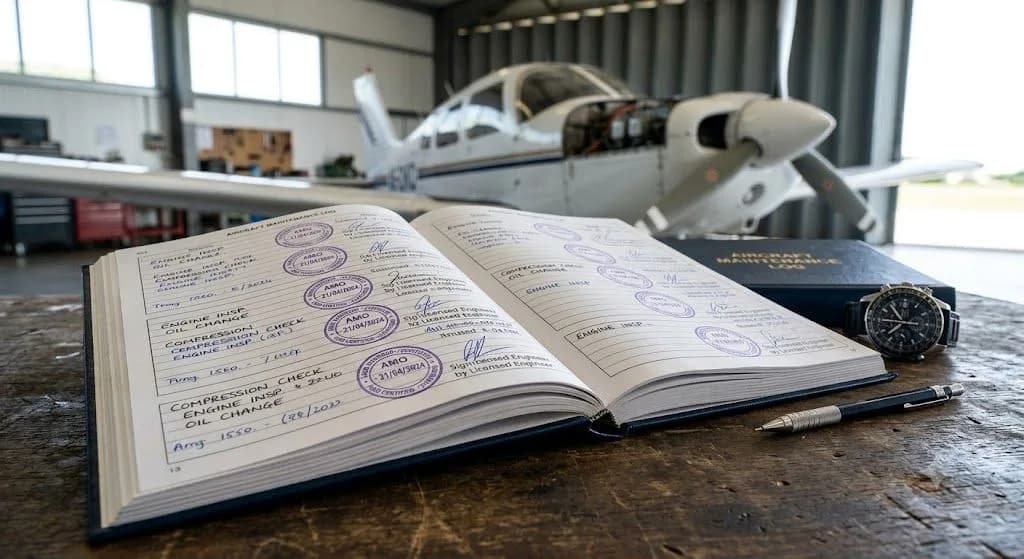
The engine failure looked like bad luck. The aircraft was insured, the loss was the kind hull cover exists for, and the owner expected the claim to run cleanly. Then the assessor asked for the logbooks. One scheduled inspection sat unsigned, recorded as done but never certified, and the claim stalled on that single entry.
He’d thought of the logbook as the regulator’s paperwork. It was also the insurer’s. The same record he kept for SACAA was the record the insurer now read to decide whether the cover responded. The gap belonged to both of them at once.
What is the role of aircraft maintenance logs in insurance?
Aircraft maintenance logs are the records that prove an aircraft was maintained to standard and remains airworthy. In insurance, they are the primary evidence an insurer relies on, because cover assumes the aircraft is airworthy. At claim stage, the logbook often decides whether the claim is paid.
Key Takeaways
- Aircraft maintenance logs are the records proving an aircraft was maintained to standard and remains airworthy.
- Insurance cover assumes the aircraft is airworthy, and the logbook is the evidence that shows whether it was.
- Maintenance must be certified by an Approved Maintenance Organisation, with each entry dated, signed, and stamped.
- After a loss, the maintenance record is one of the first things a claims assessor examines.
- A gap, an overdue task, or a missing entry can support a declined claim, even where it didn’t cause the loss.
- Lost or incomplete logbooks can force an owner to re-prove airworthiness, at their own cost.
What aircraft maintenance logs prove to an insurer

Aircraft maintenance logs are the proof the cover is built on. An insurer prices and issues aviation cover on the basis that the aircraft is airworthy and maintained to standard. The logbook is the document that shows whether that’s true. The SACAA airworthiness framework requires maintenance to be recorded and certified, and the certificate of airworthiness rests on those records being in order.
The logbook isn’t a formality the owner keeps for the regulator. It’s the same evidence the insurer turns to if a claim is ever made. One document serves both, which is why its condition carries weight beyond compliance.
So the cover assumes the logs, and the logs prove the cover. The full guide to aviation insurance treats airworthiness as a given. The logbook is where that given is either confirmed or undone.
The logbook is the first thing an assessor reads
After a loss, the maintenance record is among the first things a claims assessor examines. Before the cause of the accident is settled, the assessor establishes whether the aircraft was airworthy at the time: maintenance current, inspections signed off, defects cleared. The South African Civil Aviation Authority requires that work to be certified by an Approved Maintenance Organisation, and the logbook is where that certification lives.
A clean accident with a clean logbook is a straightforward claim. A clean accident with a gap in the logbook is a different conversation, because the gap raises a question the insurer is entitled to ask. When that happens, the claims process slows to the pace of the records.
So the logbook is read before the wreckage is fully understood. The condition of the paperwork shapes the claim before the cause is even agreed.
How a maintenance gap becomes a declined claim
A gap in the maintenance record can support a declined claim, even where it had nothing to do with the loss. Scheduled maintenance is a condition of cover, not a suggestion, and the logbook is what proves the condition was kept. An overdue inspection, an unsigned task, or a missing entry lets the insurer argue the aircraft wasn’t in the state the policy assumed. The argument doesn’t need the gap to have caused the crash. It needs the gap to exist.
This is the mechanism behind many a refused aviation claim. The link between a maintenance gap and a rejected claim runs through the logbook. The record is either there, or it’s the reason the insurer says no.
So the absence of an entry can cost more than the maintenance it records. The task was cheaper than the claim it later sinks.
Airworthiness, the AMO, and the paper trail

Continuing airworthiness is a documented chain, not a single certificate. An Approved Maintenance Organisation carries out the work and signs it off. Each entry records the date, the hours, the task, the corrective action, and the certifying person’s signature and licence number. Under the Civil Aviation Act 13 of 2009 and the regulations beneath it, that record is what keeps the certificate of airworthiness valid between inspections.
The records, in effect, are the airworthiness. An aircraft can be mechanically sound, but if the paper trail doesn’t show it, the aircraft can’t be proved airworthy. An unprovable airworthiness is a practical problem at claim stage. What SACAA compliance requires and what an insurer expects are, on this point, the same thing.
So the AMO’s signature isn’t a stamp on a task. It’s a link in the chain the cover depends on, and a broken link breaks more than the entry it sits in.
What insurers look for in the records
Insurers read the logbook for a short list of specific things. Scheduled maintenance done on time. Work certified by an appropriately rated Approved Maintenance Organisation. Each entry dated, signed, and stamped by the certifying person. Modifications approved and recorded. Defects rectified and cleared before further flight. Hours and cycles tracked consistently across the airframe, engine, and propeller.
What raises a flag is the opposite: a missing period, an entry added after the fact, an unsigned task, a modification with no approval behind it. None of these is fatal on its own, but each is a thread an insurer can pull. Reading how risk and exclusions are written shows how those threads connect to the wording.
So the records are read closely, not skimmed. A logbook that’s complete, contemporaneous, and properly certified is the strongest single document an aircraft owner can bring to a claim.
Keeping logs in a state the cover can rely on
The time to put the records right is before the loss, not after it. Keep the logbook complete and contemporaneous. Have every task certified by an Approved Maintenance Organisation, and never fly an aircraft with maintenance overdue or a defect uncleared. Declare modifications and keep their approvals on file. Safeguard the logbooks themselves, because a lost logbook can force an owner to re-prove the aircraft’s airworthiness from scratch, at their own expense.
Aviation insurance is a short-term insurance class in South Africa, regulated under the Short-term Insurance Act 53 of 1998. An independent broker working under Financial Sector Conduct Authority standards can help align the cover with how the aircraft is maintained and recorded. The aim is simple: no daylight between the logbook and the policy.
So the records aren’t admin to be caught up later. They’re the cover, kept current one entry at a time.
What the logbook says when the loss arrives

A maintenance logbook does little until the day everything turns on it. For most of an aircraft’s life it sits in a folder, updated and filed. Then a loss happens, and the same logbook becomes the most important document in the claim. It’s read line by line for what was done, when, and by whom. The owner who kept it complete has already won an argument they didn’t know they were having. The one who let it slip finds, at the worst moment, that the record was the cover all along.
You shouldn’t have to find out at claim stage that a gap in the logbook cost you the cover. With Mont Blanc Financial Services you won’t.
Contact Mont Blanc Financial Services to review how your aircraft’s maintenance records line up with the cover meant to respond when it counts.
Owners and operators tend to ask the same questions about how their records affect a claim. These come up first.
Frequently Asked Questions
Why are aircraft maintenance logs important for insurance?
Aircraft maintenance logs are important for insurance because they are the evidence an insurer relies on to confirm the aircraft was airworthy. Aviation cover is issued on the assumption that the aircraft is maintained to standard, and the logbook is the document that proves whether that assumption held. At claim stage, the insurer reads the records to establish that maintenance was current and properly certified before deciding whether to pay. A complete, properly signed logbook supports a smooth claim, while a gap or an overdue task gives the insurer grounds to question it. The records also satisfy the regulator, so the same logbook serves both compliance and cover. In practice, the condition of the maintenance record can affect a claim as much as the cause of the loss itself. Keeping the logbook in order is part of keeping the cover effective.
Can an insurer reject a claim over aircraft maintenance logs?
Yes. An insurer can reject or reduce a claim where the aircraft maintenance logs show a gap, an overdue task, or work that wasn’t properly certified. Scheduled maintenance is a condition of aviation cover, and the logbook is what proves the condition was met. If the records show the aircraft was flown with maintenance overdue or an inspection unsigned, the insurer has a case. It can argue the aircraft wasn’t in the airworthy state the policy assumed. In many cases the insurer doesn’t need to show the maintenance gap caused the loss, only that the gap existed at the time. This is one of the more common routes to a declined aviation claim, because it turns on documents the owner controlled. Keeping every task recorded and certified by an Approved Maintenance Organisation is the way to close that route off.
What do aviation insurers look for in maintenance logs?
Aviation insurers look for a maintenance record that is complete, current, and properly certified. That means scheduled maintenance carried out on time, with each task signed and stamped by an appropriately rated Approved Maintenance Organisation. The entries should record the date, the hours, the work done, and the certifying person. They also check that modifications were approved and recorded, that defects were cleared before further flight, and that hours and cycles are tracked consistently. What draws scrutiny is the opposite. The flags are a missing period in the record, an entry added after the fact, an unsigned task, or a modification with no approval behind it. None of these is automatically fatal, but each gives an insurer a reason to look harder. A clean, contemporaneous logbook is the strongest evidence an owner can present at claim stage.
Do maintenance logs affect aircraft insurance claims?
Yes, maintenance logs directly affect aircraft insurance claims, because they are the primary evidence of airworthiness an insurer examines after a loss. A claim is assessed not only on what caused the accident but on whether the aircraft was legally maintained and fit to fly at the time. The logbook answers that second question. Where the records are complete and properly certified, they support the claim and speed it up. Where they show a gap, an overdue inspection, or an uncertified repair, they give the insurer grounds to delay, reduce, or decline. Because the logbook is created over the life of the aircraft, its state at the time of a loss is largely fixed by then. The work that protects a future claim is the maintenance recorded accurately today, long before any loss occurs.

Nicola Iozzo
Founder & CEO, Mont Blanc Financial Services
Nicola has spent his career reading the policy wording most people skip, and writes here so you don't discover at claim stage what page 14 meant.
This blog is here to inform, not advise. Think of it as a guidebook, not a contract. For decisions affecting your world, have a chat with your broker or financial professional.
Mont Blanc Financial Services (PTY) Ltd. is an authorised financial services provider. FSP 8271