Cheap Agricultural Insurance South Africa
Is Cheap Cover Really Saving You Money?
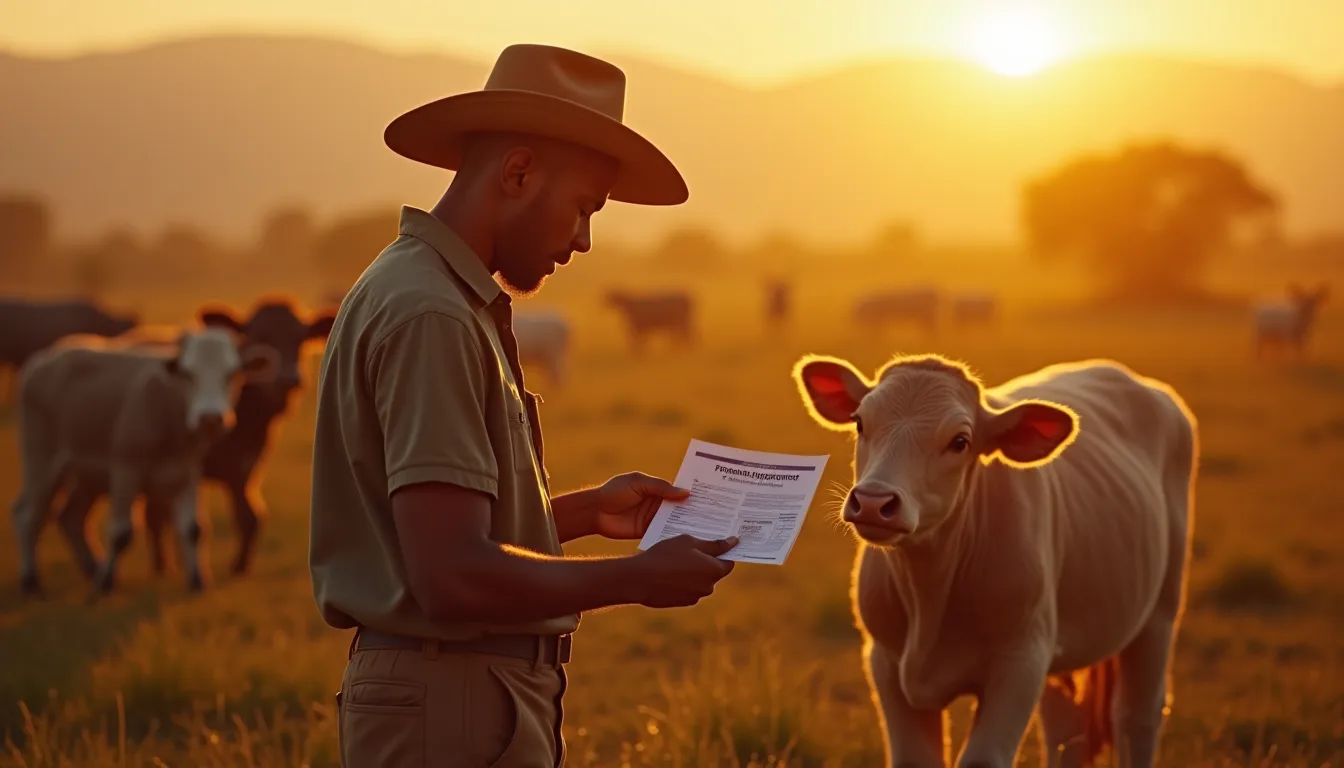
A low agricultural premium looks like a saving until the claim reveals what was removed to produce it. Cheap cover is not simply less expensive; it is cover with sections discounted, narrowed, or deleted, and the farmer rarely sees which until a loss lands on an exclusion. Fire not included reads the same before and after the baler burns. The gap between the premium that looked polite and the protection that wasn’t there is where the cost sits.
What is cheap agricultural insurance in South Africa?
Cheap agricultural insurance in South Africa is a reduced-cost farm policy that lowers the premium by limiting cover, raising excesses, or excluding specific perils rather than by reducing genuine risk. It can suit a narrow exposure, but the saving usually reflects protection removed. The critical question is which perils, assets, or conditions were stripped out to reach the lower price.
Key Takeaways
- Cheap agricultural insurance lowers the premium by reducing protection, narrowing cover, raising excesses, or excluding perils, not by lowering the underlying risk.
- Common exclusions that catch farmers out include specific perils such as fire, theft conditions, and equipment breakdown, which surface only at claim stage.
- Premiums are calculated on the farm’s assets, location, claims history, and perils covered, so a lower price usually means fewer perils are included.
- Cheap cover can work where the exposure is genuinely limited and the farmer knows precisely what has been removed.
- Premiums can be lowered safely through risk reduction and accurate valuation rather than by quietly cutting cover.
Why Farmers Search For Cheap Agricultural Insurance
South African farmers do not wake up looking for more paperwork or more expenses. They look for space to breathe. Diesel climbs. Fertiliser climbs. Everything climbs except commodity prices. Erratic weather eats profits. Load shedding kills irrigation schedules. Labour costs rise. Theft increases. Rural crime creeps closer every year. By the time insurance renewal season arrives, a farmer has already fought nine battles and survived twelve.
So, when a broker slides a cheap insurance quote across the table, the temptation is real. It looks like relief. A little victory. A rare moment where a number goes down instead of up. Cheap insurance is appealing because farming often runs on tight margins. Every rand saved feels like a rand earned. Until the claim.
The truth is that farmers search for cheap cover for the same reason trucking companies do. They are trying to protect their cashflow without destroying value. The mistake is not wanting something cheaper. The mistake is accepting cheap without understanding what was removed to make it cheap.
Cheap agricultural insurance does not lower risk. It lowers protection. And protection is the only thing standing between farmers and catastrophic loss.
What agricultural insurance covers on a South African farm
Agricultural insurance in South Africa covers farm machinery, equipment, implements, livestock, crops, and farm structures against losses from fire, theft, overturning, weather, and operational risk. Policies are not standardised: cover is built around the specific assets, operations, and risk environment of each farm. What is included, excluded, and excess-rated varies significantly between policies, and that variation is where most claim disputes originate.
What a cheap policy has usually removed
- Agricultural insurance premiums in South Africa are calculated on equipment profile, operator competency, nature of operations, geography, and security, not on the farm’s productivity or commodity prices.
- Cheap agricultural insurance is not a discount. It is a policy with sections removed: typically fire, overturning, night movement, theft from fields, public road use, and seasonal worker cover, to reduce the premium mathematically.
- Harvest season is when cheap policies fail most consistently, because the exclusions most likely to be triggered: night movement, seasonal operators, fire risk, and continuous machinery use, are exactly the conditions that define peak agricultural operations.
- High excesses hidden behind low premiums are as financially damaging as missing cover. An excess of R50,000 on a fire claim or 10% of equipment value on a theft claim can make the insurance economically worthless at the point of use.
- The safest way to reduce an agricultural insurance premium is to reduce actual risk: through better storage, operator training, maintenance documentation, and telematics, rather than to reduce cover sections.
What Cheap Agricultural Insurance Really Is
Let us be honest. No insurer wakes up generous. Cheap is never magic. It is mathematics. Something has been removed. Something has been restricted. Something important has been pushed into the fine print and disguised with friendly wording like limited, conditional or excluded.
Cheap agricultural insurance usually means:
- Fire cover removed
- Theft cover reduced
- Equipment not covered off farm property
- No cover on public roads
- Implements excluded unless named
- Only named operators allowed
- Night movement excluded
- Overturning excluded
- High excesses hidden at the back
- Seasonal labour not covered
- Certain crops or operations excluded
- Lightning only covered if you have proof of certain protections
This is how insurers reduce premiums. They pull pieces out of the policy until the remaining cover barely resembles insurance. It is like buying a tractor without the rear tyres. Yes, it was cheaper. No, it will not work when you need it.
Cheap insurance is not a discount. It is insurance with holes. Some holes are small. Some holes are large enough to drive a combine harvester through. Most farmers only discover them during a claim when the insurer quietly mentions the excluded section printed on page 17, paragraph six, line four under the heading Additional limitations.
If a premium is very cheap, assume the cover is very selective.
How Agricultural Premiums Are Calculated
Farmers often feel like premiums are random, but they are not. Insurers price agricultural risk the same way they price trucking risk. They study the environment, the behaviour, the security and the past patterns. They look at what you own, how you use it, where you use it and how likely it is that someone or something will damage it.
Heritage, soil quality and rainfall may matter to the farm, but they mean nothing to insurers. They want to know the statistical likelihood of something burning, overturning, being stolen, being used incorrectly or being destroyed in the middle of a busy season.
Here is how premiums are built.
3.1 Equipment Profile
Not all machinery is equal.
- A brand new John Deere with GPS and rollover protection costs less to insure than a twenty year old tractor with a starter that only works on odd numbered days.
- A combine harvester is more expensive than a baler.
- A quad bike used by seasonal workers is more dangerous than a sprayer used by a trained operator.
The age, usage, condition and replacement value determine the baseline cost.
Operator or Driver Risk
The person behind the wheel is always the biggest risk. Insurers examine:
- Operator age
- Competency
- Accident history
- Training
- Past claims
- Whether the operator understands the difference between forward, reverse and chaos
Seasonal workers raise premiums because their training is often inconsistent. Experienced operators lower premiums because they understand the land, the machinery and the consequences of mistakes.
Nature of Work
Some farm operations are low risk. Others are lightning magnets.
Low risk operations:
- Moving equipment around the farm
- Daily tasks
- Soft terrain work
High risk operations:
- Harvesting
- Transporting produce on public roads
- Working around fires or burn off areas
- Spraying chemicals
- Night operations
- Operating on steep or uneven land
Higher risk equals higher premium.
Geography and Rural Crime
Insurers know which regions have high theft, high attacks, high fire frequency and high equipment losses. Certain provinces also have higher claims due to terrain, soil type and weather patterns.
If you operate in a region with consistent theft, your premium rises. They are not pricing the farm. They are pricing the environment around it.
Storage and Security
Where the equipment sleeps matters.
- Open farmyard with no lights or cameras
- Uncontrolled access points
- Machinery left under trees
- Implements lying around
- No fencing
These increase risk.
Secure barn, cameras, fencing and controlled access reduce risk.
Premiums respond to the security story you present.
Hidden Exclusions That Make Cheap Agri Insurance Dangerous
This is where cheap policies usually implode. It is not the premium that hurts you. It is the exclusion you never knew about until the insurer says those unforgettable words: unfortunately, not covered.
Here are the most common exclusions farmers discover too late.
Theft from Fields Not Covered
Machinery left in the field overnight is a common target. Cheap policies often exclude theft unless equipment is stored in a locked structure. Farmers only learn this after the equipment is gone.
Night Movement Excluded
Some cheap policies do not cover any movement between 22:00 and 04:00. This affects harvest, firefighting and late season spraying.
If the tractor overturns at 03:47, the claim may be rejected.
Fire Excluded or Restricted
This is common in cheap policies:
- No cover for runaway fires
- No cover for fire damage caused by sparks from machinery
- No cover for electrical fires unless structures meet certain standards
Farmers assume fire is automatic. Cheap policies quietly remove it.
Overturning Not Covered
A tractor on a slope, a baler on uneven ground, a harvester making a tight turn. Overturning happens quickly. Cheap policies often exclude this completely or require expensive add ons.
Implements Not Covered
Unless each implement is individually listed, cheap policies exclude:
- ploughs
- planters
- sprayers
- rippers
- seeders
This becomes an expensive surprise at claim stage.
Seasonal Workers Not Covered
Cheap policies sometimes only cover named operators. If a seasonal worker damages machinery, the insurer may reject the claim.
No Cover on Public Roads
This exclusion is common but rarely explained.
If you transport equipment or produce on a public road and something happens, the claim collapses.
Certain Crops or Operations Excluded
Spraying, burning, harvesting certain crops and transporting high value produce may be excluded from cheap policies.
Cheap insurance hides its danger in exclusions. Understanding these exclusions is the difference between safe savings and an expensive disaster.
High Excesses: The Trap Behind Cheap Premiums
Cheap premiums often hide massive excesses. Insurance is not a charity. If they reduce your premium, they increase your excess to balance their risk.
Typical excess traps include:
- R50 000 fire excess
- R100 000 theft excess
- Ten percent of equipment value
- Double excess for untrained operators
- Special excess if equipment is not stored under cover
- Higher excess if the incident happens during harvest at night
A farmer once told me he was delighted with his cheap premium until a claim arrived with an excess that could buy a second hand bakkie. Insurance was not cheap. His premium was cheap. His risk was expensive.
Cheap premiums feel like savings until the day you read the excess.
Why Cheap Policies Fail Most During Harvest Season
Harvest exposes every weakness in a policy.
Farmers work longer hours.Tractors run late.Seasonal workers operate machinery.Implements move constantly.Fire risk spikes.Fields are busy.Visibility drops.Equipment fatigue increases.
Cheap policies fail because the exclusions are most likely to be triggered during peak risk periods. Harvest is where corners cut in winter reveal themselves openly.
Insurers know this. That is why cheap policies look great in January and completely unhelpful in November.
When Cheap Cover Can Work
It is not all bad news. Cheap cover can work when the risk is genuinely low.
Cheap cover is suitable when:
- equipment is older and low value
- operations are predictable
- no night work
- secure storage exists
- operators are trained
- movement is limited to farm property
- risk appetite is low
In these cases, cheap cover is practical and safe.
The key is understanding the conditions. Cheap works if the rules are simple and your farm follows them.
How To Lower Agricultural Premiums Safely Without Losing Important Cover
The safest way to pay less is to reduce risk rather than reduce cover. Farmers can legally lower premiums without putting their livelihood at risk by improving the following factors.
Operator Training
Insurers reward competence.
Train workers.Document it.Show insurers.Premiums go down.
Better Storage and Security
Barns, locks, cameras and lighting reduce theft risk.Lower theft risk equals lower premium.
Telematics and Basic GPS
Just like trucking insurance, tracking matters.Tracking proves movement, operator behaviour and location.Insurers love data.
Maintenance Logs
Show that equipment is serviced regularly.Breakdown risk goes down.Premium follows.
Proper Declarations
If you tell the insurer what you actually do, they price you fairly.If you guess, they guess at claim stage.
Reduce Unnecessary Night Work
Limit night movement unless essential.Risk declines.Premium responds.
Secure Implements
List them.Store them properly.Make it boring for criminals.
Avoid Seasonal Labour Running High Value Machines
Risk decreases dramatically when trained operators use expensive equipment.
The MBFS Difference: Real Advice, Real Cover, Real Care
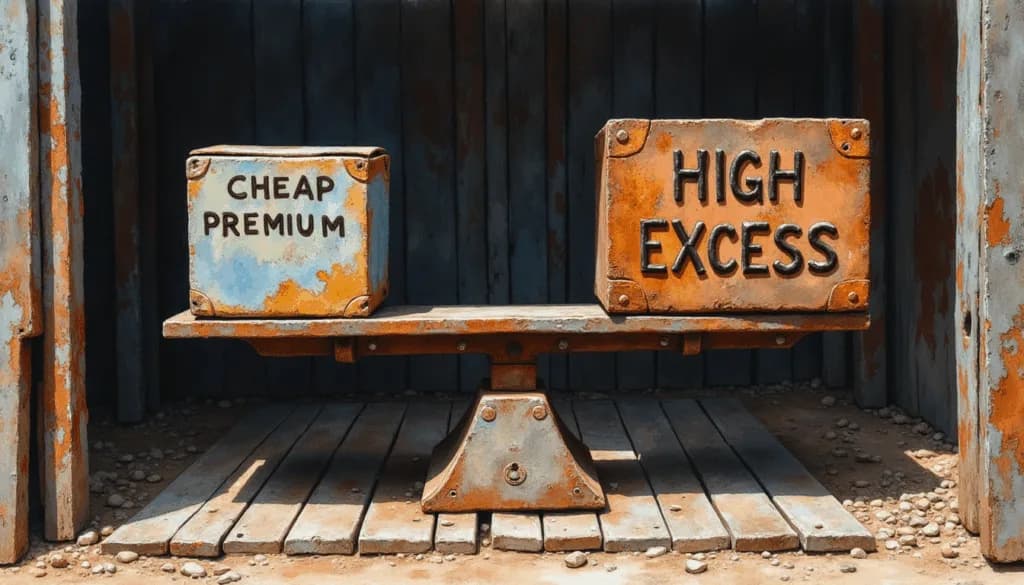
We have seen too many cheap policies collapse at claim stage. A low premium feels like a win until the insurer says the event is excluded or the excess is enough to finance a new barn.
MBFS works differently.
We assess risk honestly.We present your farm correctly.We explain exclusions clearly.We negotiate realistic premiums.We align cover with your actual operations.We protect your cash flow by avoiding traps.We stand with you during claims.
Our slogan is simple.We Care.Not in a marketing sense.In a real sense.In a when the tractor is upside down at 01:13 sense.In a when the barn is burning sense.In a when the insurer needs convincing sense.
Our job is not to sell cheap cover. Our job is to sell correct cover at the lowest safe price.
That is the difference.
Cheap cover looks fine until a hailstorm, when underinsurance on a farm turns a full claim into a part payment.
Price also depends on the ground itself, and insuring agricultural land raises questions a quick quote skips.
Closing Reflection
Cheap agricultural insurance is not the enemy. Hidden exclusions are. You can buy cheaper cover safely if the farm risks are low and the policy fits your actual operations. The danger is buying cheap cover that looks perfect in winter and collapses during harvest when you need it most. Farmers work too hard and carry too much responsibility to rely on hope when disaster strikes.
You shouldn’t have to read page 17, paragraph six of your policy wording to discover that fire wasn’t included. With Mont Blanc Financial Services you won’t.
Contact Mont Blanc Financial Services to have your current agricultural cover assessed against your actual farm operations, and find out what your policy covers before the season does.
Frequently Asked Questions
What does agricultural insurance in South Africa actually cover?
Agricultural insurance in South Africa covers a defined set of risks against a defined set of assets, and the gap between what farmers assume is covered and what the policy wording confirms is where most claim disputes are born.On the machinery and equipment side, a well-structured policy covers physical damage from fire, theft, overturning, accidental damage, and breakdown. It covers the tractor in the field, the harvester on the slope, and the implements listed on the schedule. It covers operators named in the policy, movement during specified hours, and use within the geographic boundaries stated in the wording.On the structures side, farm buildings, storage facilities, and irrigation infrastructure can be covered against fire, storm, and malicious damage. Livestock policies cover mortality from specified causes: disease, accident, and natural disaster, depending on the class of animal and the cover selected.What agricultural insurance does not automatically cover is equally important. Drought is excluded from most standard policies. Pollution liability from agricultural operations: a milk spillage into a watercourse, for example, is excluded from most standard policies. Load-shedding damage to cold storage and irrigation pumps requires specific endorsements. Crop insurance is a separate product class requiring historical yield data and specific underwriting.A policy schedule that looks comprehensive at renewal may carry significant gaps in the underlying wording. The schedule records what was agreed. The wording governs what the insurer will pay. Most farmers read only the schedule.
What are the most dangerous exclusions in cheap South African farm insurance?
The exclusions that cause the most financial damage in cheap South African agricultural policies are the ones that trigger during the periods of highest farm activity: harvest, fire season, and late-night operations, when the need for cover is greatest.Fire exclusions or restrictions are the most consequential. Cheap policies routinely exclude runaway fires, fires caused by machinery sparks, and electrical fires unless the structure meets specific construction standards. Farmers who assume fire is automatically included because it appears on the cover summary often discover that the applicable clause has been quietly restricted to a narrow set of circumstances.Overturning exclusions remove cover for one of the most common agricultural machinery incidents: a tractor on a slope, a harvester making a tight turn, an implement destabilised on uneven ground. Cheap policies either exclude overturning entirely or require expensive add-ons that eliminate the premium saving.Night movement exclusions: typically between 22:00 and 04:00, directly conflict with harvest reality. Extended daylight operations, late-season spraying, and firefighting response all happen outside business hours. A claim arising from an incident at 03:47 may be declined on this ground alone.Seasonal worker exclusions operate on the same principle. Named-operator policies only cover specified individuals. Damage caused by a seasonal worker, whose name does not appear on the schedule: gives the insurer grounds to decline the claim, regardless of the circumstances.Theft from fields, as distinct from theft from locked structures, is excluded from most cheap policies. Rural theft in South Africa targets machinery left overnight in fields and implements parked at the point of use. The exclusion removes cover precisely where the exposure is highest.
How should South African farmers compare agricultural insurance quotes?
Comparing agricultural insurance quotes on premium alone is the most reliable way to end up underinsured. The premium is the outcome of a series of underwriting decisions about what to include, restrict, and exclude, and two policies with similar premiums can carry entirely different levels of actual protection.The comparison should start with the exclusion list, not the cover summary. Every exclusion in the proposed policy should be tested against actual farm operations. If the policy excludes night movement and harvest runs until midnight, the exclusion is not a footnote: it is a coverage gap that will be discovered at the worst possible time.The excess structure deserves equal attention. A cheap premium attached to a R50,000 fire excess or a 10% equipment value theft excess may be more expensive in practice than a higher premium with a reasonable excess. The net cost of a claim: excess plus uninsured losses, is the correct comparison point, not the annual premium in isolation.Operator coverage should be confirmed explicitly. If the farm uses seasonal or contract workers, the policy must either name them or provide for unnamed operator classes. A policy that covers only named operators is a named-operator policy, and any incident involving anyone else is potentially uninsured.Geographic and road-use cover should be verified against the farm’s actual movement patterns. Equipment transported between properties, implements moved on public roads, and machinery used on adjacent land for contract work each represent potential gaps in policies that restrict cover to a defined farm boundary.A broker who presents the farm’s actual operations to underwriters: rather than simplifying the description to secure a lower premium, produces a policy that reflects what the farm does, not what is cheapest to insure.
When does cheap agricultural insurance make sense in South Africa?
Cheap agricultural insurance is a defensible choice when the risk profile genuinely warrants it, and a dangerous one when it is selected primarily because the premium number is attractive.The conditions under which cheap cover is appropriate are specific. Equipment that is older, low in replacement value, and unlikely to generate a large claim can reasonably carry basic cover. Operations that are predictable, conducted during standard hours, and confined to the farm property carry fewer of the exclusion triggers that make cheap policies fail. Farms with secure storage, trained operators, documented maintenance records, and no seasonal labour exposure present a risk profile that cheap cover can adequately match.The conditions under which cheap cover is inappropriate are equally specific. Farms that run harvest operations into the night, use seasonal workers on high-value machinery, move equipment on public roads, operate near fire risk during dry season, or rely on implements not individually listed on the schedule are carrying risks that cheap policies explicitly exclude. The premium saving is real. The cover gap it creates is also real, and it surfaces during the season when the farm is most active and most exposed.The practical test is to read the exclusion list against a typical week during harvest. If more than two or three of the farm’s standard activities fall into excluded categories, the policy is not cheap insurance. It is the absence of insurance for the farm’s most critical operating period.

Nicola Iozzo
Founder & CEO, Mont Blanc Financial Services
Nicola has spent his career reading the policy wording most people skip, and writes here so you don't discover at claim stage what page 14 meant.
This blog is here to inform, not advise. Think of it as a guidebook, not a contract. For decisions affecting your world, have a chat with your broker or financial professional.
Mont Blanc Financial Services (PTY) Ltd. is an authorised financial services provider. FSP 8271