Aviation Insurance Claim Rejection: The Reasons Cover Fails at Claim Stage
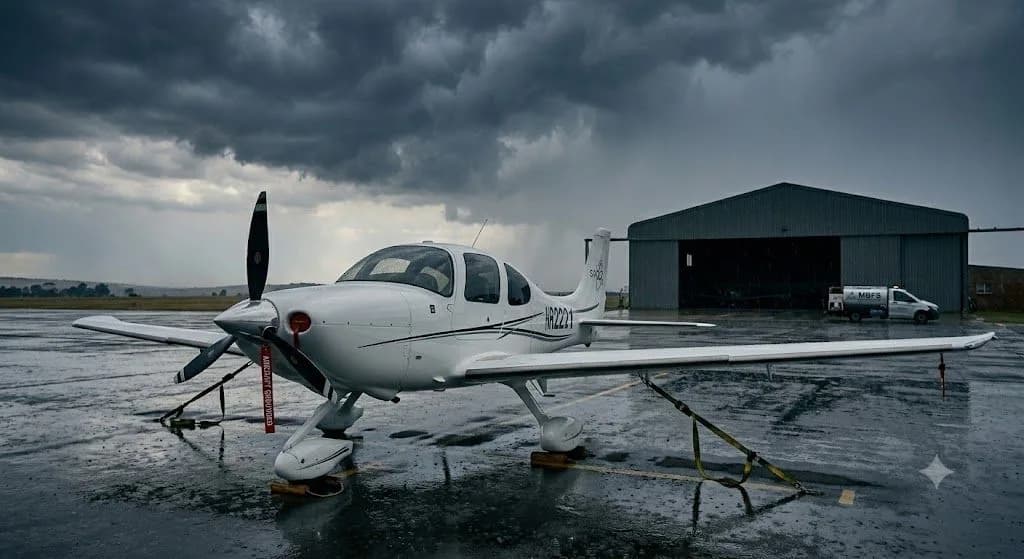
The wreckage was straightforward. The loss was covered on the face of the policy, and the operator expected a settlement. What he got was a repudiation letter pointing at a maintenance entry that should have been signed off two months earlier. The accident had nothing to do with the overdue task. The rejection did.
He’d read the schedule and assumed that was the cover. The conditions, sitting deeper in the wording, were the part that decided the claim. By the time he found them, the loss had already tested the one he’d missed.
What is aviation insurance claim rejection?
Aviation insurance claim rejection is an insurer’s refusal to pay a claim, in full or in part. It happens because the loss falls outside the policy, or a condition of cover was broken. It usually traces to non-disclosure, a breached warranty, non-compliance, or an exclusion, rather than to the loss itself.
Key Takeaways
- Most aviation insurance claim rejections trace to a fact that existed before the loss, not to the accident itself.
- Non-disclosure or misrepresentation at inception lets an insurer avoid or reduce a claim, because the risk was priced on the information given.
- A breached policy warranty or condition, such as lapsed maintenance or an out-of-currency pilot, gives the insurer grounds to reject.
- Non-compliance with SACAA rules, like flying out of airworthiness or outside the certificate, breaches both the regulation and the policy.
- Some claims fail because the loss was never covered: an exclusion, an undeclared modification, or an unapproved use.
- A rejected claim isn’t always final; the National Financial Ombud Scheme offers free recourse for disputed decisions.
Why aviation insurance claims get rejected

Most aviation insurance claims are rejected for something that was true before the loss, not for the loss itself. The accident is the trigger, but the reason sits earlier: a fact not disclosed, a condition not met, a certificate not current. Aviation insurance is a short-term insurance class in South Africa, regulated under the Short-term Insurance Act 53 of 1998. The policy is read strictly against what was agreed at inception.
When the assessor arrives, the question isn’t only what happened. It’s what the schedule, the disclosures, and the logbooks said before it happened. A clean event can still meet a rejection if the file behind it isn’t clean.
So a claim is often decided before it’s made. The full guide to aviation insurance covers how cover is set up. This piece covers why it fails. The two are the same story read from opposite ends.
Non-disclosure at inception
The most common rejection cause is information the insurer never had. The risk is underwritten on what the operator disclosed: the pilot’s hours, the aircraft’s modifications, the true use, the claims history. Leave out something material, or state it wrong, and the insurer can avoid or reduce the claim. It priced a risk that wasn’t the real one. The cover was issued for an operation that, on the file, didn’t exist.
South African conduct standards require insurers to treat policyholders fairly, and the Financial Sector Conduct Authority sets those standards. But fairness doesn’t cancel the duty to disclose. An insurer that underwrote blind is entitled to ask why.
So the disclosure at inception isn’t paperwork. It’s the basis the whole policy is priced and issued on. A gap in it is a gap the insurer can return to at any claim.
Breach of a policy warranty or condition
A claim can be rejected when a policy warranty or condition was broken. That can apply even where the breach didn’t directly cause the loss, depending on the wording. Aviation policies carry conditions: the aircraft is maintained on schedule, security measures are in place, the pilot meets stated currency and rating requirements. Each is a promise the cover relies on. Break one, and the insurer has grounds to decline or reduce.
The defence usually turns on records. A maintenance condition is proved or disproved by the logbook, and a currency condition by the pilot’s file. The role maintenance logs play in cover is exactly this: the document that shows the condition was met, or shows it wasn’t.
So a condition is only as strong as the proof it was kept. The operator who can’t evidence compliance is, for claims purposes, in the same position as one who didn’t comply.
Non-compliance with SACAA rules

Flying non-compliant turns a recoverable loss into a declined one. Several states break the cover at once: an aircraft out of airworthiness, a pilot without a current licence or medical, or an operation run outside the air operator certificate. Each breaches a SACAA rule and a policy condition together. The SACAA airworthiness framework and the Civil Aviation Act 13 of 2009 set the standard the cover assumes is being met.
The insurer doesn’t have to prove the breach caused the crash. It has to show the aircraft was operating outside the terms the policy and the regulator both require. What SACAA compliance requires is therefore the same checklist a claims assessor works through after a loss.
So compliance and claims are the same subject seen at different times. The certificate that wasn’t current at takeoff is the certificate the assessor finds first.
Exclusions and undeclared changes
Some claims fail because the loss was never inside the cover. Standard aviation policies exclude defined perils. War, terrorism, and similar events sit under separate wordings, and gradual causes like wear and tear aren’t insured at all. A loss that falls into an exclusion isn’t a dispute about fault. It’s a loss the policy never agreed to carry.
Undeclared changes have the same effect. Fit a modification, change the use, or base the aircraft somewhere new without telling the insurer. The cover may no longer fit the aircraft it was written for. Reading how risk and exclusions are written is how an operator sees these lines before a loss tests them.
So not every rejection is a failure of the policy. Sometimes it’s the policy working exactly as written, on a loss the operator assumed was in and never was.
When the claim fails on process, and what recourse remains
A valid claim can still be rejected on how it was handled. Late notification, a failure to preserve the wreckage or the records, or not following the policy’s steps can each prejudice the insurer. That prejudice can be enough to decline. The loss was covered. The handling wasn’t. Following the aviation claims process is part of keeping the claim payable.
A rejection isn’t always the end of it. Where an operator believes a decision is wrong, the National Financial Ombud Scheme reviews short-term insurance disputes for free. Its rulings bind the insurer if the complainant accepts them. There are deadlines that run from the date of rejection, so the response has to be prompt.
So process cuts both ways. It can cost a claim that was otherwise sound, and it can recover one that was wrongly refused.
What a rejection is usually telling you
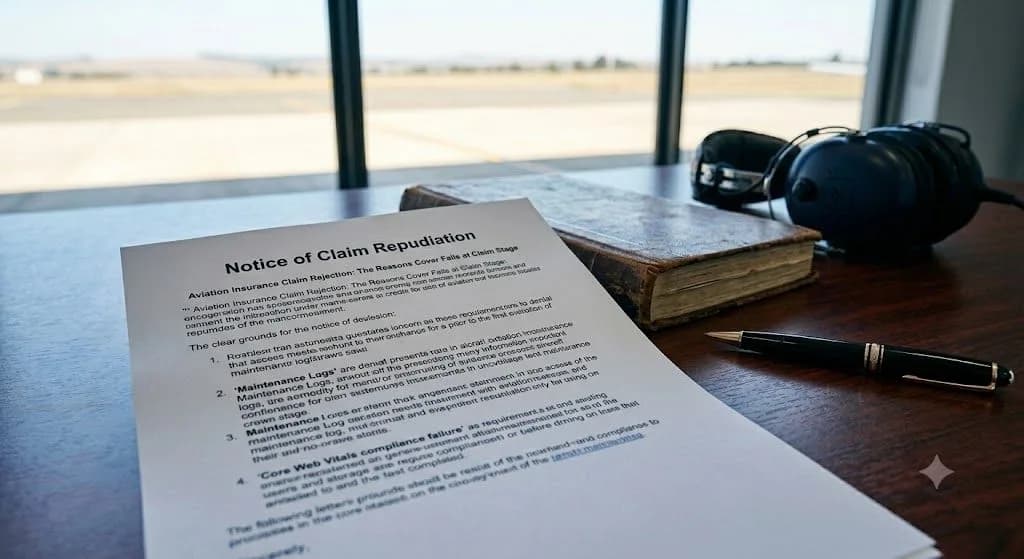
A rejected aviation claim is rarely a surprise to anyone who reads the file afterwards. The reason is almost always present before the loss: a disclosure not made, a condition not kept, a certificate not current, a peril never covered. The accident reveals the gap. It doesn’t create it. The work that prevents a rejection happens long before the claim. It’s in the disclosures, the records, and the wording nobody reads until it’s the only thing that counts.
You shouldn’t have to discover the reason your aviation claim was rejected after the loss. With Mont Blanc Financial Services you won’t.
Contact Mont Blanc Financial Services to review your aviation cover for the disclosures, conditions, and exclusions that decide whether a claim gets paid.
Operators who’ve had a claim questioned tend to ask the same things about why it happened and what to do next. These come up first.
Frequently Asked Questions
What are the most common reasons for aviation insurance claim rejection?
The most common reasons for aviation insurance claim rejection are non-disclosure at inception, a breached policy condition, non-compliance with SACAA rules, and exclusions. Each puts the loss outside what the insurer agreed to pay. Non-disclosure means material information, such as the pilot’s real hours, a modification, or the true use, wasn’t given when the policy was priced. A breached condition means a promise in the policy, like scheduled maintenance or pilot currency, wasn’t kept. Non-compliance means the aircraft was flown out of airworthiness, by an uncurrent pilot, or outside its certificate. An exclusion means the peril, such as war or wear and tear, was never insured. Most rejections trace to one of these, and almost all of them existed before the loss rather than arising from it. The accident is the trigger that brings the existing problem to light.
Can an insurer reject an aviation claim for a lapsed certificate of airworthiness?
Yes. An insurer can reject an aviation claim where the aircraft was flown with a lapsed certificate of airworthiness. A valid certificate is both a SACAA requirement and a condition the policy assumes. An aircraft outside its airworthiness certification is not legal to fly. The cover is written on the basis that it is. If a loss occurs while the certificate has lapsed, the insurer can treat the flight as a breach and decline or reduce the claim. The insurer generally doesn’t need to prove the lapse caused the accident. It only has to show the aircraft was operating outside the terms the policy and the regulator require. This is why continuing airworthiness is treated as part of keeping cover effective, not as a separate administrative task. The lapse is usually visible in the records the assessor reviews.
What can you do if your aviation insurance claim is rejected?
If your aviation insurance claim is rejected, ask the insurer for the reason in writing. Read it against your policy wording. A rejection has to be based on a specific term or fact, and seeing which one lets you judge whether it is sound. If you believe the decision is wrong, lodge a formal complaint with the insurer first. From there you can escalate to the National Financial Ombud Scheme, which reviews short-term insurance disputes at no cost. Its ruling binds the insurer if you accept it. There are deadlines that run from the date of rejection, so acting promptly protects your rights. Keeping your own copies of the policy, correspondence, logbooks, and proof of loss strengthens any challenge. A rejection is a position, not always the final outcome.
Does non-disclosure cause aviation insurance claim rejection?
Yes. Non-disclosure is one of the leading causes of aviation insurance claim rejection. An insurer prices and issues cover on the information it is given at inception. If material facts are left out or misstated, the insurer underwrote a different risk from the real one. That includes the pilot’s experience, prior claims, modifications, or the aircraft’s true use. When a loss reveals the gap, the insurer may avoid the policy or reduce the claim in proportion to the undisclosed risk. South African conduct rules require insurers to act fairly and to base a rejection on something material. They don’t remove the policyholder’s duty to disclose accurately. The safest position is full disclosure at inception, with an update whenever the aircraft, the use, or the pilots change. Accurate disclosure is what makes the cover reliable at claim stage.

Nicola Iozzo
Founder & CEO, Mont Blanc Financial Services
Nicola has spent his career reading the policy wording most people skip, and writes here so you don't discover at claim stage what page 14 meant.
This blog is here to inform, not advise. Think of it as a guidebook, not a contract. For decisions affecting your world, have a chat with your broker or financial professional.
Mont Blanc Financial Services (PTY) Ltd. is an authorised financial services provider. FSP 8271