Roots, Regions, and the Rhythm of Farming
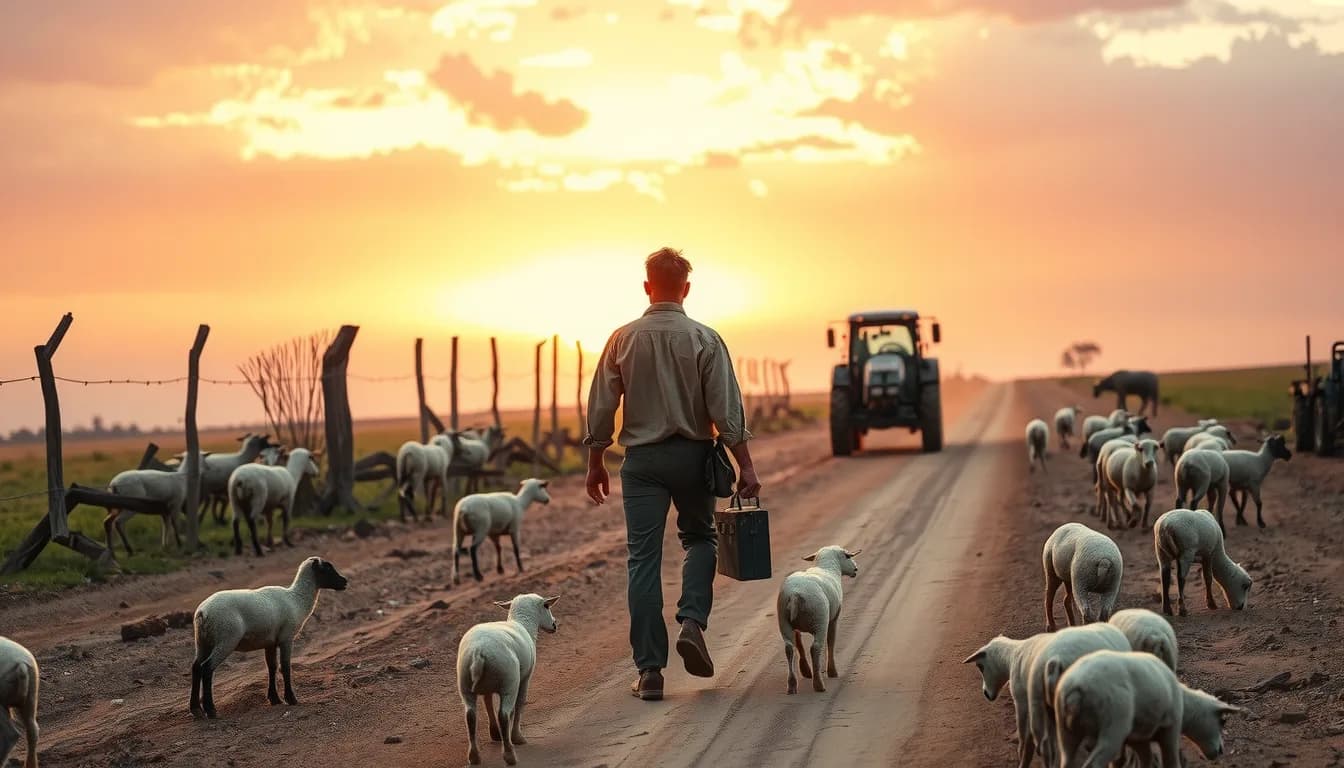
South Africa’s farming regions each carry their own risk signature, and a policy written for one rarely fits another. The Free State’s grainlands, the Western Cape’s vineyards, Limpopo’s subtropical crops, and KwaZulu-Natal’s dairy belt face different weather and different perils. A farmer insured against a generic notion of farming, rather than the conditions of their actual region, carries a hidden mismatch. That gap is where regional risk goes unpriced.
What are South African farming regions?
South African farming regions are the distinct agricultural zones of the country, each defined by climate, soil, and dominant crops or livestock: grain in the Free State, vines and fruit in the Western Cape, subtropical crops in Limpopo, and dairy and sugar in KwaZulu-Natal. Each carries its own weather risks, which shape the cover a farm needs.
Key Takeaways
- South African farming regions differ sharply in climate, soil, and dominant crops, so the risks a farm faces depend heavily on where it sits.
- The Free State grainlands, Western Cape vineyards, Limpopo subtropical crops, and KwaZulu-Natal dairy and sugar belts each carry distinct perils.
- Weather exposure varies by region, drought, frost, hail, and flood do not fall evenly across the country, which affects how cover should be structured.
- Cover written around a generic idea of farming can leave a regional risk unpriced and underinsured.
- Matching a policy to the specific region and its dominant risks is what aligns the cover with the conditions the farm actually faces.
The Roots of South African Agriculture
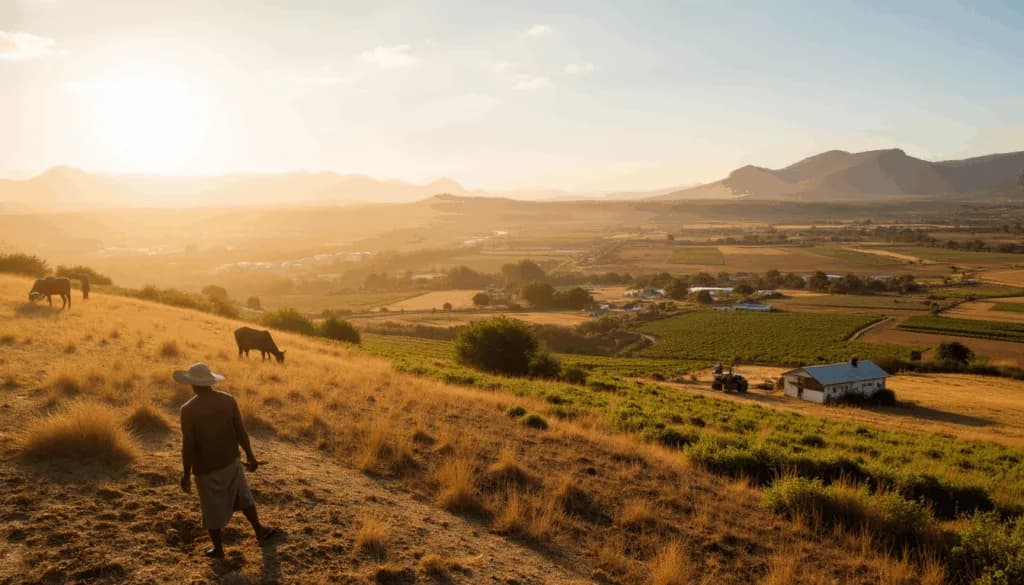
Before tractors, before spreadsheets, before government permits that take longer to grow than maize, there were people simply feeding their families. Indigenous communities planted sorghum and millet, herded cattle, and traded along dusty routes connecting tribes long before the first ship from Europe touched the Cape. Their systems were sustainable and built on something rarer than diesel: balance.
Then came colonisation, and with it a new idea of agriculture that wore boots, carried ledgers, and measured success in export weight. The Dutch planted wheat near the Cape in the 1600s, followed by vines that became the Cape’s sweetest inheritance. The British added fences, taxes, and laws, proving every empire eventually finds a way to complicate a perfectly good thing.
By the twentieth century, the land was divided between vast mechanised farms and smaller subsistence plots. The soil remembered every policy, drought, and promise that followed. From liberation dreams to land reform acts, the story of South African agriculture has always been written by hands both weathered and hopeful.
Today, emerging farmers are reclaiming space once lost, blending ancestral knowledge with modern science. Somewhere between traditional wisdom and technology, a new generation is redefining what farming in South Africa looks like. It is less about ownership and more about stewardship – understanding the ground does not care who owns it, only who tends it well.
For detailed historical data, the Department of Agriculture, Land Reform and Rural Development (DALRRD) keeps updated reports on land use and transformation progress.
South Africa’s Agricultural Map
If you drive across the country, you start to see a pattern. Every province swears it feeds the nation. The Free State calls itself the breadbasket; the Western Cape insists it pours the wine keeping everyone else tolerable; Limpopo claims its avocados make middle-class life possible. And they are all correct in their own way.
The Grain Belt – Free State, North West, and Mpumalanga
Here the sky is wide and the horizon straight. Fields of maize and wheat stretch so far you would swear the earth was ironed flat. Every year farmers watch the weather like gamblers at a roulette wheel, hoping for a few more millimetres of rain and one less surprise from Eskom. Massive combines crawl through dust, GPS screens glow, and yield monitors tell you more about nitrogen than most politicians know about numbers. Yet a single hailstorm can turn a million-rand season into bird food. Still, they plant again, because what else do you do in a place where hope comes in fifty-kilogram bags?
The Fruit Kingdom – Western Cape and Limpopo
The Western Cape lives a more glamorous farming life, ; vineyards, olives, and orchards that look like postcards. The soil smells faintly of money and fermented grapes. Lemons from Ceres perfume Europe; Pinotage fills glasses from London to Lagos. Limpopo, by contrast, is humid and stubborn, turning sunlight into mangoes, avocados, and macadamias. Horticulture exports from the province are booming, mostly because someone finally realised the world loves guacamole. But even paradise has problems: elephants test fences, boreholes dry up, and baboons believe solar panels make excellent snacks.
The Livestock Lands – Eastern Cape, Northern Cape, and KwaZulu-Natal
Drive through the Karoo and you will meet more sheep than people. Farmers here can tell each by ear tag and temperament. The Northern Cape specialises in wool so soft it could double as currency, while the Eastern Cape carries generations of cattle-herding wisdom. KwaZulu-Natal’s hills host dairy and poultry farms, green and damp enough to grow envy. Yet humidity breeds every pest known to science. Farming, here as everywhere, is a tug-of-war between nature and persistence.
The Sugar and Wine Corridor
Sugarcane fields of KwaZulu-Natal and vineyards of the Cape could not be more different, yet both test patience equally. Sugar farmers face global price crashes every time someone invents a new diet. Wine farmers fight weather, labour shortages, and the annual temptation to drink their profits. Both industries anchor thousands of rural jobs and show what the future of farming could be; diversified, export-ready, and occasionally profitable enough to replace a bakkie before it collapses.
Across all these regions, one truth endures: farms are not just pieces of land; they are ecosystems of resilience and mild insanity, stitched together by people who keep believing in the next harvest.
Key Crops and Livestock
If you need proof farmers are practical and slightly mad, look at what they plant. The country’s soil swings from lush river valleys to dry dust that laughs at rain, yet someone, somewhere, insists on making it work.
The Big Six of the Field
- Maize is the national comfort food and the backbone of rural economies. The Free State alone grows enough to feed half the continent.
- Wheat thrives in the Western Cape’s cool winters, feeding the nation’s bakeries.
- Sugarcane keeps KwaZulu-Natal’s mills humming and its politics sticky.
- Citrus and Grapes fill cargo ships bound for Europe and Asia, earning foreign currency.
- Avocados and Macadamias make Limpopo’s farmers global players.
- Soybeans quietly feed livestock and the plant-based boom.
The Creatures That Pay the Bills
Livestock brings its own rhythm: cattle across the veld, sheep dotting the Karoo, and chickens powering industrial barns from Gauteng to KZN. Poultry is now South Africa’s biggest meat industry, and dairy still survives the odds in rolling hills where cows and accountants both pray for stable feed prices.
The link between field and factory keeps rural economies alive. Grain becomes bread, fruit becomes juice, and cattle become biltong, a national treasure and unofficial currency. According to Agri SA, agro-processing contributes billions to GDP, proving farming stretches far beyond the fence line.
The Insurance Connection: Risk, Rain, and the Safety Net Beneath the Soil
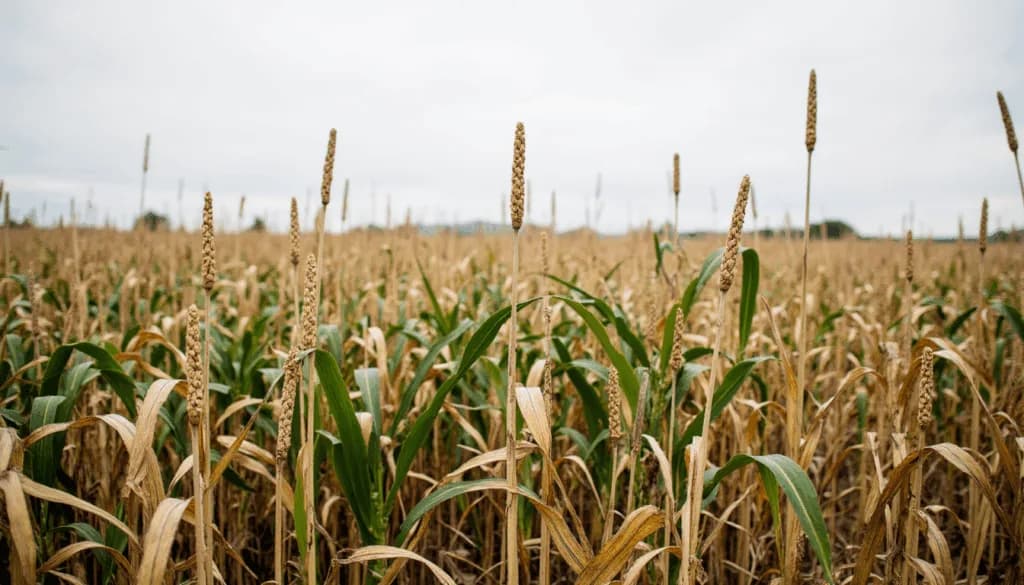
Every generation of farmers has faced risk,, floods, fuel hikes, pests, and politics. What has changed is how they manage it. Where ancestors relied on prayer and neighbours, modern farmers add a quieter ally: insurance.
A policy does not make rain fall, but it keeps a dry season from turning into a financial cliff. Equipment cover protects tractors and irrigation systems from theft or damage. Crop insurance shields against hail, frost, and drought. Livestock cover compensates when disease or disaster strikes. Together they turn uncertainty into something closer to strategy.
At Mont Blanc Financial Services, agricultural insurance is not paperwork; it is partnership. It is the difference between starting over and starting again. When the sky misbehaves, a solid policy can be the most valuable crop you own.
(Read more in our Agricultural Insurance Guide to see how protection fits into your farm’s future.)
Region decides a lot, but the paperwork still counts, and farm insurance claims is where good records earn their keep.
Cattle and crops share the same ground, so livestock insurance rounds out cover a grain-only policy forgets.
Closing Reflection
If you drive far enough across South Africa, you will eventually pass a farm that looks like every headline you have ever read: resilience, risk, drought, and hope. It is in the cracked soil that still yields maize and in the quiet rhythm of people who plant, wait, and believe.
Agriculture here is not a story of wealth, it is a story of endurance. Against climate swings, power cuts, and paperwork, the land still produces. What it needs in return is protection as steadfast as its people.
“You shouldn’t have to carry cover written for farming in general while your region’s specific risks go unpriced. With Mont Blanc Financial Services you won’t.
Contact Mont Blanc Financial Services to match your cover to the perils your region actually presents.”
Frequently Asked Questions
What are the main farming regions in South Africa?
South Africa’s main farming regions are distinguished by climate, soil, and the crops or livestock that dominate them. The Free State is known for its grain production, particularly maize, spread across large mechanised operations. The Western Cape is associated with vineyards and deciduous fruit, supported by its distinct winter-rainfall climate. Limpopo produces subtropical crops, including citrus and other fruit suited to its warmer conditions, while KwaZulu-Natal carries significant dairy and sugar production. Other regions add their own specialities, from livestock farming in the drier interior to mixed operations elsewhere. Each region’s combination of climate and soil shapes not only what it grows but the risks it faces, since the weather patterns, water availability, and perils differ markedly across the country. Understanding which region a farm sits in is therefore the starting point for understanding its risk profile. The diversity of South African agriculture is, in large part, a diversity of regions, each operating under conditions that the others do not share.
Why do farming regions in South Africa face different risks?
Farming regions in South Africa face different risks because climate, water availability, and dominant agricultural activity vary widely across the country. A grain region contends with drought and hail in ways a coastal dairy region may not, while a fruit-growing area faces frost and specific disease risks tied to its crops. Rainfall patterns differ fundamentally, with winter-rainfall and summer-rainfall regions operating on different cycles and exposures. The perils therefore do not fall evenly: a hailstorm devastating to a maize field is a different risk from the flood exposure of a low-lying region or the fire risk of dry veld. Because each region’s risk signature is distinct, the cover a farm needs depends on where it operates, not on a general notion of farming risk. This is why regional differences matter for insurance: a policy structured around the perils of one region can leave a farm in another exposed. The variation in risk follows directly from the variation in climate, geography, and what each region grows or raises.
How should farming region affect a farm’s insurance in South Africa?
A farm’s region should directly shape its insurance, because the dominant perils and recovery conditions differ from one agricultural zone to another. Cover structured around the actual region, its weather risks, its typical crops or livestock, and its recovery timelines, is far more likely to respond appropriately than a policy built on a generic idea of farming. A grain farm in a hail-prone region needs cover weighted toward that exposure, while a fruit operation in a frost-susceptible area needs protection matched to its specific risk. Ignoring region risks two failures: paying for cover against perils the farm does not face, and underinsuring against the ones it does. The practical step is to ensure the policy reflects the genuine regional risk profile rather than a national average. For an insurer or broker assessing a farm, region is among the most informative factors, since it determines so much of the operation’s exposure. Aligning cover with region is part of matching the policy to how and where the farm actually operates.

Nicola Iozzo
Founder & CEO, Mont Blanc Financial Services
Nicola has spent his career reading the policy wording most people skip, and writes here so you don't discover at claim stage what page 14 meant.
This blog is here to inform, not advise. Think of it as a guidebook, not a contract. For decisions affecting your world, have a chat with your broker or financial professional.
Mont Blanc Financial Services (PTY) Ltd. is an authorised financial services provider. FSP 8271