Farm Insurance: Fire, Flood, and Foot-and-Mouth
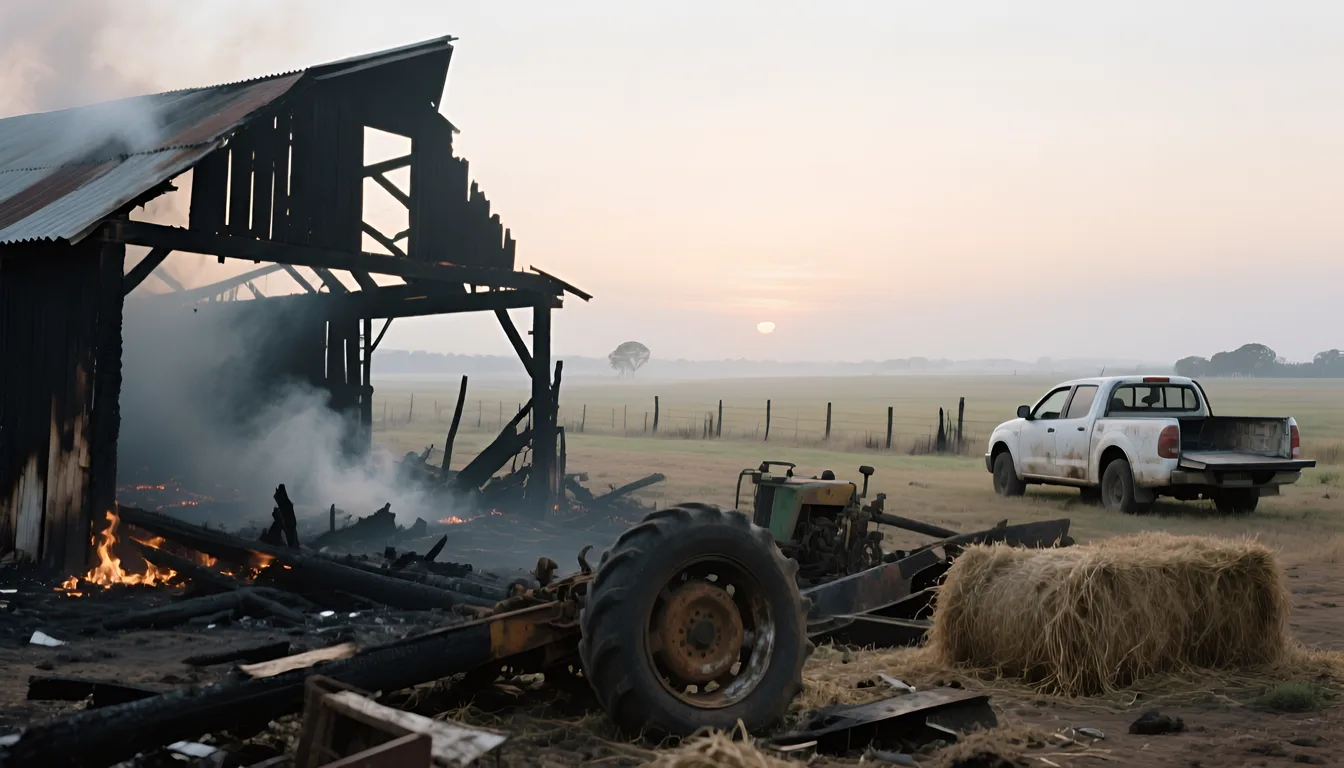
The hardest moment of a farm disaster is often not the fire or flood itself but the discovery afterward of what the policy did and did not cover. A barn burns, a river bursts, a disease moves through a herd, and the farmer learns at claim stage that an accidental fire and a spreading veld fire are treated differently. The gap between the cover assumed and the cover held is where the second loss happens.
What is farm insurance in South Africa?
Farm insurance in South Africa is cover protecting agricultural operations against the perils that damage farm property, crops, and livestock, including fire, flood, storm, and disease outbreaks. It distinguishes between causes that look similar but are covered differently, such as accidental fire and spreading veld fire, and it spans property, liability, and livestock components matched to the operation.
Key Takeaways
- Farm insurance covers the major perils that strike agricultural operations: fire, flood, storm, and livestock disease, across property, liability, and livestock components.
- Policies often separate accidental fire (electrical faults, lightning) from spreading veld fire caused by neighbouring properties, and the distinction determines who pays.
- Firebreak maintenance and water-source availability can affect a fire claim, so the condition of the farm matters as much as the policy.
- Standard crop cover may pay for flood damage to planted fields while excluding erosion, a gap that surfaces after the water recedes.
- Knowing which perils and conditions the policy covers before a disaster is what prevents a second loss at claim stage.
When Fire Becomes a Teacher
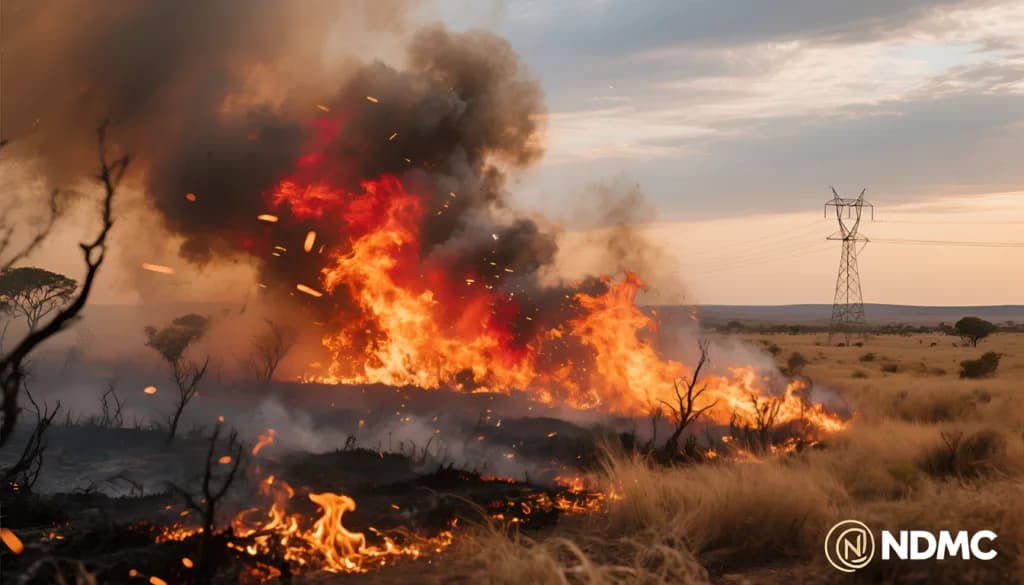
Wildfires are part of South African summers. The mix of dry grass, wind, and powerlines turns open veld into tinder. According to the National Disaster Management Centre (NDMC), agricultural fires cause millions in losses every year, particularly across the Western and Northern Cape.
Fire insurance may sound straightforward, but most policies separate accidental fires (such as electrical faults or lightning strikes) from spreading veld fires caused by neighbouring properties or equipment. The difference determines who pays.
We handle claims from both sides of the fence, literally. Farmers often discover too late that firebreak maintenance or lack of water sources affected their claim. A solid policy includes liability protection for when flames cross boundaries and property protection for barns, crops, and machinery on your side.
As one farmer put it, “You only check the small print after the fire if you didn’t check it before.” We makes sure our clients never have to learn that lesson the hard way.
Floods: When the River Changes Its Mind
Floods don’t knock politely either. They arrive in brown walls of water carrying topsoil, fence posts, and sometimes livestock. The Insurance Institute of South Africa (IISA) reports a steady rise in agricultural flood claims since 2019, linked to shifting rainfall patterns and over-saturated catchments.
Standard crop insurance may cover damage to planted fields but exclude erosion, road collapse, or structural losses such as pump houses and grain silos. Multi-peril and comprehensive farm insurance include these secondary effects.
MBFS uses rainfall and flood-mapping data from the South African Weather Service and satellite partners to speed up verification. Claims no longer wait for site inspectors to arrive by bakkie when the evidence is visible from space.
For mixed farms, flood cover also extends to business interruption: income protection while operations recover. The water eventually recedes but bills never do.
When Disease Crosses the Fence
Livestock farmers carry a different kind of risk: invisible, contagious, and often devastating.Foot-and-mouth disease (FMD) outbreaks have forced culling across multiple provinces in recent years. The South African Veterinary Association (SAVA) and Food and Agriculture Organization (FAO) note that even one infection can lock entire districts out of export markets for months.
Livestock insurance can cover direct losses, death, theft, or injury, but policies with disease extensions protect farmers from mandated culling and quarantine. MBFS brokers help structure cover aligned with Department of Agriculture protocols, so compensation reflects not just market value, but the cost of rebuilding herds safely.
A strong biosecurity plan also lowers premiums. Farmers who maintain vaccination schedules, track livestock electronically, and record veterinary visits demonstrate reduced risk. MBFS collaborates with clients to document these practices before crisis strikes, ensuring claims are straightforward when they matter most.
The Hidden Cost of Silence
Many farmers avoid talking about claims because they associate them with failure. In reality, each successful claim represents a recovery story, a bridge between disaster and resilience.The Agricultural Business Chamber of South Africa (Agbiz) estimates that insured farms return to production up to three times faster than uninsured ones after severe events. The reason is simple: recovery requires liquidity, not luck.
Insurance is not about avoiding trouble; it is about surviving it. Fires teach prevention, floods teach preparation, and disease teaches discipline. Every policy written by MBFS includes these lessons built in, because we have seen them first-hand through our clients’ experiences.
A farm is not merely land and equipment. It is history, community, and endurance under pressure. Insurance ensures that story continues.
Closing Reflection
Farming has never been gentle. Fire takes minutes, floods take hours, and disease sometimes takes only one handshake. Yet farmers continue, rebuilding from ashes, mud, or empty kraals.Insurance does not erase disaster, but it ensures the next season still happens. Each claim tells a story of persistence stronger than loss.
When the smoke clears or the water drains, what remains is faith in tomorrow, and a broker who answers the phone.
“You shouldn’t have to learn the difference between accidental fire and veld fire while your barn is still smoking. With Mont Blanc Financial Services you won’t.
Contact Mont Blanc Financial Services to confirm which perils and conditions your farm cover turns on before the next fire, flood, or outbreak.”
This article is part of our complete guide to agricultural insurance.
Frequently Asked Questions
What does farm insurance in South Africa cover for fire?
Farm insurance in South Africa covers fire, but it commonly distinguishes between types of fire in ways that determine who pays. Accidental fires, such as those caused by electrical faults or lightning strikes, are typically treated differently from spreading veld fires that originate on neighbouring properties or from equipment. This distinction matters because the cause determines which part of the cover responds and whether liability is involved. A solid farm policy combines property protection for barns, crops, and machinery on the farmer’s own side with liability protection for situations where flames cross a boundary. The condition of the farm also affects a fire claim: firebreak maintenance and the availability of water sources can influence whether and how a claim is paid, which farmers sometimes discover only afterward. The practical lesson is to understand the fire cover, and the obligations attached to it, before a fire rather than after. Fire is a routine summer risk in South Africa, and the cover responds best when its terms were checked in advance.
Does farm insurance in South Africa cover flood damage?
Farm insurance in South Africa can cover flood damage, but the scope often has important limits that catch farmers out. Standard crop insurance may cover damage to planted fields caused by flooding while excluding related consequences such as erosion, which means a farmer can be paid for the lost crop but not for the damage to the land itself. This distinction is significant, since erosion and the loss of topsoil can be as costly as the immediate crop loss and can affect future seasons. Flood cover therefore needs to be read carefully to understand exactly which consequences are included. With shifting rainfall patterns reportedly driving a rise in agricultural flood claims, the exposure is increasingly relevant across farming regions. The practical step is to confirm whether a policy covers only the planted crop or also the broader damage flooding causes, and to arrange additional cover where the gap matters. Assuming flood cover is comprehensive, when it may be limited to the crop alone, is what produces an unwelcome surprise at claim stage.
How does farm insurance in South Africa handle livestock disease like foot-and-mouth?
Farm insurance in South Africa addresses livestock disease, including outbreaks such as foot-and-mouth, but the cover carries specific considerations around culling and quarantine. A contagious disease outbreak can force the culling of affected and exposed animals and the quarantine of an operation, producing losses that extend well beyond the individual animals lost. Livestock cover within a farm policy can respond to these events, providing financial support when disease forces such measures, but the terms determine the extent of that support. Because disease outbreaks can affect a whole herd rather than a single animal, the potential loss is large, which makes understanding the cover important before an outbreak occurs. The consequences also include business interruption while an operation is under quarantine and unable to trade normally. A farmer should confirm how their policy treats disease-related culling, quarantine, and the associated income loss. Treating livestock disease as a covered peril with its own rules, rather than assuming general cover applies, is what keeps the protection aligned with the genuine risk.
Why do farm insurance claims in South Africa get reduced or rejected?
Farm insurance claims in South Africa are often reduced or rejected because of conditions attached to the cover that the farmer did not meet, or distinctions in the policy that were not understood. Fire cover frequently depends on firebreak maintenance and water-source availability, so a claim can be affected if those obligations were not kept. The accidental-fire versus veld-fire distinction can determine whether a particular fire is covered and under which section. Flood cover may pay for crop damage but exclude erosion, leaving part of the loss uncovered. In each case, the issue is not that the policy was worthless but that its terms and conditions were not matched to the farm’s actual situation. The recurring pattern is that the cover responds as written, and the written terms surface at claim stage if they were not read before. Avoiding this means understanding the conditions, distinctions, and exclusions in advance, and keeping the farm compliant with the obligations the cover depends on, so that a disaster does not become a double loss.

Nicola Iozzo
Founder & CEO, Mont Blanc Financial Services
Nicola has spent his career reading the policy wording most people skip, and writes here so you don't discover at claim stage what page 14 meant.
This blog is here to inform, not advise. Think of it as a guidebook, not a contract. For decisions affecting your world, have a chat with your broker or financial professional.
Mont Blanc Financial Services (PTY) Ltd. is an authorised financial services provider. FSP 8271