New Science of Farming, Technology, Climate
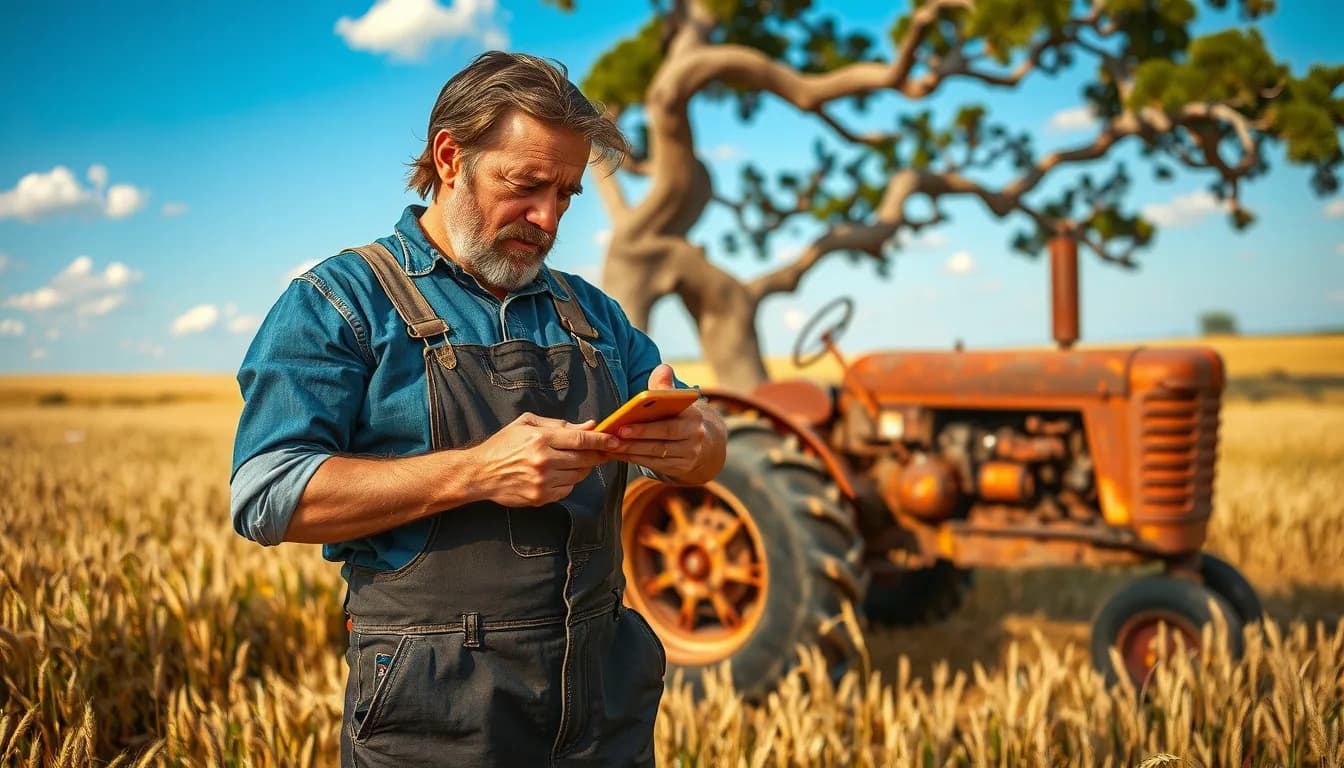
Farming in South Africa increasingly runs on data as much as diesel: drones scouting pests, sensors tracking soil moisture, software forecasting harvests before a seed breaks ground. The technology promises precision, less water wasted, less fertiliser misapplied, more yield from the same land. What it also introduces is a new layer of risk, expensive equipment, dependence on connectivity, and systems that can fail. The gap between adopting the technology and insuring it is one many farmers have not yet considered.
What is agricultural technology in South Africa?
Agricultural technology in South Africa refers to the digital tools and systems increasingly used in farming: GPS-guided machinery, drones, soil and weather sensors, and software that forecasts yields and manages irrigation and feeding. Together these enable precision agriculture, calculating water and fertiliser use to reduce waste, while introducing new equipment and dependencies that carry their own risk and cover needs.
Key Takeaways
- Agricultural technology spans GPS-guided machinery, drones, sensors, and forecasting software, enabling precision agriculture that reduces both water and fertiliser waste.
- Precision methods are reported to improve yields and cut input waste substantially, helping farmers stay viable under rising cost and climate pressure.
- The technology introduces new risks: high-value equipment, dependence on connectivity and power, and software that can fail or be compromised.
- Load-shedding directly undermines technology-dependent farming, interrupting irrigation, monitoring, and automated feeding systems at critical moments.
- Cover needs to account for the high-value equipment and digital systems a modern farm now relies on, not only its traditional physical assets.
A New Kind of Farmhand
Technology has crept into agriculture the way cats sneak into kitchens, quietly, curiously, and suddenly everywhere.What began with GPS-guided tractors has grown into a digital ecosystem. Drones scout pests, sensors track rainfall, and software predicts harvests before a seed breaks soil. Even WhatsApp groups have become weather stations, sharing real-time updates faster than the evening news.
Farmers no longer walk fields just to look; they walk with tablets in hand, checking nitrogen maps and yield models. A decade ago, most could not imagine checking crops from bed. Now they open an app, tap a few buttons, and start irrigation without leaving the duvet. It sounds luxurious until Eskom intervenes.
This fusion of soil and software has given rise to what experts call precision agriculture, a system where every litre of water and every gram of fertiliser is calculated. According to Agri SA, precision methods have already improved yields by up to 20 percent while cutting waste nearly in half. The numbers tell one story, but the real one is simpler: technology is helping South African farmers stay in the game.
Data, Drones, and Decisions
Walk into any modern co-op meeting and you will hear farmers talking about cloud storage, not just rain clouds. Platforms like Khula, Aerobotics, and Nile.ag have changed how produce is traded and monitored. A farmer in Upington can now sell table grapes directly to a retailer in Dubai, complete with satellite-verified quality reports.
Drones have become the new bakkies of the sky. They spray fertiliser, spot crop stress, and create time-lapse maps of growth. One flight can cover what used to take a full day with a backpack sprayer. Meanwhile, RFID-tagged livestock transmit health data to apps that alert farmers before animals show symptoms of illness.
It isn’t just convenience, it is protection. When data replaces guesswork, fewer mistakes cost money. The technology becomes a shield, guarding against invisible losses which once went unnoticed until harvest time.
Still, machines do not farm alone. Behind every drone pilot is someone who once read the clouds by instinct. The best farmers now blend both, the intuition of experience and the insight of algorithms.
The Climate Curveball
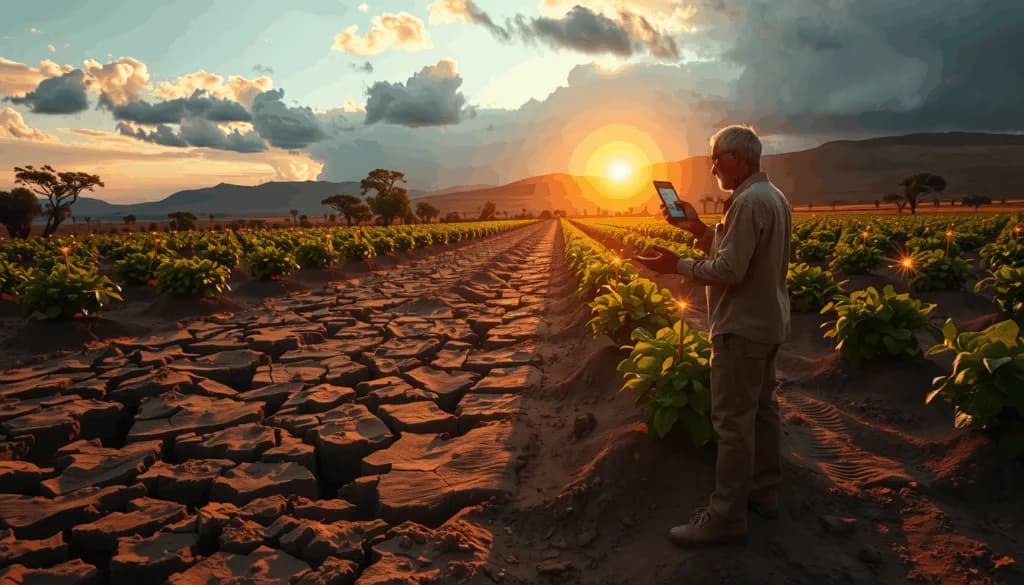
For all its clever tools, farming still answers to the weather. And lately, the weather is playing a different game.According to the Food and Agriculture Organization (FAO), South Africa’s average temperature has risen by 1.5 °C over the last century, twice the global rate. Droughts linger longer, floods arrive faster, and pests migrate to new zones once thought too cold.
The result is simple: farming has become less about control and more about cooperation with a sky that no longer keeps appointments. Farmers now talk about climate resilience the way accountants talk about interest rates, regularly and with anxiety.
Water scarcity is the main villain. Irrigation uses more than 60 percent of freshwater, yet half disappears through leaks or poor scheduling. Enter drip systems, soil-moisture sensors, and automated valves delivering water with surgical precision. Each drop counts, literally.
Some have turned to drought-tolerant crops like sorghum, cowpeas, and certain maize hybrids. Others use dam-lining or harvest roof runoff. Technology has become both a survival strategy and a form of repentance, an effort to restore balance to ground once overworked.
Even the smartest equipment cannot hold back a heatwave or stop the next hailstorm. This is where insurance steps into the story.
When Data Meets Insurance
Technology can predict the rain; insurance can survive it.Modern agricultural policies increasingly use the same data farmers rely on, from satellite imagery and rainfall records to yield models, to verify claims faster and more accurately. No more waiting weeks for a manual inspection when the evidence is already in the cloud.
At Mont Blanc Financial Services, insurance has evolved alongside innovation. Crop cover can now be tailored to data-verified risk levels. Asset protection includes solar panels, sensors, and irrigation electronics. Livestock insurance covers theft, disease, and transport incidents, all monitored by the same technology tracking production.
The tools farmers use to plant smarter now help them claim smarter. Data tells the story of a season; insurance ensures it has a second chapter.
(Learn more in our Agricultural Insurance Guide on how MBFS turns data into defence.)
Sustainable and Climate-Smart Science of Farming
Every farmer has two bosses: the market and the weather. One negotiates, the other laughs. The new science of survival lies in working with both.
The Department of Agriculture, Land Reform and Rural Development (DALRRD) promotes climate-smart agriculture, techniques protecting soil, saving water, and lowering carbon emissions without killing profit. South Africa’s farmers have taken the cue, experimenting with regenerative practices:
- Cover crops instead of bare fallow
- Rotational grazing to prevent erosion
- Composting and minimal tillage to restore microbes
- Renewable energy to keep pumps alive during load-shedding
Solar power now dots the countryside, from Western Cape wine estates to Free State grain farms. Panels perch on barns, packhouses, and even chicken coops. According to Agri SA’s Renewable Energy Desk, on-farm solar systems have doubled since 2022. Each one is a quiet act of independence from a grid that cannot keep its promises.
Biogas digesters turn manure into energy, wind turbines spin over ostrich country, and hydroponic greenhouses grow lettuce where there used to be dust. Sustainability has stopped being a slogan; it is now basic arithmetic. Use less, waste less, lose less.
Insurance makes this possible. Renewable assets are expensive but insurable. MBFS policies extend cover to solar arrays, biogas plants, and processing equipment, ensuring the green transition stays financially sound.
The Human Factor
All the apps and algorithms in the world cannot replace instinct. A farmer still reads the colour of the sky, smells the soil, and feels when something isn’t right. The best technology enhances, not replaces, those senses.
Training is catching up fast. Programmes through AgriSETA and universities now teach digital farm management. Younger farmers enter the industry fluent in code as well as compost. Some of the most successful are women leading climate-smart projects in Limpopo and KZN, proving innovation is as much about mindset as machinery.
Co-operatives have become knowledge networks where farmers trade rainfall data, drone footage, and financial tips. In WhatsApp groups once filled with jokes about tractors, you now find discussions on carbon credits and insurance claims. Progress speaks fluent emoji.
Challenges on the Digital Front
Technology does not always behave. Devices fail, subscriptions cost money, and data networks vanish in rural areas just when you need them. Farmers must balance shiny new tools with old-fashioned common sense.
Load-shedding remains a villain too persistent to ignore. A sensor is only useful if it has power. Even solar systems depend on maintenance, cleaning, and the occasional stubborn inverter.
Then there is the cost. A drone can save labour but cost as much as a small tractor. For small-scale farmers, which is a big leap. Partnerships, shared equipment pools, and insured financing are becoming essential. Mont Blanc’s structures policies around shared assets, ensuring one breakdown does not sink an entire co-op.
The Insurance Connection: From Risk to Resilience
Technology reduces risk, but insurance removes panic.When drones record crop health, insurers can use the same imagery to validate yield losses. When a sensor logs borehole levels, it becomes proof of drought conditions. Insurance has moved from reactive to predictive, working in rhythm with the systems farmers use daily.
At Mont Blanc Financial Services, this is the next frontier: data-driven insurance for data-driven farms. Innovation is not only about planting smarter; it is about protecting smarter too.
The full picture lives in our guide to agricultural insurance.
Frequently Asked Questions
What is agricultural technology in South Africa?
Agricultural technology in South Africa refers to the digital tools and systems that have become part of everyday farming, transforming how operations are managed. It includes GPS-guided tractors, drones that scout for pests and monitor fields, sensors that track rainfall and soil moisture, and software that predicts harvests and manages irrigation and feeding schedules. Together these enable what is known as precision agriculture, an approach in which every litre of water and gram of fertiliser is calculated rather than estimated, reducing waste while improving output. Farmers increasingly manage their operations with tablets and apps, checking field data and triggering irrigation remotely. The shift has been significant: tasks that once required walking the fields can now be monitored and controlled digitally. This is no longer a distant prospect but an established part of South African farming, particularly on larger commercial operations. The technology helps farmers stay competitive under rising costs and climate pressure, though it also brings new dependencies and risks that the traditional farm did not carry.
How does agricultural technology in South Africa improve farming?
Agricultural technology improves farming in South Africa primarily through precision, using data to apply resources exactly where and when they are needed rather than across the board. Precision agriculture calculates water and fertiliser use to match the specific needs of the crop and soil, which both raises yields and cuts waste, and reported gains in yield and reductions in input waste have been substantial. Drones and sensors allow problems, pests, dry patches, disease, to be identified early and addressed before they spread, while forecasting software supports better planting and harvest decisions. The cumulative effect is greater efficiency: more output from the same land and inputs, with less wasted. This matters in a context of rising fuel, fertiliser, and water costs, where margins are tight and waste is expensive. The technology helps farmers remain viable under pressure that would otherwise erode profitability. Beyond efficiency, it also improves resilience, giving farmers better information to manage the climate variability and resource constraints that increasingly define South African agriculture.
How does load-shedding affect technology-dependent farming in South Africa?
Load-shedding poses a direct threat to technology-dependent farming, because the systems that make modern agriculture efficient rely on power and connectivity to function. Automated irrigation, sensor networks, monitoring systems, and the apps that control them all depend on electricity, and when the power goes off, these systems can stop precisely when they are needed. An irrigation schedule interrupted at the wrong moment, monitoring that goes dark, or automated feeding that fails can each cause real losses, particularly where crops or livestock depend on consistent management. This makes load-shedding more than an inconvenience for a high-technology operation; it is an operational risk that can undermine the very efficiency the technology was adopted to achieve. Farmers increasingly invest in backup power and resilient systems to manage it, but the exposure remains. The lesson is that adopting agricultural technology also means planning for the infrastructure gaps it depends on. A system that improves the farm when running can become a vulnerability when the power it relies on is unreliable.
Does farm insurance in South Africa cover agricultural technology?
Insurance has evolved alongside technology. Today, claims can be verified through drone footage, satellite data, and real-time weather logs rather than delayed site visits. This makes payouts quicker and reduces disputes. The same tools that track growth now provide evidence when storms strike. Farmers who use precision systems also qualify for better risk profiles, which can lower premiums. MBFS integrates data into its insurance processes, ensuring transparency from planting to payout. When technology and insurance work together, the process becomes fairer and faster, giving farmers confidence their coverage keeps pace with their innovation. It is a partnership where information protects investment.
What kind of insurance supports tech-driven farming?
Farm insurance can cover agricultural technology, but cover needs to be deliberately structured to account for the equipment and systems a modern farm now depends on. As farms adopt GPS-guided machinery, drones, sensors, and software, these become valuable assets in their own right, and a policy written around traditional farm property may not fully reflect them. The exposure includes physical damage to high-value equipment, the cost of replacing specialised technology, and potentially the consequences of system failure on a technology-dependent operation. A farmer relying on precision systems should confirm that the cover extends to this equipment rather than assuming general farm cover applies. The principle mirrors the broader rule that cover must match how the operation actually works: a farm that runs on technology carries technology risk, and the policy should reflect that. As agriculture becomes more digital, ensuring the cover keeps pace with the tools the farm relies on is part of keeping the protection aligned with the genuine operation rather than an outdated picture of it.
Closing Reflection
Farming has always been an act of faith. The tools may have changed, but the prayer before rain has not.Today’s farmers plant seeds of data as much as grain. They fly drones, charge batteries, and whisper the same old hope into the wind: let it grow.
Technology brings precision; insurance brings peace. Together, they turn survival into strategy.
“You shouldn’t have to find out your high-value farm technology was never properly covered after it fails. With Mont Blanc Financial Services you won’t.
Contact Mont Blanc Financial Services to make sure your cover reflects the equipment and systems your farm now actually runs on.”.

Nicola Iozzo
Founder & CEO, Mont Blanc Financial Services
Nicola has spent his career reading the policy wording most people skip, and writes here so you don't discover at claim stage what page 14 meant.
This blog is here to inform, not advise. Think of it as a guidebook, not a contract. For decisions affecting your world, have a chat with your broker or financial professional.
Mont Blanc Financial Services (PTY) Ltd. is an authorised financial services provider. FSP 8271