Renewable Energy Insurance
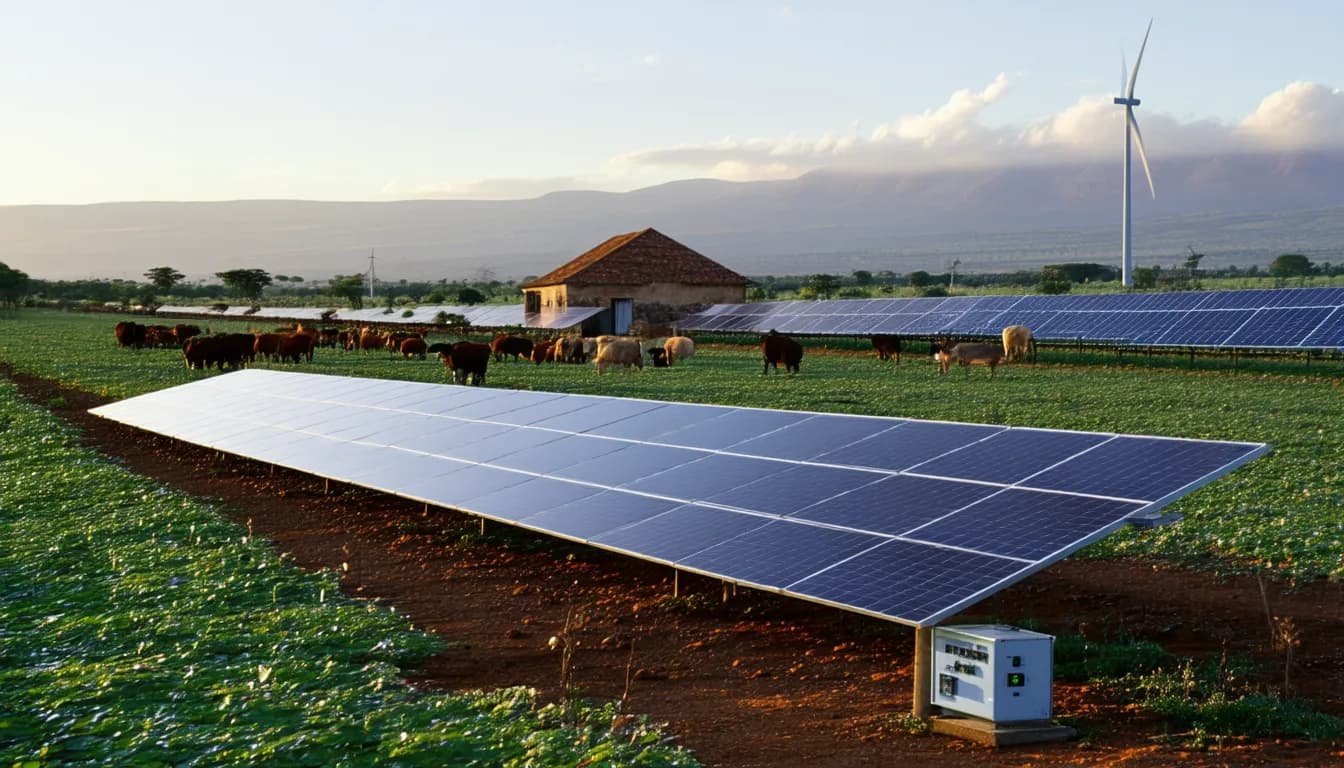
A farm’s solar array can survive dust, hail, and years of sun, then die in seconds when a voltage surge from a faulty transformer reaches the inverters. The irony is sharp: the system installed to escape load-shedding and fuel costs becomes an expensive, lifeless asset. As renewable infrastructure spreads across farms, lightning, inverter failure, theft, and grid instability follow it. The gap is that standard farm cover often was never written for these machines at all.
What is renewable energy insurance for farmers?
Renewable energy insurance for farmers is cover designed for the solar, biogas, wind, and battery systems increasingly used in agriculture. It protects these installations against risks standard farm policies often exclude, lightning, power surges, inverter and component failure, theft, and grid instability, treating them as the high-value, specialised assets they are rather than as unlisted machinery.
What is renewable energy insurance for farmers?
Renewable energy insurance for farmers is cover designed for the solar, biogas, wind, and battery systems increasingly used in agriculture. It protects these installations against risks standard farm policies often exclude, lightning, power surges, inverter and component failure, theft, and grid instability, treating them as the high-value, specialised assets they are rather than as unlisted machinery.
Key Takeaways
- Renewable energy insurance covers the solar, biogas, wind, and battery systems farms increasingly rely on, against risks standard policies often exclude.
- Standard farm policies frequently predate on-farm renewables and may treat them as unlisted machinery or exclude renewable components.
- Key risks include lightning strikes, voltage surges, inverter and component failure, theft, and damage from grid instability.
- These are high-value assets that age, overheat, and can fail, so they need cover matched to their cost and specific failure modes.
- Farms use renewables to pump water, refrigerate produce, and run irrigation, so a failure can halt production as well as destroy an asset.
Powering the Farm of the Future
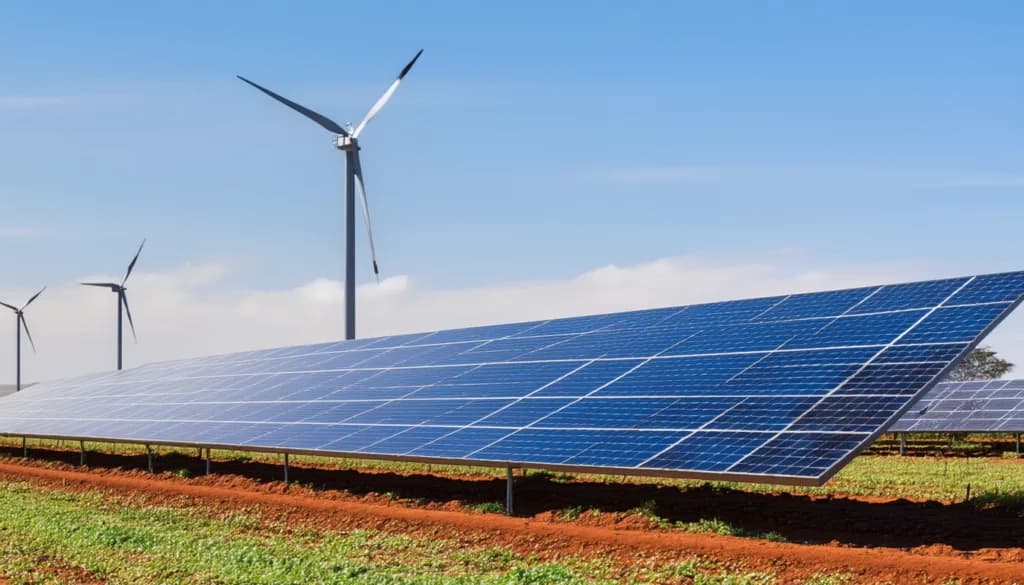
South Africa’s farms are quietly becoming micro power stations. According to the South African Photovoltaic Industry Association (SAPVIA), the country surpassed 5 GW of installed solar capacity in 2024, with agriculture contributing a fast-growing share. Farmers use renewables to pump water, refrigerate produce, power irrigation systems, and run processing plants far from the grid.
The Council for Scientific and Industrial Research (CSIR) reports that solar has reduced average on-farm energy costs by up to 40 percent for producers who invested in hybrid systems. Yet those same systems bring new insurance questions: Who covers the panels on the roof? What about battery storage or biogas digesters? And who pays when the wind turbine catches lightning before the clouds bring rain?
Renewable installations behave like any other asset, they age, overheat, and sometimes fail spectacularly. Without specialised cover, standard farm insurance may treat them as “unlisted machinery,” leaving owners exposed to uninsured loss.
Why Renewable Energy Needs Its Own Insurance
Most traditional farm policies were written long before solar panels arrived on barn roofs. While they cover property, crops, and vehicles, they often exclude electronic systems and renewable components unless specifically added.
A comprehensive renewable energy policy covers:
- Solar arrays and inverters against fire, lightning, hail, and power surges.
- Battery storage systems for explosion, leakage, or theft.
- Wind turbines and towers for mechanical breakdown, blade damage, and electrical faults.
- Biogas digesters and pumps for contamination, pressure failure, or fire.
- Business interruption for loss of energy supply or income during downtime.
The National Energy Regulator of South Africa (NERSA) recommends regular maintenance and compliance checks under the South African Grid Code to ensure insurance remains valid. MBFS brokers help farmers align their policies with these requirements so technical faults do not become claim exclusions later.
Renewables may reduce dependence on Eskom, but they still rely on sound insurance to keep the lights on when nature or technology misbehaves.
When the Sky and Technology Collide
South Africa’s weather keeps insurers honest. Hailstorms, lightning, and wind shear frequently damage solar installations. According to the Eskom Renewable Energy Programme, over 30 percent of farm-level renewable failures in 2023 were related to grid voltage spikes and lightning strikes.
A single strike can destroy an inverter worth tens of thousands of rand, while hail can crack solar panels faster than you can say “cloud cover.” Thieves, too, have realised panels and copper cabling fetch a price faster than harvested maize.
Our brokers structure renewable policies that include surge arrestor coverage, theft and vandalism protection, and extended warranty for power-electronic components. Claims are supported by drone imagery and electrical-load diagnostics rather than guesswork. Farmers who document their systems with installation certificates and maintenance logs often see faster settlements and lower premiums.
In other words, the sun might be free, but protecting it takes planning.
The Economics of Protection: Why Insuring Makes Financial Sense
Many farmers hesitate to insure renewables, assuming warranties will suffice. Unfortunately, warranties cover factory defects, not the realities of weather or theft. Replacing a solar array can cost more than rebuilding a tractor fleet.
Insurance converts this capital risk into manageable monthly expense. The International Renewable Energy Agency (IRENA) notes that insured renewable systems maintain higher long-term performance and attract better financing. Lenders increasingly require proof of insurance before approving green-energy loans.
We help clients calculate total replacement value, factoring in import delays, exchange-rate fluctuations, and rising installation costs. We also assist with performance-loss clauses so partial output failure triggers compensation, not confusion.
An uninsured inverter failure can shut down irrigation for weeks; insured downtime becomes a short interruption rather than a financial crisis.
Solar arrays are a newer line on an old schedule. Our guide to agricultural insurance shows where generation equipment fits with the rest of the farm's cover.
Beyond Solar: Covering Biogas, Wind, and Hybrid Systems
While solar dominates farms, renewable diversity is expanding. Dairy operations use biogas digesters for waste-to-energy conversion. Grain mills experiment with small wind turbines for backup. Each system has its own hazards, pressure leaks, blade stress, or gas buildup, and each demands specific cover.
We collaborate with engineers to assess system integrity and risk zones before recommending policy limits. We also consider liability exposure: if a turbine collapses onto a neighbouring property, who pays? A proper renewable package covers not only damage but also third-party claims.
The Department of Agriculture, Land Reform and Rural Development encourages renewable adoption through various sustainability incentives. MBFS ensures these green investments stay profitable by protecting them against both technical failure and natural disaster.
Solar on the shed does not cancel the older risk, and underinsurance in farming still catches owners who insure the panels but not the barn.
Technology keeps moving, and climate-smart methods show how fast the cover has to follow.
Frequently Asked Questions
What does renewable energy insurance for farmers cover?
Renewable energy insurance for farmers covers the specialised energy systems that farms increasingly depend on, protecting them against the specific risks they face. This includes solar panels and arrays, inverters, battery storage, biogas digesters, and small-scale wind systems, the infrastructure farms use to pump water, refrigerate produce, power irrigation, and run processing away from the grid. The cover responds to risks such as lightning strikes, voltage surges, inverter and component failure, theft, and damage arising from grid instability. These are the failure modes that genuinely threaten renewable installations, and a policy designed for them treats the systems as the high-value, specialised assets they are. This matters because standard farm policies often predate on-farm renewables and may either exclude electronic and renewable components or treat them as unlisted machinery, leaving them inadequately covered or uncovered entirely. Renewable energy cover closes that gap by addressing the equipment specifically. For a farm that has invested significantly in renewable infrastructure, the cover ensures that a single surge or strike does not turn a major asset into an uninsured loss.
Why do farmers need separate renewable energy insurance?
Farmers need separate renewable energy cover because most standard farm policies were written before solar and other renewable systems became common on farms, and they often do not properly account for them. While a traditional policy covers property, crops, and vehicles, it may exclude electronic systems and renewable components unless they are specifically added, or it may treat an expensive solar array as unlisted machinery. The result is that a farmer who has invested heavily in renewable infrastructure can discover, at claim stage, that the system was not adequately covered. Renewable installations behave like any other asset in that they age, overheat, and can fail, sometimes dramatically, through surges, lightning, or component breakdown, yet their specialised nature means generic farm cover does not always reach them. Separate or specifically added renewable energy cover addresses this by matching the protection to the equipment. As renewables spread across South African farms, the gap between what farmers have installed and what their policies actually cover widens, which is precisely why dedicated cover for these systems has become necessary rather than optional.
What risks threaten renewable energy systems on farms?
Renewable energy systems on farms face a distinct set of risks that dedicated cover is designed to address. Lightning strikes are a significant threat, capable of destroying panels and electronics in an instant, and farms are often in exposed rural locations. Voltage surges, sometimes from grid instability or faulty transformers, can fry inverters and arrays in seconds, turning a functioning system into a total loss without warning. Component failure is another exposure, since inverters, batteries, and other parts age and can fail through overheating or wear. Theft is a real risk too, given the value of panels and equipment and their often remote placement. Grid instability, a particular concern in the South African context, can damage systems connected to or interacting with an unreliable supply. Each of these can disable not just the asset but the farm functions it powers, irrigation, refrigeration, processing. Understanding these specific risks explains why renewable systems need cover built around them rather than the general protection a standard farm policy provides, which may not contemplate these failure modes at all.
Does renewable energy insurance cover loss of production if the system fails?
Whether renewable energy cover extends to lost production depends on how the policy is structured, which is an important question for farms that depend on these systems to operate. The renewable installations on many farms do not just represent value in themselves; they power essential functions such as water pumping, refrigeration, irrigation, and processing. If a system fails, through a surge, a strike, or a breakdown, the consequence can be more than the loss of the equipment; it can be the interruption of the farm activities that equipment supported. Cover for the physical asset addresses replacing or repairing the system, but the loss of production during the downtime is a separate consideration that may require business interruption cover to address. A farmer relying heavily on renewables should therefore confirm not only that the installations themselves are covered, but how the policy treats the operational consequences of their failure. Matching the cover to both the asset and its role in the operation is what ensures a renewable system failure does not produce an uncovered double loss.
Closing Reflection
Renewable energy has given farmers something they have not felt in years, control over their own energy. Yet independence without insurance is still vulnerability. Solar panels, turbines, and biogas digesters are not only environmental investments; they are capital assets that need protection as carefully as land and livestock.
You shouldn’t have to absorb the loss of a fried solar array your standard policy never properly listed. With Mont Blanc Financial Services you won’t.
Contact Mont Blanc Financial Services to make sure your renewable energy systems are covered as the high-value assets they are.

Nicola Iozzo
Founder & CEO, Mont Blanc Financial Services
Nicola has spent his career reading the policy wording most people skip, and writes here so you don't discover at claim stage what page 14 meant.
This blog is here to inform, not advise. Think of it as a guidebook, not a contract. For decisions affecting your world, have a chat with your broker or financial professional.
Mont Blanc Financial Services (PTY) Ltd. is an authorised financial services provider. FSP 8271