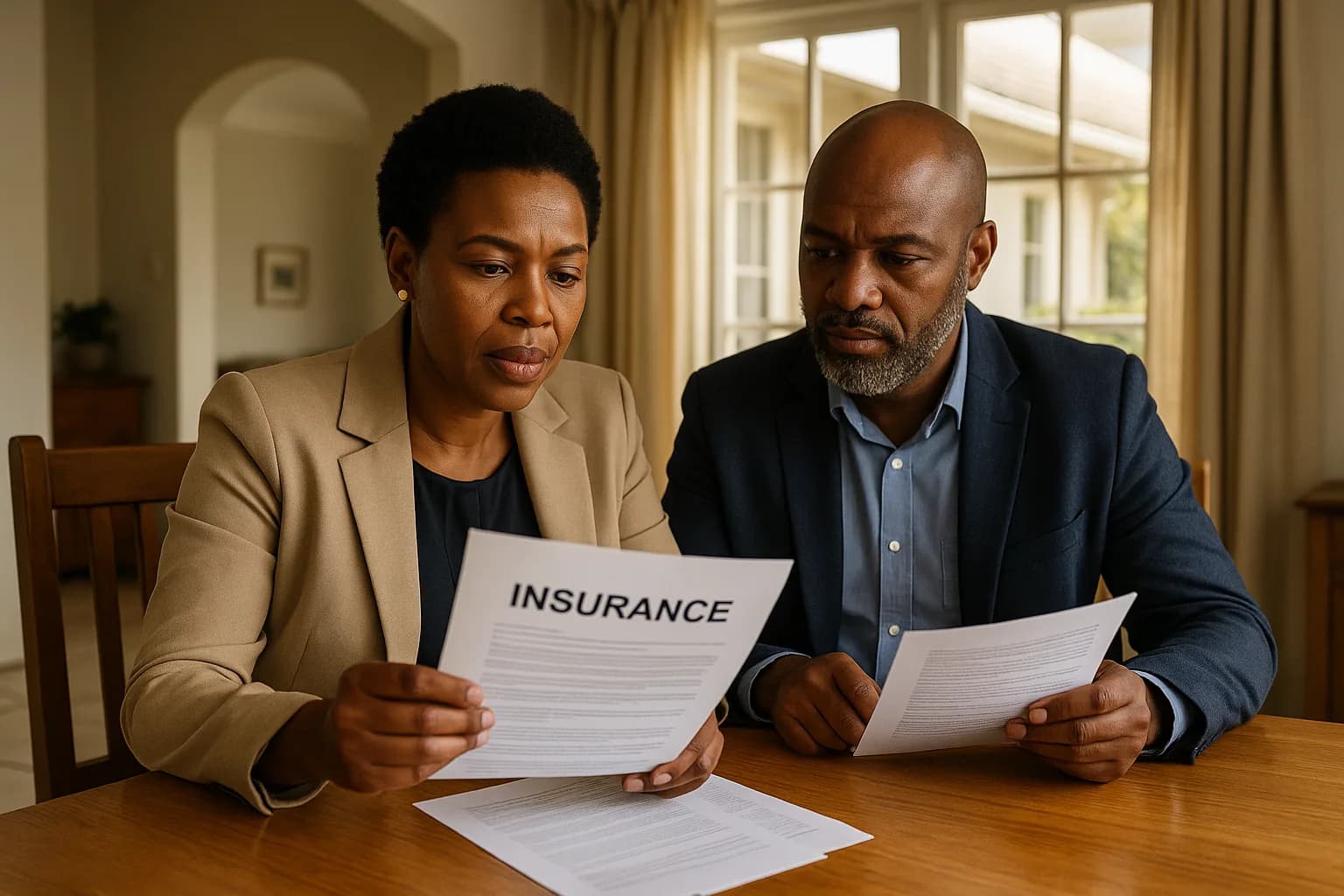
Third party liability cover for truck owners explained
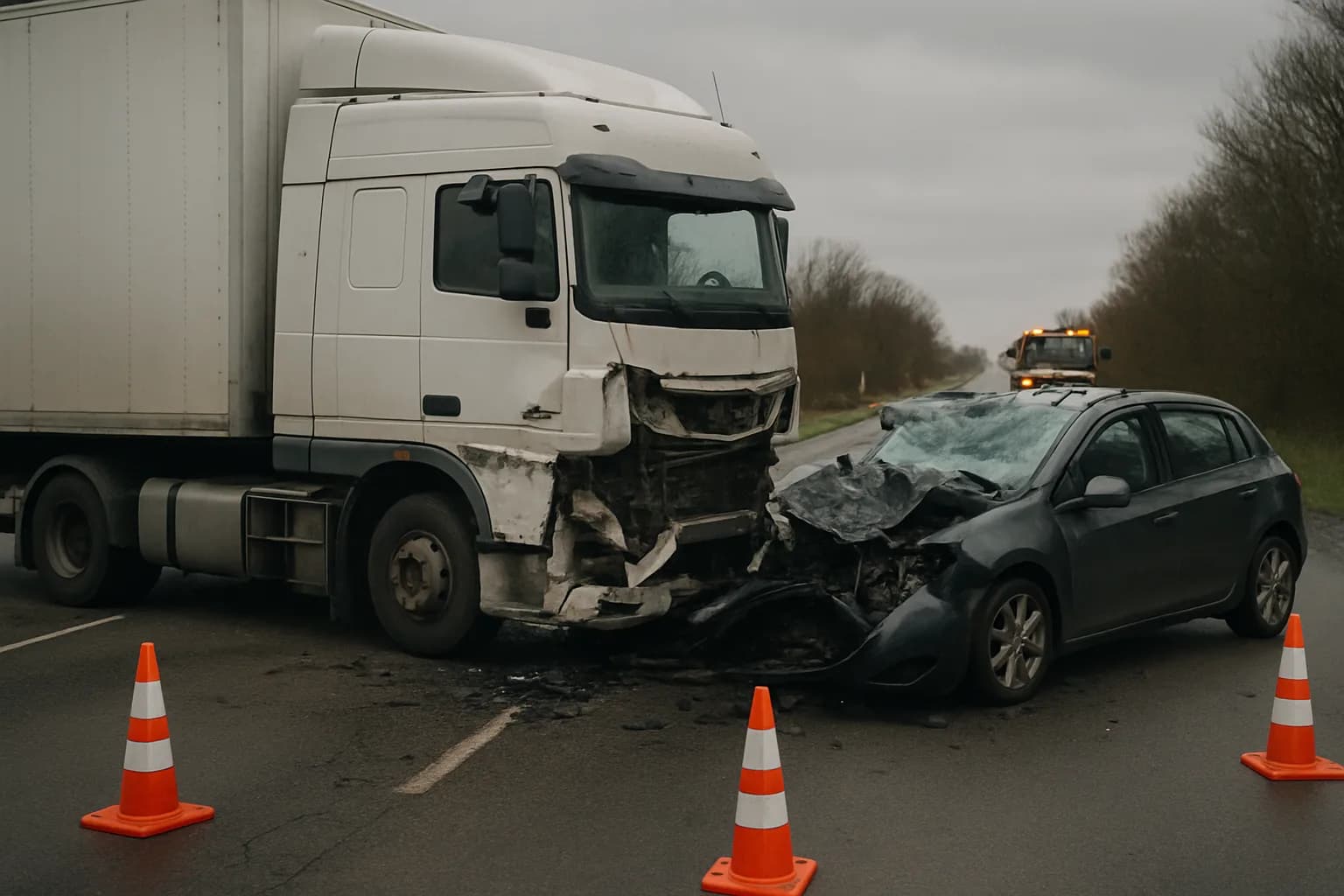
The Reef Road interchange north of Johannesburg is where a fully loaded flatbed rear-ends a light motor vehicle at 40 km/h because the brakes faded on the downgrade. The car is a write-off. The driver is in hospital. The cargo shifted and punched through the cab wall of a second truck. No one is arguing about fault; the dashcam and the skid marks settle that before the tow truck arrives. The argument, which will run for months and possibly years, is about who pays. The answer depends almost entirely on what the truck's policy says, and most operators find out the answer at the worst possible moment.
What is third party truck liability?
Third party truck liability is the section of a commercial motor policy that pays for damage or injury your truck causes to someone else. The "third party" is anyone outside the transaction between you (the first party) and your insurer (the second party): another driver, a pedestrian, a building struck during a delivery, or a road barrier taken out by a runaway trailer. The cover pays the third party's loss, not yours.
Key Takeaways
- Third party truck liability pays for bodily injury and property damage your truck causes to others; it doesn't cover your own vehicle or cargo.
- The Road Accident Fund covers bodily injury on South African roads, but its limits are capped and it excludes certain classes of claim, so a separate liability section in your policy fills the gap the RAF leaves.
- Statutory requirements set a floor; commercial operators typically need cover well above that floor because a single truck accident can generate claims in the millions.
- Exclusions, unlicensed drivers, overloading, a lapsed roadworthy certificate, are the clauses that turn a covered event into an uninsured loss.
- The limit of indemnity is the ceiling on what the insurer pays; anything above it is the operator's personal or business liability.
- A broker who reads the wording before renewal finds the gaps before the claim does.
How the Road Accident Fund fits in, and where it stops

The Road Accident Fund, or RAF, is the state-funded scheme that compensates road accident victims for bodily injury. Every litre of fuel sold in South Africa carries a levy that feeds it, which means the RAF effectively rides along with every vehicle on every public road, covering personal injury claims without requiring the at-fault driver to hold separate bodily injury cover.
That sounds like a safety net broad enough to remove the liability concern. It isn't. The RAF compensates the injured person for general damages, pain, suffering, loss of enjoyment of life, and for loss of earnings and support, but its ability to pay has been under strain for years. The RAF Amendment Act has progressively narrowed the categories of claimant who qualify for general damages, and the fund's published financial statements have reflected a structural deficit for most of the past decade. More practically for a truck operator: the RAF covers the injured person's body, not their vehicle, not their property, and not the infrastructure your truck destroyed. A third party whose R1.2 million SUV is written off pursues that claim through your liability cover, not through the RAF. So does the municipality whose traffic light your trailer took out, and the warehousing company whose perimeter wall your driver reversed through at 23:00.
The RAF is the floor, and it is a cracked one. Third party truck liability is what you build above it.
What third party truck liability actually pays for
Third party truck liability responds to two categories of loss: bodily injury and property damage caused to a third party by your truck or a trailer attached to it.
Bodily injury in the liability section covers claims falling outside or above what the RAF pays. A passenger in the vehicle you strike who holds a valid claim for medical expenses, rehabilitation, or permanent disability may pursue the RAF for the statutory portion and your liability cover for the balance, or pursue your cover directly where the RAF has declined or capped the claim.
Property damage is where the cover earns its place most visibly. A flatbed striking a highway barrier generates a SANRAL reinstatement claim. A rigid truck losing its brakes on a residential street can write off three parked vehicles in one incident. A curtainsider reversing into a retail shopfront in Randburg destroys the frontage, the stock inside, and the tenant's trading week. None of those claims touches the RAF. Every one of them lands on your liability policy.
The limit of indemnity is the number governing everything. It is the maximum the insurer will pay across all third party claims arising from a single incident. South African commercial motor policies typically offer limits from R5 million upward, but a serious accident involving multiple vehicles, casualties, and infrastructure damage can exhaust R5 million before the legal costs are settled. Logistics operators running heavy trucks on the N3 or the N1 should model their limit against the worst plausible scenario, not against the average one.
Indicative third party truck liability claim types and cover response
| Claim type | RAF responds | Third party liability responds | Typical quantum range |
|---|---|---|---|
| Bodily injury (personal injury to third party) | Yes, within limits | Top-up above RAF cap or where RAF declines | R250,000 – R5 million+ |
| Third party vehicle damage | No | Yes | R80,000 – R1.5 million+ |
| Infrastructure damage (barriers, traffic lights, bridges) | No | Yes | R50,000 – R2 million+ |
| Third party property damage (buildings, stock) | No | Yes | R100,000 – R5 million+ |
| Legal defence costs | No | Yes, usually within the limit | R50,000 – R500,000+ |
Quantum ranges are illustrative. Actual claims depend on circumstances, the number of third parties, and the extent of damage.
The exclusions operators discover too late
An insurer will only pay a third party claim if the circumstances of the accident sit inside the policy's cover. The exclusions are where cover disappears, and they tend to surface at the precise moment the operator is counting on them.
Unlicensed or disqualified drivers. If the driver behind the wheel didn't hold a valid and appropriate licence for the vehicle class at the time of the accident, most liability sections exclude the claim. A professional driving permit (PrDP) lapsed by a week is a lapsed PrDP. A Code 10 driver operating a Code 14 vehicle has the wrong licence. The insurer's obligation goes the same direction as the licence: away.
Overloading. A truck operating above its gross vehicle mass at the time of a collision hands the insurer an argument. The Road Traffic Act 93 of 1996 prohibits overloading and creates a direct link between the breach and any accident contributed to by excess weight: longer stopping distances, structural stress on the vehicle, altered handling. Whether a court would find the overloading causative is a separate question; the exclusion doesn't wait for that finding.
Lapsed roadworthy certificate. A truck without a valid certificate of roadworthiness isn't legally on the road. An accident during that period exposes the operator to an uninsured liability claim, because the insurer's cover attaches to a vehicle in lawful condition. Roadworthy certificates for heavy vehicles run on fixed cycles, and the renewal date has a habit of arriving between fleet manager handovers.
Use outside the declared purpose. Policies describe the use for which the vehicle is covered: goods in transit, own goods, hired-out vehicle. A truck deployed in a way the policy doesn't contemplate, sub-contracted to another operator, carrying goods outside the described class, or used for a purpose the insurer didn't underwrite, creates a use-exclusion argument the operator won't win easily.
The limit of indemnity and why fleet operators get it wrong
The limit of indemnity is the ceiling on the insurer's liability for any single claim or series of claims arising from one event. Once the limit is exhausted, the balance is the operator's.
Most fleet operators set their limit at inception and renew it unchanged year on year. The scheduling equivalent is a filing cabinet locked since 2018 with no review since. In the interim, construction costs have risen, vehicle replacement values have climbed, and the legal environment around personal injury claims has grown more sophisticated. A limit adequate for a single-truck SME in 2019 may be materially insufficient for a five-truck fleet delivering retail goods on urban routes in 2025.
The calculation should start with the worst plausible incident on the routes your fleet runs: peak-hour traffic on the N1, a truck losing control at speed, multiple vehicle strikes, third party injuries, infrastructure damage, and legal costs running for eighteen months. Model that scenario against your current limit. If the answer is uncomfortable, the limit needs to move. Premium increases for higher liability limits are, in most cases, considerably smaller than operators expect, because the probability of a maximum-limit event is low even when the cost of one is not.
The FSCA's conduct standard for financial service providers requires that insurers and intermediaries act in the client's best interest; part of meeting that standard in a trucking context is ensuring the limit reflects current exposure, not the figure someone wrote on a form at inception.
Trailer liability and the articulated truck problem
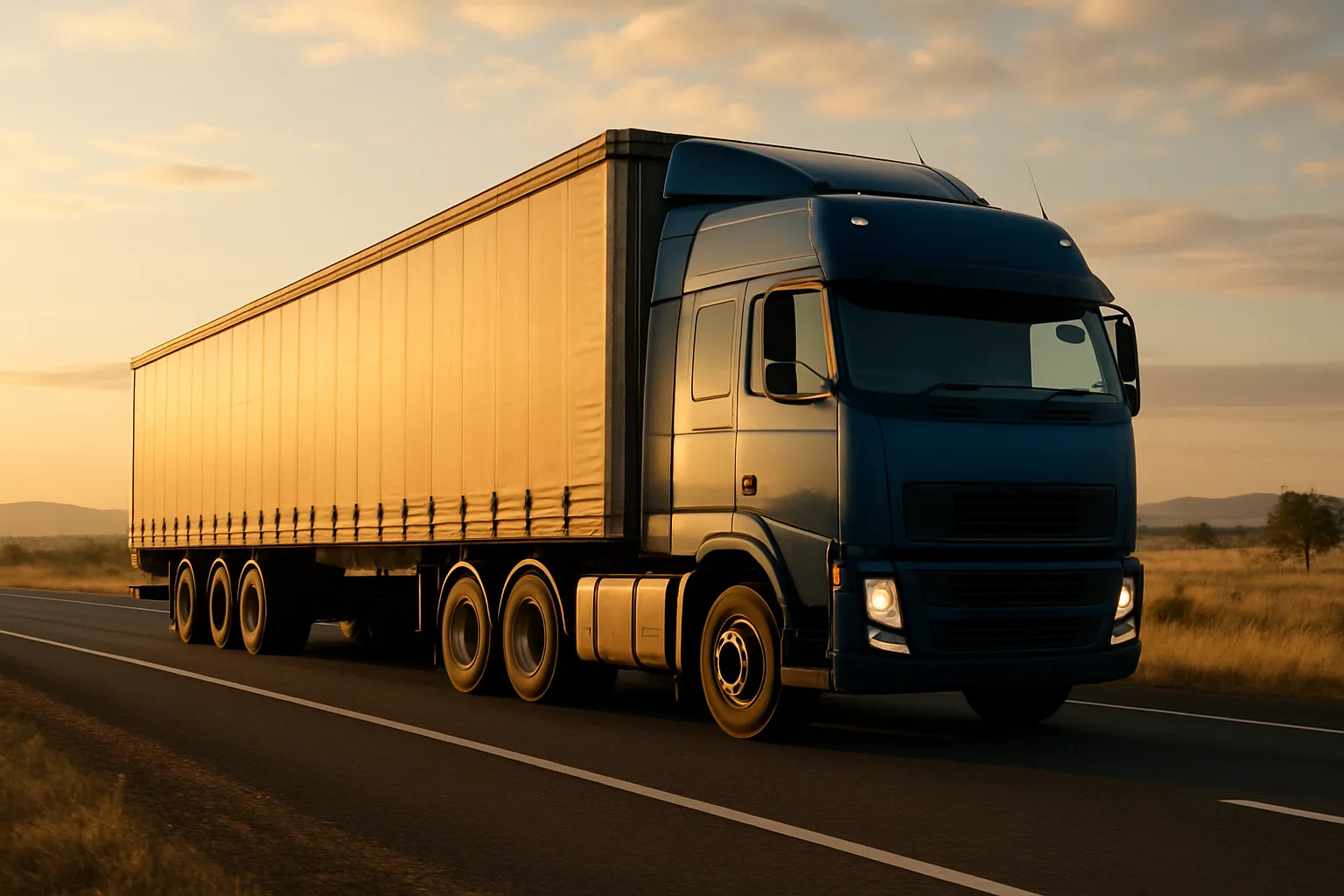
An articulated truck is two separate legal objects: a horse (the tractor unit) and a trailer. When a trailer detaches and strikes a third party while the horse has already cleared the incident zone, the question of which policy responds becomes genuinely complicated.
Most commercial motor policies cover the trailer only while it is attached to the insured tractor unit. A detached trailer resting overnight in a client's yard, rolling away and striking a parked vehicle, may fall into a gap between the truck's motor policy and any separate plant or goods cover the operator holds. A trailer fleet owner renting units to multiple haulers faces the same exposure: whose third party liability section responds when a rented trailer causes the damage?
The answer depends on the policy wording, and the wording isn't standard across the market. Some policies extend third party cover to owned trailers regardless of attachment. Others require a specific trailer extension endorsement, a paragraph added to the policy changing what it covers for that specific risk. Without knowing which of those you hold, you're guessing. The SAIA's general insurance code of conduct requires that policyholders receive adequate disclosure of material terms, but the obligation to read and understand those terms remains yours.
Cross-border operations and territorial limits
South African third party truck liability policies are written for South African roads. The moment a truck crosses into Mozambique, Zimbabwe, Zambia, or Botswana, the territorial limit in the policy becomes the most important clause in the schedule.
The standard policy covers the Republic of South Africa and sometimes Lesotho and eSwatini as named territories. Every country beyond those borders requires either a specific territorial extension on the South African policy or a separate policy arranged in the country of operation.
The COMESA Yellow Card scheme provides minimum statutory third party liability cover for member states, including Zimbabwe, Zambia, Malawi, and Mozambique. It is the floor for cross-border operations in those territories, and it is a thin floor: the COMESA Yellow Card bureau's schedule of minimum cover specifies limits well below the exposure a loaded heavy truck generates in a serious accident. An operator running regular cross-border routes and relying solely on the Yellow Card minimum is accepting a liability gap equal to the difference between that minimum and a realistic worst-case claim.
A broker arranging cross-border cover needs the full route detail, the countries entered, the frequency of crossing, and the vehicle and cargo description. An extension arranged without that information may not respond to a claim falling outside the disclosed scope.
When the claim is disputed: your insurer's role
A third party liability claim isn't simply a bill the insurer pays. It is a legal claim against you, and your liability policy gives the insurer both the right and the obligation to defend that claim on your behalf.
This is consequential because a large truck accident generates claims from multiple parties simultaneously, sometimes including claimants whose loss is disputed, exaggerated, or manufactured. The insurer's legal panel manages the response: they instruct attorneys, engage loss adjusters, and contest quantum (the amount claimed) where the facts support it. The cost of that legal defence comes off the limit of indemnity in most standard wordings, which is one more reason to hold a limit larger than the bare minimum.
Your obligation is to cooperate: report the accident promptly, preserve the dashcam footage, secure driver statements, and don't admit liability to any third party or their attorneys without the insurer's consent. An admission of liability made without the insurer's knowledge can compromise their ability to defend the claim and, in some wordings, trigger a breach of the policy's cooperation clause.
The road running longer than the limit
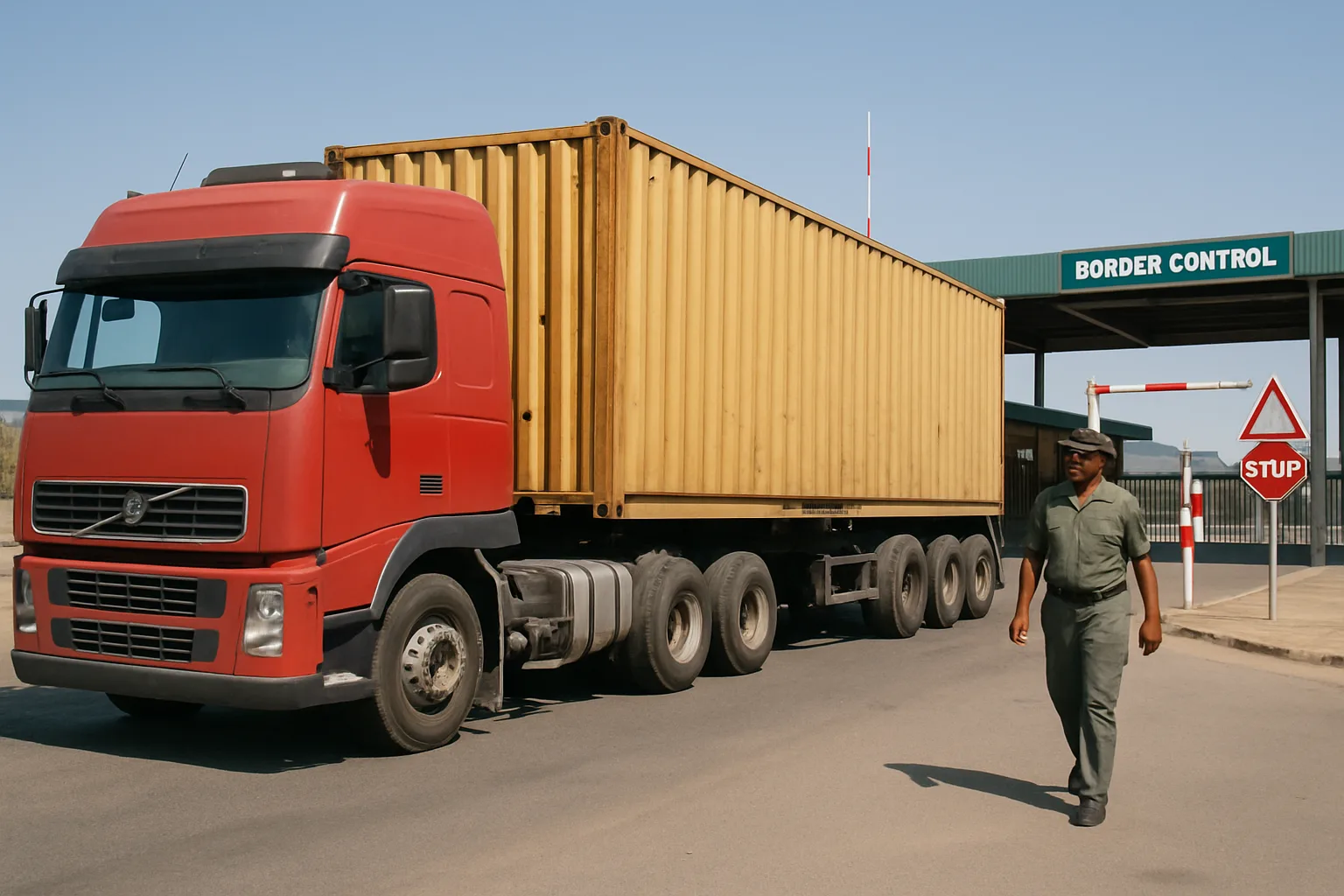
Third party truck liability cover sits between your fleet and a loss large enough to end a business. The cover isn't the commodity it appears from the outside: the exclusions are real, the limits count in proportion to your actual exposure, and a trailer sitting unhitched in a client's yard at midnight is a different legal object than it was three hours earlier when it was on the N3. Getting the detail right before an incident is the kind of work that looks like caution and functions like insurance.
You shouldn't have to find out at claim time that your limit ran short or your driver's PrDP had lapsed by a fortnight. With Mont Blanc Financial Services you won't.
Contact Mont Blanc Financial Services to have your third party truck liability cover reviewed, your limits stress-tested against your worst plausible route, and your exclusions explained before they become your problem.
Third party truck liability generates questions that standard policy summaries rarely answer. The ones below are the questions South African fleet operators and owner-drivers ask most often.
Frequently Asked Questions
Does third party truck liability cover my own vehicle if I cause the accident?
No. Third party truck liability pays for damage and injury caused to others, their vehicles, their property, and their persons. Your own truck is a separate claim, falling under the own damage or comprehensive section of your motor policy, not the liability section. If you hold third party only cover without a comprehensive or specified perils section, your own vehicle is uninsured for the damage you cause yourself. This distinction is most consequential for owner-operators running older trucks: the third party liability section is legally and commercially essential regardless of the truck's age, but the own damage decision is a separate risk calculation. If your truck is written off in a collision you caused, your liability section pays the other party's loss. Your own loss is either covered under a separate section you have arranged, or it is yours to carry. The two sections serve different purposes and are priced separately. Before your next renewal, confirm which sections your current policy includes and whether the own damage decision still reflects your financial position.
What happens if the third party claim exceeds my limit of indemnity?
The insurer pays up to the limit and stops. Everything above the limit is your liability, personally, or through your business. In practice, the third party's attorneys pursue you directly for the balance. Where the operator is a close corporation or a private company, directors aren't automatically shielded from claims exceeding the company's assets; the structure of the claim and the applicable law determine that. The risk is substantial enough that industry bodies encourage commercial motor policyholders to review their cover limits regularly against actual fleet operations. Setting an inadequate limit at inception and renewing it unchanged is the most common way operators end up personally exposed to a claim their policy was meant to absorb. The cost of doubling a liability limit is almost never double the premium, because the probability of a maximum-limit event is far lower than the probability of a mid-range one. Ask your broker to model the worst-case route scenario before your next renewal so the limit is anchored to a real number, not the one carried over from the previous year.
Is third party truck liability cover compulsory in South Africa?
South African law doesn't require private or commercial vehicle owners to hold a separate third party property damage liability policy. The RAF levy paid through fuel provides the statutory bodily injury floor, but there is no legislative equivalent for property damage liability. Practically, however, operating a commercial truck on public roads without third party property damage cover exposes the operator to personal or business liability for every accident they cause. Contracts with retailers, logistics clients, and freight principals almost universally require the operator to hold third party liability cover as a condition of the haulage agreement, and a lender financing the truck typically requires proof of cover as a condition of the loan. The absence of a statutory floor doesn't make the cover optional for any operator running commercially. Your clients' standard terms and your financier's conditions effectively impose the requirement even where the law doesn't. Review those contracts before deciding the cover is discretionary.
Does my third party cover respond if my employee was at fault?
Yes, provided the driver was operating within the scope of their employment and the policy's conditions were met at the time of the accident. An employee driving a fleet vehicle on a legitimate delivery route is acting within the course and scope of employment, and the employer's liability section responds to the third party claim. The insurer may seek recovery from the employee under the principle of subrogation, the right an insurer holds after settling a claim to pursue the at-fault party, but in most employment contexts that recovery action isn't pursued unless gross negligence or deliberate misconduct is established. The key conditions for the third party claim are that your policy was in force, the driver held the correct licence and PrDP, the vehicle was roadworthy, and the use was within the policy's declared purpose. If any of those conditions failed, the cover may not respond, regardless of whether the driver was your employee or a subcontractor. Keeping PrDP records current for every driver on your fleet is one of the few administrative tasks where a missed date has direct insurance consequences.
How do I claim if another truck causes damage to my vehicle?
If another truck causes damage to your vehicle or property and that driver is at fault, your first option is to claim directly against their third party liability cover. In practice, this means identifying their insurer, establishing fault, and lodging a claim with that insurer's claims department. This process can take months, particularly where fault is disputed or the other operator's cover is inadequate or absent. The faster route is to claim under your own comprehensive cover and let your insurer pursue the third party's insurer for the recovery, a process called subrogation. You pay your excess, your insurer handles the repair or write-off, and the subrogation process runs in the background. If your insurer recovers successfully from the other party's insurer, you may receive your excess back. Holding comprehensive truck cover rather than third party only means you aren't dependent on the other driver's policy being valid and adequate before your own loss is resolved. Confirm with your broker whether your current policy includes a comprehensive section or is third party only cover.

Nicola Iozzo
Founder & CEO, Mont Blanc Financial Services
Nicola has spent his career reading the policy wording most people skip, and writes here so you don't discover at claim stage what page 14 meant.
Everything on this blog is written to inform and educate. It is for information only. Nothing here is professional legal, financial, or technical advice. If you are making a significant business decision, speak to a qualified professional first. Mont Blanc Financial Services works hard to keep this content accurate and current, but is not liable for decisions made based on what you read here.
Mont Blanc Financial Services (PTY) Ltd. is an authorised financial services provider. FSP 8271