Fleet insurance for small trucking businesses

Three trucks. Three separate policies. Three renewal dates scattered across the calendar, three sets of excess structures to remember, and three brokers who may or may not know what the other two have written. When one of those trucks rolls over outside Harrismith on a Thursday night, the driver calls the number on the policy document in the cubbyhole, and you spend Friday morning trying to work out whether that was the policy including the cargo, the policy with the R15,000 excess, or the one you renewed last month and haven't read yet. The administrative tangle is its own kind of exposure.
What is fleet insurance?
Fleet insurance is a single commercial motor policy covering two or more vehicles under one schedule, one renewal date, and one set of terms. Instead of managing separate policies for each truck, you bring the whole fleet under one agreement. Claims are handled through one process, the sum insured is reviewed once a year, and the premium reflects the combined risk of the fleet rather than each truck priced as if it were the only one you own.
Key Takeaways
- Fleet insurance replaces multiple individual truck policies with a single arrangement, reducing admin, consolidating renewal dates, and simplifying claims.
- Most South African insurers require a minimum of two vehicles to qualify for a fleet policy; the commercial advantage grows from about five vehicles upward.
- The fleet discount is real but not automatic: it reflects risk quality, and a poor claims history across your fleet can eliminate the saving entirely.
- Cover under a fleet policy typically includes accidental damage, theft, third-party liability, and optional goods in transit protection, each section subject to its own excess and conditions.
- SASRIA cover for political violence, riot, and social unrest must be added separately, as it doesn't form part of a standard commercial motor fleet policy.
- An annual fleet valuation audit is as important as the renewal: a truck insured at its 2022 purchase price may be worth significantly less today, or may cost significantly more to replace if it's a specialist vehicle.
How many trucks qualify for fleet insurance

A fleet policy starts at two vehicles, but the financial case for pooling cover only becomes compelling at around five. Below that threshold, the administrative benefit is real but the premium advantage is modest. At five trucks and above, you're bringing enough combined premium to the table that the insurer prices the risk as a portfolio rather than five individual gambles, and the difference shows in the annual renewal figure.
The Road Freight Association, whose membership guidance covers operator licensing and fleet management standards across South Africa, notes the average small trucking operator in the country runs between three and eight units. That bracket sits directly in fleet insurance territory, but many of those operators are still paying individual vehicle rates because nobody has structured the account differently. A three-truck owner-driver operation running Gauteng to Durban every week is exactly the business a fleet policy was designed for, and exactly the business most likely to be carrying three separate policies out of habit.
The insurer will want to see a complete list of vehicles: registration numbers, makes, models, year of manufacture, GVM (gross vehicle mass, the maximum weight the truck is legally allowed to carry when fully loaded), and current market values. They'll also ask for the claims history across all vehicles for the past three years. That last piece is where the premium either rewards you or reflects the account back honestly.
What fleet insurance covers and what it doesn't
A standard commercial motor fleet policy covers accidental damage, fire, theft, and third-party liability. Third-party liability means the insurer pays for damage your truck causes to someone else's property or person: a guardrail on the N3, a car in the wrong lane, a warehouse wall meeting the reversing trailer. This section isn't optional in any practical sense: a single third-party bodily injury claim can exceed R10 million, and your business carries that exposure on every trip.
What the standard fleet policy doesn't automatically include deserves equal attention. Goods in transit insurance, cover for the cargo on the truck, is a separate section or a separate policy altogether, and it responds to different triggers. A truck written off in a collision may generate two claims: one under the fleet policy for the vehicle, and one under the GIT policy for the load. If only one of those policies exists, only one of those losses gets paid.
SASRIA cover sits entirely outside a commercial motor fleet policy. SASRIA is the state-owned insurer responsible for losses caused by riot, strike, public disorder, and politically motivated action. During the July 2021 civil unrest, trucks were among the most targeted assets on the road. A fleet policy without SASRIA endorsement left those operators with vehicles damaged or destroyed and no mechanism to recover the cost. Your broker collects the SASRIA premium and issues the cover on SASRIA's behalf; it doesn't come automatically, and it doesn't cost much relative to what it protects.
The fleet discount: what it is and how you keep it
The fleet discount isn't a loyalty gift. It is a pricing mechanism rewarding a demonstrably well-managed risk portfolio. Insurers apply it when the fleet presents predictable, controllable risk: low claims frequency, consistent driver vetting, maintained vehicles, and a claims history showing no systemic problems.
The table below shows roughly how South African commercial motor insurers approach fleet pricing as a function of claims experience. Figures are indicative; actual terms depend on the insurer and the specific risk.
How fleet claims history affects premium loading in South African commercial motor cover
| Claims frequency (3-year period) | Likely premium adjustment | What drives it |
|---|---|---|
| No claims | 5–15% discount on base rate | Clean loss ratio rewards the account |
| 1–2 minor claims | Near base rate | Frequency within expected band |
| 3–5 claims, mixed severity | 10–20% loading | Insurer flags frequency as a risk signal |
| 6+ claims or one large loss | 25–40% loading or referral | Account reviewed for structural risk factors |
| Unreported incidents discovered at renewal | Policy cancellation risk | Non-disclosure treated as material |
Two things drive claims frequency more than anything else in a small trucking fleet: driver behaviour and vehicle maintenance. Insurers know this, which is why they increasingly ask for driver licence validation records, Professional Driving Permit (PrDP) confirmation, and vehicle service histories at renewal. A fleet with vetted drivers and trucks serviced on schedule negotiates from a stronger position than one presenting a file of receipts and hoping for the best.
How the excess structure works across a fleet
The excess is the amount you pay from your own pocket before the insurer contributes to a claim. On a fleet policy it can be structured in one of two ways: a single fixed excess per vehicle per claim, or a fleet aggregate excess capping your total out-of-pocket exposure across multiple simultaneous events.
For a small operator running five trucks, a per-vehicle excess of R25,000 on an accidental damage claim means a single collision costs you R25,000 before the insurer responds. If two trucks are involved in separate incidents in the same week, that's R50,000 from your cash flow, regardless of how large or small the actual repairs are. An aggregate excess arrangement, where your total exposure across all claims in a policy period is capped at a fixed figure, can provide more predictable budgeting for operators whose cash flow is already stretched.
Excess levels also vary by risk type within the same policy. Theft claims often carry a higher excess than accidental damage claims, on the assumption that theft is partly a controls failure. Night-time incidents, out-of-area incidents, and claims arising during tyre changes or loading operations may attract additional excesses under specific policy conditions. Read the schedule carefully, because the excess you remember from the broker conversation isn't always the excess applying to the claim you're making.
Valuation: the number deciding what you recover

Fleet insurance pays out on the insured value of the vehicle, not on what you feel the truck is worth on the morning it burns. Getting that number right at inception and keeping it current at every renewal is the exercise most small operators skip, and the one the insurer relies on when a total loss claim arrives.
There are two valuation bases used in South African commercial motor fleet policies. The first is market value: what the truck would fetch in an arm's-length sale between a willing buyer and a willing seller on the date of the loss. The second is retail replacement value: what it costs to buy an equivalent replacement vehicle from a dealer. Market value produces a lower figure and a lower premium. Retail replacement value produces a higher figure and a higher premium, but it's the one letting you actually replace the truck rather than pocketing the smaller cheque and finding you can't afford what you lost.
Specialist trucks, refrigerated units, tipper bodies, crane trucks, and lowbeds carry fitout costs a standard market valuation may miss entirely. A truck insured as a base vehicle and listed at its trade value may leave the specialist body uninsured. The insurer indemnifies the listed item; if the fitout wasn't listed or valued, it isn't in the claim. This is the kind of detail costing nothing to confirm before the loss and a great deal to discover after it.
When to review your fleet policy and what to check
Most small operators review their fleet policy once a year at renewal, which is once a year less frequently than they should. A fleet policy is a living document in a business where vehicles are added, sold, repurposed, and modified throughout the year, and a policy reflecting the fleet in January may bear almost no resemblance to it by October.
The FSCA's policyholder protection rules place a disclosure obligation on policyholders throughout the policy period, not only at inception. If you add a vehicle to the fleet without notifying the insurer, that vehicle has no cover. If you modify a truck, fitting a sleeper cab, a livestock body, or a load-sensing system, without updating the schedule, the modification may void the claim on that vehicle. The insurer assesses the risk they were told about, not the one turning up at the accident scene.
Mid-year checks are also the right time to add newly appointed drivers to the fleet's approved driver list, confirm PrDP licences haven't lapsed, and verify vehicle service records are current. A driver operating a fleet vehicle without a valid PrDP is a material change to the risk, and a claim arising from that trip may be declined on that basis alone. The Road Traffic Management Corporation's operator compliance framework and the SAIA code of conduct for short-term insurers both underline the shared obligation between operator and insurer to maintain accurate, current records throughout the cover period.
Trucking insurance covers vehicle, cargo, and liability side by side, and a fleet policy is one route through it.
The cost of getting fleet insurance wrong
A Limpopo general freight operator running six trucks discovered, during a total-loss fire claim on one of his vehicles, that he'd been carrying the truck on its 2020 purchase value of R780,000. The replacement cost by the time the claim arose was R1,150,000. The policy paid the insured value minus the applicable excess. The gap between what he received and what a replacement truck cost came out of the business, not the policy. Nothing about the claim was disputed; the wording performed exactly as written. The number was wrong, and it had been wrong for four years while the premiums went out and nothing prompted a correction.
This isn't an unusual story. Truck values in South Africa have moved sharply since 2020, driven by import costs, rand weakness, and supply chain disruptions in the new vehicle market. A fleet scheduled on pre-2022 values is almost certainly underinsured today, and the insurer isn't required to tell you so at renewal. The South African Insurance Association's industry data on commercial motor claims consistently shows underinsurance as a contributing factor in claim shortfalls across the fleet segment. Updating your values before the renewal is the cheapest intervention available.
Why the numbers count more than the policy document
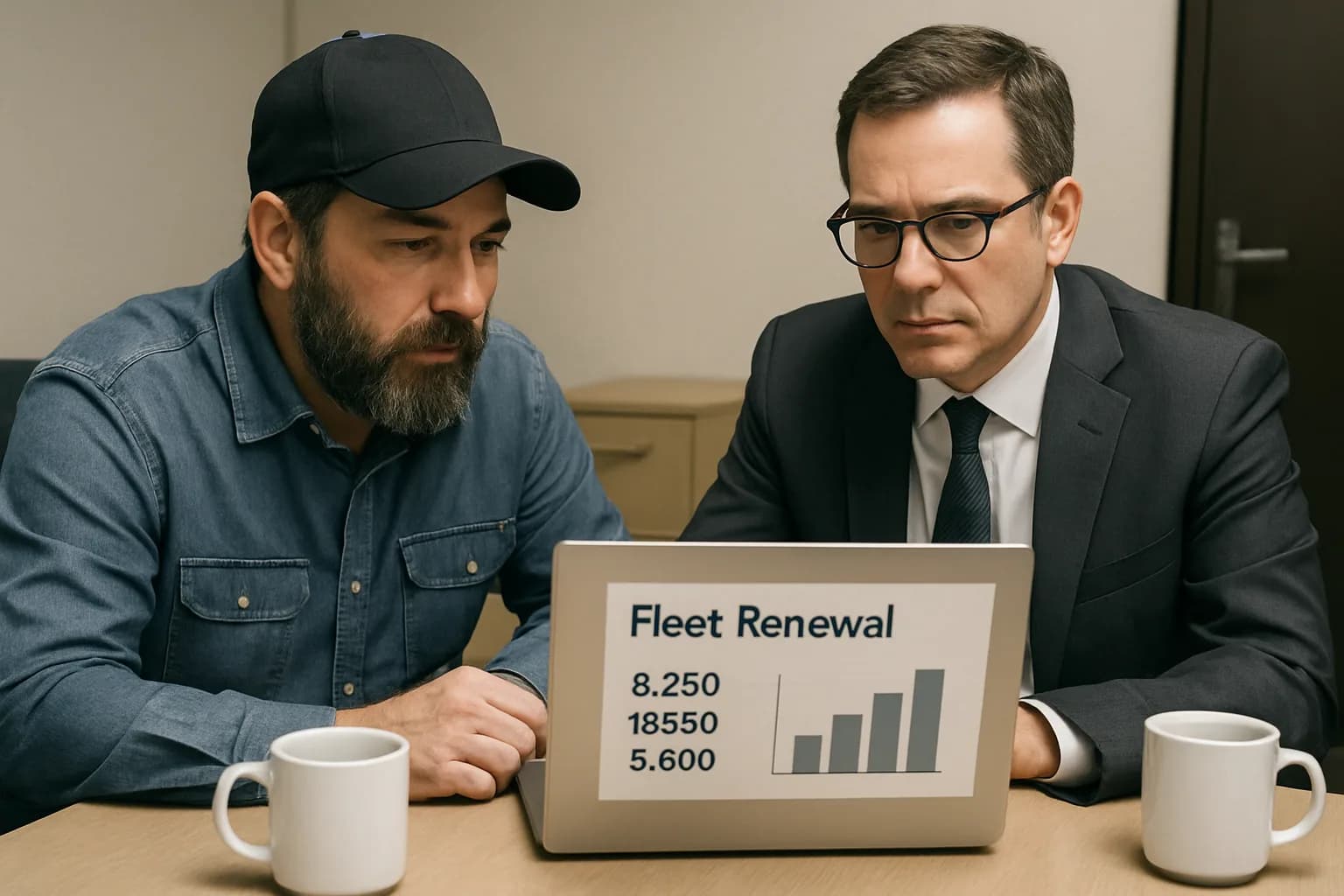
Fleet insurance is a structural decision as much as an insurance one. Pooling your trucks under a single policy is the starting point, not the outcome. The outcome is a policy reflecting the actual fleet, valuing the vehicles honestly, covering the right drivers, including SASRIA, coordinating with the GIT policy on the same trucks, and carrying an excess structure that won't flatten your cash flow the week two claims arrive together. That configuration requires attention, not a signature at renewal.
You shouldn't have to manage multiple truck policies and still not know what's covered when a claim lands. With Mont Blanc Financial Services you won't.
Contact Mont Blanc Financial Services to have your fleet structured properly, vehicles valued, SASRIA confirmed, GIT aligned, and driver records current before the next trip leaves the yard.
If you're weighing fleet insurance against individual policies or wondering what happens at claim time when cargo and the truck are both damaged, the questions below address what small South African operators most often ask.
Frequently Asked Questions
How many trucks do I need for fleet insurance to make financial sense?
Most South African commercial motor insurers issue a fleet policy from two vehicles, but the premium advantage over individual policies rarely appears until you reach five trucks or more. Below five, the administrative benefit is real, one renewal, one set of documents, one broker conversation, but the discount is modest. At five and above, you're presenting a combined premium large enough that insurers price the account as a managed portfolio, and that's where the fleet rate typically becomes meaningfully lower than the sum of separate premiums. The more important consideration is often risk management: a fleet policy ties all your vehicles to one claims history, which means a well-run fleet gets rewarded at renewal and a poorly managed one sees the loading applied across the whole account. Two trucks run cleanly will generally pay less combined under a fleet policy than under two individual ones. Ten trucks with a patchy claims record may not see the same benefit, because the loading reflects the portfolio as a whole.
Does fleet insurance cover the cargo on my trucks?
Not automatically. A standard commercial motor fleet policy covers the vehicle: accidental damage, fire, theft, and third-party liability for damage your truck causes. The cargo, the load in the trailer, is covered under a separate goods in transit policy, sometimes called GIT cover. These two policies respond to different events and are assessed independently. If your truck rolls over and the load is destroyed, the fleet policy responds to the vehicle damage and the third-party claims; the GIT policy responds to the cargo loss. Running trucks without GIT cover means every load your drivers carry is exposed, and if the client whose furniture, steel, or pharmaceuticals are on that truck wants to recover their loss, the claim lands on your business rather than the insurer. The two policies need to be designed together, because the conditions in one can affect the other. A GIT policy with a road-worthiness clause, for example, may decline a cargo claim if the vehicle's service record can't be produced.
What is SASRIA and does my fleet policy include it?
SASRIA, the South African Special Risk Insurance Association, is the state-owned insurer covering damage caused by riot, strike, civil commotion, and politically motivated acts. Standard commercial motor fleet policies exclude this class of event. SASRIA cover is issued separately, collected by your broker on SASRIA's behalf, and attached to your policy as an additional layer. The premium is low relative to the exposure: during the July 2021 unrest, trucks were among the most frequently damaged and destroyed assets, and operators without SASRIA cover absorbed those losses entirely. You can confirm whether SASRIA is included by checking your policy schedule for a SASRIA premium line item and a SASRIA certificate number. If neither appears, the cover isn't there. SASRIA's published cover classes and current limits are available on their website and are worth checking against your schedule at each renewal. Ask your broker to walk through the certificate at renewal rather than treating it as a line item to scroll past.
Can I add or remove trucks from a fleet policy mid-year?
Yes, and you should do so immediately whenever the fleet changes. Adding a vehicle to your fleet without notifying the insurer means that vehicle has no cover. Selling or disposing of a truck without notifying the insurer means you continue paying premium on a vehicle you no longer own, and in some policy structures a claim on another vehicle could be complicated by inaccurate fleet records. Most fleet policies accommodate mid-term additions and deletions through a process called an endorsement: a written instruction to the insurer to amend the schedule. The insurer adjusts the premium on a pro-rata basis from the date of the change. Delays in notifying the insurer are one of the most common reasons fleet claims are complicated or reduced, because the vehicle involved in the incident isn't on the schedule and the paperwork was never sent. Keep the fleet schedule current, confirm each amendment in writing, and retain copies of the updated schedule so the correct version is available if a claim arises shortly after a change.
Why did my fleet insurance premium increase at renewal even though I had no claims?
Renewal pricing reflects more than your own claims history. Insurers price commercial motor fleet cover using industry-wide loss data, and that pool has shifted. Theft of trucks and cargo has increased significantly across major South African freight corridors, fuel theft and hijacking incidents have grown, and the cost of repairs has risen with parts import prices and the rand's performance against the euro and dollar. Your clean claims record earns a relative advantage within the pricing model, but it doesn't insulate you from market-wide adjustments. The other factor is vehicle values: if your fleet schedule still reflects 2021 purchase prices and the insurer has updated their replacement cost benchmarks, the premium rises to match the revised sum insured. Review the renewal schedule in detail rather than accepting the figure. Check every vehicle's insured value is current, confirm no vehicles have been added to the premium calculation without your knowledge, and verify the cover structure hasn't changed. If the increase isn't explained by identifiable factors in the schedule, ask for a written breakdown before signing.

Nicola Iozzo
Founder & CEO, Mont Blanc Financial Services
Nicola has spent his career reading the policy wording most people skip, and writes here so you don't discover at claim stage what page 14 meant.
Everything on this blog is written to inform and educate. It is for information only. Nothing here is professional legal, financial, or technical advice. If you are making a significant business decision, speak to a qualified professional first. Mont Blanc Financial Services works hard to keep this content accurate and current, but is not liable for decisions made based on what you read here.
Mont Blanc Financial Services (PTY) Ltd. is an authorised financial services provider. FSP 8271