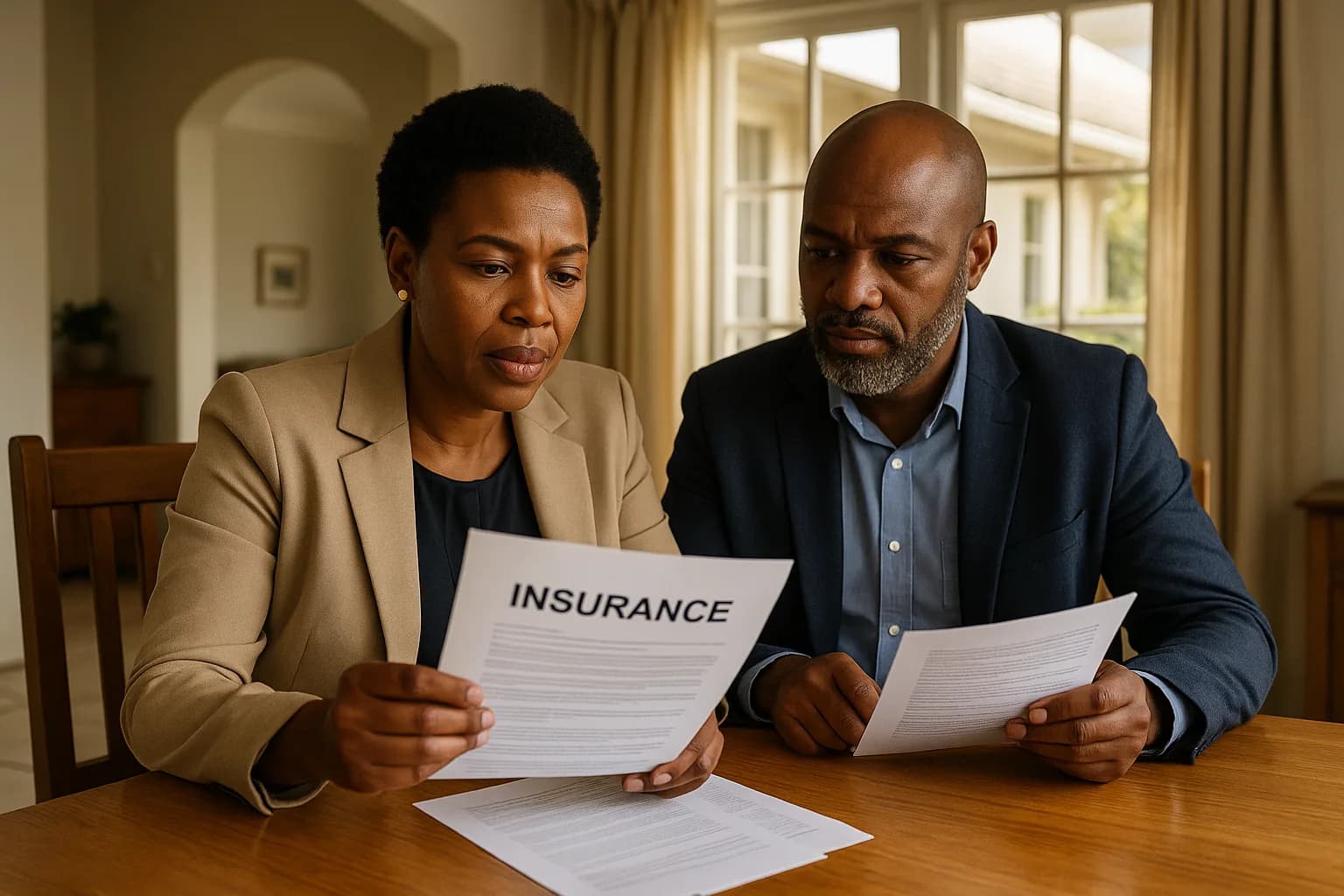
General Liability Insurance

Liability is the one exposure that grows automatically as a business does, and most owners never feel it expand until a letter arrives. Every new customer, site, product, or employee adds a way for someone to allege harm, injury, property damage, a professional error, a defective product. The claims do not begin politely; they begin with demands and legal language. The gap between a growing operation and the cover meant to match it is rarely noticed until it is tested.
What is general liability insurance in South Africa?
General liability insurance in South Africa is the broad category of cover protecting a business against third-party claims that it caused harm. It spans several distinct classes, public liability, product liability, professional indemnity, employers’ liability, and cyber liability, each addressing a different exposure. It funds legal defence, settlement, and compensation within defined limits rather than preventing the claims themselves.
Key Takeaways
- Matching the mix of liability cover to the operation’s real activities is what closes the gaps between the separate classes.
- General liability insurance is a broad category covering third-party claims that a business caused injury, property damage, or financial loss.
- It spans distinct classes: public liability, product liability, professional indemnity, employers’ liability, and cyber liability, each for a different exposure.
- It funds defence, settlement, and compensation within defined limits, rather than preventing allegations from being made.
- Liability exposure expands automatically as a business grows, since more customers, sites, products, and staff each add new ways harm can be alleged.
- Each class has defined boundaries, so understanding what one covers, and what it excludes, prevents wrong assumptions at claim stage.
Public Liability Insurance in South Africa

Public liability insurance protects businesses against claims from third parties who suffer injury or property damage linked to business operations.
Customers slip on wet floors. Visitors trip over equipment. Contractors damage neighbouring property. Accidents rarely arrive with warning.
Public liability insurance typically covers:
- Legal defence costs
- Compensation awards
- Settlement negotiations
It does not cover every incident. Policy wording defines scope carefully.
In public-facing environments, foot traffic increases exposure. Liability insurance ensures a single accident does not destabilise financial position.
What Public Liability Covers vs Doesn’t
Public liability usually covers:
- Bodily injury to third parties
- Property damage to third parties
- Legal defence expenses
It does not typically cover:
- Employee injuries
- Intentional acts
- Professional negligence
- Contractual guarantees beyond policy scope
Understanding boundaries prevents assumption during a claim. Liability policies operate within defined events and defined activities.
Clarity in scope reduces surprise during litigation.
Tenant vs Landlord Public Liability
Liability exposure shifts depending on occupancy structure.
Tenants may be responsible for internal safety conditions. Landlords may be responsible for structural integrity and common areas.
Lease agreements often define responsibility clearly. Insurance should mirror those contractual obligations.
If a visitor is injured in a shared corridor, responsibility may be disputed. Insurance ensures defence occurs while responsibility is determined.
Alignment between lease terms and liability cover reduces funding gaps.
Cheap Public Liability vs Risk
Lower premiums often mean lower limits or narrower scope.
A R2 million liability limit may feel substantial until legal costs and compensation exceed that threshold.
Cheap liability insurance reduces annual expense. It does not reduce potential claim size.
Selecting limits should reflect operational scale, customer interaction, and contractual exposure.
Liability claims can escalate faster than expected. Protection should reflect worst-case exposure rather than best-case assumption.
Product Liability Insurance
Product liability insurance protects businesses when products cause injury or damage after sale.
Manufacturers, distributors, and retailers all share exposure within the supply chain.
A defective electrical component, contaminated food product, or faulty installation can trigger injury claims.
Product liability insurance funds defence and compensation where legal responsibility exists.
The product may leave your premises. Liability may not.
Liability for Defective Products
Defects may arise from design, manufacturing error, or inadequate warnings.
Even small components can generate large claims if injury occurs.
Courts examine:
- Whether the product was defective
- Whether warnings were adequate
- Whether quality control systems were reasonable
Product liability insurance addresses these exposures within policy limits.
Defect disputes often require technical defence. Insurance funds that process.
Product Recall Insurance
Product recall insurance addresses the cost of removing defective goods from the market.
This may include:
- Communication expenses
- Collection logistics
- Disposal costs
- Public notification
- Brand rehabilitation expenses
Recall costs arise before liability is established. They focus on mitigation.
Product recall insurance supports controlled response rather than reactive panic.
Product Liability Claims
Product liability claims may involve individual injury or class action exposure.
Legal defence can extend over long periods. Technical evidence may be required.
Insurance funds defence and settlement within agreed limits.
Proactive quality control reduces frequency. Insurance reduces financial shock.
Employer’s Liability Insurance
Employer’s liability insurance protects businesses against claims from employees who suffer work-related injury or illness and seek compensation beyond statutory benefits.
Workplaces carry risk even with safety protocols in place.
Employer liability insurance funds defence where negligence is alleged.
Employee claims differ from public claims. The employment relationship creates additional obligations.
Workers’ Compensation Explained
Workers’ compensation schemes provide statutory benefits to employees injured during employment.
These schemes operate separately from employer liability insurance but interact with it.
Workers’ compensation addresses medical costs and income replacement according to legislation.
Employer liability insurance may respond where legal action extends beyond statutory compensation.
Understanding the distinction ensures layered protection.
Workplace Injury Claims
Workplace injury claims often examine:
- Safety procedures
- Equipment maintenance
- Training standards
- Supervisory oversight
If negligence is established, liability exposure increases.
Insurance funds defence while legal responsibility is assessed.
Prevention remains the first line of defence. Insurance remains the financial backstop.
Professional Indemnity Insurance
Professional indemnity insurance protects businesses that provide advice, design, consulting, or specialised expertise.
If a client alleges financial loss due to error or omission, professional indemnity insurance funds defence and potential compensation.
Consultants, engineers, accountants, architects, and IT providers commonly require this cover.
Advice carries exposure beyond physical damage.
PI Claims Process
Professional indemnity claims typically begin with a demand letter alleging negligence.
Insurers must be notified promptly. Late notification can complicate response.
Defence may involve forensic review of documentation, contracts, and communication history.
Professional indemnity insurance supports structured legal defence within policy limits.
Documentation discipline strengthens defence strategy.
Why PI Claims Get Rejected
PI claims may be rejected due to:
- Work performed outside declared professional scope
- Late notification
- Breach of policy conditions
- Intentional misconduct
Accurate disclosure and prompt reporting protect claim integrity.
Professional services evolve. Insurance must reflect current scope of work.
Cyber Liability Insurance
Cyber liability insurance protects businesses against losses arising from digital breaches and cyber events.
Modern operations rely on data storage, email communication, and online transactions.
A single breach can expose customer information and trigger regulatory scrutiny.
Cyber liability insurance funds forensic investigation, legal defence, notification costs, and potential regulatory penalties within policy scope.
Cyber Security Insurance
Cyber security insurance often overlaps with cyber liability but may include first-party losses such as:
• System restoration• Data recovery• Business interruption• Incident response support
Digital infrastructure requires protection beyond physical assets.
Insurance supports recovery when systems fail or are compromised.
Ransomware & Malware
Ransomware attacks encrypt data and demand payment for release.
Malware disrupts systems and compromises operations.
Insurance may cover:
• Incident response• Negotiation support• Restoration costs• Business interruption
Prevention reduces likelihood. Insurance reduces financial exposure if prevention fails.
Business Email Compromise
Business email compromise involves fraudulent communication directing payments to incorrect accounts.
These incidents often appear legitimate.
Cyber policies may respond depending on wording and security controls in place.
Employee training and verification protocols reduce exposure.
Insurance supports financial recovery within defined conditions.
POPIA Liability
The Protection of Personal Information Act imposes obligations regarding data handling.
Failure to safeguard personal information can result in regulatory action and civil claims.
Cyber liability insurance may assist with defence and regulatory response where policy wording permits.
Data governance now intersects directly with liability exposure.
Conclusion
Business liability insurance covers exposure that arises when operations affect others.
Public interaction, product distribution, employee safety, professional advice, and digital systems all create potential claims.
In Johannesburg commercial districts, Gqeberha retail corridors, and Mbombela industrial zones, liability risk follows activity.
Business liability insurance in South Africa protects companies against third-party claims, product defects, professional error, employment injury, and cyber breach, ensuring legal defence and compensation are funded within defined limits.
Your business shouldn’t face personal or corporate financial strain because of a liability claim. With structured liability insurance in place, defence and compensation wouldn’t destabilise operations.
You shouldn’t have to discover your liability cover was set for a smaller business than the one you now run. With Mont Blanc Financial Services you won’t.
Contact Mont Blanc Financial Services to review whether your mix of liability cover matches the exposures your operation actually carries today.
Frequently Asked Questions
What does general liability insurance cover in South Africa?
General liability insurance in South Africa is best understood as a category rather than a single policy, covering the range of third-party claims that a business caused harm. The harm can take several forms: physical injury to a member of the public, damage to someone else’s property, financial loss from a professional error, harm from a defective product, injury to an employee, or loss from a cyber breach. Each of these falls to a distinct class of liability cover, public liability, product liability, professional indemnity, employers’ liability, and cyber liability respectively. What they share is the underlying structure: the cover funds the legal defence, the settlement negotiations, and the compensation awarded, all within the limits selected in the policy. It does not prevent allegations from being made; it responds to them financially when they are. Because the classes address different exposures, a business typically needs a combination matched to its activities rather than any single one. Understanding general liability as a framework of related covers, each for a specific kind of claim, is the starting point for arranging it sensibly.
Why does liability exposure grow as a business expands?
Liability exposure grows as a business expands because every form of growth introduces new ways for harm to be alleged, without the owner ever deciding to take on more risk deliberately. Each additional customer is another person who could suffer injury or loss connected to the business. Each new site is another place where an accident could occur. Each new product is another item that could prove defective, and each new employee is another person to whom the business owes a duty of care. As operations scale across locations, Johannesburg offices, Gqeberha stores, Mbombela sites, the surface area for claims widens in step. This is why liability is described as expanding automatically: it is a by-product of doing more business, not a separate choice. The danger is that cover set for an earlier, smaller operation quietly falls behind the exposure the business now carries, leaving a gap that only appears when a claim arrives. Reviewing liability cover as the business grows, so it keeps pace with the expanding exposure, is what prevents that gap from opening unnoticed.
What are the main types of liability insurance for businesses?
The main types of liability insurance for businesses each address a distinct kind of third-party claim. Public liability covers injury or property damage suffered by members of the public, customers, visitors, passers-by, in connection with the business’s operations. Product liability responds when a product the business made, imported, or sold causes harm after leaving its control. Professional indemnity covers claims arising from professional advice or services that caused a client financial loss, relevant to advisory and service businesses. Employers’ liability addresses civil claims by employees for work-related injury or illness. Cyber liability covers losses connected to data breaches and cyber incidents, an increasingly significant exposure. Each class has its own scope and exclusions, and they are not interchangeable: a public liability policy will not answer a product claim, and a product policy will not answer an employee injury. A business usually needs a combination matched to its activities, which is why understanding the distinct classes matters. Identifying which exposures the operation genuinely carries is the basis for selecting the right mix of cover.
Does general liability insurance prevent claims against a business?
General liability insurance does not prevent claims from being made against a business; it responds to them financially when they arise. This is an important distinction, because the cover’s value lies not in stopping allegations but in funding the response to them. When a third party alleges that the business caused injury, damage, or loss, the claim proceeds regardless of whether it is ultimately justified, and the cover meets the legal defence costs, any settlement negotiations, and the compensation awarded, all within the policy’s defined limits. A business cannot insure its way out of being accused; what it can do is ensure that an accusation does not become a financial crisis. This also means that good risk management and good insurance work together rather than substituting for each other: reducing the likelihood of incidents lowers the chance of claims, while the cover handles those that occur anyway. Understanding that liability insurance is a financial response mechanism, not a shield against allegations, sets the right expectation for what it does and why the defined limits and scope matter so much.
Explore the full general liability insurance series
Each guide below takes one part of general liability insurance and works through it in practical detail.

Nicola Iozzo
Founder & CEO, Mont Blanc Financial Services
Nicola has spent his career reading the policy wording most people skip, and writes here so you don't discover at claim stage what page 14 meant.
This blog is here to inform, not advise. Think of it as a guidebook, not a contract. For decisions affecting your world, have a chat with your broker or financial professional.
Mont Blanc Financial Services (PTY) Ltd. is an authorised financial services provider. FSP 8271