Trucking Risks and the Power of Dashcams
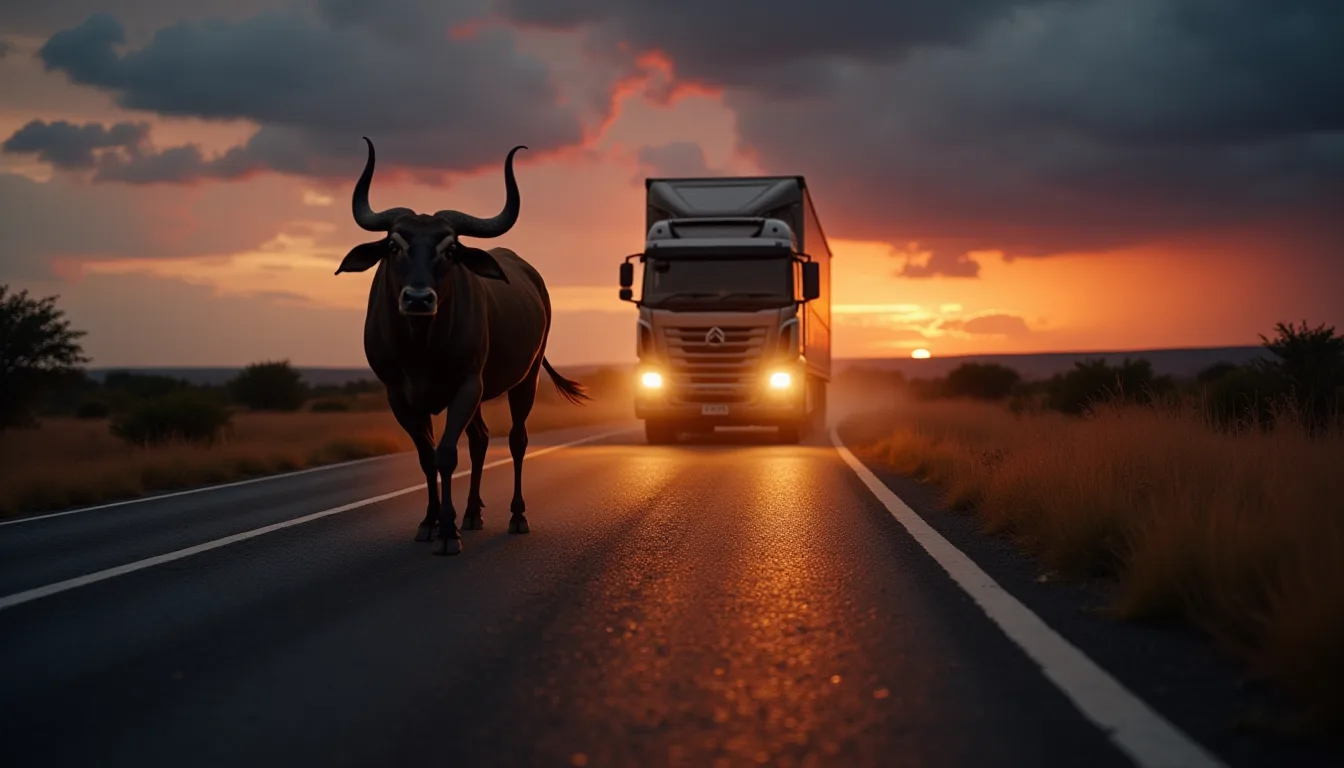
A disputed truck accident usually comes down to whose account the assessor believes, and the truck is rarely given the benefit of the doubt against a smaller vehicle. Fleets carry that disadvantage into every contested claim, where months can pass while liability is argued from conflicting statements. A camera changes the terms: it is the one witness with no stake in the outcome. The fleets that fit them resolve in days what the others spend months disputing.
What are fleet dashcams in South Africa?
Fleet dashcams in South Africa are vehicle-mounted cameras used in commercial trucks and transport vehicles to record road conditions, driver behaviour, and incidents in real time. In a commercial context they do more than capture footage: integrated with GPS tracking and live monitoring systems, they provide verifiable evidence for insurance claims, support hijacking response, and give fleet managers visibility over every vehicle on the road.d 24/7 monitoring systems can transform trucking safety from reactive firefighting into proactive protection.
Key Takeaways
- South African trucking fleets face risks that passenger vehicle operators don’t: driver fatigue on long-haul routes, organised hijacking syndicates, deteriorating road infrastructure, and weather systems that change faster than routes can be adjusted.
- Fleet dashcams function as impartial witnesses. When liability is disputed, which it frequently is, given the size differential between trucks and passenger vehicles: timestamped footage with GPS coordinates resolves claims that would otherwise take months.
- AI-enabled dashcams detect fatigue through eyelid monitoring and head position analysis, issuing in-cab alerts before microsleep becomes an accident. Fatigue contributes to an estimated 40% of truck accidents in South Africa.
- Live monitoring with panic button integration changes a hijacking from a loss event into an intervention opportunity. Footage streamed to a control room in real time allows operators to coordinate with SAPS while the incident is still in progress.
- The cost of one unresolved claim, one contested liability case, or one hijacked high-value load routinely exceeds the annual cost of a monitored dashcam system. For smaller fleets, that comparison is existential, not financial.
The Leading Risks for South African Trucking Fleets
Driver Fatigue
Fatigue is one of the most silent yet devastating risks in trucking. Long-haul drivers push through irregular hours, poor rest conditions, and demanding schedules. Unlike alcohol or drugs, fatigue leaves no measurable trace, yet it impairs reaction times and judgment just as severely. A few seconds of microsleep is enough for a fully loaded truck to veer off course, with catastrophic consequences.
AI-enabled dashcams now detect early signs of drowsiness, such as nodding or eyelid closure, and alert drivers before disaster strikes. With real-time monitoring, fleet managers can intervene by rerouting, enforcing rest, or dispatching backup drivers. Fatigue cannot be eliminated, but it can be managed, and technology makes it visible.
Reckless Motorists and Blind Spots
Truck drivers are often blamed for accidents, but in many cases, it is passenger vehicles that cause the collision. Cars dart into blind spots, brake suddenly, or misjudge the braking distance of a 30-ton truck. South African roads add to the challenge, with minibus taxis, impatient motorists, and poor lane discipline.
Dashcams act as impartial witnesses. When an incident occurs, video evidence provides clarity on what happened. This not only protects drivers from unfair blame but also strengthens insurers’ ability to resolve claims quickly and fairly, reducing downtime for the fleet.
Poor Roads and Infrastructure
South Africa’s road network is under strain. Potholes, uneven shoulders, fading lane markings, and inadequate lighting create daily hazards. For smaller vehicles these are inconveniences, but for trucks, they can mean tyre blowouts, jack-knifing, or overturned loads. Repairs are costly, and downtime can cripple delivery schedules.
Dashcam footage provides documentation of road conditions, enabling fleets to log recurring risks, hold municipalities accountable, and improve route planning. Over time, this data becomes a shield against liability while supporting proactive maintenance.
Hijackings and Cargo Theft
Hijacking remains one of the most severe risks in logistics. Syndicates target high-value loads, often using roadblocks or forced diversions. Even the most experienced drivers cannot always outmanoeuvre these threats.
Here, technology is more than a precaution, it is a lifeline. Dashcams stream incidents live to a control room, where trained staff monitor trucks around the clock. With GPS tracking and panic buttons, fleet managers and law enforcement can be alerted instantly. In many cases, intervention is possible before cargo is lost, or drivers harmed.
Weather and Environmental Risks
Heavy rains, fog, and sudden storms are a frequent challenge on trucking routes. Limited visibility and slippery roads increase the chance of multi-vehicle collisions, while high winds can destabilize trailers. Unlike reckless motorists or hijackings, weather cannot be controlled, but it can be managed.
Dashcams help document conditions for insurers and serve as evidence when claims arise. With real-time monitoring, fleets can adjust routes, delay departures, or notify drivers of incoming weather threats, reducing exposure to unnecessary risk.
The Financial Fallout of Trucking Accidents
The human cost of accidents is immeasurable, but for businesses, the financial toll is equally devastating. A single crash can cost millions. Repairs, replacement vehicles, insurance excesses, lawsuits, medical bills, cargo loss, and reputational damage. For smaller fleets, one major incident may even threaten survival.
Without clear evidence, liability disputes drag on for months, leaving trucks idle and draining cash flow. Fraudulent claims are also common, where third parties inflate damages or exaggerate injuries. For insurers, this means higher payouts, and for fleets, higher premiums.
Dashcams and monitoring cut through the uncertainty. Claims backed by video evidence resolve faster, legal battles are reduced, and costs are contained. In effect, the technology pays for itself many times over.
How Dashcams and Monitoring Mitigate Risks
The value of dashcams reaches far beyond recording. Clients who choose live monitoring gain real-time visibility and control over their fleets. Every truck can be connected to a 24/7 control room where trained operators track movement, detect driver fatigue, and respond to alerts the moment they appear. Incidents are verified instantly, and footage becomes evidence, not speculation.
Mont Blanc assists clients who prefer not to manage their own monitoring. Two dedicated operators remain on duty day and night, logging in through the client’s control room and reacting to events according to client instructions.
For a monthly fee, fleets gain an integrated safety net that includes:• Live monitoring of every truck on the road• Immediate response during hijackings or emergencies• Fatigue and distraction detection with driver alerts• GPS tracking for route optimisation and recovery• Secure evidence vaults for insurance and liability claims
This approach moves beyond passive recording. It gives clients the power to prevent losses, recover assets, and prove innocence within minutes.
Reducing the risk is half the work; insuring what remains is the other half, and our guide to trucking insurance covers what a fleet policy should carry.
Case Study: A Realistic South African Example
Consider a Gauteng-based fleet carrying electronics worth several million rand. On the N3 highway, a driver encounters a staged roadblock, a common hijacking tactic. Within seconds, the monitoring team, or MBFS’s monitoring team, detected unusual behaviour: the truck slowed abruptly in an unsafe area, and the driver’s dashcam shows armed men approaching the vehicle.
The operator triggers an emergency response, alerting both the fleet manager and SAPS. The driver discreetly activated his panic button, confirming the hijack attempt. Police are dispatched while the monitoring team track the truck in real time. Within minutes, the criminals flee, leaving the cargo intact.
Without dashcams and 24/7 monitoring, the incident could have cost not only the driver’s life but also millions of rands. Instead, the fleet continued operations with minimal delay, and the insurer processed the claim swiftly thanks to video evidence.
Still have questions about trucking risks and the role of dashcams? Here are some of the most common concerns fleets raise, with in-depth answers to help you make informed decisions.
Conclusion
The risks of trucking in South Africa are real and relentless, from fatigue and reckless motorists to hijackings and storms. But fleets are not powerless. With dashcams and MBFS’s live monitoring, risks are no longer left to chance. They are managed, documented, and mitigated in real time.
You shouldn’t have to reconstruct what happened from driver accounts and damaged hardware after a serious incident. With Mont Blanc Financial Services you won’t.
Contact Mont Blanc Financial Services to find out how our 24/7 fleet monitoring service keeps your drivers, your cargo, and your claim outcomes protected on every route.
Frequently Asked Questions
How do fleet dashcams in South Africa help resolve insurance claims?
Fleet dashcams resolve insurance claims faster and more accurately by replacing contested accounts with verifiable evidence.Without footage, a liability dispute between a truck and a passenger vehicle defaults to competing versions of events. Given that trucks are larger and their impact in a collision more severe, the default assumption frequently lands against the fleet, regardless of what actually caused the incident. A passenger vehicle that braked suddenly in a blind spot, drifted into a lane, or staged a collision leaves no trace without a camera. With dashcam footage, the sequence of events is on record: road conditions, vehicle speeds, driver behaviour in the moments before impact, and the exact point of contact.South African insurers assess claims partly on the quality of evidence submitted. A claim supported by timestamped, GPS-tagged footage from a forward-facing and cab-facing camera processes differently to one supported by a driver’s statement and a police report completed hours after the event. The former resolves in days. The latter resolves in months, if at all, while the truck sits idle and cash flow tightens.For fleets operating on high-risk routes: the N3 corridor, the N1 between Johannesburg and Polokwane, the R61 through the Eastern Cape, the evidentiary value of dashcam footage is not a peripheral benefit. It is the primary instrument for protecting claim outcomes.
What makes South African roads particularly dangerous for truck fleets?
South African roads present a combination of hazards that most other markets don’t face simultaneously.Road infrastructure is deteriorating faster than it is being repaired. Potholes on major freight routes cause tyre blowouts and suspension damage that create secondary hazards for other vehicles. Uneven shoulders, fading lane markings, and inadequate lighting on rural stretches compound the risk for drivers navigating long-haul routes in darkness or poor weather.Minibus taxis operate outside the lane discipline that trucks depend on. The braking distance of a fully loaded 30-ton vehicle is not a variable most passenger car drivers account for when cutting lanes or braking abruptly. The physics of a collision in those circumstances is decided before the truck driver reacts.Hijacking syndicates operate with a level of organisation that makes standard security measures insufficient on their own. Staged roadblocks, forced diversions, and coordinated approaches in remote areas target high-value loads on predictable routes. A driver alone in a cab at 2 a.m. has limited options without a monitoring system behind them.Weather adds a further layer. KwaZulu-Natal’s summer storms, the Western Cape’s winter systems, and sudden fog on mountain passes each create conditions where visibility drops faster than speed can be safely reduced. Fleet dashcams document those conditions for insurers and, in real-time monitoring systems, trigger operator alerts that can delay departures or reroute drivers before the weather window closes.
Can fleet dashcams in South Africa prevent hijackings or only record them?
A dashcam without live monitoring records a hijacking. A dashcam connected to a 24/7 monitoring system can interrupt one.The distinction is the transmission layer. A standard consumer dashcam stores footage locally on an SD card. If the vehicle is hijacked, that card leaves with the truck. The footage is gone, or at best recovered after a lengthy process. The hijacking is documented. The cargo is not recovered. The driver is on their own until someone raises the alarm through other means.A commercial fleet dashcam with live streaming transmits footage continuously to a secure cloud platform and a monitoring control room. When a truck stops unexpectedly in a known risk zone, operators see it in real time. When a driver activates a panic button, operators receive the alert, view the live feed, and begin coordinating a response: calling the fleet manager, contacting SAPS, and relaying the truck’s exact GPS coordinates, while the incident is still in progress.The criminals in these situations are aware of response times. A monitoring team on the line within seconds, with police dispatched and coordinates confirmed, changes the calculation. In documented cases on South African freight routes, intervention by monitoring operators has resulted in criminals abandoning attempts before cargo was taken or drivers were harmed. The dashcam alone does not prevent anything. The system behind it does.
How does driver fatigue affect South African truck fleets and what can dashcams do about it?
Fatigue is the most underreported cause of serious trucking accidents in South Africa because it leaves no trace at the scene and rarely features in a police report as a primary cause.Long-haul drivers on routes between Johannesburg, Durban, Cape Town, and the borders operate under scheduling pressure that conflicts directly with safe rest. Irregular hours, loading delays that push departure times into the early morning, and return trips that begin before recovery is complete create conditions where microsleep is a predictable outcome, not an aberration. A driver experiencing microsleep for three seconds at 100 km/h travels approximately 83 metres with no conscious control of the vehicle.AI-enabled dashcams address fatigue at the detection layer. Cameras mounted to monitor the driver analyse eyelid closure frequency, yawning patterns, and head position. When the system identifies early indicators of drowsiness, it triggers an in-cab audio alert before the driver reaches the point of incapacity. In a live monitoring setup, the same alert reaches the control room operator, who can call the driver directly, confirm their condition, and instruct them to pull over at a safe stop.Fatigue monitoring does not eliminate the scheduling and rest culture problems that create fatigued drivers in the first place. What it does is insert a detection and response layer between the risk and the outcome: giving the fleet an intervention window that does not exist in a vehicle without the system.

Nicola Iozzo
Founder & CEO, Mont Blanc Financial Services
Nicola has spent his career reading the policy wording most people skip, and writes here so you don't discover at claim stage what page 14 meant.
This blog is here to inform, not advise. Think of it as a guidebook, not a contract. For decisions affecting your world, have a chat with your broker or financial professional.
Mont Blanc Financial Services (PTY) Ltd. is an authorised financial services provider. FSP 8271