Navigating the Turbulent Aviation Market
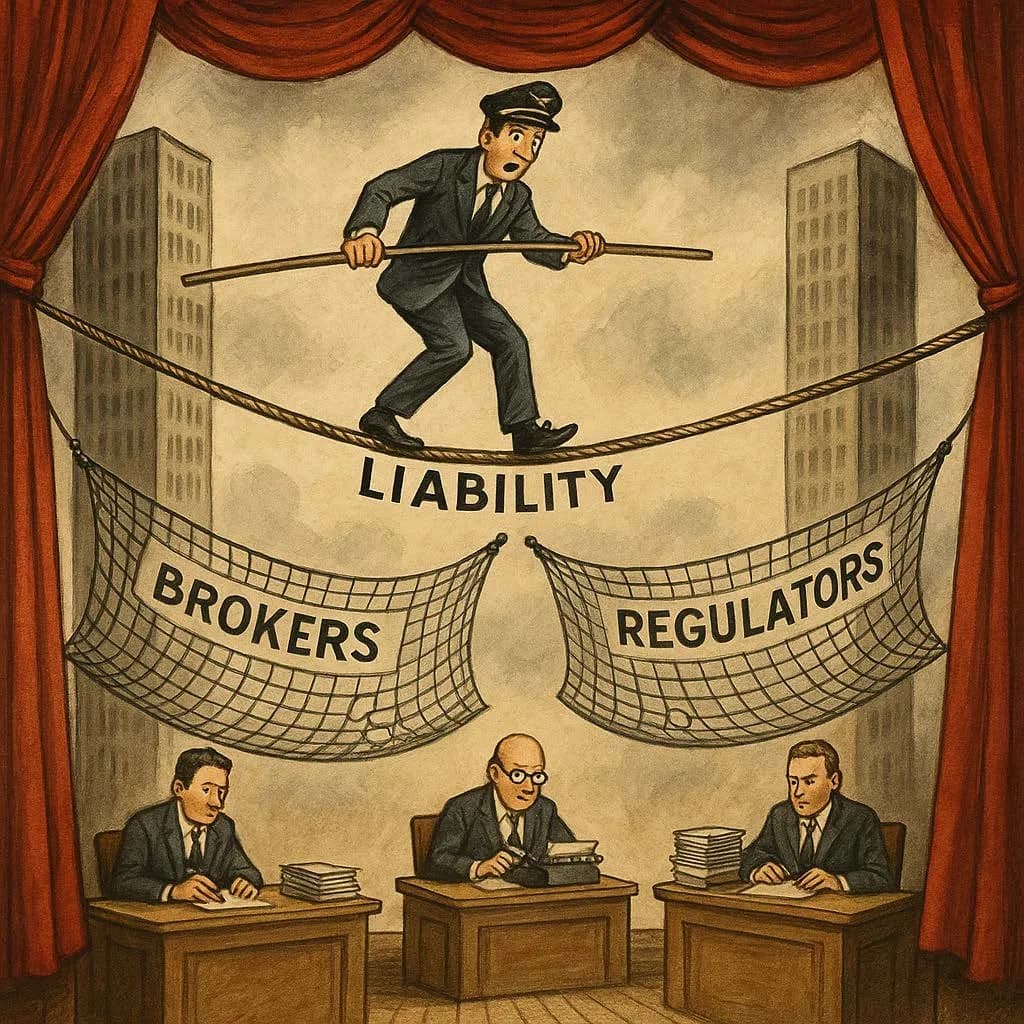
An aviation policy is usually chosen on price and limit, rarely on the system standing behind it. Yet the parties who decide how a claim resolves, the insurer carrying the risk, the broker reading the wording, the regulator setting the floor, sit out of view until something goes wrong. By then the structure is fixed. A gap found mid-claim is one that can no longer be closed.
What is aviation liability insurance?
Aviation liability insurance covers operators and aircraft owners against legal and financial claims arising from an incident involving their aircraft. It responds to bodily injury, property damage, and in some cases environmental harm caused to passengers, crew, or third parties. In South Africa, commercial operators are required by law to hold liability cover as a condition of operating.
Key Takeaways
- Aviation liability insurance covers bodily injury, property damage, and environmental harm caused by an aircraft to passengers, crew, and third parties.
- Commercial operators in South Africa are legally required to hold liability cover under Civil Aviation Authority regulations.
- Insurers write the policies and carry the financial risk; brokers advise operators on which cover fits their operation and advocate during claims.
- The South African Civil Aviation Authority sets and enforces minimum cover requirements, aligning local standards with international benchmarks.
- Gaps in aviation liability cover tend to surface only when a claim is already in progress, which is the worst possible moment to discover them.
Understanding Liability Coverage in Aviation Insurance

When accidents happen in aviation, the costs rarely stop at the aircraft. Damage to property, injury to passengers, and harm to bystanders can all ripple out from a single incident. Liability coverage is the safety line that prevents those ripples from turning into tidal waves.
At its core, liability insurance protects operators and owners against the legal and financial consequences of an accident. It covers bodily injury, property damage, and sometimes environmental harm caused by the aircraft. Without it, even a minor incident could drag an operator into lawsuits capable of sinking an entire business.
In South Africa, liability coverage is not a luxury, it is required by law for commercial operators. It assures regulators that passengers, crew, and the public are not left unprotected. It also reassures clients and partners that they are dealing with a professional operation that takes responsibility seriously.
Liability cover is not about paranoia. It is about acknowledging that aviation, no matter how carefully managed, carries risk and someone must be prepared to manage the consequences.
Key Players in the South African Aviation Insurance Market
Behind every flight, there is more than a pilot and an aircraft. There is also a quiet network of people and institutions whose job is to manage risk. The aviation insurance market rests on three main pillars: insurers, brokers, and regulators. Each plays a distinct role and understanding how they fit together is like learning who sits where in the cockpit.
Insurance Companies: The Risk Carriers
Insurance companies are the backbone of the market. They are the ones who write the policies, crunch the numbers, and take on the financial burden when something goes wrong. Several major players specialize in aviation coverage. Santam, Old Mutual Insure, and Hollard Insurance are among the best known, each bringing years of experience and a suite of tailored products to the table.
These companies are not simply handing out generic contracts. They understand the peculiar risks of aviation: the mechanical failure no one saw coming, the weather event that blows through with no warning, the accident that has ripple effects on the ground as well as in the sky. Their underwriters are specialists, trained to measure these variables and price them into a policy that makes sense for both insurer and client. Without them, the industry would grind to a halt, because no operator could shoulder the potential costs alone.
Insurance Brokers: The Navigators
If the insurers are the backbone, brokers are the navigators. They are the people who sit down with pilots, fleet operators, and aircraft owners to translate jargon into plain speech. A good broker does not just push paper across a desk; they ask the right questions, weigh the options, and help clients choose the cover that truly fits.
Brokers also fight in the client’s corner when things go wrong. A claim is not simply a form to be filed; it is often a tense, stressful process with large sums at stake. Brokers advocate for their clients, cutting through red tape and pressing for fair, timely resolutions. In a sector as complex as aviation, this role is invaluable. Without brokers, clients would be flying blind, unsure of which policy protects them and how to enforce it when disaster strikes.
Brokers are more than middlemen. They are navigators in a complex marketplace, helping clients understand their risks, compare policies, and avoid exclusions that could be crippling. A good broker knows which insurers specialize in certain types of cover, how to spot hidden pitfalls in the fine print, and how to negotiate terms that serve the client.
Their value becomes crystal clear when a claim arises. Filing a claim can feel like navigating turbulence without instruments – slow, confusing, and filled with sudden jolts. Brokers cut through that, advocating for clients and pressing insurers for fair, timely settlements. In South Africa’s expanding aviation industry, where regulations and risks can overwhelm even seasoned operators, brokers transform insurance from an intimidating maze into a manageable path.
Regulatory Bodies: The Guardians
Finally, there are the regulators, who make sure the game is played fairly and safely. In South Africa, the Civil Aviation Authority (CAA) carries this responsibility. They are the ones who set the standards for insurance coverage, enforce compliance, and monitor industry practices. Their role is not decorative. Without their oversight, bad policies and risky behaviour could undermine the entire market.
The CAA ensures that operators meet both local and international benchmarks, protecting passengers, third parties, and aviation businesses alike. They are the guardians of integrity in the industry. Their rules may feel strict, but they are what keeps South African skies credible in the eyes of global partners and investors.
When these three groups – insurers, brokers, and regulators – work together, aviation insurance functions as it should: balancing freedom with responsibility, risk with protection. Each flight depends on this quiet machinery running smoothly in the background. It may not have the romance of a cockpit view, but it is every bit as essential to keeping aviation safe, sustainable, and trusted.
The Role of Aviation Insurance Brokers
The aviation insurance market is not easy terrain to navigate. Policies are complex, exclusions are plentiful, and premiums can rise or fall on details that seem invisible to the untrained eye. This is where brokers step in – the navigators of the insurance world.
A broker’s job is to function as translator, advisor, and advocate. They help clients understand their actual insurance needs, compare different policies, and identify the coverage that fits best. Their value goes beyond shopping for a premium. They know the insurers, the underwriters, and the industry quirks. They can spot where a policy leaves dangerous gaps or where an exclusion could cripple an operator down the line.
Their most crucial role appears when disaster strikes. Filing a claim is never as simple as filling in a form. It can be slow, technical, and filled with disputes. Brokers fight on behalf of clients, pushing for fair settlements and ensuring that insurers deliver on their promises.
In South Africa, where the aviation sector is growing but remains tightly regulated, brokers bridge the gap between regulation, insurer, and operator. They turn insurance from a confusing maze into a clear route forward.
Brokers are one part of a market with several moving parts. The parent guide to aviation insurance covers hull, liability, and the regulation shaping both.
Building on Solid Ground
Every safe flight begins with preparation, and insurance is as much a part of that as pre-flight checks and fuel calculations. The fundamentals of aviation insurance, hull, liability, passenger cover, and the network of insurers, brokers, and regulators, form the foundation that keeps South African aviation stable.
Whether you fly for leisure, run a charter service, or operate a commercial fleet, knowing these basics ensures you are not caught off guard. With the right coverage, you protect your aircraft, safeguard your passengers, and demonstrate the professionalism that partners and regulators expect.
Aviation is about freedom, but freedom lasts only when it is anchored in responsibility. Insurance is that anchor.
Flying is freedom, but insurance is the fine print that makes freedom sustainable. Liability cover ensures that accidents do not destroy lives or businesses. Insurers carry the risk, brokers translate the jargon, and regulators keep the entire system honest. Without them, the industry would stumble on trust alone, and trust is a fragile wing to fly on. With them, aviation becomes not just possible but dependable. When you know the players and how they protect you, insurance stops feeling like a bureaucratic burden and starts feeling like the quiet partner that lets you look up instead of over your shoulder.
You shouldn’t have to decode aviation policy wording under pressure or discover a liability gap mid-claim. With Mont Blanc Financial Services you won’t.
Contact Mont Blanc Financial Services to review your aviation liability cover and confirm the protection matches the actual risk before the next flight departs.[Secure your aviation insurance with Mont Blanc today →]
Frequently Asked Questions
What does liability coverage include in aviation insurance?
When an aircraft is involved in an incident, the consequences rarely stay contained to the aircraft itself. Passengers may be injured. Property on the ground may be damaged. In some cases, environmental harm follows. These outcomes surface after the event, as responsibility spreads outward from the point of incident.Liability coverage functions as a perimeter around the operation. The aircraft sits inside it, but the protection faces outward. When injury or damage affects passengers, third parties, or property beyond the aircraft, liability coverage responds to the resulting claims. In South Africa, this cover is a legal requirement for commercial operators, which reflects how quickly aviation risk extends beyond the cockpit.The pressure often comes from scale. A single incident can generate multiple claims from different directions, each carrying its own cost and process. Without liability cover, those claims move directly to the operator. With it, an established structure absorbs the pressure and manages the response.Once this function is understood, liability coverage stops feeling abstract. It exists to manage the outward reach of an incident, allowing the operation to continue while responsibility is handled through an established, structured process.
Why use a broker instead of going directly to an insurer?
Aviation insurance documents can appear complete while still containing gaps. The wording looks precise. The limits seem adequate. The problem only surfaces when a scenario does not behave as expected and exclusions begin to apply.A broker’s role resembles a navigator sitting beside the pilot. The destination remains the same, but the route is checked before departure. Conditions are assessed. Alternatives are mapped. The navigator does not fly the aircraft, but prevents avoidable errors before they occur.Going directly to an insurer places that responsibility on the operator alone. Policy comparisons must be made without full visibility of market differences. Exclusions must be interpreted without context. When an incident occurs, the same party who sold the policy also decides how it responds.With a broker involved, the policy structure is examined before cover is placed. Wording is compared across insurers. When a claim arises, the broker remains present, following a route already planned rather than improvising under pressure. That difference is practical, not promotional.
Who regulates aviation insurance in South Africa?
Aviation operates within strict boundaries because failure carries consequences beyond the operator. Passengers, crew, and people on the ground are all exposed when standards slip. Regulation exists to manage that exposure before incidents occur.In South Africa, aviation insurance operates within the framework enforced by the South African Civil Aviation Authority. Their oversight functions as a defined boundary along the operation. The rules do not fly the aircraft, but they prevent deviation into unacceptable risk.The Authority sets minimum requirements for cover, particularly for commercial operators, and aligns local standards with international expectations. This ensures that insurance responds in a predictable way across borders and jurisdictions, which matters for operators involved in cross-border cargo, charter, or passenger services.Once this role is understood, compliance stops feeling procedural. It becomes part of maintaining operational credibility, protecting passengers, and ensuring the business remains accepted within the broader aviation environment, both locally and internationally.What happens if an aviation liability insurance claim involves multiple parties?Multi-party claims are among the most complex outcomes in aviation liability insurance, and they are not unusual. A single incident can produce simultaneous claims from an injured passenger, a third party whose property was damaged on the ground, and a cargo owner whose goods were lost or destroyed.Each claim follows its own process, with its own documentation requirements, timelines, and settlement calculations. The liability policy responds to each, up to the limit of indemnity stated in the schedule. Where multiple claims exceed that limit, the distribution of available cover becomes a matter for legal and claims processes to resolve.This is where the gap between an adequate limit and an insufficient one becomes visible. An operator who set their indemnity limit based on a single anticipated claim type may find that limit insufficient when several claims arrive simultaneously from different directions.Reviewing the indemnity limit against the realistic worst-case scenario, not the average incident, is the more reliable basis for structuring aviation liability cover.

Nicola Iozzo
Founder & CEO, Mont Blanc Financial Services
Nicola has spent his career reading the policy wording most people skip, and writes here so you don't discover at claim stage what page 14 meant.
This blog is here to inform, not advise. Think of it as a guidebook, not a contract. For decisions affecting your world, have a chat with your broker or financial professional.
Mont Blanc Financial Services (PTY) Ltd. is an authorised financial services provider. FSP 8271