FOB, CIF, EXW: How Incoterms Decide Who Must Insure the Cargo
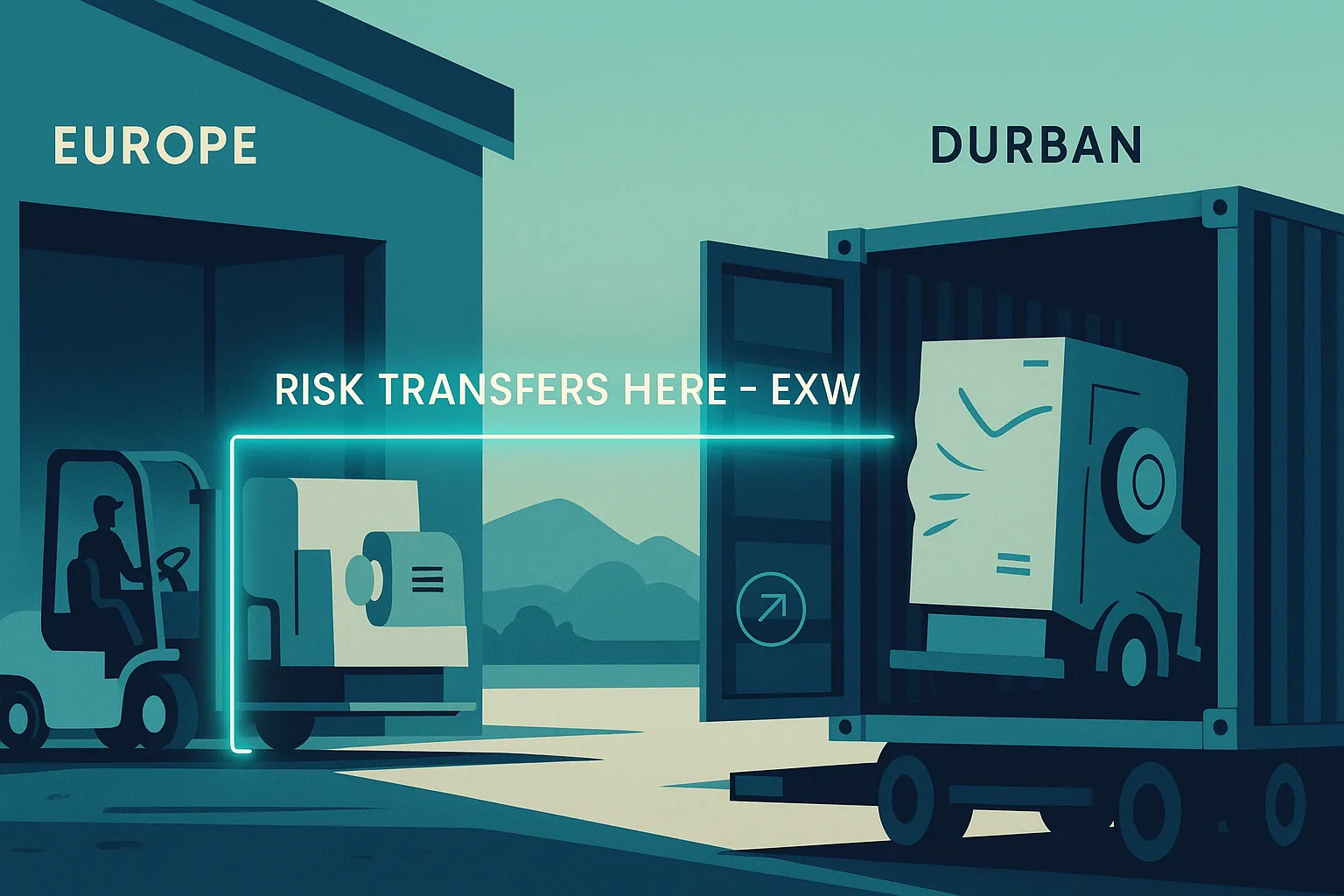
An importer can be certain his supplier insured everything, right up to the moment a forklift bends his machinery against a container wall in Durban and he checks the invoice. Three letters in bold, EXW, tell a different story: under that term the supplier owed him no cover, and risk passed when the goods left the supplier’s door. He had carried every kilometre of exposure uninsured. The gap was not in the cover but in the term he never understood.
What are Incoterms in cargo insurance?
Incoterms are standardised international trade rules, written as three-letter codes, that define the responsibilities of buyer and seller in a shipment. They determine who pays for transport, who carries risk at each stage, who handles customs, and crucially who must insure the cargo and who holds insurable interest at the time of loss. They are binding trade terms, not suggestions.
Key Takeaways
- Incoterms are binding three-letter trade rules that decide who pays for transport, who carries risk, who handles customs, and who must insure the cargo.
- They also determine who holds insurable interest at the time of loss, which directly affects who can claim.
- Under EXW (Ex Works), risk passes to the buyer the moment goods leave the supplier’s door, so the buyer carries and must insure the entire journey.
- Under FOB risk transfers at a defined point in the shipping process, while under CIF the seller arranges only a minimum level of insurance.
- Choosing an Incoterm without understanding it is a leading cause of failed cargo claims, since risk follows the rule regardless of assumption.
What Incoterms Do
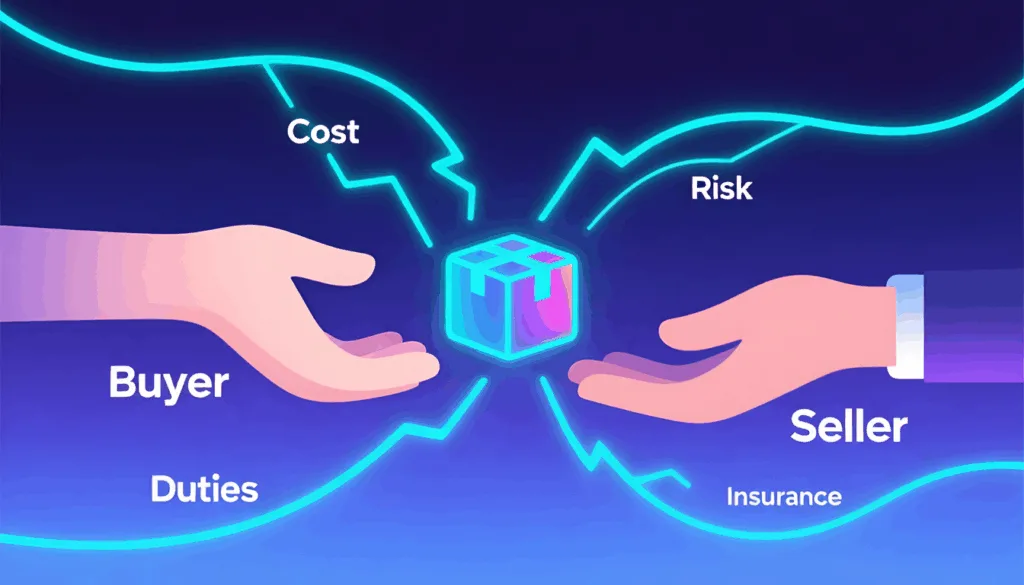
Incoterms are international trade rules written in three-letter codes. They determine practical responsibilities between buyer and seller and influence every part of the logistics chain.
Incoterms decide:
- Who pays for transport
- Who carries risk at each stage
- Who handles customs duties
- Who must insure the cargo
- Who has insurable interest at the time of loss
Incoterms are not suggestions. They are binding trade terms used worldwide. One incorrect choice can turn a well-planned shipment into a costly lesson.
The Three Most Misunderstood Incoterms: EXW, FOB and CIF
South African importers encounter these three often. They also create the highest number of failed claims.
EXW (Ex Works): You Carry Nearly Everything
Under EXW, the seller places the goods at their own door. Risk moves to you immediately. You must arrange loading, inland transport, export clearance and insurance. You must take care of the entire chain.
Many importers choose EXW because it appears simple. It is simple. Walking barefoot across Johannesburg is simple. You can do it, but you will feel every step.
Who Must Insure Under EXW?
You must insure everything from the first lift onward. If the cargo falls during loading, gets stolen during inland transport or is soaked by weather before the first truck arrives, you carry the loss.
Why EXW Surprises South African Importers
Buyers assume suppliers handle early risks. Under EXW, they do not. If you fail to insure immediately, the first part of the journey remains unprotected. Most losses occur inland before the cargo reaches a ship, which makes EXW risky without immediate insurance.
FOB (Free On Board): Risk Moves at the Ship’s Rail

FOB remains popular because it divides duties neatly. The seller handles the cargo until it reaches the vessel. They pay for loading and export clearance. The moment the crate crosses the ship’s rail, risk transfers to you.
Who Must Insure Under FOB?
You must insure the sea voyage and everything after. The seller carries inland risk until the rail. After the rail, the cargo belongs to you.
Why FOB Creates Confusion
Loading involves several lifts and pauses. If a container collides with equipment during the lift, everyone asks the same question: did it cross the rail? Without evidence, the claim becomes slow. Insurers need clarity. Photos save time.
CIF (Cost, Insurance and Freight): The Illusion of Safety
CIF feels comfortable because the seller arranges freight and insurance. Importers expect full protection. They do not receive it.
CIF requires the seller to buy minimum insurance only. Minimum cover protects the seller, not you. It excludes inland movement, many theft scenarios and most handling issues South African cargo faces.
Who Must Insure Under CIF?
Technically, the seller buys insurance. Practically, you still need your own. Minimum cover remains too narrow for real risk.
Why CIF Creates False Confidence
Minimum cover responds to major disasters only. If your cargo arrives dented, wet or crushed by handling, minimum cover usually ignores the loss. Buyers using CIF often discover they needed additional insurance only after the claim fails.
When Incoterms Control Risk Better Than Insurance Alone

Insurance protects your finances, but Incoterms decide who owns the risk at each moment.
You can buy perfect insurance and still lose a claim if the loss occurred before you held insurable interest.
Incoterms Decide the Moment Risk Transfers
Risk transfer acts like the engine of marine insurance. If the loss occurs before risk moves to you, your insurer cannot respond. If the loss occurs after the transfer and you have no cover, you carry the cost.
Understanding risk transfer prevents most disputes
.
Insurable Interest Lives Where Risk Lives
Insurable interest exists when you stand to lose money. If loss occurs while risk belongs to the supplier, they must claim. If risk belongs to you, you need insurance active immediately. No risk means no right to claim.
How Incoterms Affect Your Insurance Premium
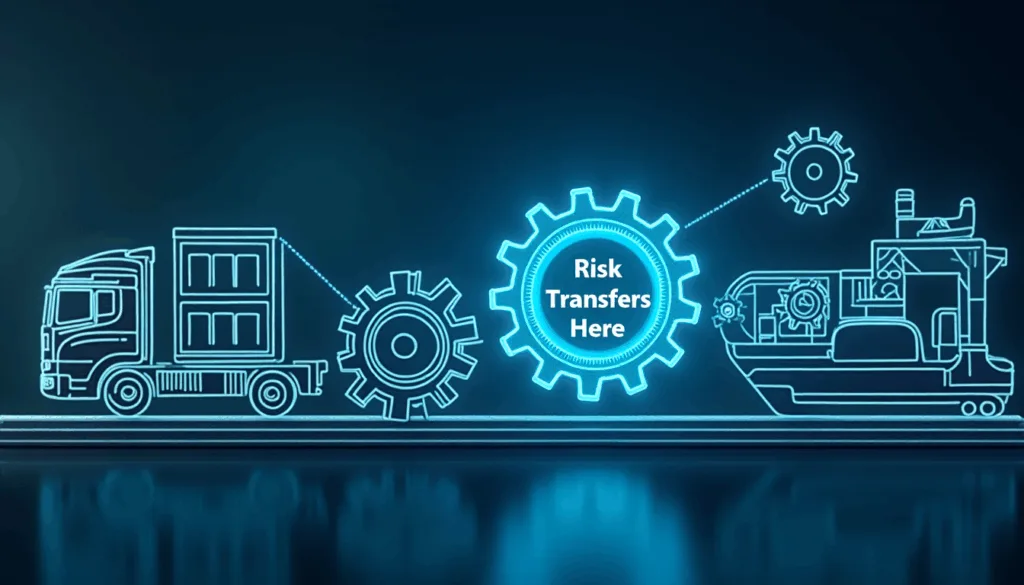
Your insurer prices the part of the journey you own. More risk equals a higher premium. Less risk equals a lower premium.
EXW Usually Creates Higher Premiums
EXW forces you to own every stage from the supplier’s door. The insurer must price loading, inland movement, port handling, the sea voyage and later inland movement in South Africa. Each stage carries its own risks. This increases the premium because the policy covers a long timeline filled with unpredictable events. Importers who choose EXW often underestimate early exposure, but insurers understand the full picture and price accordingly.
FOB Creates Moderate Premiums
FOB begins at the ship’s rail. Since the seller carries early risk and manages inland handling on their side, your insurer takes over once the cargo enters the vessel. The risk period shortens, which produces more balanced premiums. Claims remain cleaner under FOB because the risk transfer moment is visible and well-defined.
CIF Appears Cheaper but Costs More Later
CIF looks affordable because the seller includes insurance in the quote. The problem appears during claims. Minimum cover excludes most inland and handling risks. You may save money upfront but pay far more later when gaps in the seller’s cover become clear. Experienced importers treat CIF as an add-on, not a solution.
The Most Common Incoterm Mistakes in South Africa
Believing CIF Gives Full Insurance
CIF never gives full protection. Sellers buy only minimal cover to meet their obligation. Minimum policies exclude inland theft, impact during loading and common South African risks. Buyers discover the gaps only when the shipment arrives damaged.
Assuming Marine Insurance Covers Inland Movement
Marine insurance protects the international section only. Once cargo enters South Africa, inland movement requires domestic cargo insurance. Most local claims arise during inland movement, not at sea.
Thinking Incoterms Deal Only With Transport Costs
Incoterms determine who owns the cargo during each stage and who may claim during a loss. They influence legal rights, financial risk and insurance structure. Thinking they deal only with costs causes failed claims.
Forgetting to Adjust Insurance When Incoterms Change
Shifting from FOB to EXW without updating insurance leaves the earliest part of the journey uninsured. Changing from CIF to FOB without additional insurance creates gaps. Risk transfer moves instantly when Incoterms change, and your cover must follow.
Choosing the Right Incoterm for Your Business
Choose EXW When You Want Full Control and Full Responsibility
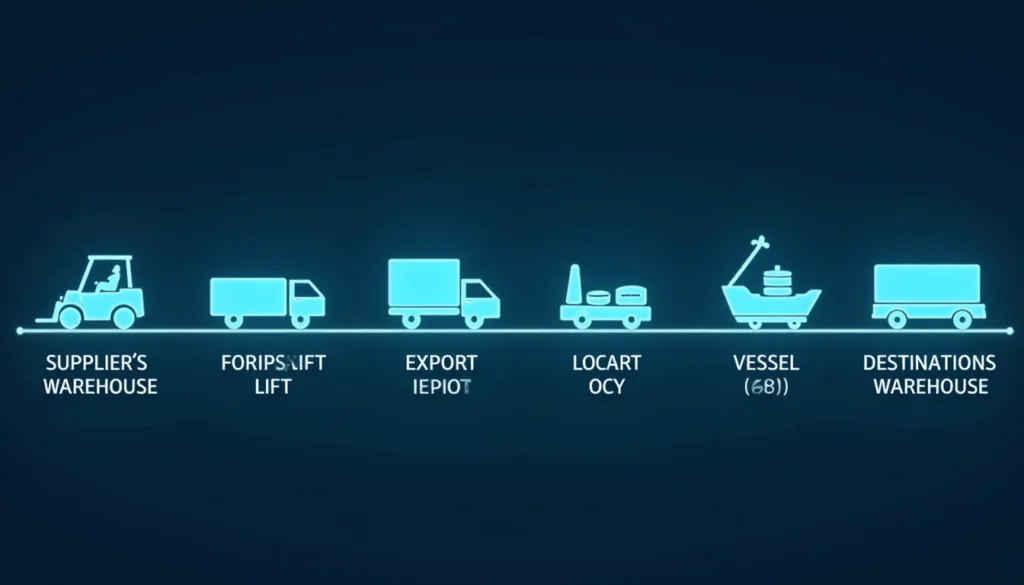
EXW gives you complete control over the journey from the supplier’s door onward. You manage every stage, every document, every carrier and every point where risk can shift. It suits businesses with strong logistics partners and a clear plan for transport, packing and insurance. EXW also places the entire burden of risk on you, from the first lift in the supplier’s warehouse to the moment the cargo arrives at your own. Importers who choose EXW accept early exposure and buy proper cover immediately. This option rewards experience but punishes hesitation. When handled well, EXW offers predictable management. When handled poorly, it becomes the fastest route to a failed claim.
Choose FOB When You Prefer Balanced Responsibility
FOB works for importers who want a fair, predictable split of duties. The supplier manages the inland movement on their side, covers loading and ensures the cargo reaches the vessel safely. Once the goods cross the ship’s rail, responsibility shifts to you. This gives you control over the ocean leg and the South African inland leg without carrying the early exposure of EXW. FOB remains one of the most practical choices for importers because the point of risk transfer is visible and easy to document. When both parties understand their roles, FOB creates cleaner claims, fewer disputes and a more organised journey from port to port.
Choose CIF Only When You Intend to Add Your Own Cover
CIF appeals to importers who prefer convenience, but it offers limited real protection. The seller arranges freight and insurance, but they purchase minimum cover designed to protect their interest, not yours. Minimum policies exclude many common risks, including inland theft, rough handling and damage during loading. Importers using CIF often add their own insurance to cover the full journey and protect the true value of the cargo. When you top up CIF with proper cover, it becomes useful. When you rely on minimum cover alone, it becomes risky for anything valuable, fragile or sensitive. CIF should be treated as a logistical arrangement, not a complete safety net.
If Incoterms leave you unsure or your supplier uses terms you do not trust, send us your invoice or shipping plan. We will explain your risk clearly, close gaps and structure cover for the full journey.
The label on the deal names the insurer, and freight forwarders and clearing agents each carry a slice of the risk.
You shouldn’t have to discover EXW meant you owned every kilometre of risk after the machinery is already bent. With Mont Blanc Financial Services you won’t.
Contact Mont Blanc Financial Services to confirm what your shipment’s Incoterm means for who must insure the cargo before the goods move.
It sits within our broader guide to marine and cargo insurance.
Frequently Asked Questions
What do Incoterms decide about cargo insurance?
Incoterms decide who carries the risk on a shipment and therefore who must insure the cargo, among other responsibilities. They are standardised international trade rules, written as three-letter codes, that determine who pays for transport, who carries risk at each stage of the journey, who handles customs duties, who must arrange insurance, and who holds insurable interest at the time of a loss. This last point is critical for insurance, since the party bearing the risk at the moment damage occurs is the one who needs cover in place and the one able to claim. Incoterms are binding trade terms used worldwide, not optional guidelines, and the term chosen for a shipment governs the allocation of responsibility whether or not the parties fully understand it. A single incorrect or misunderstood choice can turn a well-planned shipment into a costly lesson, because the risk follows the rule regardless of what either party assumed. Understanding which Incoterm applies, and what it means for who must insure, is therefore fundamental to ensuring cargo is actually covered.
What does EXW mean for who insures the cargo?
Under EXW (Ex Works), the buyer carries almost the entire responsibility, including the obligation to insure the cargo across the whole journey. With EXW, the seller’s only duty is to make the goods available at their own premises; from that moment, risk transfers to the buyer, who must arrange loading, inland transport, export clearance, and insurance for every stage thereafter. This means the buyer is exposed from the supplier’s door all the way to final destination, and if they have not arranged cover, that entire chain is uninsured. EXW is often chosen because it appears simple, but the simplicity is deceptive: it places the maximum burden of risk and arrangement on the buyer. An importer who selects EXW assuming the supplier handles cover can discover, after a loss, that no cover ever existed on their side. The practical lesson is that EXW demands the buyer take active responsibility for insuring the goods from the outset. It is the term under which the gap between assumption and reality is most often and most painfully exposed.
How do FOB and CIF differ for cargo insurance?
FOB and CIF allocate risk and insurance responsibility differently. Under FOB (Free On Board), the seller is responsible up to a defined point in the loading process, after which risk transfers to the buyer, who then carries the cargo for the remainder of the journey and must insure that portion. Under CIF (Cost, Insurance and Freight), the seller arranges carriage and a minimum level of insurance for the buyer’s benefit, so cover is provided as part of the term. The important caveat with CIF is that the insurance the seller must provide is often only a minimum level, which may not be adequate for the cargo’s value, so the buyer should check whether additional cover is needed. The key difference is that FOB leaves the buyer to arrange cover for their portion, while CIF includes a baseline of cover but not necessarily enough. Understanding which term applies, and what insurance it does or does not include, is what prevents a buyer from being under-covered without realising it.
Why do Incoterms cause failed cargo insurance claims?
Incoterms cause failed cargo claims when a party misunderstands which term applies and therefore who was responsible for insuring the goods at the moment of loss. Because Incoterms determine who carries risk and who holds insurable interest at each stage, choosing or misreading a term can leave a party exposed on a leg they wrongly assumed someone else covered. The classic failure is an importer who believes the supplier insured everything, only to find that under their chosen term, EXW, for instance, the risk and the duty to insure sat with the buyer from the supplier’s door. When a loss occurs, there is no cover in place, and the claim fails not because insurance was unavailable but because it was never arranged by the responsible party. EXW, FOB, and CIF generate a high number of these failures precisely because they are common and frequently misunderstood. The remedy is to identify the Incoterm before shipping, understand exactly what it requires of each party, and arrange cover accordingly. The risk follows the rule whether or not it is understood.

Nicola Iozzo
Founder & CEO, Mont Blanc Financial Services
Nicola has spent his career reading the policy wording most people skip, and writes here so you don't discover at claim stage what page 14 meant.
This blog is here to inform, not advise. Think of it as a guidebook, not a contract. For decisions affecting your world, have a chat with your broker or financial professional.
Mont Blanc Financial Services (PTY) Ltd. is an authorised financial services provider. FSP 8271