SACAA Aviation Insurance Requirements: What Compliance Means for Your Cover

The charter operator passed his SACAA audit without a finding. The aircraft was registered, airworthy, and maintained on schedule, and the licence was current. He took that as proof the cover was sound too. The two weren’t the same thing, and the difference surfaced the day a passenger claim arrived.
He’d met the regulator’s minimum and assumed the minimum was the target. It was the floor. The policy paid to the mandated limit and stopped, and the shortfall above it was his to carry. The certificate said compliant. The cover said something narrower.
What are SACAA aviation insurance requirements?
SACAA aviation insurance requirements are the rules obliging aircraft owners and operators to carry insurance as a condition of registration and licensing. They sit in the Civil Aviation Act and the air services regulations. For commercial operators, they set minimum passenger and third-party liability cover the operator has to hold.
Key Takeaways
- SACAA compliance is the precondition for insurance: an aircraft must be registered, airworthy, maintained, and flown by a licensed pilot to be insurable.
- The Civil Aviation Act and the air services regulations require operators to carry insurance for harm the aircraft causes to others.
- Commercial operators face mandated minimum liability cover: passenger liability per seat, and third-party liability scaled to the aircraft’s mass.
- The regulatory minimum is a licensing floor, not a measure of adequate cover.
- Compliance is a continuing condition of the policy, not a one-off check at inception.
- Operating outside the certificate, or letting airworthiness or licensing lapse, can breach both the regulation and the policy.
What SACAA aviation insurance requirements include
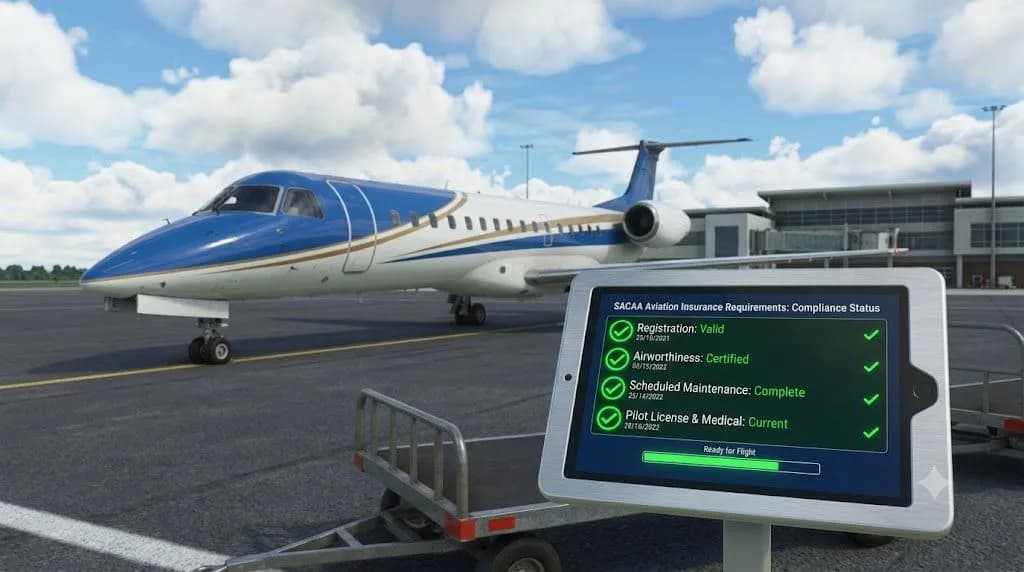
SACAA aviation insurance requirements have two halves: the compliance that makes an aircraft insurable, and the insurance the law then obliges the operator to carry. The first half is the baseline. An aircraft has to be on the South African register, hold a valid certificate of airworthiness, and be maintained to standard. The pilot has to be licensed, medically current, and rated for the type. A commercial operator needs an air operator certificate as well. The South African Civil Aviation Authority sets and enforces all of it under the Civil Aviation Act.
The insurer assumes this baseline. The policy is written on the understanding that the aircraft is legal to fly, and flown by someone legal to fly it. The schedule rarely restates it, because the regulator already requires it.
So compliance and cover aren’t two tracks. The full guide to aviation insurance treats them as one, because an aircraft that fails the compliance half won’t keep the insurance half. The certificate comes before the policy.
The insurance the regulations mandate
The law requires an aircraft owner or operator to carry insurance for harm the aircraft causes to others. A registered owner is treated as the owner for liability for damage the aircraft does, under the Civil Aviation Act. The insurance requirements sit across the Civil Aviation Act 13 of 2009 and the air services legislation. For private flying the obligation is broad. For commercial operations it is specific.
Commercial operators face mandated minimums. Passenger liability is set per seat, at R1 million a seat for the seats the certificate of airworthiness authorises. Third-party liability scales with the aircraft’s maximum certificated mass, from R500,000 for a microlight up to R50 million for the heaviest aircraft. These are the liability covers set out in how hull and liability cover divide.
So the regulation doesn’t only ask whether an operator is insured. It sets how much, by seat and by mass. The figures are minimums written into the rules, and the current regulations govern the exact numbers.
Why the regulatory minimum isn’t the same as enough
Meeting the SACAA minimum proves the operator is licensed, not that the operator is adequately covered. The mandated limits are a floor for the certificate, set so an operator can’t fly with no cover at all. A single serious claim, a passenger injury, a death, major damage on the ground, can run past the mandated figure and keep going. The minimum stops at the regulation. The claim doesn’t.
Aviation insurance is a short-term insurance class in South Africa, regulated under the Short-term Insurance Act 53 of 1998. Nothing in the regulatory minimum decides what an operator’s real exposure is. That depends on the seats flown, the routes, and the people carried. How higher limits price out is set out in what aviation cover costs.
So the operator who insures to the SACAA minimum has satisfied the regulator and not much else. There’s a particular irony in a compliant certificate sitting above an underinsured claim.
How compliance keeps the policy alive
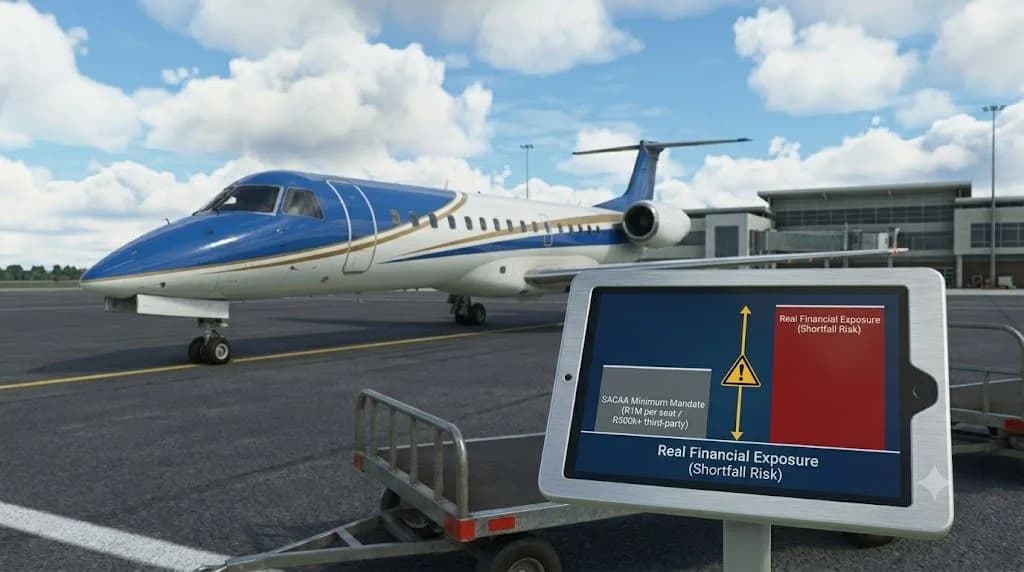
Compliance is a continuing condition of cover, not a box ticked at inception. The policy assumes the aircraft stays airworthy and the crew stays current for the whole period, not only on the day it incepts. The SACAA airworthiness framework governs the inspections and certificates that keep that true between renewals.
Let a certificate of airworthiness lapse, run maintenance past its due date, fly on an expired medical, or operate outside the air operator certificate. The aircraft is then no longer in the state the policy assumed. The cover doesn’t always end, but the breach gives the insurer a defence, and the way risk and exclusions are written decides how far that defence reaches.
So the policy stays alive on the same terms the regulator sets. Keep the compliance current, and the cover keeps its shape. Let it slip, and the slip becomes the insurer’s argument.
Where non-compliance voids cover
Most compliance-related declines trace to a breach the operator could see coming. Several breaches do the same damage: flying an aircraft that’s out of airworthiness, carrying paying passengers on a private rating, using a non-current pilot, or flying an undeclared modification. Each breaks a regulatory rule and a policy condition at once. The claim then meets both a regulator and an insurer with the same finding.
The pattern is consistent. The loss happens, the assessor looks at the certificate and the logbook, and the breach that was always there becomes the reason the claim fails. When that happens, the claims process turns on documents the operator controlled all along.
So non-compliance rarely voids cover by surprise. It voids it on a fact the operator knew, recorded, and chose not to fix before the loss made it relevant.
What to confirm with a broker
Two checks sit behind proper cover, not one. The first is whether the policy meets the SACAA minimum for the aircraft and the operation. The second is whether those limits reflect the real exposure, which is the check the regulation doesn’t make. An operator can pass the first and fail the second without knowing it.
An independent broker works under the conduct standards of the Financial Sector Conduct Authority. The broker runs both checks: that the minimums are in place, and that the limits match the certificate, the seats, and the routes flown. The aim isn’t a thicker policy. It’s a policy that answers the operation it covers.
So the question to bring to a broker isn’t only whether the cover is compliant. It’s whether compliant is enough for what the aircraft does.
What the requirements are there for
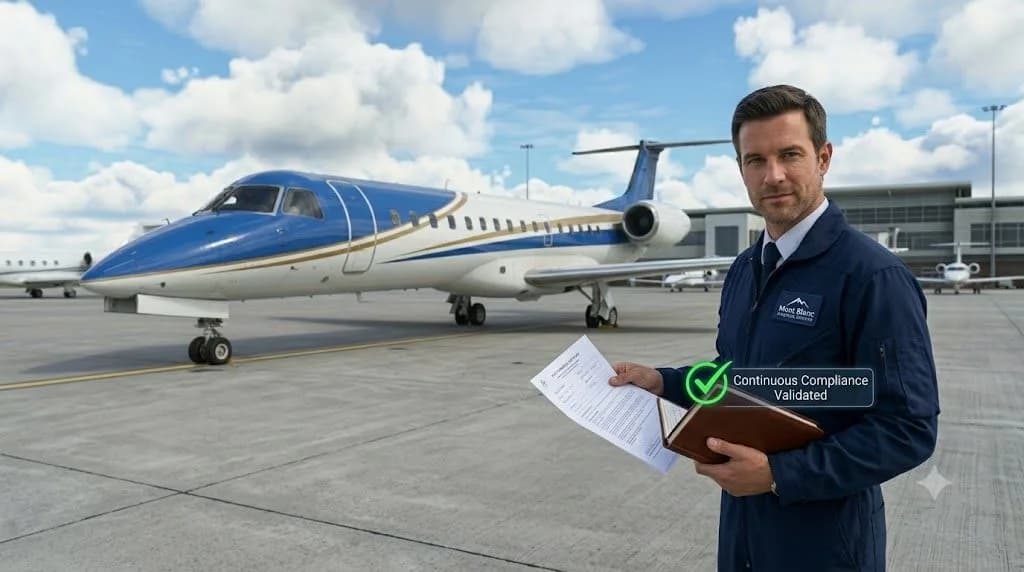
The SACAA insurance rules exist to stop an aircraft flying with no answer to the harm it can cause. They set a floor, not a ceiling, and they assume the operator reads the floor as a starting point. The compliant operator who treats the minimum as the target has met the rule and missed its purpose. The requirements point at the exposure. They don’t measure it. That measurement is the operator’s to make, before the claim makes it for them.
The regulator now watches the small stuff too, so unmanned aircraft cover sits inside the same compliance net.
You shouldn’t have to learn at claim stage that meeting the SACAA minimum left you underinsured. With Mont Blanc Financial Services you won’t.
Contact Mont Blanc Financial Services to check your aviation cover against both the regulatory minimum and the exposure your operation carries.
Operators reading the regulations for the first time tend to ask the same questions about what’s required and what’s enough. These come up first.
Flight schools and training operations
A training operation carries exposures a private owner never meets, and the policy has to be written for them rather than adapted afterwards. The aircraft is flown by people learning to fly it, the cycle count is high because circuits are short, and the heaviest wear happens in the phase of flight where most accidents occur.
Three things separate the cover from a private policy. The first is permitted use: a hull policy rated for private and pleasure flying responds differently where the aircraft is being used for instruction, and the schedule has to say so. The second is who counts as an insured pilot, since a student flying solo is not an experienced named pilot and the open pilot warranty has to accommodate them. The third is dual instruction liability, where instructor and student are both aboard and a claim can involve each of them.
Underwriters price the training system more than the individual pilots. Syllabus, currency checks, maintenance intervals measured against hours flown rather than against the calendar, and how the school records them all affect the rate, because a school is a process rather than a person. Aircraft used for both instruction and hire carry a further question, since the two uses are rated separately and a policy covering one may not answer for the other.
Frequently Asked Questions
What are the SACAA aviation insurance requirements in South Africa?
SACAA aviation insurance requirements oblige an aircraft owner or operator to carry insurance for harm the aircraft causes to other people or their property. The obligation sits in the Civil Aviation Act and the air services regulations. It works alongside the compliance rules: an aircraft must be registered, airworthy, maintained, and flown by a licensed pilot. For commercial operators, the requirements go further and set minimum liability cover. Passenger liability is mandated per seat, and third-party liability scales with the aircraft’s maximum certificated mass. Private operations carry a broad duty to insure against third-party harm, while scheduled and commercial operations carry specific mandated limits. The requirements are minimums set for licensing, so meeting them confirms an operator may fly, not that the cover is adequate for the real exposure. The current regulations govern the exact figures and should be confirmed against them.
Does SACAA require aviation insurance by law?
Yes. Aviation insurance is required by law in South Africa, not left to the operator’s discretion. A registered aircraft owner or operator must hold insurance for loss or damage the aircraft causes to any person or property. The requirement is set out across the Civil Aviation Act and the air services legislation. The registered owner is also treated as the owner for liability for damage the aircraft does. That’s why the cover is mandatory rather than optional. For commercial and scheduled operators the law is more specific, setting minimum passenger and third-party liability limits that have to be in place before a licence is granted. For private flying the duty to insure against third-party harm still applies, even where the specific limits are less prescriptive. Flying a commercial operation without the required cover is both an insurance gap and a licensing breach.
How much aviation insurance does SACAA require?
The amount of aviation insurance SACAA requires depends on the aircraft and the operation, because the mandated minimums scale rather than sitting at one figure. For commercial operators, passenger liability is set per seat, at R1 million a seat for the number of seats the certificate of airworthiness authorises. Third-party liability scales with the aircraft’s maximum certificated mass, running from R500,000 for a microlight up to R50 million for the heaviest aircraft. These are minimum limits written into the air services regulations, not a guide to adequate cover, and the current regulations govern the exact figures at any time. An operator should confirm the present minimums for the specific aircraft mass and seat count, then decide separately whether those limits cover the real exposure. The mandated figure and the sensible figure are rarely the same number.
What happens to insurance cover if an aircraft isn’t SACAA compliant?
If an aircraft isn’t SACAA compliant, its insurance cover is exposed. The policy is written on the assumption that the aircraft is registered, airworthy, maintained, and legally flown. A lapsed certificate of airworthiness, overdue maintenance, an expired pilot medical, or operating outside the air operator certificate each breaches a condition the cover relies on. The cover doesn’t always fall away the instant a rule is broken. But the breach gives the insurer grounds to reduce or decline a claim that arises while the aircraft was non-compliant. Because the breach is usually documented in the certificates and logbooks, it is straightforward for an assessor to establish after a loss. Keeping the aircraft compliant is therefore part of keeping the cover effective, not a separate administrative task. Compliance protects the claim as much as it satisfies the regulator.
Does a flight school need different aviation insurance?
Yes, and the difference sits in the permitted use rather than in the aircraft. A hull policy rated for private and pleasure flying may not respond where the aircraft is being used for instruction, so the schedule has to state the training use rather than leave it implied. Two other things change. The open pilot warranty has to accommodate student pilots, including those flying solo, who are not experienced named pilots by any normal definition. And dual instruction raises a liability question a private policy never faces, because instructor and student are both aboard and a single claim can involve both. Underwriters rate the school as a system rather than as a set of pilots, so the syllabus, the currency checks and the maintenance intervals measured against hours flown rather than the calendar all affect the premium. Where an aircraft is used for instruction and for hire, confirm that both uses are covered: they are rated separately.

Nicola Iozzo
Founder & CEO, Mont Blanc Financial Services
Nicola has spent his career reading the policy wording most people skip, and writes here so you don't discover at claim stage what page 14 meant.
This blog is here to inform, not advise. Think of it as a guidebook, not a contract. For decisions affecting your world, have a chat with your broker or financial professional.
Mont Blanc Financial Services (PTY) Ltd. is an authorised financial services provider. FSP 8271