Aircraft Hull and Liability Insurance: How Hull, Liability, and Hangar Cover Differ
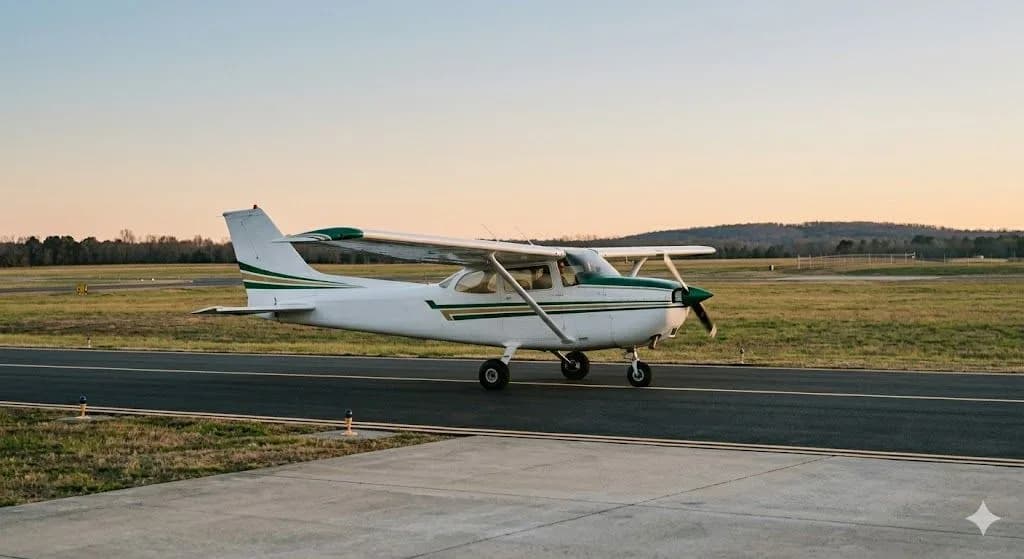
The aircraft was damaged in a hangar that belonged to someone else. The owner assumed his policy would pay, and it did, in part. What it wouldn’t pay was the drop in the aircraft’s value and the weeks it sat unusable. Those costs landed elsewhere, on the hangar operator, under a cover the owner had never read.
He’d bought one policy and pictured it as a single wall around the aircraft. It wasn’t. The cover arrived in parts, each answering a different kind of loss, and the damage had landed on the seam between two of them. The seams are where most of these disputes live.
What is aircraft hull and liability insurance?
Aircraft hull and liability insurance is the core aviation policy an aircraft owner carries. Hull cover pays for physical loss or damage to the aircraft. Liability cover pays the owner’s legal responsibility to other people, on the ground and on board. Hangar cover is a separate policy again.
Key Takeaways
- Hull cover insures physical loss or damage to the insured aircraft, on an agreed-value basis fixed at inception.
- Liability cover insures the owner’s legal responsibility to others: third parties on the ground and passengers on board, under separate limits.
- Hull and liability are usually sold as one policy, but they answer different losses and respond to different events.
- For licensed commercial operators, South African regulation sets minimum liability cover, including R1 million per passenger seat.
- Hangar cover sits outside the aircraft policy, and it splits into building cover, hangarkeepers liability, and premises liability.
- Hangarkeepers liability covers damage to other people’s aircraft held in an operator’s care, custody, or control.
What aircraft hull and liability insurance covers
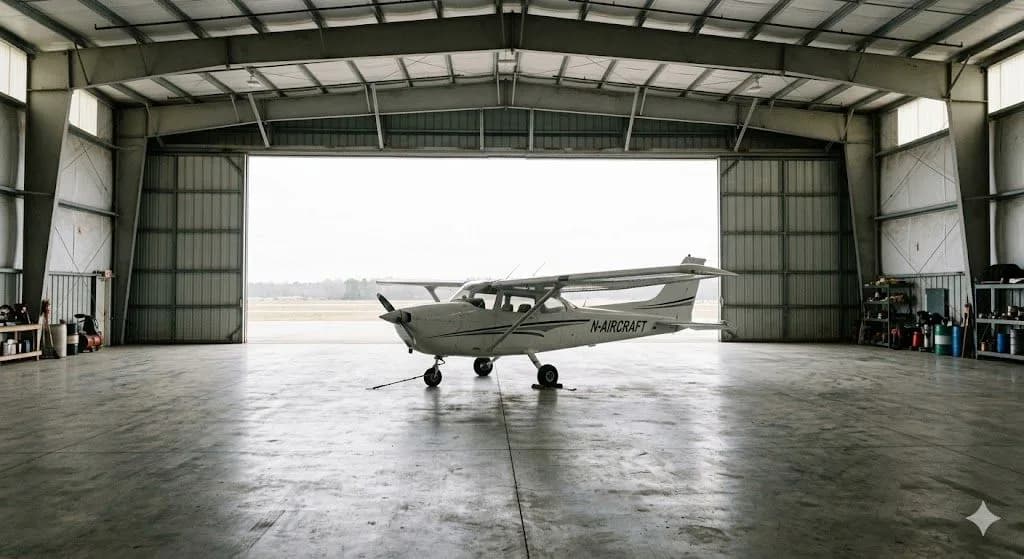
Aircraft hull and liability insurance does two separate jobs inside one policy. Hull cover looks inward, at the aircraft. Liability cover looks outward, at everyone the aircraft might harm. The schedule prints them together, but a claim treats them as two, because a single event rarely triggers both sections the same way.
A crash that damages the aircraft and injures a passenger reaches both sections at once. A hangar door that dents a wing reaches only hull. A passenger hurt on an ordinary flight reaches only liability. Each loss falls on the line between the aircraft and the rest of the world, and that line decides which limit pays. The policy is built along that division on purpose.
The class itself is regulated. Aircraft hull and liability cover is a short-term (non-life) insurance class in South Africa, written under the framework of the Short-term Insurance Act 53 of 1998 and the conduct regime that now sits above it. Where these covers fit alongside passenger, cargo, and hangar exposures is set out in the wider aviation insurance programme. The practical point is narrower. The first question at any loss is which section responds, and the answer is seldom both in equal measure. A wing repair is a hull question; an injured passenger is a liability question. Naming the right section early, before the loss adjuster does it for you, shapes how the rest of the claim runs and which limit it draws down.
Hull cover: the aircraft and nothing beyond it
Hull cover insures physical loss or damage to the aircraft, and nothing beyond it. It’s written on an agreed-value basis, so the figure is fixed when the policy starts rather than argued when the claim arrives. That one design choice removes the most common settlement fight, the one over what the aircraft was worth, and moves it to inception where there’s time to get it right.
The cover usually splits by phase of operation. Ground risk applies while the aircraft is parked, motion risk while it’s taxiing, and in-flight risk once it’s airborne. In-flight is the most exposed phase and the most expensive to cover, which is why some owners hold ground-risk-only cover for an aircraft that flies rarely. Hull cover also assumes the aircraft is airworthy. The SACAA airworthiness framework sets the registration, certificate of airworthiness, and approved-maintenance requirements behind that assumption, and an aircraft outside it is hard to insure and easy to decline. How the hull value then drives the premium is set out in how aviation cover is priced.
Hull cover is narrow but deep. It pays to repair or replace the aircraft up to the agreed value, and it leaves the people, the third-party property, and the hangar building to other sections and other policies. Reading hull cover as the whole programme is how an owner finds the rest of the exposure at claim stage.
Liability cover: everyone who isn’t you
Liability cover responds to your legal responsibility to other people, not to your own aircraft. It has two parts. Third-party liability covers injury or property damage to people and property outside the aircraft: a house, a vehicle, a person on the ground. Passenger liability covers injury or death to the people on board. The two often share one limit, but not always, and the structure of that limit decides what a claim pays.
A combined single limit, sometimes called smooth liability, applies one pool to any liability claim. A policy with a per-passenger sub-limit caps what each passenger can recover, whatever the total. The distinction is invisible at renewal and decisive at claim. For licensed commercial operators the floor is set by regulation, not by choice. Under the Air Services Licensing Act 115 of 1990 and the International Air Services Act 60 of 1993, the air services regulations require passenger liability of R1 million per seat and third-party liability scaled to aircraft mass, from R10 million up to R50 million for the heaviest aircraft. How a liability claim is then handled, and which limit it draws on, is the subject of how a liability claim is presented.
This is where the largest numbers usually sit. An aircraft is finite in value. The people it can harm are not, and the limit chosen is the only ceiling on that exposure.
Hangar and hangarkeepers cover: a different policy entirely
Hangar cover isn’t part of a hull and liability policy, and it isn’t a single product. It splits into three. Hangar property cover insures the building and its contents, a commercial property asset the aircraft policy never touches. Hangarkeepers liability covers damage to non-owned aircraft held in an operator’s care, custody, or control. Premises liability covers a person injured on the site. Three covers, three different losses, one misleading word.
Who needs which follows the operation. A private owner storing only their own aircraft generally needs none of these beyond a tenant’s interest, because there’s no third-party aircraft in their care and no building on their books. A fixed-base operator, flight school, or maintenance organisation is in a different position: they hold other people’s aircraft, sometimes worth more than the building around them. The Civil Aviation Act 13 of 2009 and the approved-organisation regime behind it sit over those operators, and what SACAA compliance requires shapes which of these covers an operator carries.
The word hangar, then, hides three covers wearing one name. Treating them as one is how an operator learns, at claim stage, that a client’s aircraft was never on their policy at all. There’s something quietly instructive about discovering the gap only after the aircraft is sitting in it.
Where the three covers overlap and leave gaps
The three covers meet at the edges, and the gaps live in the seams between them. The aircraft damaged in someone else’s hangar is the standard case. Your hull cover may pay to repair it. What it usually won’t pay is the lost value after the repair and the weeks the aircraft sat out of service, and those fall instead to the operator’s hangarkeepers liability. Neither policy was wrong. The loss simply spanned both, and landed where neither owner was looking.
Other seams are quieter. Ground damage can fall outside in-flight cover and into a phase the schedule rates differently. A passenger claim can run into a per-passenger sub-limit and stop there, well short of the actual award. The hangar building isn’t insured by the aircraft policy at any point. Each gap reads as a small line in the wording and arrives as a large number at the claim. Mapping the exclusions and where the risk sits, set out in the exclusions most owners never read, is how these surface before a loss rather than during one.
The covers aren’t a single wall around the aircraft. They’re three walls with seams between them, and a loss has a reliable way of finding the seam. The work isn’t buying more cover. It’s closing the joins between the cover already held.
How to structure the three for your operation
The right structure follows the operation, not a template. A private owner flying their own aircraft needs hull and liability, plus a tenant’s interest if they rent hangar space, and little else. A fixed-base operator, flight school, or maintenance organisation needs the full stack: hull and liability on owned aircraft, hangarkeepers liability for client aircraft, premises liability for the site, and property cover for the building. Same three families of cover, different weighting, because the use sets the exposure. The common mistake is buying a packaged product built for a different operation and assuming it fits this one.
This is also where independent placement earns its keep. An independent broker, working under the conduct standards of the Financial Sector Conduct Authority, prices each cover against the real exposure rather than fitting the operation to a single packaged answer. The recommendation follows the risk assessment, not the commission. The aim isn’t more cover for its own sake. It’s the right cover in the right section, with the seams between them closed before a loss tests them.
The question, then, is rarely hull or liability or hangar. For most operations it’s how much of each, in what proportion, and where one cover ends and the next begins. That boundary is the part worth pricing carefully at inception, because it’s the part a loss tests first.
What the split is for
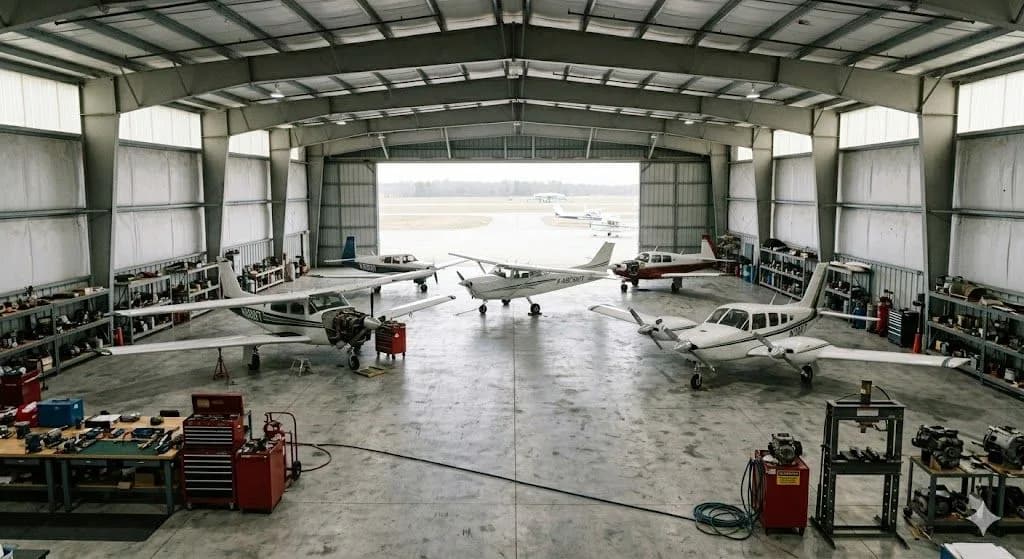
The split between hull, liability, and hangar cover isn’t an accident of how the market sells policies. It follows the shape of the risk: the aircraft, the people, and the place are three different exposures, and each is given its own section or its own policy. An owner who reads them as one wall meets the seam at claim stage. Read as three, with the joins checked at inception, they hold the weight they were built to hold. The cover was never the hard part. The joins were.
Not every aircraft has a pilot on board, and drone insurance answers risks a hull policy never imagined.
You shouldn’t have to find out at claim stage that a loss sat in the seam between your hull, liability, and hangar cover. With Mont Blanc Financial Services you won’t.
Contact Mont Blanc Financial Services to map your aircraft, liability, and hangar exposures to the policies that respond to them.
Owners and operators sorting out which cover does what tend to arrive at the same handful of questions. These are the ones that come up first.
Passenger liability: the people the third-party section does not reach
Third-party liability answers for people and property outside the aircraft. Passengers are inside it, and most policies deal with them under a separate passenger liability limit rather than inside the third-party one. The distinction surprises owners, because the person in the right-hand seat feels like any other third party until a claim establishes otherwise.
The usual structure is a combined single limit for third-party and passenger liability together, with a sub-limit applying per passenger. Both numbers are worth reading. A combined limit which looks generous can still leave a shortfall where several passengers are involved in one event, since the per-passenger sub-limit governs each of them before the combined figure is reached.
Carriage matters to how the section is written. A private owner flying friends is carrying passengers even where no money changes hands, and the policy has to permit it. Commercial carriage changes the requirement again, both in the limits an operator is expected to hold and in the regulator’s view of the operation. Where the aircraft is used for anything beyond the stated purpose, the section is the first place a claim is tested.
Frequently Asked Questions
What does aircraft hull and liability insurance cover?
Aircraft hull and liability insurance covers two distinct risks under one policy. Hull cover pays for physical loss or damage to the insured aircraft on an agreed value fixed at inception, usually split by phase of operation: ground, taxiing, and in-flight. Because the value is agreed, the insurer can’t argue depreciation at claim. Liability cover pays the owner’s legal responsibility to others in two parts: third-party liability for injury or property damage outside the aircraft, and passenger liability for those on board. The two sections carry separate limits and respond to different events. A single crash that damages the aircraft and injures passengers can trigger both at once, while most losses trigger only one. Cover also runs only within the declared use and geographical limits on the schedule. What the policy doesn’t cover is the hangar building, other people’s aircraft in an operator’s care, war and hijacking unless written back, or the loss of value after a repair. Each needs separate cover.
What is the difference between hull and liability insurance on an aircraft?
Hull and liability insurance on an aircraft differ in what they protect and who they pay. Hull cover protects the aircraft, paying to repair or replace it after physical loss or damage up to an agreed value set when the policy starts. It’s a first-party cover: it pays the insured. Liability cover protects other people and their property from the aircraft, paying the owner’s legal responsibility for injury or damage to third parties and passengers. It’s a third-party cover: it pays others. Put plainly, hull looks inward at the asset and liability looks outward at the exposure. The two are usually sold together but carry separate limits and separate deductibles, and hull commonly carries an excess while the liability section often doesn’t. The liability limit is usually the larger of the two, because an aircraft’s value is finite while the cost of injury to people isn’t. A breach of the pilot or airworthiness warranty can cancel a hull recovery while the same loss still draws on liability.
Is hangar insurance part of aircraft hull and liability insurance?
Hangar insurance is not part of an aircraft hull and liability policy. It’s a separate cover, and it isn’t a single product. It has three components. Hangar property insurance covers the building and its contents, which the aircraft policy never insures. Hangarkeepers liability covers an operator’s legal liability for damage to non-owned aircraft kept in their care, custody, or control. Premises liability covers a person injured on the site. The difference shows after a shared event: a fire that starts in one hangar and damages several aircraft draws on each aircraft’s own hull cover, while the hangar holder’s liability for causing it sits under hangarkeepers and property cover. An owner who stores only their own aircraft usually needs none of these beyond a tenant’s interest in the building. An operator who stores, moves, or repairs other people’s aircraft, such as a fixed-base operator, flight school, or maintenance organisation, needs hangarkeepers liability and often the property and premises covers too. A hangar lease commonly requires it.
Does an aircraft owner need hangarkeepers liability for their own aircraft?
An aircraft owner storing only their own aircraft generally doesn’t need hangarkeepers liability, because that cover responds to damage to aircraft belonging to other people. Hangarkeepers liability exists to protect a business that takes other aircraft into its care, custody, or control, such as a fixed-base operator, a flight school, or a maintenance organisation. When the only aircraft in the hangar is the owner’s, the owner’s own hull cover responds to damage to it, and there’s no third-party aircraft for hangarkeepers cover to protect. The position changes the moment another owner’s aircraft comes in, even informally, because the operator then takes custody of property they don’t own. Hangarkeepers is a liability cover, not a property one: it pays the owner’s legal liability for the damage, not an automatic repair, and the visiting aircraft’s own insurer may still pursue the hangar holder. At that point hangarkeepers, and often premises and property cover, becomes relevant. The test is custody of non-owned aircraft, not whether the hangar is owned or rented.
Does aircraft liability insurance cover passengers?
Usually under a separate limit rather than within the third-party section. Third-party liability answers for people and property outside the aircraft, so passengers, who are inside it, are dealt with under a passenger liability limit of their own. Most policies express this as a combined single limit covering both, with a sub-limit applying to each passenger. Reading only the combined figure can mislead, because the per-passenger sub-limit governs each claim individually and several passengers in one event can exhaust the cover faster than the headline number suggests. Carriage also has to be permitted: a private owner flying friends is carrying passengers even without payment, and commercial carriage raises both the limits expected and the regulatory position. Where an aircraft is flown outside its stated purpose, this is the section a claim is tested against first.

Nicola Iozzo
Founder & CEO, Mont Blanc Financial Services
Nicola has spent his career reading the policy wording most people skip, and writes here so you don't discover at claim stage what page 14 meant.
This blog is here to inform, not advise. Think of it as a guidebook, not a contract. For decisions affecting your world, have a chat with your broker or financial professional.
Mont Blanc Financial Services (PTY) Ltd. is an authorised financial services provider. FSP 8271