10 Marine Insurance Terms Shippers Keep Getting Wrong
A Cape Town importer can open a crate of Italian glassware to find half of it in glittering fragments and assume a storm did it, when a surveyor finds the truth: weak inner packaging that collapsed under ordinary handling on the first inland lift, long before the vessel sailed. The difference matters because one phrase in the policy decided whether the claim paid. Marine insurance uses strict terms for a reason, and misreading them is where painful claim surprises begin.
What are the key marine insurance terms?
Key marine insurance terms are the defined phrases that determine responsibility and cover during a cargo loss, including perils of the sea, general average, particular average, and the distinction between all-risks and named-perils cover. Each term has a precise meaning that decides whether and how a policy responds, and misunderstanding them is a common source of failed or disputed claims.
Key Takeaways
- Marine insurance uses strict, defined terms because each one determines responsibility and cover during a loss, and misreading them creates claim surprises.
- Perils of the sea refers to natural, sudden sea events beyond human control, not poor packing, rust, slow leakage, or careless handling.
- General average is the principle that when cargo is sacrificed to save a ship in danger, all cargo owners contribute proportionally to the loss.
- Particular average refers to partial loss or damage borne by one party, as distinct from the shared loss of general average.
- All-risks cover responds to any accidental loss not specifically excluded, while named-perils cover responds only to the perils the policy lists.
1. Perils of the Sea
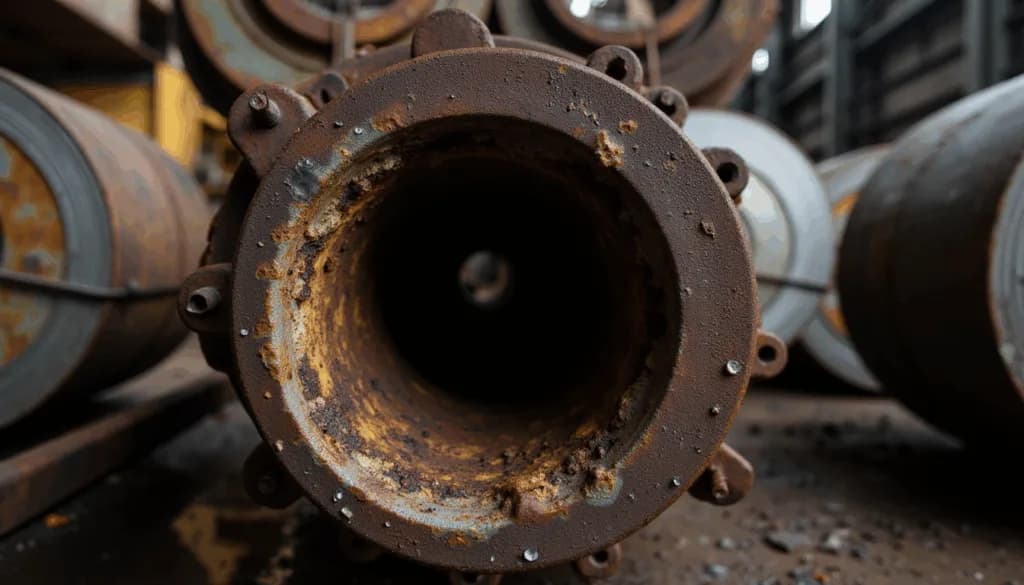
Perils of the sea sound like pirates and storms straight from a movie. In marine insurance, the phrase refers to natural sea events beyond human control. These include heavy weather, strong waves, violent motion, and accidental seawater entering the vessel. Perils of the sea involve sudden, unexpected, and natural forces. They describe conditions no human can predict or prevent.
What Perils of the Sea Do Not Include
Perils of the sea never include poor packing, rust, slow leakage, dampness, careless handling, or ordinary deterioration. Many people assume any salt water on a crate means a peril occurred. Insurers disagree. If a forklift dented your crate in Durban, it becomes a peril of bad driving, not a peril of the sea.
2. General Average
General Average confuses more people than any other marine insurance term. When a vessel faces danger, the captain may sacrifice some cargo or equipment to save the ship. Containers can be thrown overboard. Fuel can be pumped out. Heavy machinery can be cut loose. Once the vessel stabilises, every cargo owner contributes financially to the loss, including those whose goods remain untouched.
Why You Pay Even When Your Cargo Is Fine
General Average treats the ship as a shared community. If the community sacrifices something, every member assists. If you do not have insurance, you must pay your share before your goods are released. Importers with no cover often learn about General Average for the first time when they receive an invoice demanding payment before delivery.
3. Particular Average
If General Average is the community problem, Particular Average becomes the personal problem. This term refers to partial loss affecting your cargo alone. If your machinery dents or your crate cracks while everyone else’s cargo arrives safely, the loss belongs to you. Your insurer assesses the damage and pays according to your cover type and declared value. Particular Average covers events where only your shipment suffered.
4. Salvage
Salvage describes costs linked to saving a vessel and the cargo onboard. Salvage teams operate in dangerous environments using specialised equipment. Their fees match the risk and skill involved. When salvage teams intervene, their costs become part of the final loss.
Why Salvage Can Be Expensive
When a ship runs aground, catches fire, or faces flooding, the salvage operation becomes complex, dangerous and urgent. Marine insurance includes salvage fees because saving the ship reduces total loss for everyone involved.
5. Subrogation
Subrogation allows your insurer to recover money from the party responsible for your loss. When a third party damages your cargo through negligence, your insurer compensates you first and then pursues the guilty party afterward.
Why Subrogation Helps You
Subrogation speeds up your payout. You do not need to chase foreign carriers, port operators or warehouse teams. The insurer steps in, uses their legal channels and recovers costs while you keep your business moving.
6. Inherent Vice
Inherent vice refers to the natural tendency of certain goods to damage themselves without any outside force. Some cargoes rust, sweat, rot, leak or deteriorate when exposed to heat, moisture, or pressure. Marine insurance excludes losses caused by the natural behaviour of the goods.
How Inherent Vice Creates Claim Disputes
Goods sensitive to moisture or temperature need proper packaging. If packaging does not protect them, the insurer views the loss as a natural process rather than an accident. This leads to claim disputes unless packing evidence proves the supplier prepared the goods correctly.
7. Improper Packing
Improper packing may be the most common reason insurers reject claims. Marine transport involves vibration, stacking and motion. If the supplier packs goods carelessly, insurers consider the loss avoidable. All Risks cover still excludes improper packing.
What Counts as Improper Packing
Weak boxes, unstable pallets, poor internal padding, missing moisture control, incorrect stacking, and low-quality outer crates all qualify. Importers should request packing photos from suppliers, especially when shipping fragile goods.
8. Deviation
Deviation occurs when a vessel changes its planned route. Deviations happen due to storms, emergencies, mechanical issues, or port congestion. Insurers accept reasonable deviations, but unjustified route changes may complicate claims if they contribute to a loss.
Why Deviation Matters
A deviation alters the risk profile. If a vessel detours without valid cause and an incident occurs, the insurer may question responsibility. These situations are rare, but they appear when losses become large or complex.
9. Sue and Labour
Sue and Labour has nothing to do with lawsuits or trade unions. It refers to actions you must take to minimise damage once you discover a problem. This includes moving goods to a safer area, preventing further exposure and informing your broker quickly.
Why Sue and Labour Helps Your Claim
Insurers expect you to protect remaining goods. Preventing further loss speeds up claims, reduces investigation time, and strengthens your paperwork. Doing nothing increases complexity and delays payouts.
10. Average Clause
The average clause applies when you insure your cargo for less than its true value. If you declare a lower value to reduce premiums, you receive a reduced payout during a claim. Underinsurance always leads to disappointment.
How the Average Clause Works
If you insure cargo for 70 percent of its true value, the insurer pays only 70 percent of any loss. The reduction applies to partial losses, not only total losses. Many importers discover this rule during a claim, which becomes a painful lesson in honest declarations.
Why These Terms Matter More Than People Think
Each term defines how responsibility moves between you and the insurer. During a claim, insurers examine wording carefully. Understanding these terms helps you pack better, document better, declare accurately and avoid gaps in your protection.
Clarity Creates Faster Claims
When you know the rules, you navigate inspections, surveys, declarations and policy wording with confidence. Claims move faster when surprises disappear.
Marine Insurance Protects More Than the Ocean
Marine insurance covers the entire chain, from warehouse to port, from vessel to destination. These terms form the framework of your protection.
If these terms feel overwhelming or your supplier keeps using language that looks friendlier than it is, send us your shipping plan to review or request a quote. We will explain your risks, translate the tricky parts and match your cover to the real journey.
Jargon hides the risk, and clearing customs is where the definitions suddenly cost money.
Some terms only surface in a crisis, like piracy risk on a cargo route.
You shouldn’t have to learn what ‘perils of the sea’ excludes while staring at a crate of broken glass. With Mont Blanc Financial Services you won’t.
Contact Mont Blanc Financial Services to make sure you understand the terms your marine policy turns on before a claim tests them.
The full picture lives in our guide to marine and cargo insurance.
Frequently Asked Questions
What does ‘perils of the sea’ mean in marine insurance?
Perils of the sea refers to natural sea events beyond human control, not the dramatic pirates-and-storms image the phrase suggests. In marine insurance, it covers sudden, unexpected, and natural forces such as heavy weather, strong waves, violent motion of the vessel, and accidental entry of seawater. The defining characteristics are that the event is natural, sudden, and beyond human prevention. Crucially, perils of the sea do not include poor packing, rust, slow leakage, dampness, careless handling, or ordinary deterioration, even though many people assume any seawater on a crate means a peril occurred. Insurers draw a firm line here: if a forklift dented a crate in Durban, that is a peril of bad handling, not a peril of the sea, and it falls under different consideration. This distinction frequently surprises shippers, who attribute damage to the voyage when it actually arose from handling or packing. Understanding what perils of the sea does and does not include is essential, because it determines whether a particular loss falls within that part of the cover or is excluded from it.
What is general average in marine insurance?
General average is the marine insurance principle that when a vessel faces danger and cargo or equipment is deliberately sacrificed to save the ship, all cargo owners contribute proportionally to that loss. If a captain throws containers overboard, pumps out fuel, or cuts loose heavy machinery to stabilise a vessel in peril, the resulting loss is not borne solely by the owner whose cargo was sacrificed. Instead, once the vessel is safe, every cargo owner on the ship contributes a share, on the logic that the sacrifice saved the whole venture, so the cost should be shared across all who benefited. This is one of the oldest and most confusing principles in marine insurance, and it can come as an unwelcome surprise to a shipper whose cargo arrived intact but who is nonetheless asked to contribute to a general average loss. Marine cargo insurance typically responds to a policyholder’s general average contribution, which is one reason the cover matters. Understanding general average explains why an owner of undamaged cargo can still face a claim arising from someone else’s sacrificed goods.
What is the difference between general average and particular average?
The difference between general average and particular average lies in who bears the loss. General average, as described, is a shared loss: when cargo or equipment is sacrificed to save a ship in danger, all cargo owners contribute proportionally to that loss because the sacrifice benefited everyone aboard. Particular average, by contrast, is a partial loss or damage borne by a single party, the owner of the specific cargo that was damaged, rather than shared across all owners. In other words, particular average affects one party’s goods and stays with that party, while general average spreads a deliberate sacrifice across everyone. The distinction matters for understanding how a loss is allocated and how the policy responds: a particular average loss concerns damage to one’s own cargo, whereas a general average situation can require contributing to a loss even when one’s own goods are undamaged. Shippers often confuse the two, but they describe fundamentally different scenarios. Knowing which applies to a given loss clarifies who carries the cost and how the cover engages with it.
What is the difference between all-risks and named-perils marine cover?
The difference between all-risks and named-perils marine cover lies in how each defines what it responds to. All-risks cover responds to any accidental physical loss or damage that is not specifically excluded in the policy, meaning the starting point is broad protection, narrowed only by the listed exclusions. Named-perils cover works the opposite way: it responds only to the specific perils the policy names, so anything not on that list is not covered. This makes all-risks cover generally broader and named-perils cover more limited, though the actual protection in each case depends on the exclusions or the named list respectively. The distinction matters when a loss occurs, because under named-perils cover the shipper must show the loss arose from a listed peril, while under all-risks cover the question is whether an exclusion applies. Shippers sometimes assume their cover is broader than it is, which leads to disputes when a loss falls outside a named-perils list. Reading which basis a policy is written on, and what it excludes or names, is essential to knowing how far the cover actually reaches.

Nicola Iozzo
Founder & CEO, Mont Blanc Financial Services
Nicola has spent his career reading the policy wording most people skip, and writes here so you don't discover at claim stage what page 14 meant.
This blog is here to inform, not advise. Think of it as a guidebook, not a contract. For decisions affecting your world, have a chat with your broker or financial professional.
Mont Blanc Financial Services (PTY) Ltd. is an authorised financial services provider. FSP 8271