Cyber liability insurance cover for South African businesses

The ransom note arrived on a Tuesday morning, formatted like a company memo, addressed to the managing director by name. A logistics firm in Centurion had its entire server network encrypted overnight, and by the time the IT manager tried to restore from backup, he found the backup drive had been on the same network. The business stopped. Drivers sat in the yard with nowhere to go, customers called with nowhere to route their queries, and the insurer asked a question nobody had prepared for: did the company have cyber cover?
What is cyber liability insurance?
Cyber liability insurance is cover responding when your business suffers a cyber incident, a ransomware attack, a data breach, or a network outage, and faces either its own financial losses or claims from third parties whose data or systems were affected. It funds the response: the forensic investigation, the legal costs, the regulatory notifications, and the business income lost while your systems are down.
Key Takeaways
- Cyber liability insurance covers both your own losses (first-party cover) and claims brought against you by others (third-party cover) following a cyber incident.
- South Africa's Protection of Personal Information Act (POPIA) requires businesses to notify the Information Regulator and affected data subjects after a breach, and fines for non-compliance can reach R10 million.
- Ransomware is the most common trigger for claims in South Africa; many attacks encrypt the primary server and mapped backup drives on the same network.
- The policy responds to downtime, not only hardware damage. Business interruption from a cyber event is a distinct cover element and must be specifically included.
- Cover limits, excesses, and sub-limits vary considerably across insurers. An entry-level cyber policy is not the same as a policy structured for a business holding personal financial data.
- Your broker should read the wording, not the product brochure, before recommending a limit.
Why POPIA changes what a breach costs your business

POPIA, the Protection of Personal Information Act 4 of 2013, is the South African law governing how businesses collect, store, and protect the personal information of their clients, employees, and suppliers. A breach of that information isn't merely a technical incident; it is a legal event with a regulated response and potential financial penalties.
When a breach occurs, the Act requires your business to notify the Information Regulator and every affected data subject as soon as reasonably possible. That notification process isn't free. A business with thirty thousand customer records needs legal drafting, a communications strategy, and often a call centre to field the response. The Information Regulator, established under POPIA, can impose fines of up to R10 million for non-compliance, and the Act also creates a private right of action, meaning individuals whose data was mishandled can sue your business directly.
Cyber liability insurance addresses this exposure. The better-structured policies fund the cost of notifying affected parties, cover the legal fees arising from third-party claims, and respond to regulatory investigations. What they won't automatically cover is a fine for deliberate non-compliance, that distinction is consequential, and the wording governs.
The Information Regulator's guidance on breach notification obligations sets out the process in detail. Understanding what the Act requires before an incident is a better use of time than discovering it during one.
How first-party cyber cover works for your own losses
First-party cyber cover is the portion of your policy paying for your own losses, the costs your business carries directly because of the incident, not the costs of compensating someone else. Think of it as the cyber equivalent of a property policy: it responds to what the event costs you, before any third party has made a claim.
The main first-party elements in a well-structured cyber policy are:
- Incident response costs: the forensic investigators who identify what happened, the extent of the breach, and whether the attacker is still in the system
- Data restoration: the cost of recovering or reconstructing data encrypted, deleted, or corrupted
- Business interruption: the income your business loses while systems are down and cannot trade, subject to a waiting period (typically eight to twenty-four hours) before the cover activates
- Cyber extortion: the ransom payment itself, where your insurer and specialist negotiators agree it is the most practical resolution, and the cost of the negotiation team
- Crisis communications: public relations fees for managing client and media response
The waiting period in business interruption cover deserves specific attention. If your systems are down for twelve hours and the policy's waiting period is twenty-four hours, none of that downtime is compensable. For a business running continuous operations, that window carries real cost. Check it before the renewal is signed, not when the clock is already running.
How third-party cyber cover protects you from external claims
Third-party cyber cover responds when another party, a client, a supplier, a partner, suffers a loss because of an incident on your network and holds your business responsible. It is the liability portion of a cyber policy, and for businesses handling other people's data or providing technology services, it is often the larger exposure.
Cover limits across the main third-party elements of a cyber liability policy
| Cover Element | What It Pays | Typical Sub-limit Structure |
|---|---|---|
| Privacy liability | Legal costs and damages where your breach exposed a third party's personal data | Often a sub-limit within the aggregate |
| Network security liability | Claims where your compromised network caused damage to a third party's systems | Sub-limit or shared with privacy liability |
| Media liability | Claims arising from defamation or intellectual property breach in digital content | Separate sub-limit in most policies |
| Regulatory defence costs | Legal representation in regulatory investigations, including before the Information Regulator | Sub-limit; fines typically excluded |
| Third-party business interruption | Compensation to a client whose operations were disrupted because your systems were down | Not standard; check the wording carefully |
A South African accounting firm whose client portal is breached and whose clients' financial records are accessed carries all of these exposures simultaneously. The POPIA claim, the client damages claim, and the regulatory investigation can run in parallel. A policy appearing adequate on its aggregate limit may have sub-limits leaving one or more of those tracks materially underfunded.
SAIA's cybercrime industry data shows the frequency of claims in professional services sectors rising steadily. The pattern is consistent: the businesses least prepared for a third-party claim are those whose clients trusted them most with sensitive data.
Ransomware exclusions and coverage gaps catching businesses off-guard
Ransomware is the most common trigger for cyber claims in South Africa, but it is also where policy wording diverges most sharply between insurers. Having cyber cover doesn't mean you have ransomware cover on the terms you assume.
Several gaps appear with enough regularity to be worth naming directly. The first is the social engineering exclusion: if an employee transferred funds after receiving a convincing instruction from an email impersonating a director or supplier, some policies treat that as a crime claim rather than a cyber claim, and the two policies may each point at the other. The second is the war and hostile acts exclusion: following global disputes about whether state-sponsored cyber attacks constitute acts of war, some insurers have introduced nation-state attribution exclusions. The UK and US insurance markets have been actively litigating this boundary since the NotPetya attack in 2017, and South African policy wordings have begun importing similar carve-outs.
The third gap is unencrypted or unpatched systems: if a breach results from a known vulnerability with a patch available you hadn't applied, or from data stored without encryption on a device lost or stolen, the insurer may argue the loss arose from a failure to maintain basic security hygiene. This is often framed in the policy as a condition precedent, a requirement you had to meet before the cover responds, rather than an explicit exclusion, which makes it harder to spot when reading the schedule rather than the wording.
The FSCA's published guidance on cyber risk for financial institutions sets out the expectations regulators hold for basic cyber hygiene. What they require as a compliance standard is also a reasonable baseline for what an insurer expects before paying a claim.
What the right cyber liability insurance limit looks like

Setting a cyber liability limit isn't as straightforward as insuring a building for its replacement value. There is no standard reference table, and the correct number depends on the type of data your business holds, the volume of records, the revenue at risk during downtime, and the likely cost of a regulatory response.
A useful framing is to work through the worst-case scenario before discussing a number. For a retailer with an online store, the relevant questions are: how many customer records are stored, what would notification cost if every record was exposed, how many days of income would be lost if the site was down, and what would a client claim look like if a third party's data was compromised through your systems?
For most South African SMEs, a cyber liability limit between R5 million and R20 million covers the realistic range of those costs, though businesses holding large volumes of financial or health data should model upward from R20 million. What sub-limits apply within that aggregate and whether business interruption is included or sub-limited are the two questions the wording must answer.
The Prudential Authority, through the SARB's published frameworks on operational resilience, has made cyber risk a formal component of financial sector resilience. Even businesses outside the financial sector should read the framing: the questions the Prudential Authority asks about data exposure and recovery time are the same questions a well-run broker asks at placement.
How your business reduces the cost and improves the terms of cyber cover
Insurers underwrite cyber liability cover on the basis of your security posture, the systems, habits, and controls your business has in place before the incident happens. This differs from most property risks, where the insurer inspects the physical asset and prices accordingly. For cyber, the underwriter asks a detailed questionnaire, and the answers determine both whether you can get cover and what it costs.
The controls consistently shifting premium and terms are multi-factor authentication (a login process requiring a second confirmation step beyond the password, such as a code sent to a phone), regular tested backups stored on systems isolated from the main network, endpoint detection software on all devices, and a documented incident response plan. None of these is exotic; most are free or low-cost to implement. The ones absent before the incident are the ones the insurer references when assessing the claim.
A cyber liability policy isn't a substitute for security investment. It responds to the residual risk, the events happening even when the controls are solid. Businesses treating the policy as an alternative to basic hygiene tend to find the claim disputed on exactly the grounds they avoided addressing.
Stats SA's General Household Survey data consistently shows rising internet and digital transaction use across South African businesses of all sizes. The exposure isn't theoretical and isn't limited to large corporates. A sole-practitioner accountant with a client database and a cloud accounting platform carries a meaningful cyber liability exposure on a laptop fitting in a bag.
What the right cover delivers when an incident arrives
The claims process for cyber liability insurance is faster and more specialised than a standard commercial claim. The policy typically appoints an incident response firm directly, a team of forensic investigators, legal specialists, and communications advisors, rather than routing everything through a standard claims handler. Your job in the first hours is to stop the spread, preserve the evidence, and notify your insurer before taking any remediation steps, including paying a ransom.
That last point carries real consequence. Paying a ransom before notifying your insurer means some policies treat the payment as a voluntary act falling outside the extortion cover. The notification obligation exists for a reason. The insurer's incident response team includes negotiators who have resolved similar situations and who may reduce the ransom, confirm the attacker's decryption capability, and manage the payment through sanctions-compliant channels. Acting alone is both more expensive and more likely to generate a coverage dispute.
When the policy runs out before the incident does
Cyber incidents often run longer than the initial disruption. The forensic investigation, the regulatory inquiry, and the third-party litigation can all extend well past the moment the systems come back online. A policy with a twelve-month discovery period covers incidents beginning during the policy year even if the claim is reported later. A policy without adequate tail cover leaves you exposed to claims surfacing after the renewal.
This detail carries real weight in practice. POPIA complaints can take twelve to twenty-four months to resolve through the Information Regulator's process. A third-party claim from a client whose data was compromised may only crystallise once their own losses become apparent. The policy in force on the day of the incident is the one required to respond to those claims, and only if the discovery period allows.
Cyber risk is not a question of if, the cover structure is
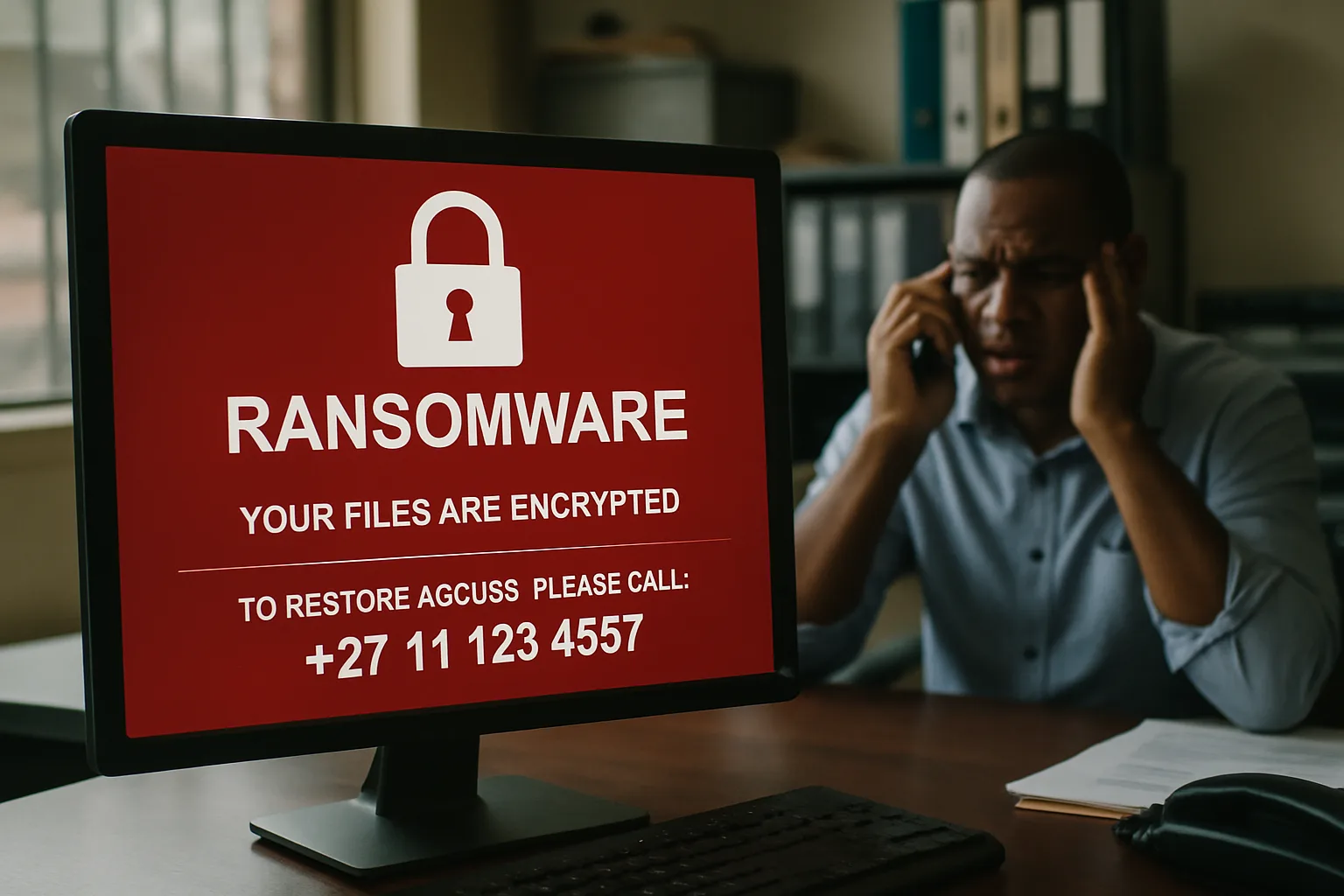
Every business connected to the internet faces some form of cyber event. The honest question isn't whether the risk exists but whether the cover structure matches the realistic cost of the event you're most likely to face.
A brochure-level cyber policy bought because the premium was low is not cover. It is a document. The difference between the two becomes clear when the forensic firm arrives and asks whether notification costs are inside or outside the aggregate limit.
Liability is one half of the exposure; the cyber insurance guide covers the first-party losses which land on the same desk.
You shouldn't have to find that out while your systems are down. With Mont Blanc Financial Services you won't.
Contact Mont Blanc Financial Services to have your cyber liability cover read, structured, and tested against the incidents your business is most likely to face.
The questions your business is likely to carry after reading are the ones worth answering before the policy is placed or renewed. What follows addresses the ones coming up most consistently.
Frequently Asked Questions
Does cyber liability insurance cover ransomware payments in South Africa?
Most structured cyber liability policies in South Africa include a cyber extortion cover element responding to ransomware, but the conditions are consequential. The cover typically activates after you notify your insurer and work with their appointed incident response team, which includes specialist negotiators. Paying a ransom before notifying your insurer, or paying to a sanctioned entity, can void the extortion cover entirely.
The policy may also carry a sub-limit on extortion payments lower than the aggregate limit. A business with R10 million in aggregate cover might find the extortion sub-limit set at R2 million. The ransom demand and the sub-limit are separate numbers, and the gap between them is yours to carry if you haven't checked.
Your broker should confirm whether ransomware is explicitly included, what the sub-limit is, what the notification conditions are, and whether there is a sanctions exclusion applying if the attacker operates from a restricted jurisdiction. These aren't standard questions in a five-minute renewal call, but they are standard questions for a claim.
What does POPIA require my business to do after a data breach?
Under POPIA, if a breach involves the personal information of data subjects, clients, employees, or other individuals, you are required to notify the Information Regulator and the affected data subjects as soon as reasonably possible after becoming aware of the breach. The notification must describe what happened, what data was involved, and what steps your business has taken in response.
The Information Regulator can investigate the breach independently and may impose fines of up to R10 million for serious non-compliance. Data subjects suffering damages because of the breach have a separate right to bring a civil claim against your business.
Cyber liability insurance responds to the cost of the notification process, the legal defence of regulatory investigations, and, within the policy's wording, the cost of defending or settling third-party civil claims. The Information Regulator's guidance on breach notification sets out the formal process and timeframes. Reviewing it before an incident is considerably more useful than reading it during one.
How much cyber liability insurance does a South African SME need?
There is no single correct number, because the right limit depends on the volume of personal data your business holds, the daily revenue at risk during downtime, and the likely cost of a regulatory and legal response. A useful starting framework is to estimate the cost of notifying every data subject in your database, add the revenue your business would lose during a realistic outage, and then add a third-party claim buffer based on your client relationships.
For most South African SMEs without large financial or health data sets, limits between R5 million and R10 million cover the realistic range of that calculation. Businesses holding thousands of financial records, operating e-commerce platforms, or providing technology services to other businesses should model upward.
The aggregate limit isn't the only number to check. Sub-limits on extortion, business interruption, and notification costs can each be materially lower than the headline figure, and the sub-limits govern what the insurer pays when the claim arrives.
Is cyber liability insurance the same as crime cover?
No, and the distinction decides what the insurer pays at claim time. Crime cover, often called commercial crime or fidelity cover, responds to theft, fraud, and dishonest acts, including employee theft and forgery. Cyber liability insurance responds to digital incidents: data breaches, ransomware, network outages, and the liability following them.
The two policies can overlap and also leave a gap between them. A business email compromise attack, where an attacker impersonates a director by email and instructs an employee to transfer funds, sits at exactly that boundary. Some insurers treat it as a cyber claim; others treat it as a social engineering or crime claim. Some cyber policies include social engineering cover as an extension; most crime policies exclude losses involving digital deception without physical forgery.
Before assuming one of your existing policies covers this exposure, have your broker confirm which wording responds and whether the two policies work together without leaving the social engineering scenario in the gap.
Can a small business get cyber liability insurance in South Africa?
Yes. Cyber liability cover is available to businesses of almost any size in South Africa, including sole practitioners and small firms. Entry-level products exist in the market with premiums accessible to businesses turning over from around R5 million per year, and the underwriting process has simplified considerably as the product has matured.
What varies with size is the quality of the terms rather than the availability. A small business buying a package cyber product may find notification costs, business interruption, and extortion each sub-limited in ways a larger, specifically placed policy wouldn't accept. The product is accessible; the advice is what ensures it performs.
A small business holding client data, an accountant, a medical practice, a law firm, a recruitment agency, carries a POPIA exposure proportionate to the data it holds, not the revenue it generates. That exposure doesn't shrink because the business is small, and the policy structure should reflect it.

Nicola Iozzo
Founder & CEO, Mont Blanc Financial Services
Nicola has spent his career reading the policy wording most people skip, and writes here so you don't discover at claim stage what page 14 meant.
This blog is here to inform, not advise. Think of it as a guidebook, not a contract. For decisions affecting your world, have a chat with your broker or financial professional. Mont Blanc Financial Services works to keep this content accurate and current, but isn’t liable for decisions made on it alone.
Mont Blanc Financial Services (PTY) Ltd. is an authorised financial services provider. FSP 8271