Who Is Responsible for Cargo, Freight and Customs Problems in a Shipment?
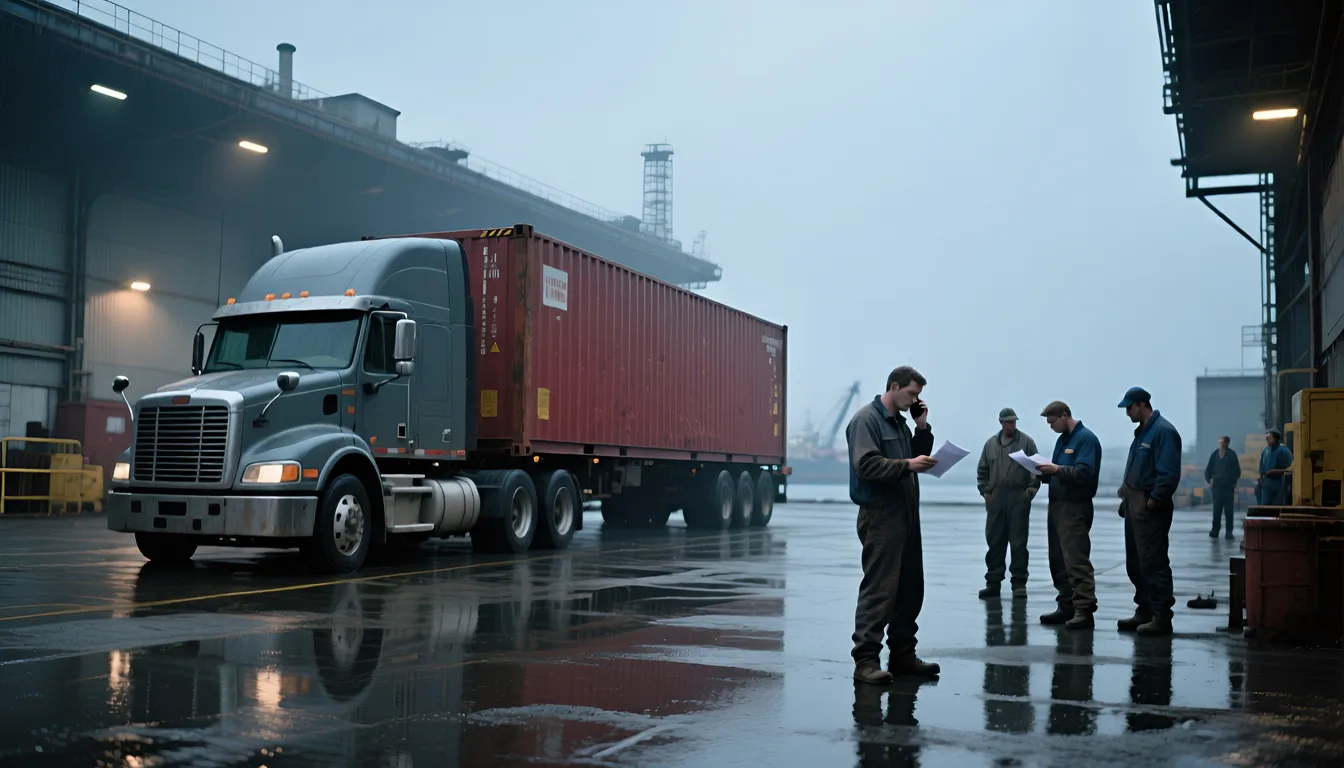
Cargo, freight, and customs problems rarely begin with one dramatic mistake; most start with a quiet assumption. One party thinks another checked the invoice, another assumes customs details were confirmed, a third assumes insurance was arranged because someone mentioned it on a call. Then the shipment stops and responsibility drifts around the room. The useful question is not who looks busiest but who owned the task at the point the problem started.
Who is responsible for cargo, freight, and customs problems?
Responsibility for cargo, freight, and customs problems follows the source of the problem, the scope of the service, and the authority given, not the most visible operator. The cargo owner owns the commercial truth of the goods, the freight forwarder owns the agreed movement scope, and the clearing agent owns customs execution within its mandate.
Key Takeaways
- Once these boundaries go soft, delay, storage, and correction costs arrive quickly, so ownership should be assigned in advance.
- Responsibility for shipment problems follows the source of the data, the scope of the service, and the authority given, not the busiest party.
- The cargo owner owns the commercial truth of the goods: what they are, who is buying or selling, the invoice, and the commercial terms.
- The freight forwarder owns the agreed movement scope, and the clearing agent owns customs execution within its mandate and the information supplied.
- A party can be copied on every email yet not own the task where a problem began, so visible activity is a poor guide to responsibility.
Cargo, Freight and Customs Responsibility Does Not Sit with One Party
Responsibility in a shipment does not sit with one visible operator. Responsibility sits with the party that owns the task, the data, or the process where the issue began. The cargo owner owns the commercial truth of the goods. The freight forwarder owns the agreed movement scope. The clearing agent owns customs execution within the mandate and information supplied.
Confusion appears when businesses treat the busiest party as the responsible party. A freight forwarder may be copied on every email and still not own the invoice data. A clearing agent may detect an error and still not own the original commercial record. A cargo owner may remain commercially exposed even after outsourcing most day-to-day logistics activity.
The core rule is simple. Responsibility follows source, scope, and authority.
The working lens in this article is simple: commercial source data, movement scope, and customs execution.
Where Cargo Owner Responsibility Starts and Stops
The cargo owner is responsible for the commercial truth of the shipment. That includes what the goods are, who is buying or selling, what the invoice says, and which commercial terms apply. Once the source data is wrong, the problem usually begins here.
The cargo owner does not need to perform every operational task, but the cargo owner still owns the commercial position. If a shipment carries the wrong description, value, quantity, or party detail, the correction usually has to move back to the commercial source. A freight forwarder or clearing agent may spot the issue, but spotting an issue is not the same as owning the original data.
The line becomes easier to see once a claim, delay, or customs query exposes weak paperwork. The commercial stake stays with the cargo owner even where operational tasks were outsourced.
Where Freight Forwarder Responsibility Starts and Stops
The freight forwarder is responsible for the movement scope agreed in the forwarding instruction or service contract. That can include bookings, routing, document flow, service coordination, and follow-up with carriers or handling partners. The FIATA overview of freight forwarding captures the role as a broad logistics coordination function.
Freight responsibility has limits. The forwarder does not automatically own the commercial truth of the goods. The forwarder also does not absorb every customs risk simply because shipment documents passed through the forwarding desk. Responsibility depends on scope.
A routing error, missed booking, or failed handoff may fall inside freight responsibility. A wrong invoice value usually does not. Businesses get better outcomes once the forwarding agreement states exactly what the forwarder will arrange, check, and escalate.
Where Clearing Agent Responsibility Starts and Stops
The clearing agent is responsible for customs-facing execution within the mandate granted and the information supplied. The role usually includes preparing and submitting declarations, managing release steps, and responding to customs queries during the clearance process. The SARS clearing agent licensing guidance shows the formal compliance nature of this role.
Customs responsibility also has edges. The clearing agent cannot create correct source data from incorrect commercial records. A declaration can only be as sound as the information feeding it. If the cargo owner or another source party provides weak data, the clearing agent may detect the weakness, but the correction still needs to happen at the right origin point.
South Africa makes this distinction feel practical very quickly because customs delay soon becomes storage cost, release delay, and operational friction.
How Incoterms, Insurance and Contracts Change Responsibility
Contracts can shift cost, timing, and risk without changing role identity. A seller may carry risk up to a named point. A buyer may carry import exposure after a handoff. A freight forwarder may be asked to arrange cover. A clearing agent may receive a narrow customs mandate only. The paperwork can branch out while responsibility remains divided by role.
The ICC Incoterms® 2020 rules and broader ICC guidance on Incoterms® rules help here because they show how cost and risk can move between buyer and seller. Businesses reviewing Incoterms & Insurance Policies or Cargo Insurance often find the same pattern. Insurance arrangement, risk-bearing position, and operational handling do not always sit with the same party.
A freight forwarder can arrange insurance without becoming the commercial risk holder. A sale term can move risk without changing who handles customs execution. Good contract review keeps those distinctions visible before a dispute begins.
What Happens When Shipping Documents Are Wrong
Incorrect shipping documents can delay release, trigger amendments, create storage cost, and expose the shipment to avoidable queries. The effect depends on which document is wrong and who owns that document. An incorrect invoice description starts as a commercial data problem. An incorrect transport instruction starts as a freight problem. A mismatch between declaration data and supporting records becomes a customs problem very quickly.
Durban offers a familiar example. A container can be physically ready, the clearing process can be prepared, and the shipment can still stall because one document carries the wrong detail. The issue may only become visible at the customs stage, but the source of the problem often sits much earlier in the chain.
How Businesses Should Assign Responsibility Before Dispatch
Businesses should assign responsibility before booking begins, not after the shipment stalls. Start with a short responsibility map. Name the cargo owner. Name the freight coordinator. Name the customs representative. Then tie each role to document ownership, approval steps, escalation routes, and correction responsibility.
Cape Town offers the same lesson from a different angle. A shipment can move through a polished chain of providers and still suffer delay if the service scope looked clear only because nobody tested the edges. The same discipline also supports the broader Marine Insurance decision because good insurance thinking depends on clean role and risk allocation before movement begins.
Pre-dispatch clarity usually costs less than post-delay repair.
Closing Reflection
Shipment problems do not spread because one role failed to exist. Problems spread because several roles were never separated clearly enough.
The clean rule is simple. Responsibility follows source, scope, and authority. Once a business names those three anchors early, disputes become easier to prevent and much easier to solve.
Clear responsibility mapping helps businesses fix the right problem at the right point in the chain.
You shouldn’t have to watch responsibility drift around the room while a stopped shipment runs up storage costs. With Mont Blanc Financial Services you won’t.
Contact Mont Blanc Financial Services to make sure the insurance side of a shipment is owned and arranged before a problem tests who was responsible.
The FAQs below cover the most common responsibility questions in direct terms.
It sits within our broader guide to marine and cargo insurance.
Frequently Asked Questions
Who is responsible when a shipment problem occurs?
Responsibility for a shipment problem sits with the party that owned the task, the data, or the process where the issue began, rather than with the most visible operator. Responsibility does not automatically fall on whoever appears busiest or is copied on every email. Instead, it follows three things: the source of the problem, the scope of the service contracted, and the authority that was given. The cargo owner owns the commercial truth of the goods, so a problem rooted in incorrect commercial data traces to them. The freight forwarder owns the agreed movement scope, so a problem within the transport it was contracted to arrange traces to it. The clearing agent owns customs execution within its mandate and the information supplied, so a customs problem within that scope traces to the agent, unless it stems from wrong source data the cargo owner provided. This source-scope-authority lens is what assigns responsibility accurately. The common error is treating the busiest party as the responsible one, when the party that owned the failing task may not be the most visible at all.
What is the cargo owner responsible for in a shipment?
The cargo owner is responsible for the commercial truth of the shipment, the foundational data on which everything else depends. This includes what the goods actually are, who is buying and selling them, what the invoice states, and which commercial terms apply. Because the rest of the shipment process builds on this information, an error in the source data tends to propagate: a wrong description, value, or term entered at the commercial level can cause customs problems, delays, and disputes further down the line, even though the parties handling movement and customs did their own work correctly. This is why the cargo owner’s responsibility for accurate commercial data is so significant. It also explains why a cargo owner can remain commercially exposed even after outsourcing most day-to-day logistics, since outsourcing the movement and customs work does not transfer ownership of the commercial truth of the goods. The forwarder and clearing agent act on the information the cargo owner provides; if that information is wrong, the problem originates with the owner.
Is the freight forwarder responsible for customs or invoice errors?
A freight forwarder is generally not responsible for customs execution or for the accuracy of the commercial invoice, because those tasks fall outside the movement scope it owns. The freight forwarder’s responsibility is the agreed movement scope, arranging and coordinating the transport and logistics it was contracted to handle. Customs execution belongs to the clearing agent within its mandate, and the commercial truth of the goods, including the invoice, belongs to the cargo owner. A freight forwarder may be copied on every email and involved throughout yet still not own the invoice data or the customs declaration, which is where confusion arises when businesses assume the most involved party is responsible. Where a single provider offers forwarding and clearing together, it may own more than one scope, but the boundaries still follow what each function covers. The reliable principle is that the forwarder answers for the movement it agreed to coordinate, not for errors that originate in the commercial data or in customs work belonging to other roles.
How can businesses assign shipment responsibility before problems arise?
Businesses assign shipment responsibility effectively by clarifying, before dispatch, who owns each task, the commercial data, the movement, and the customs execution, rather than working it out after a problem has stopped the shipment. The guiding framework is source, scope, and authority: identify who owns the commercial truth of the goods, who owns the agreed movement scope, and who owns customs execution within what mandate. Establishing these boundaries in advance means that when a problem appears, its source can be traced to the party that owned the relevant task, and accountability is clear rather than drifting around the room. This matters because once the boundaries go soft, delay, storage, and correction costs accumulate quickly while parties argue. Confirming the insurance position is part of this too, since responsibility for cover should be assigned rather than assumed. Settling these ownership questions at the outset means responsibility is defined by design rather than disputed after the fact.

Nicola Iozzo
Founder & CEO, Mont Blanc Financial Services
Nicola has spent his career reading the policy wording most people skip, and writes here so you don't discover at claim stage what page 14 meant.
This blog is here to inform, not advise. Think of it as a guidebook, not a contract. For decisions affecting your world, have a chat with your broker or financial professional.
Mont Blanc Financial Services (PTY) Ltd. is an authorised financial services provider. FSP 8271